
An uninsulated crawl space is rarely a reason to walk away from a house, but if you are buying a Chicago-area home with one, sort it out during attorney review. There are three reasons. Water pipes and equipment down there can freeze, bare soil adds moisture to the framing, and the floors above run cold. How to fix it depends on what is in the crawl space. When pipes, ducts or a furnace are down there, the U.S. Department of Energy’s Building America guidance points to crawl space insulation on the walls, with the space sealed, rather than batts between the floor joists.
Below are the crawl spaces we documented this year, from a 1950 house with no vapor barrier and growth on the subfloor to one from a few days ago where the water piping and pressure tank sit beside uninsulated concrete walls. After that: what each condition means, and what to ask the seller for.
Table of Contents
- What we found in Chicago-area crawl spaces this year
- Why does an uninsulated crawl space matter in a Chicago winter?
- Should crawl space insulation go on the walls or the floor above?
- Is a crawl space a radon question too?
- What does a home inspection check in a crawl space?
- If you are buying the house: what to ask for
- How we help
- Sources
- FAQ
What we found in Chicago-area crawl spaces this year
The pattern was similar from house to house: a crawl space under part or all of the home, a floor with no vapor barrier or only a partial one, and no insulation between the floor joists. The photos below come from our own home inspections in the Chicago area.
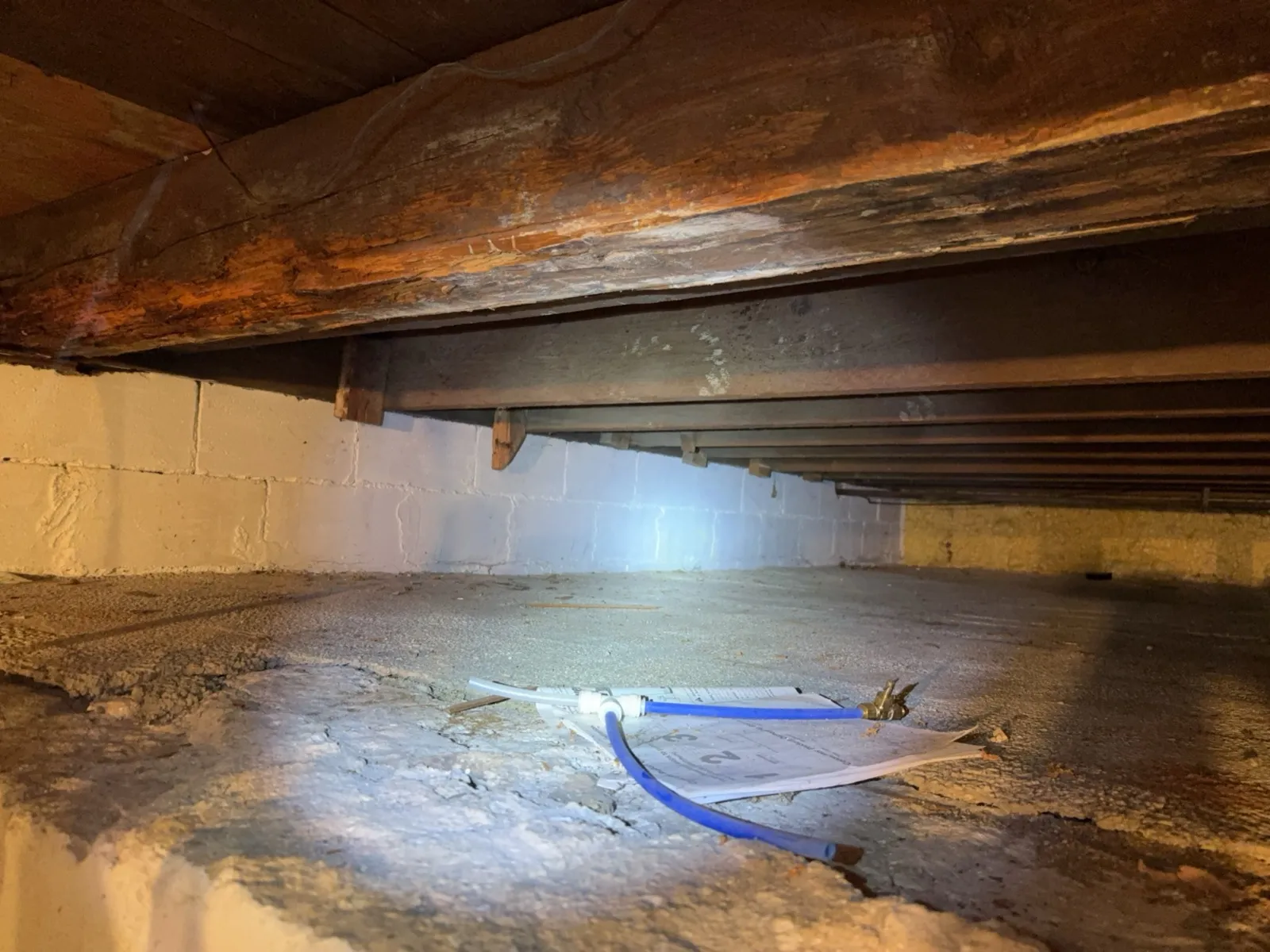
No vapor barrier and no floor insulation. In that house we wrote: “The crawlspace floor did not have a vapor barrier, and no insulation was observed beneath the floor sheathing.” We recorded missing floor insulation alongside a missing or incomplete vapor barrier in other homes this year too, from April through this month.
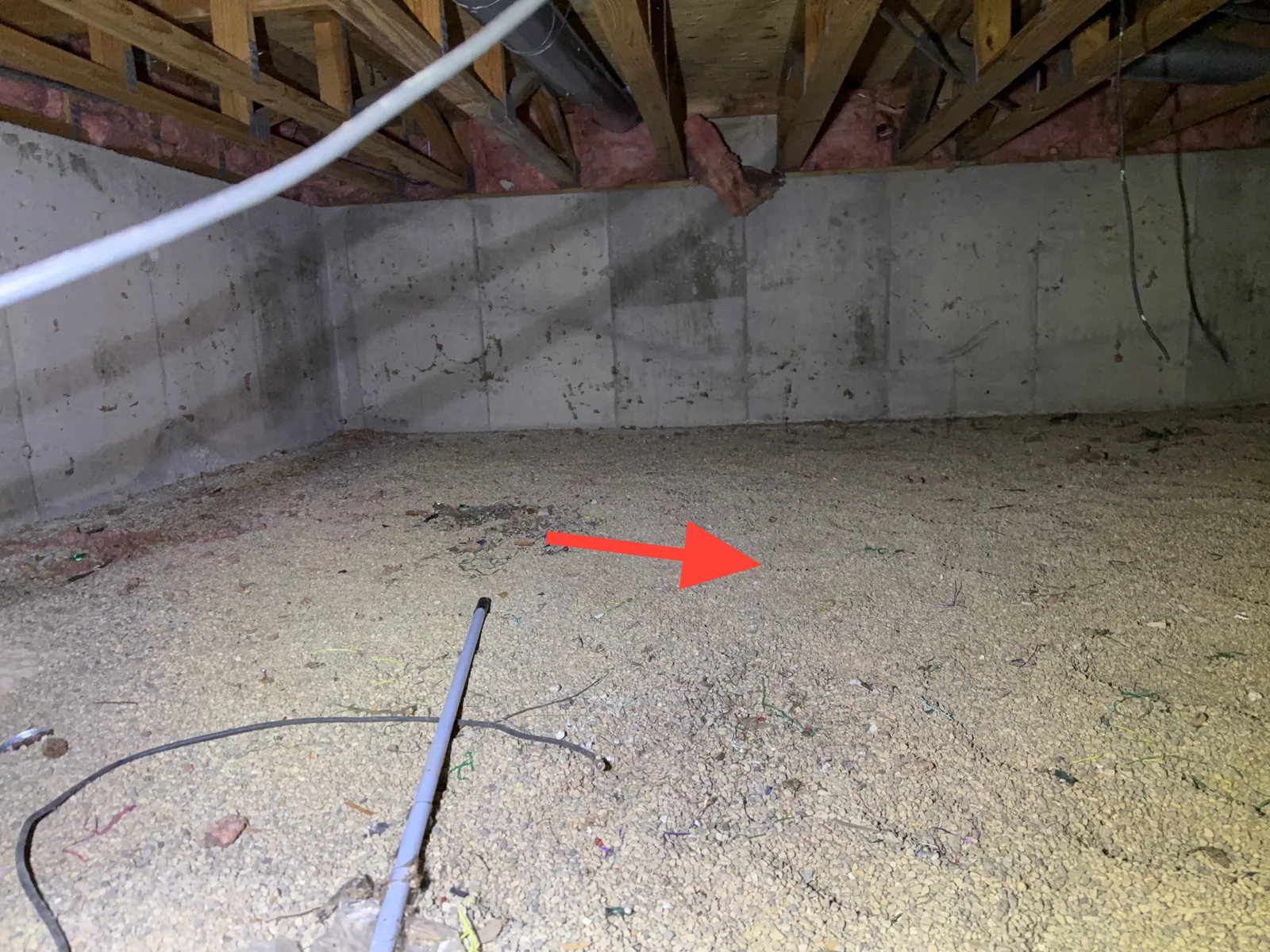
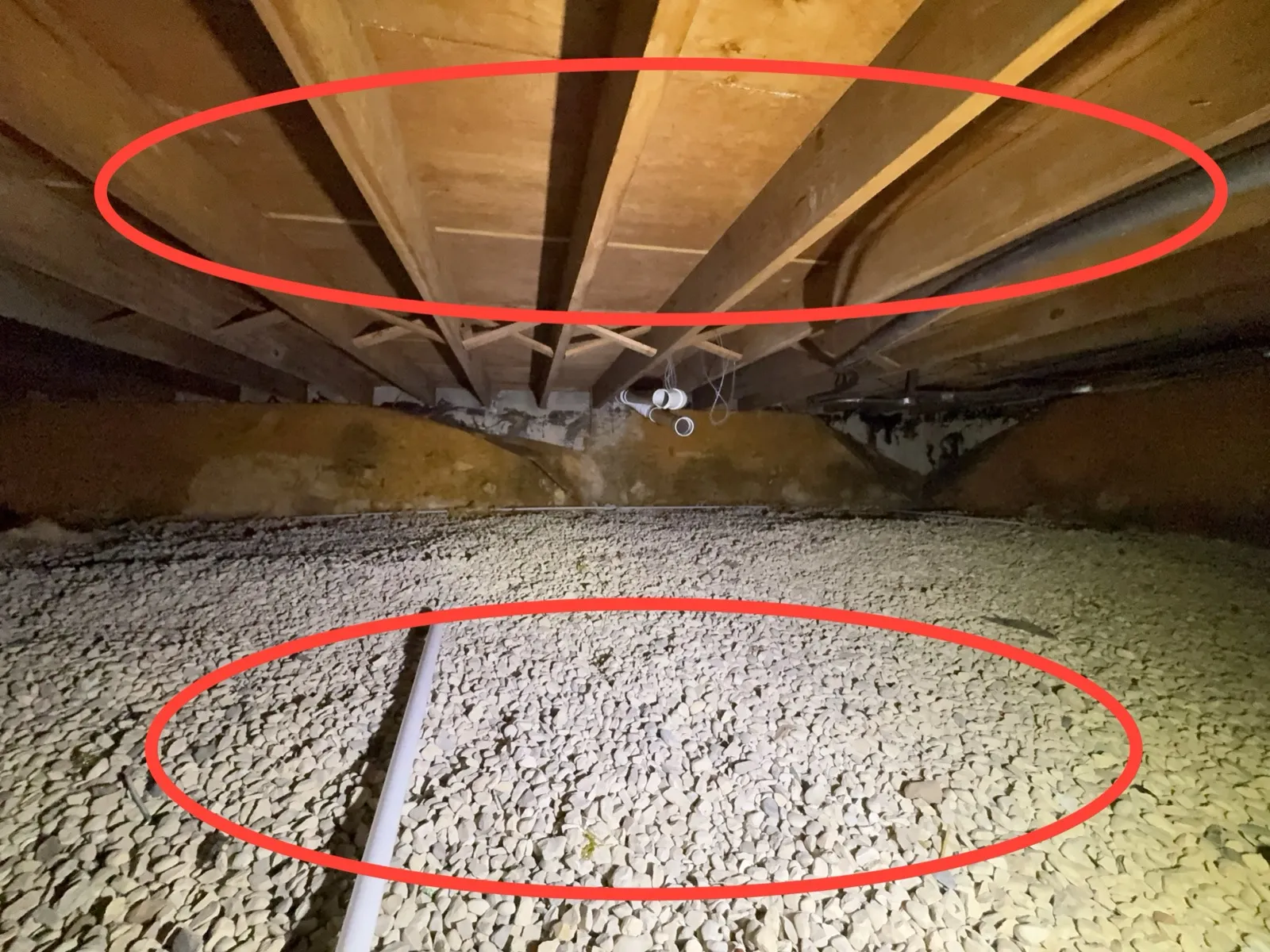
Water piping beside cold walls. The inspection that prompted this post was on November 21. That house is on a private well, and the pressure tank and the water supply piping are in the crawl space. From the report: “the foundation walls and rim joists are not insulated and the supply piping is not insulated. During extended cold weather or a loss of heat, piping near the exterior walls and the well line where it enters the crawlspace may be exposed to freezing temperatures, which may lead to a burst pipe, water damage, and loss of water supply to the home.”
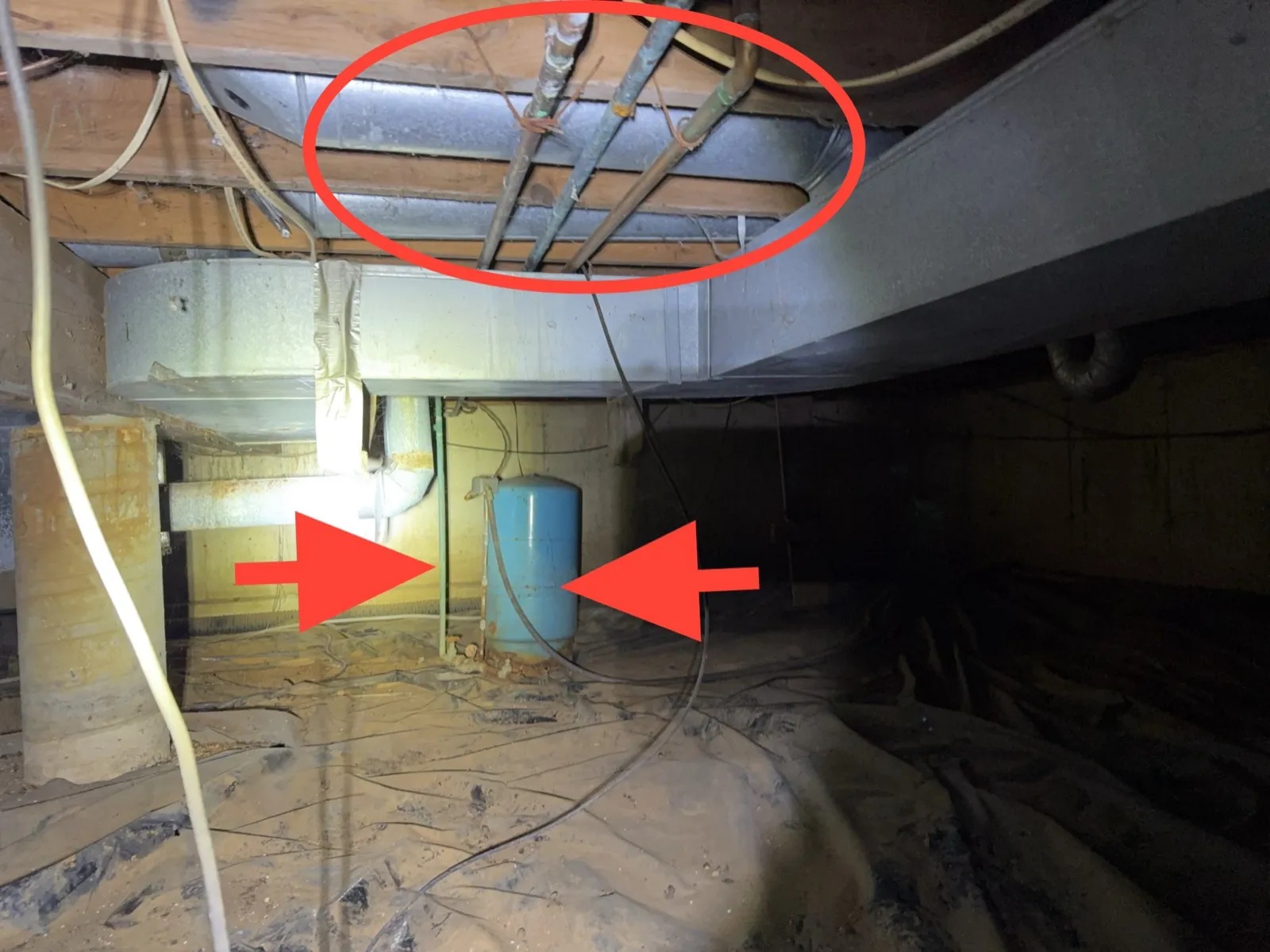
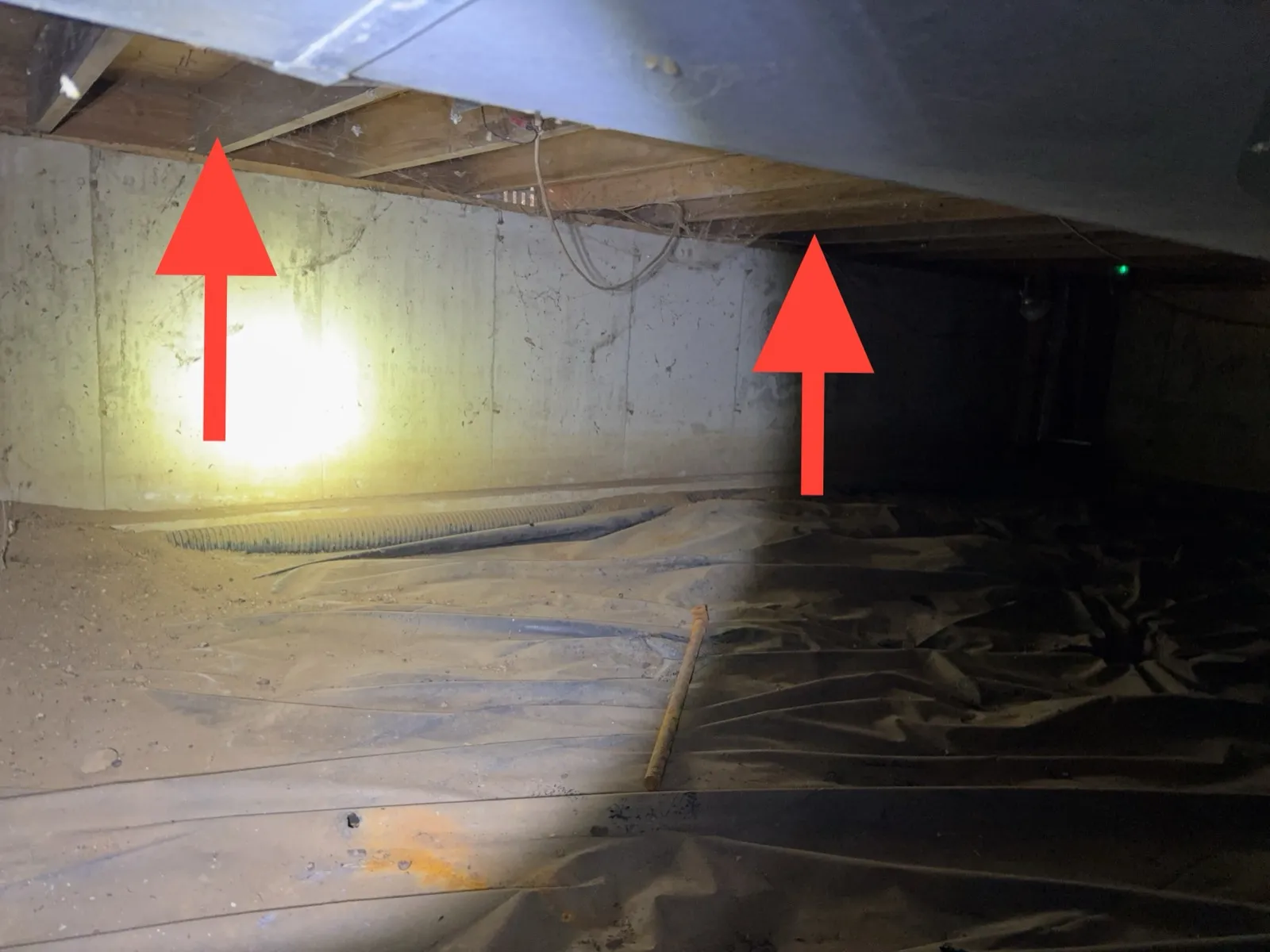
Equipment that lives down there. In several of these houses the crawl space held mechanical systems. In an April inspection the furnace sat far back in the crawl space, and the main water shutoff was beside the well tank. Ductwork ran through the crawl space in another. In the November 21 house, the high-efficiency furnace’s PVC vent and combustion air piping “appeared to be routed down through the floor into the crawlspace before terminating at the exterior wall.” When equipment and piping sit below the floor, an uninsulated crawl space is more than a comfort issue.
Openings to the outside. In a 1918 house this month, “daylight was visible through a gap in the crawlspace perimeter.” An opening like that lets cold air, water and pests straight into the space under the floor.
More foundation and framing photos from our inspections are in our structural inspection photo gallery.
Why does an uninsulated crawl space matter in a Chicago winter?
It matters for three separate reasons, and each one points to a different fix.
Can pipes in a crawl space freeze?
Yes. Pipes and equipment in a crawl space that is open to the cold are outside the heated part of the house. The EPA makes the same point when it describes ventilating a crawl space: “In colder climates, for either passive or active crawlspace ventilation, water pipes, sewer lines and appliances in the crawlspace may need to be insulated against the cold.” The risk is highest during a long cold spell or when the heat goes off, for example in a house that sits empty between closing and move-in.
What does a missing vapor barrier do?
Bare soil gives off moisture into the crawl space. In our report wording, “the absence of a vapor barrier allows ground moisture to enter the crawlspace, contributing to elevated humidity, condensation, and potential wood rot or microbial growth.” In the 1950 house shown above, which had no vapor barrier, the same crawl space had what appeared to be microbial growth on the subfloor and framing, plus damage at the rim and sill.
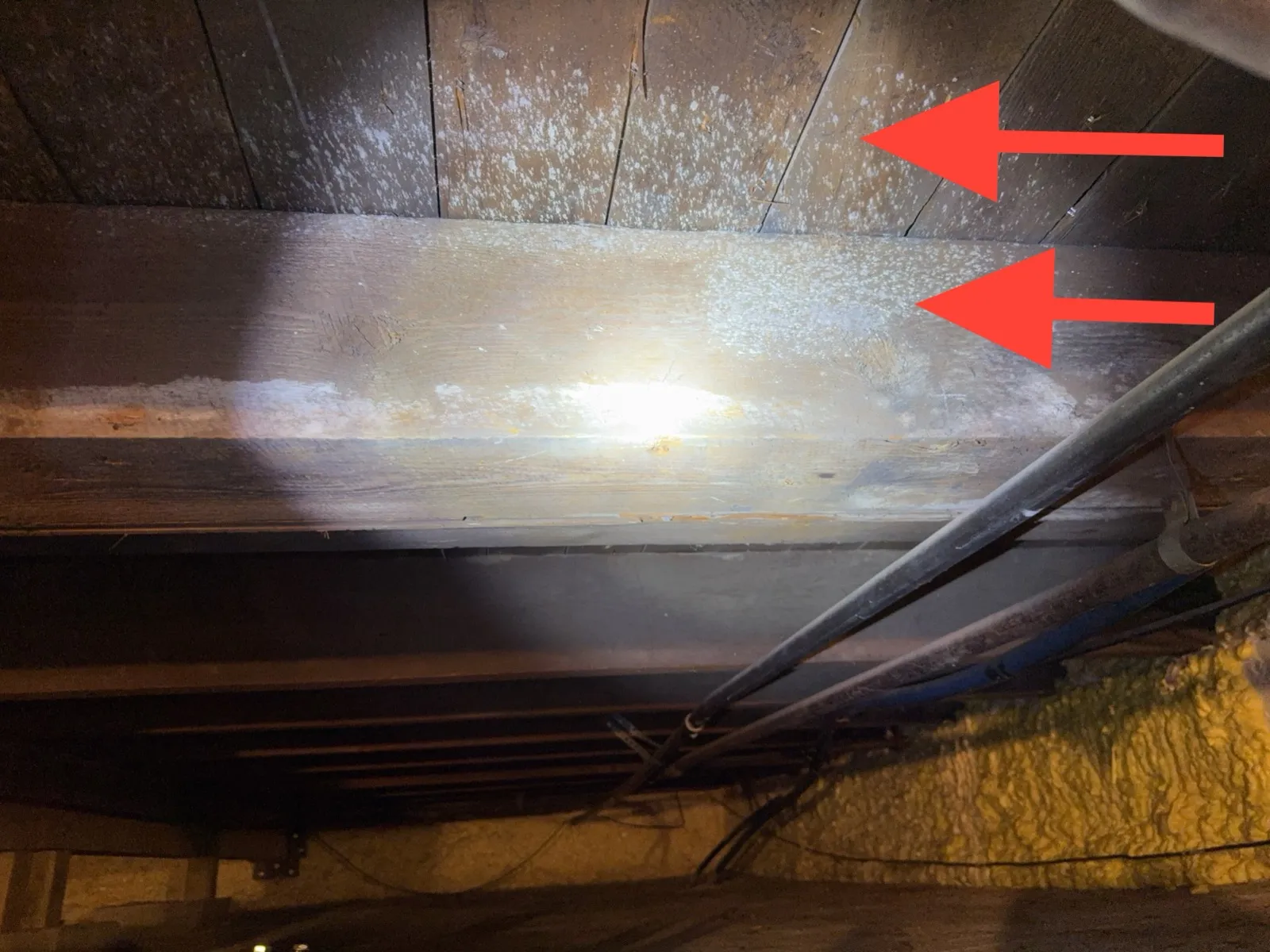
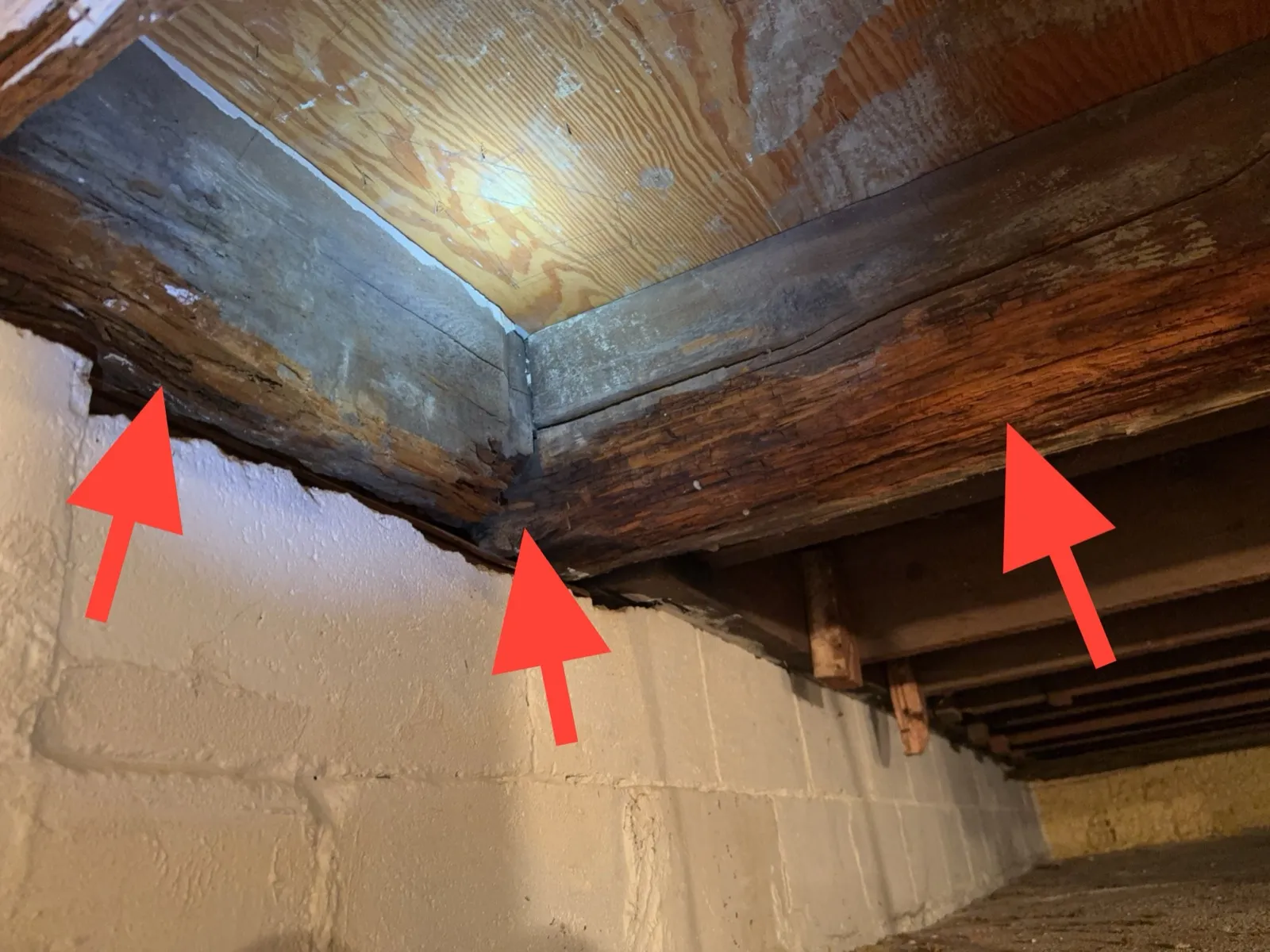
A visual inspection cannot prove what caused the growth or the decay. What it does show is a damp space with exposed wood, which is where a buyer needs answers before closing.
Why are the floors above a crawl space cold?
Without insulation, heat moves straight through the floor into the crawl space. The Building America guidance notes that “heat loss through floors over unconditioned basements or vented crawlspaces can cause uncomfortably cold floors.” In our reports that line reads “cold floors, energy loss, and reduced comfort.”
Should crawl space insulation go on the walls or the floor above?
If pipes, ducts or a furnace are in the crawl space, insulating and sealing the walls usually protects them better. The DOE’s Building America Solution Center calls “best practice in all climates” connecting the crawl space to the house by insulating along its walls, particularly “where HVAC equipment and plumbing pipes will be located in the crawlspace.” Insulating the floor above a vented crawl space is a standard approach too, but it leaves the crawl space, and anything in it, on the cold side.
The guide on unvented, insulated crawlspaces says sealed crawl spaces “can keep floors warmer and help protect HVAC equipment and plumbing pipes from freezing temperatures.” It also spells out what a proper job includes:
- A polyethylene vapor retarder that “should completely cover the floor and lap up the walls to within 4 in. of the top of the foundation walls.”
- Seams “overlapped 12 in.” and “sealed with adhesive and tape.” The guide notes that the residential code requires 6 inches and recommends 12.
- Insulation on the walls (the guide shows rigid foam).
- A way to dry the space. The guide cites a code requirement for “a drying mechanism such as a continuously operating exhaust fan or conditioned air supply.”
Here is how the two approaches compare, based on the Building America floor insulation guide and the unvented crawl space guide:
| Approach | What it does | Fits when | What to ask the contractor |
|---|---|---|---|
| Insulate and seal the crawl space walls (unvented crawl space) | Brings the crawl space inside the house, so pipes, ducts and equipment stay on the warm side | Water piping, ductwork, a furnace or a well tank are in the crawl space | Vapor retarder coverage and seams, wall insulation type, and how the space will be dried |
| Insulate the floor above (vented crawl space) | Insulates the living space from the crawl space | Nothing that can freeze is in the crawl space | How the pipes and ducts left below the insulation will be protected |
| Vapor barrier only | Slows ground moisture but adds no insulation | As the first step, or alongside either approach | Full floor coverage, lapped and sealed seams, and edges run up the walls |
Is a crawl space a radon question too?
It can be. Radon comes from the soil, and a crawl space with a bare soil floor sits directly on it. The EPA’s Consumer’s Guide to Radon Reduction says the most effective fix in crawl space homes is “covering the earth floor with a high-density plastic sheet” and drawing radon from under it with a vent pipe and fan, which it calls submembrane suction.
Two practical points follow for a buyer. First, the EPA notes it is common for a house to have a basement under part of it and a crawl space under the rest, and that a combination of radon reduction methods may then be needed. Second, if the crawl space is going to get new sheeting anyway, decide about radon at the same time. A radon test during the inspection period tells you whether radon reduction belongs in the same project.
What does a home inspection check in a crawl space?
A home inspection is visual and non-invasive. Where the crawl space is safely accessible, our reports record that “the crawlspace was inspected, including the access opening, the visible foundation walls and piers, the ground surface and any vapor barrier, and the accessible framing overhead.” We do not open finished surfaces, and we do not measure insulation levels against a code table. When equipment sits out of reach, as with the furnace in April, the report says so.
| What we report | Who takes it from there |
|---|---|
| Missing or incomplete insulation at the floor, walls or rim joists | An insulation contractor |
| Uninsulated water piping, or a well tank exposed to the cold | A plumber |
| Missing or unsealed vapor barrier | A qualified contractor |
| Apparent microbial growth | A contractor to find and correct the moisture source and remediate |
| Damage to the rim, sill or framing | A licensed pest control professional, then a contractor for repairs |
If you are buying the house: what to ask for
Treat the crawl space as two kinds of item, because they belong in different parts of your repair request.
- Conditions doing damage now. Apparent growth, decayed framing, disconnected piping and openings to the outside are repair or evaluation items. Ask for them in writing, by name, and ask for the evaluation before your attorney review period ends, so you are not deciding on a guess.
- Upgrades. Missing insulation and a missing vapor barrier are upgrades rather than damage. A credit often works better than a seller repair here, because the right approach depends on what is in the crawl space. A seller hiring the quickest fix may put batts between the floor joists and leave the pipes below them colder than before.
Steps that help inside the attorney review window:
- Get a written quote from an insulation contractor that names the approach (walls or floor), the vapor retarder details and how the space will be dried. Our guide to checking a Chicago contractor’s license covers vetting whoever you call.
- If water piping or a well tank is in the crawl space, ask a plumber how they would protect it, and ask the seller whether pipes have frozen there before.
- Use the quotes to size your credit. Our post on estimating repair costs after an inspection walks through building the number.
- If the house will sit empty between closing and move-in, keep the heat on. A loss of heat is exactly when piping near uninsulated walls is at risk.
If what turns up in the crawl space changes your mind about the house, the timing rules in our guide on backing out after the inspection are what matter next.
How we help
Our home inspection includes the crawl space wherever it can be safely entered, with photos of the floor, walls, framing and any equipment down there. Reports go out the next business day, in time for attorney review. Radon testing is in-house and can run alongside the inspection. If we see apparent growth, mold testing is a separate service we do ourselves. We do not refer repair contractors, so quotes come from contractors you choose.
Sources
- U.S. DOE Building America Solution Center: Floor Above Unconditioned Basement or Vented Crawlspace
- U.S. DOE Building America Solution Center: Unvented, Insulated Crawlspaces
- U.S. EPA: Consumer’s Guide to Radon Reduction (2016)
FAQ
Is it normal for a crawl space to have no insulation?
We find it in houses of many ages: the ones in this post were built between 1918 and 1993. Whether it matters depends on what is down there. A crawl space with no insulation and water piping in it needs a plan before winter.
What is the best insulation for a crawl space with a dirt floor?
The DOE Building America guide describes covering the dirt floor with a polyethylene vapor retarder that laps up the walls, then insulating the walls with rigid foam and providing a way to dry the space. The right product for a particular house is a question for the insulation contractor.
Is crawl space encapsulation the same as insulating it?
Not necessarily. Encapsulation usually means sealing the crawl space with plastic sheeting, and a quote can include wall insulation or leave it out. Ask what the quote covers: floor and wall coverage, seams, wall insulation, and how the space will be dried.
Will a home inspection tell me if crawl space pipes have frozen before?
Only if there is visible evidence, such as a repaired section or water staining. A past freeze that was fixed cleanly may leave nothing to see. Ask the seller directly and get the answer in writing.