
To vet a contractor while you are in attorney review, check the license that matches the trade, get every bid in writing with its scope tied to the findings in your home inspection report, and confirm the contractor carries the insurance Illinois requires. In Chicago, general, electrical and plumbing contractors are licensed by the city; roofers are licensed by the state; radon mitigators are licensed by IEMA. Each one can be looked up for free, and for city trades the Chicago contractor license lookup also shows licenses that recently expired.
This matters more than it sounds. On one repair verification visit this summer, a gas leak we had reported was still there, and loose attic wiring had been painted over rather than fixed. The bids you collect now decide whether you ask the seller for a repair or a credit, and whoever does that work decides whether the problem is actually gone.
Table of Contents
- What we found on one repair verification visit
- Which Chicago contractor license lookup applies to your repair?
- What must an Illinois home repair contract include?
- How do you compare repair bids against the inspection report?
- Should you ask for a repair or a credit?
- Why we do not recommend contractors
- Who verifies repairs after a home inspection?
- How we help
- Sources
- FAQ
What we found on one repair verification visit
In August 2026 we went back to a house to check repairs made after our inspection (report 260823A). Five items were on the verification list. Here is what we saw, using the wording from the report:
- Gas leak at the furnace piping: not corrected. The combustible gas detector again indicated the presence of gas at the piping connections serving the furnace.
- Loose wiring at the attic fan: unable to verify. The exposed conductors below the enclosure appeared unchanged from the original condition apart from having been painted over. The fan appears to be controlled by a thermally activated switch with no visible manual override, so its operation could not be confirmed.
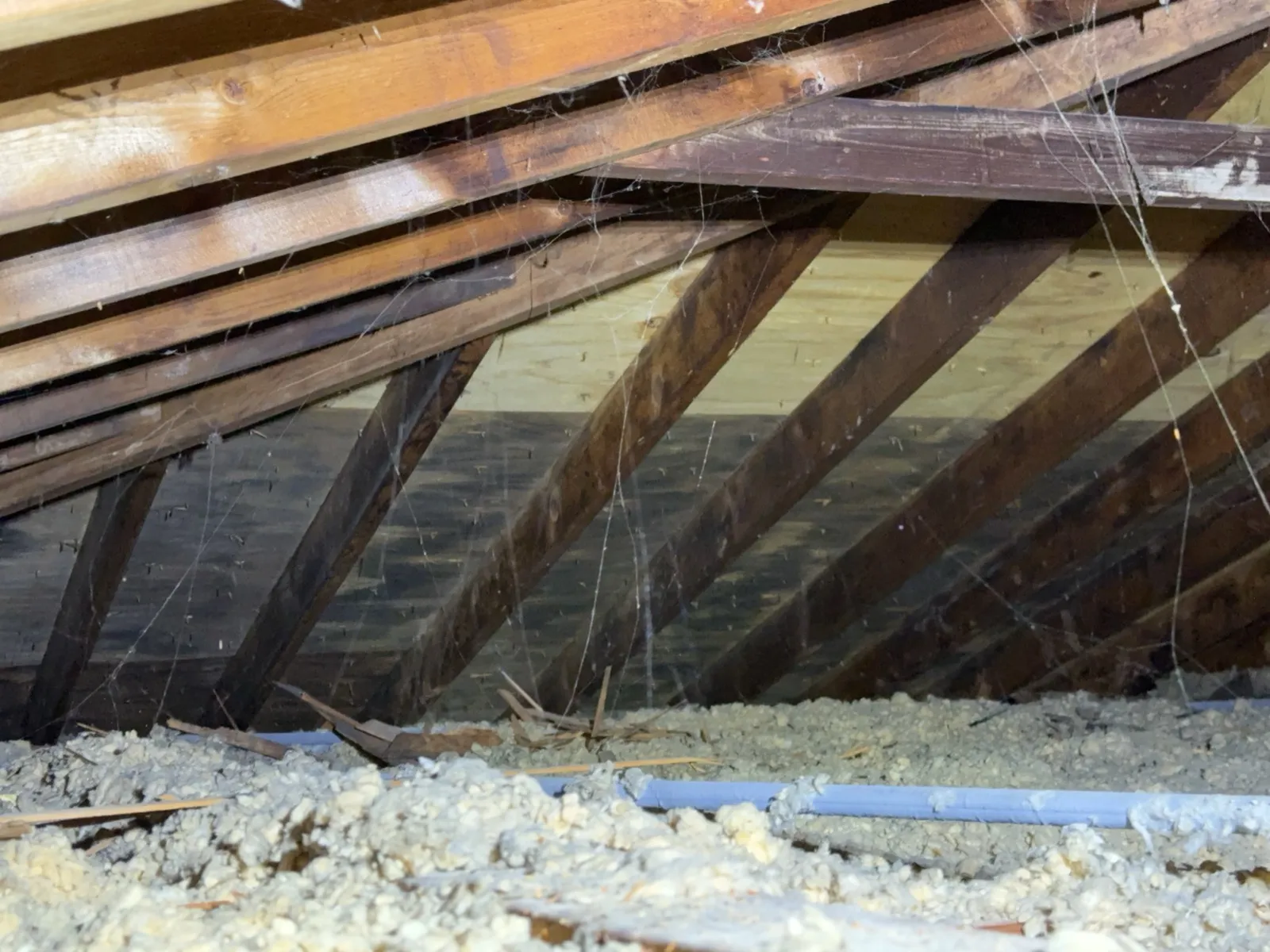
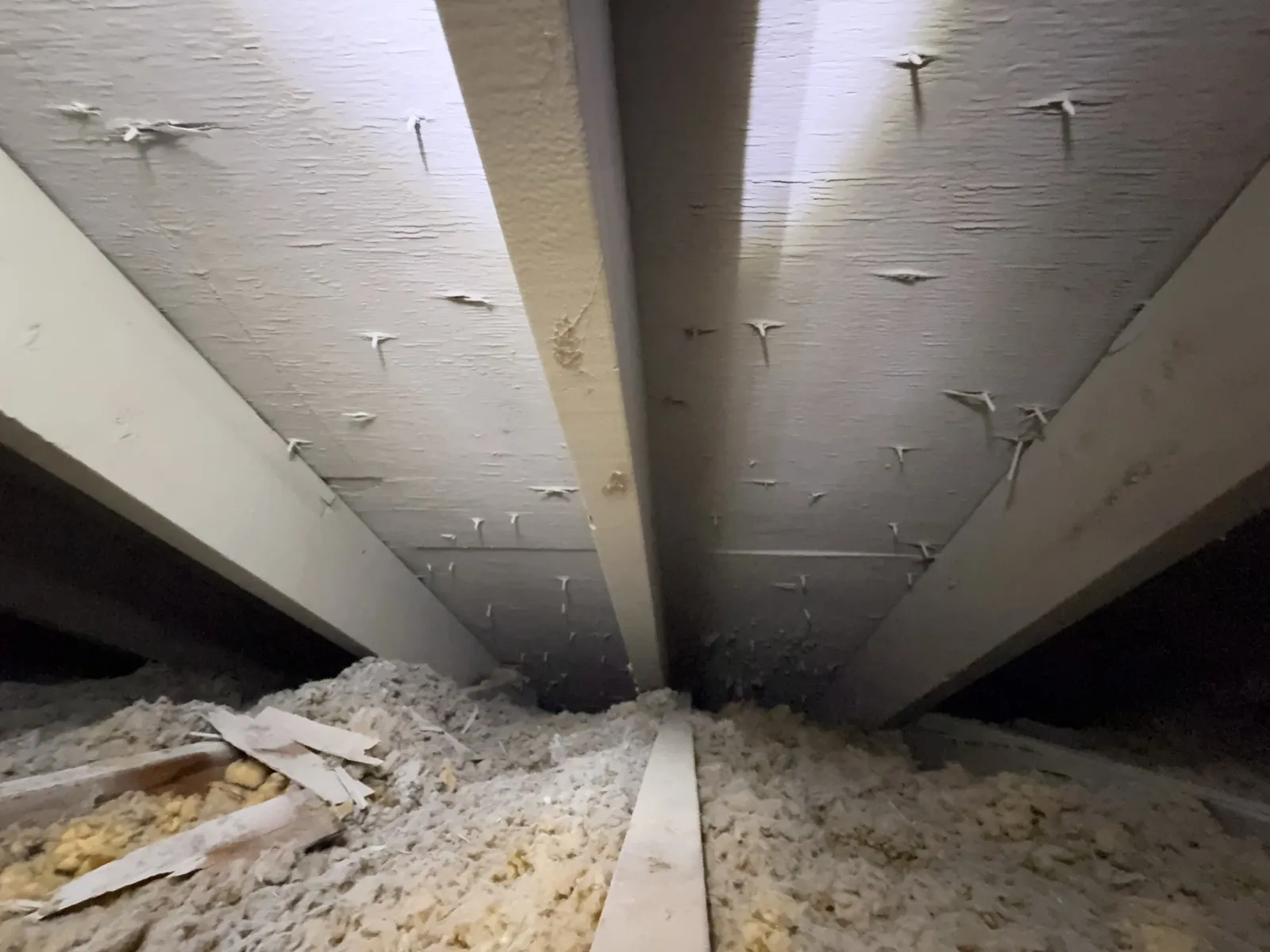
- Mold-like growth in the attic: corrected, with a question left open. The sheathing and framing were coated with what appears to be a paint-type product and no growth was visible. Whether an antimicrobial product was used could not be determined by looking, so we recommended asking for documentation of the product and the scope of work.
- Little or no cooling from one condenser: corrected. An adequate temperature difference was measured at the registers on that unit.
- Copper stub at the chimney: not a defect. On closer examination the tubing was resting loose on the vent and was not connected to it.
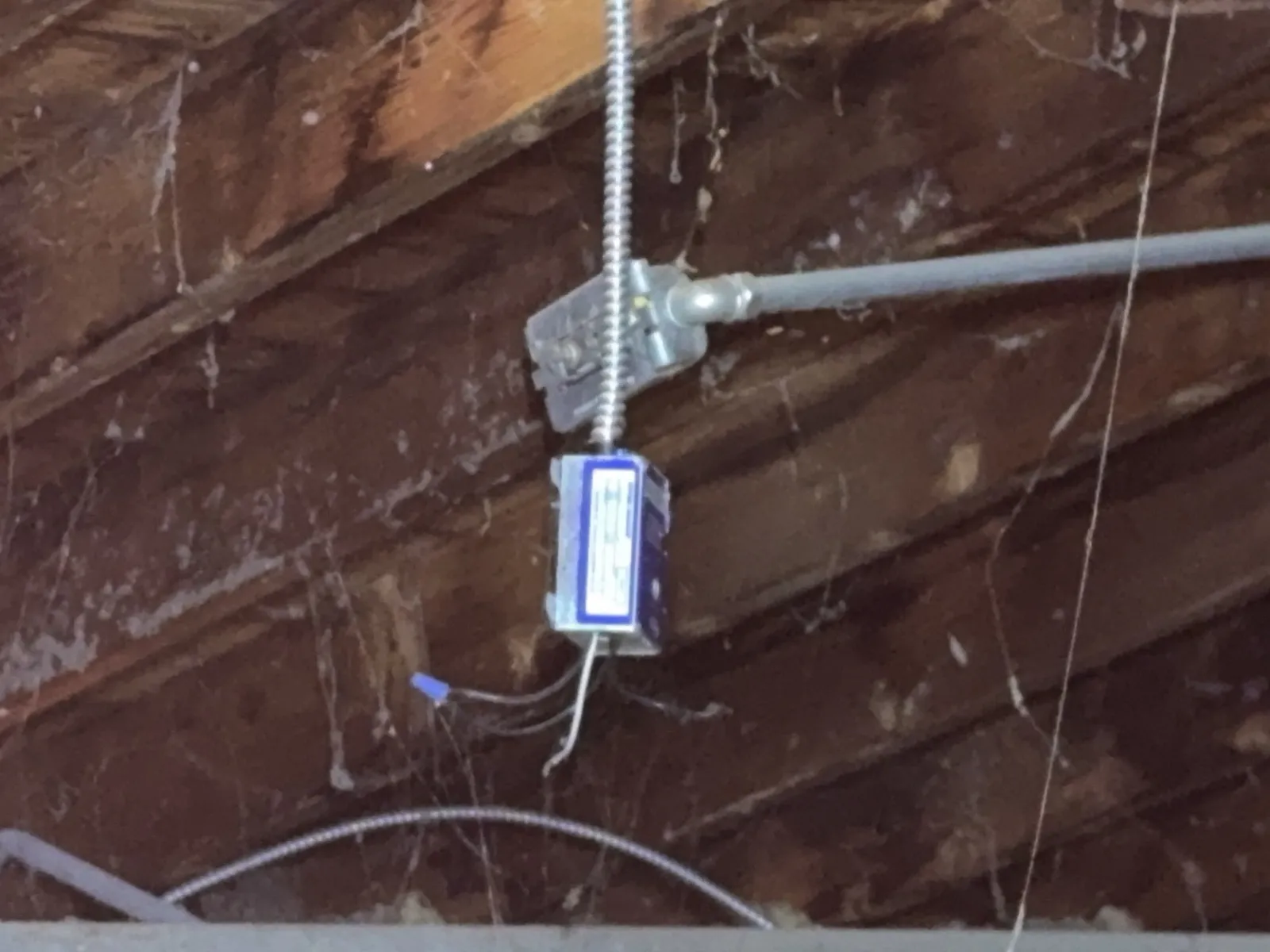
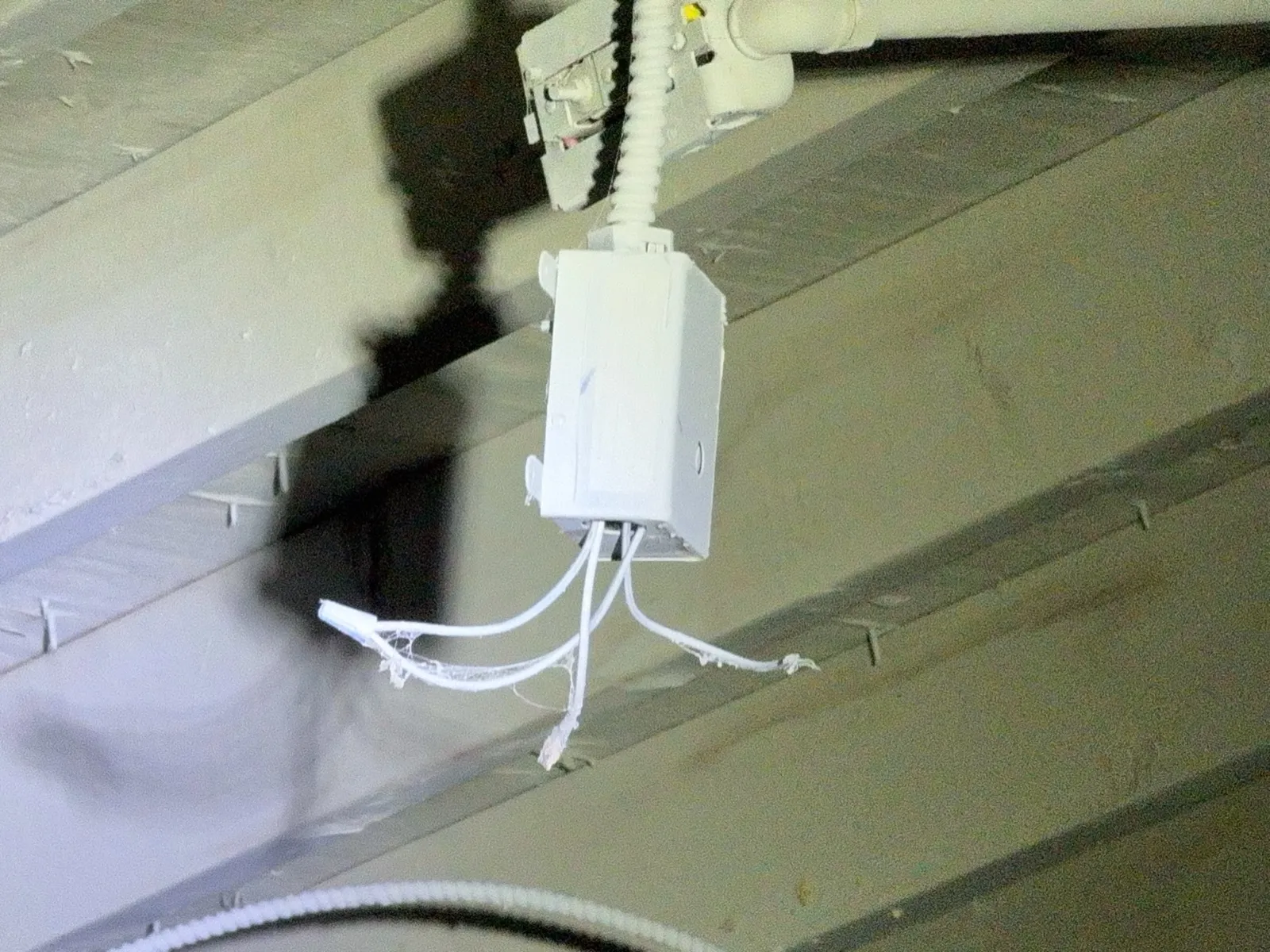
This is one visit, not a statistic. It is still a useful picture of what goes wrong: one leak that was still there, one defect that was painted over, and one where the work looked fine but nobody could say what was used. None of those would have been caught from an invoice alone. You can see more attic conditions like these in our attic inspection photo gallery.
Which Chicago contractor license lookup applies to your repair?
It depends on the trade, and in Illinois the answer comes from three different places: the City of Chicago, the state Department of Financial and Professional Regulation (IDFPR), and IEMA. Match each repair on your list to a row below.
| Repair | Who licenses it | Where to check |
|---|---|---|
| Roof repair or replacement | State of Illinois roofing contractor license, issued by IDFPR | IDFPR license lookup |
| Radon mitigation | IEMA license under the Radon Industry Licensing Act | IEMA licensed professionals list |
| Other construction, alteration or repair work in Chicago, with or without a permit, including HVAC | City of Chicago general contractor license | Chicago contractor license lookup |
| Electrical work in Chicago | City of Chicago electrical contractor license | Same Chicago lookup |
| Plumbing work in Chicago | City of Chicago plumbing contractor license | Same Chicago lookup |
| Sewer repair, rodding or cleaning in Chicago | City of Chicago drain layer contractor license, or a Chicago plumbing contractor license, which also covers drain layer work | Chicago lookup for plumbing contractors. It has no drain layer category, so confirm a drain layer license with the Department of Buildings |
| Plumbing work outside Chicago | Illinois Department of Public Health plumber license and plumbing contractor registration | IDPH plumbing licensing |
| General or electrical work outside Chicago | Set by the village or county | Call the village building department |
A few details worth knowing. Chicago requires a general contractor license for most building construction, alteration, repair and demolition work in the city, but city-licensed electrical, plumbing, mason and drain layer contractors working within their own license do not need a separate one. The city lists the trade licenses it issues and its lookup also shows recently expired or inactive licenses, which is exactly what you want to catch.
Roofers have a rule that makes checking easy: the Illinois Roofing Industry Licensing Act requires the license number and the licensee’s name, as they appear on the license, on every contract and bid. A roofing bid without a license number is the first red flag. Our post on storm chaser roofing scams covers the rest of the roofing side.
Radon mitigation in Illinois may only be performed for pay by someone licensed by IEMA, and roofers need the state license wherever the house is. Outside Chicago, plumbers are licensed and plumbing contractors registered by the Illinois Department of Public Health. General and electrical contractor licensing in the suburbs is set by each village or county, and the state’s own consumer pamphlet tells homeowners to check with local and county governments about permits and inspections.
What must an Illinois home repair contract include?
Illinois spells it out in the Home Repair and Remodeling Act. It covers single-family homes and buildings with six or fewer units, and it does not apply to maintenance, service or repairs under $500. For anything covered, check the paperwork against this list:
| Requirement | What the law says | Section |
|---|---|---|
| Written contract | For work over $1,000, a written contract or work order stating the total cost, parts and materials listed with reasonable particularity, any charge for an estimate, and the business name and address | 815 ILCS 513/15 |
| Consumer rights pamphlet | The contractor must give you “Home Repair: Know Your Consumer Rights.” Over $1,000, you both sign an acknowledgment form | 815 ILCS 513/20 |
| Insurance | Liability coverage of $100,000 per person and $300,000 per occurrence for bodily injury, and $50,000 per occurrence for property damage, unless the contractor has a net worth of at least $1,000,000 | 815 ILCS 513/25 |
| Roofing license number | On every roofing contract and bid | 225 ILCS 335/5 |
The required pamphlet also carries advice worth following on its own: get all estimates in writing, never sign a contract with blank spaces, do not make final payment until the work is done to your satisfaction, and before paying, ask for a signed and notarized Sworn Statement listing every subcontractor and supplier, because they can file a lien against the house if they are not paid. Lien waivers do the same job from the other side. Your attorney can tell you which of these matter for your deal.
How do you compare repair bids against the inspection report?
Compare scope first, price second. A low bid that fixes a different problem than the one in the report is not a bargain. Give every contractor the same report pages, then check each bid against these points:
- One line per finding. Each item you are asking about should appear on the bid in words you can match to the report. “Electrical repairs, $400” cannot be checked later.
- The cause, not just the symptom. Painting over loose conductors made them less visible. Terminating them in a closed box fixes them. The bid should describe the second.
- Materials named. For mold remediation, ask for the product and the scope in writing. That was the open question on our visit.
- A permit where one is needed. Ask whether the work needs a permit and who pulls it. In Chicago, issued permits since 2006 are searchable in the city’s building permits data, and the building department records search shows permits, inspections and violations by address. Our guide to checking a home’s permit history walks through it.
- License and insurance checked the same day. Look the license up yourself rather than trusting a number printed on the bid, and ask for the insurance certificate.
- At least two bids for anything large. The spread between them tells you how firm the number is.
Keep the request to the right items. On the Multi-Board 8.0 contract, minor repairs, routine maintenance and cosmetic items are not defects under the inspection contingency, and a request for credits or repairs outside its terms lets the seller declare the contract terminated. Bids for maintenance items belong in your own budget, not in the request. Our guide to what to do when the inspection finds problems explains how to sort them.
Should you ask for a repair or a credit?
The bids answer most of this. Who hires the contractor is the real difference between the two, and it is easy to miss while the deal is moving.
| Seller repairs before closing | Credit at closing | |
|---|---|---|
| Who picks the contractor | The seller | You, after closing |
| Who signs the contract | The seller | You |
| What you can check | Only the paperwork and the finished work | Everything above, before you sign |
| What to ask for in writing | Contractor name and license number, the contract or invoice, the permit number if one was required, and product documentation | A credit amount backed by the bids you collected |
A seller repair can work well, especially for safety items you want handled before you move in. Just put the documentation you expect into the repair request, so it is part of the deal rather than a favor. One contract detail: on the Multi-Board 8.0, the buyer does not send any part of the inspection report with the repair notice unless the seller or the seller’s attorney asks for it in writing, so the request has to describe each item on its own. Our guide to sorting the inspection findings, linked above, also covers when to walk away instead.
Why we do not recommend contractors
We do not refer repair contractors, and we never have. The inspector who finds a problem should not be the one steering who gets paid to fix it. That is why this post shows you how to check contractors yourself instead of giving you a list. Our reports name the type of professional to call, such as a licensed electrician or a qualified heating contractor, and leave the choice to you. The same logic applies to us: our guide to choosing a Chicago home inspector shows what to check before you hire one.
Who verifies repairs after a home inspection?
A repair verification visit is a separate visit after the seller says the work is done. We check the items on a written list agreed before the visit, and only what we can directly observe counts as verified. If documents are handed over, we log them as received; we do not authenticate them, and we do not give opinions on permits, code compliance or whether a contractor was licensed. That part is yours, which is the point of this post. The report goes out the next business day.
How we help
Our home inspection gives you a report written so a contractor can bid against it: each finding says what we saw, where, and what type of professional should look at it, with photos. When the repairs are done, a repair verification visit tells you what we could and could not confirm. If mold remediation is on your list, mold testing is a separate service we perform ourselves, including after remediation.
Sources
- Illinois Home Repair and Remodeling Act, 815 ILCS 513 (Sections 10, 15, 20, 25)
- Illinois Roofing Industry Licensing Act, 225 ILCS 335 (Section 5)
- Radon Industry Licensing Act, 420 ILCS 44/25
- City of Chicago: General Contractor License
- City of Chicago: Trade Licensing
- City of Chicago: Contractor License Lookup
- Chicago Data Portal: Building Permits
- State of Illinois: Radon Licensed Professionals List
- IDFPR License Lookup
- Illinois Department of Public Health: Plumbing Licensing (Illinois Plumbing License Law, 225 ILCS 320/3 and 13.1)
- Multi-Board Residential Real Estate Contract 8.0 (Paragraphs 13 and 15)
FAQ
How do I check a roofer’s license in Illinois?
Search the contractor’s name or license number in the IDFPR license lookup. Illinois law requires the license number and name to appear on every roofing contract and bid, so compare what is printed on the bid with what the lookup shows.
Does a contractor need a license to work in Chicago?
For most paid repair work, yes. Chicago requires a general contractor license for construction, alteration, repair and demolition work, including work that is exempt from a building permit, unless the contractor holds a city electrical, plumbing, mason or drain layer license for that work or is working under a licensed general contractor. The city’s contractor lookup shows current and recently expired licenses.
What is a Sworn Statement from a contractor?
A signed, notarized list of every subcontractor and supplier on the job, what each is being paid, and what is still owed. The Illinois consumer rights pamphlet tells homeowners to ask for one before paying, because unpaid subcontractors and suppliers can file a lien against the house.
Can I get repair bids before the attorney review period ends?
Yes, and start the day the report arrives, because the bids shape your repair request. On the Multi-Board 8.0 contract, notice of the major-component defects you want the seller to resolve is due within five business days after the Date of Acceptance, the same five days as attorney review. If there is no written agreement ten business days after acceptance, either side can terminate. Five business days is tight for two bids, so book contractor visits through the agents right away and get your attorney what you have before the notice deadline. If your contract is a different form, ask your attorney for the dates.