
Buying a home in Chicago can feel overwhelming when your inspection report lists a dozen repair items with no price tags attached. You know the roof needs work and the furnace is aging, but what will it actually cost to fix? Without accurate repair estimates, you risk overpaying, underbudgeting, or losing negotiating power with sellers. This guide walks you through a practical, data-backed method to estimate repair costs after a home inspection in Chicago, helping you make informed decisions and negotiate confidently in 2026’s competitive market.
Table of Contents
- Preparing To Estimate Repair Costs After A Home Inspection
- Step-By-Step Method For Estimating Repair Costs
- Common Challenges And How To Avoid Costly Mistakes
- Verifying And Using Your Repair Cost Estimates
- Let Chicago Home Inspect LLC Help You Estimate Repair Costs Accurately
- How To Estimate Repair Costs After A Home Inspection – FAQs
Key takeaways
| Point | Details |
|---|---|
| Prioritize safety first | Address structural and safety issues before cosmetic repairs to protect your investment |
| Use Chicago-adjusted ranges | Labor rates of $50-$125/hr and permit fees of $2,000-$5,000 increase costs beyond national averages |
| Get multiple contractor quotes | Obtain 2-3 bids for major repairs to verify accuracy and avoid surprises |
| Add contingency buffer | Include 10-20% extra for hidden issues common in older Chicago homes |
| Leverage estimates strategically | Use detailed cost breakdowns to negotiate seller credits of 30-50% in competitive markets |
Preparing to estimate repair costs after a home inspection
Before you can estimate anything accurately, you need the right foundation. Start by obtaining your complete home inspection report and reading it thoroughly. Don’t just skim the summary page. Every detail matters when you’re building a cost estimate that could influence thousands of dollars in negotiations.
Next, categorize each repair item by urgency. Safety and structural issues like foundation cracks, electrical hazards, or roof leaks demand immediate attention. Major systems such as HVAC, plumbing, and water heaters come second. Cosmetic items like chipped paint or worn carpeting rank last. This hierarchy helps you focus resources where they matter most and prioritize common Chicago home inspection issues effectively.
Chicago presents unique challenges that inflate repair costs beyond national averages. Labor rates range from $50 to $125 per hour, significantly higher than smaller markets. Permit fees for major work can hit $2,000 to $5,000. Older Chicago bungalows and two-flats face freeze-thaw foundation damage, lead pipes requiring replacement, and strict building codes that add compliance costs. Understanding these local factors prevents sticker shock later.
Gather baseline cost ranges for common repairs using reliable sources. National averages provide a starting point, but multiply them by 1.2 to 1.5 for Chicago’s market conditions. Create a spreadsheet listing each repair item with low, mid, and high cost estimates. For major repairs exceeding $3,000, plan to get contractor quotes from licensed, insured contractors rather than relying solely on averages.
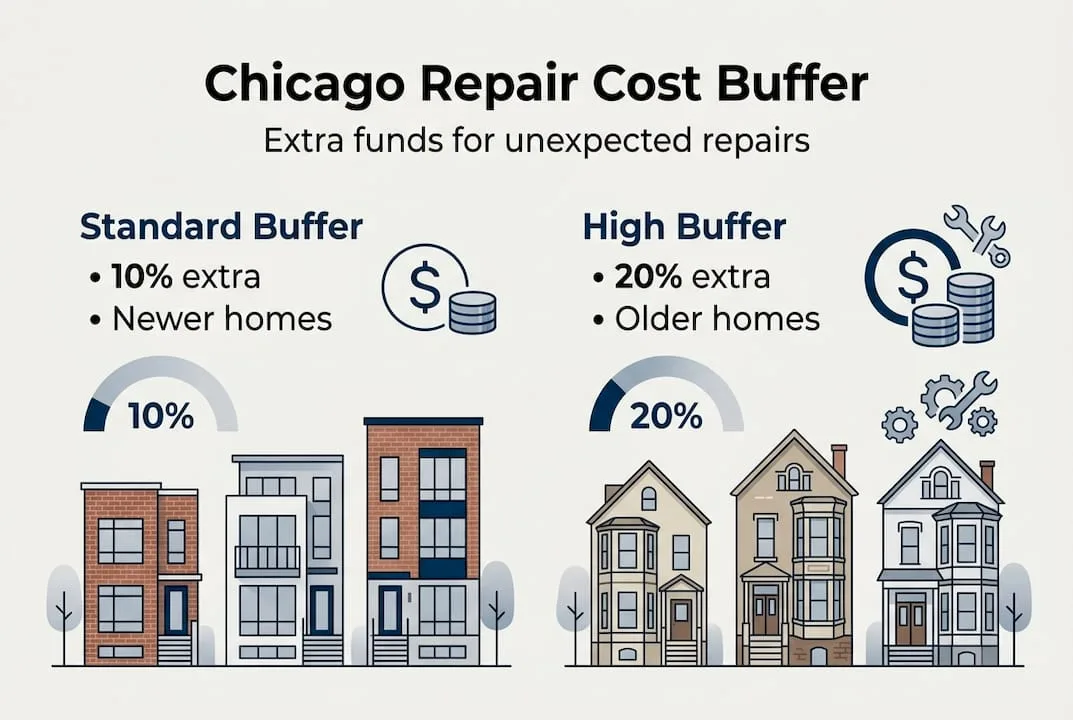
Pro Tip: Always add a 10-20% contingency buffer to your total estimate. Older homes hide surprises like outdated wiring behind walls or storm damage that reveals itself during repairs. This cushion protects your budget from unexpected expenses.
Finally, review inspection reports and categorize items systematically. Use cost tables as guides, gather contractor quotes for big-ticket items, and build in contingency funds. This preparation transforms vague worry into actionable numbers you can use to negotiate and budget with confidence.
Step-by-step method for estimating repair costs
Now that you’ve prepared your materials and understand Chicago’s cost landscape, follow this systematic approach to generate accurate estimates. Start by creating a master list of every repair item mentioned in your inspection report. Include page references so you can quickly locate details later.
Prioritize your list using the urgency categories you established earlier. Safety and structural repairs go at the top because they’re non-negotiable and often required by lenders. Systems repairs follow, then cosmetic updates. This ordering helps you allocate your budget strategically and identify which items to emphasize in seller negotiations.
Use a cost range table with Chicago-specific benchmarks to estimate each item. Here are typical ranges for common repairs in the Chicago market:
| Repair Type | Low Estimate | High Estimate | Notes |
|---|---|---|---|
| Roof replacement (1,500 sq ft) | $8,000 | $15,000 | Varies by material and pitch |
| HVAC system replacement | $4,500 | $9,000 | Higher for multi-zone systems |
| Foundation crack repair | $2,000 | $8,000 | Depends on severity and method |
| Electrical panel upgrade | $1,500 | $3,500 | Required for older 100-amp panels |
| Plumbing repiping (partial) | $3,000 | $10,000 | Lead pipe replacement costs more |
| Water heater replacement | $1,200 | $2,800 | Tankless units cost 50% more |
For major repairs exceeding $3,000, obtain at least 2-3 contractor quotes to ensure accuracy. Contractors account for site-specific factors like access difficulty, material availability, and permit requirements that generic tables miss. Request itemized bids so you can compare apples to apples.

Calculate your total estimate by adding the midpoint of each cost range plus any contractor estimates you’ve received. Then multiply this subtotal by 1.15 to include a 15% contingency for hidden issues and cost overruns. This realistic buffer prevents budget shortfalls that could derail your purchase.
Bundle your total estimate into categories for negotiation purposes: critical safety repairs, major systems, and cosmetic improvements. Sellers respond better to organized requests than a scattered list of demands. Present your findings professionally with supporting documentation from your inspection report and contractor quotes.
Pro Tip: Keep detailed notes throughout this process, including dates of quotes, contractor names, and assumptions you made. This documentation proves invaluable during negotiations and helps you track actual costs against estimates after closing.
Understanding typical Chicago home inspection costs and repair benchmarks gives you confidence when discussing numbers with sellers and lenders. Your systematic approach demonstrates you’ve done your homework, strengthening your negotiating position.
Common challenges and how to avoid costly mistakes
Even with careful preparation, several pitfalls can derail your cost estimation process. Recognizing these challenges early helps you sidestep expensive mistakes that could haunt you after closing.
First, understand that home inspectors deliberately avoid providing cost estimates. They identify problems and describe conditions, but estimating repair costs creates liability they won’t accept. Never expect your inspector to tell you what fixes will cost. Instead, use their findings as a roadmap to gather your own estimates from qualified contractors and cost databases.
Hidden issues pose another major challenge, especially in Chicago’s older housing stock. A small water stain might hide extensive mold growth behind walls. Galvanized pipes visible in the basement could indicate lead service lines underground. Foundation cracks you can see often connect to structural problems you can’t. These surprises emerge after you start repairs, blowing through initial budgets. The contingency buffer you built earlier protects against these scenarios.
Chicago’s higher labor and permit costs catch many buyers off guard. A roof replacement that costs $6,000 in a rural market might hit $12,000 in Chicago due to higher labor rates, strict permitting, and challenging access in densely built neighborhoods. Always adjust national cost averages upward by 20-50% for Chicago projects, and verify assumptions with local contractors who understand the market.
Negotiating seller credits requires realistic expectations calibrated to market conditions. In a hot seller’s market, you might recover only 30-50% of estimated repair costs through credits or price reductions. In a buyer’s market, sellers may cover 80-100% to close the deal. Pushing too hard in the wrong market conditions risks losing the property entirely. Research recent comparable sales and consult your agent about current negotiating norms.
Avoid these common mistakes:
- Relying solely on online cost calculators without getting local contractor quotes
- Underestimating permit and inspection fees required by Chicago’s building department
- Forgetting to factor in disposal costs for materials like old roofing or lead pipes
- Assuming you can DIY complex repairs to save money, then discovering code violations
- Skipping the contingency buffer because estimates seem conservative
Pro Tip: When dealing with challenges in older Chicago homes, budget an extra 25% beyond your contingency for properties built before 1950. These homes often reveal layered problems once work begins.
Document everything meticulously. Save all contractor quotes, email exchanges, and calculation spreadsheets. This paper trail proves essential when handling inspection problems and negotiating with sellers who might question your numbers. Transparency and supporting evidence strengthen your position and build trust during what can become contentious discussions.
Verifying and using your repair cost estimates
Once you’ve generated initial estimates, verification ensures your numbers hold up under scrutiny. This step separates rough guesses from reliable figures you can stake your negotiating strategy on.
Request detailed, itemized bids from at least three licensed contractors for any repair exceeding $5,000. Specify that you need written quotes, not verbal ballpark figures. Compare these bids line by line, noting differences in scope, materials, timeline, and warranty terms. The lowest bid isn’t always best if it cuts corners on quality or omits necessary permits.
Adjust your estimates based on contractor feedback about site-specific factors. A foundation repair company might identify drainage issues your inspector mentioned only briefly, adding waterproofing costs to the total. An electrician could flag aluminum wiring requiring complete replacement rather than simple repairs. These professional insights refine your numbers from theoretical to actionable.
Use this comparison framework to evaluate negotiation strategies:
| Strategy | Best For | Typical Outcome | Considerations |
|---|---|---|---|
| Request repairs | Minor items under $2,000 | Seller completes work before closing | Quality control issues, delays |
| Ask for credits | Major repairs over $5,000 | Cash back at closing to hire your own contractors | Better quality control, choose contractors |
| Price reduction | Multiple big-ticket items | Lower purchase price, affects loan amount | Reduces equity, may impact financing |
| As-is with concessions | Investor buyers, strong market | Faster closing, negotiated discount | Assumes all repair risk and costs |
Integrate verified repair estimates into your overall home buying budget. Add repair costs to your down payment, closing costs, and moving expenses to see the complete financial picture. If repairs push your total outlay beyond comfortable limits, you might need to negotiate harder, choose a different property, or adjust your offer price.
Leverage your detailed estimates during negotiations by presenting them professionally. Create a summary document showing each repair category, the estimated cost range, supporting contractor quotes, and your requested seller credit. Sellers in competitive markets typically credit 30-50% of estimated costs, while buyer’s markets may yield 80-100%. Frame your request as fair and data-driven rather than emotional or demanding.
Understand how market conditions affect negotiation outcomes. In a seller’s market with multiple offers, requesting $15,000 in credits for deferred maintenance might prompt the seller to accept a competing offer instead. In a buyer’s market where properties sit for months, the same request could succeed completely. Your real estate agent provides crucial guidance on calibrating requests to current conditions.
Pro Tip: When evaluating seller repairs, always verify completed work with your own inspector before closing. Sellers motivated to close quickly sometimes hire the cheapest contractors who produce substandard results that create new problems.
Finally, keep your verified estimates even after closing. They serve as a roadmap for tackling repairs in priority order and help you budget for ongoing maintenance. Many buyers discover that living in the home reveals additional issues, and having baseline cost data accelerates decision making when new problems emerge.
Let Chicago Home Inspect LLC help you estimate repair costs accurately
Accurate repair cost estimation starts with a thorough, professional inspection that documents every issue in detail. Chicago Home Inspect LLC provides comprehensive inspection services specifically tailored for Chicago area homes, giving you the detailed information you need to estimate costs confidently.
Our InterNACHI certified inspectors understand the unique challenges of Chicago properties, from freeze-thaw foundation damage to aging plumbing systems common in older neighborhoods. We deliver detailed reports with clear descriptions and high-quality photos that contractors can use to provide accurate quotes. Browse our sample inspection reports to see the level of detail we provide, or view our interior inspection photo gallery to understand how visual documentation supports cost estimation.
Whether you need a buyer pre-purchase inspection, seller pre-listing inspection, or specialized testing for mold and radon, our licensed and insured team delivers the comprehensive documentation that simplifies repair cost estimation and strengthens your negotiating position. Schedule your Chicago home inspection today and gain the detailed insights you need to make informed decisions with confidence.
How to estimate repair costs after a home inspection – FAQs
How accurate are repair cost estimates after a home inspection?
Estimates based on contractor quotes and local cost data typically fall within 15-20% of actual costs for straightforward repairs. Hidden issues like concealed water damage or outdated wiring can increase final costs by 25-50%, which is why building a contingency buffer into your budget proves essential. The more contractor quotes you obtain and the more detailed your inspection report, the more accurate your estimates become.
What unique Chicago factors affect repair costs?
Chicago’s higher labor rates of $50-$125 per hour, strict building codes, and permit fees of $2,000-$5,000 significantly increase repair costs compared to national averages. Older homes face additional expenses from freeze-thaw foundation damage, lead pipe replacement requirements, and compliance upgrades for electrical and plumbing systems. Dense urban neighborhoods also create access challenges that increase labor time and costs.
Should I get contractor quotes before making an offer?
For properties with obvious major issues visible during showings, getting preliminary quotes before offering helps you make informed decisions. However, most buyers obtain quotes during the inspection contingency period after their offer is accepted. This timing gives you access to the property for contractor walk-throughs while preserving your ability to negotiate or withdraw if costs exceed expectations. Balance speed against accuracy based on market competition.
How much contingency should I add to estimated repairs?
Add 10-20% contingency for newer homes with straightforward repairs, and 20-30% for older Chicago properties built before 1978. Homes showing signs of deferred maintenance or common Chicago inspection issues like foundation settling or outdated systems warrant higher contingency buffers. This cushion protects your budget when contractors discover hidden problems once work begins, which happens frequently in older urban housing stock.
Can I negotiate repair costs with sellers based on estimates?
Yes, but success depends on market conditions and how you present your case. Provide detailed estimates with supporting contractor quotes and inspection report excerpts to demonstrate legitimacy. In balanced markets, sellers typically credit 30-50% of estimated major repairs, while buyer’s markets may yield 80-100% coverage. Present requests professionally and remain flexible about whether you receive repairs, credits, or price reductions to increase the likelihood of reaching agreement.