

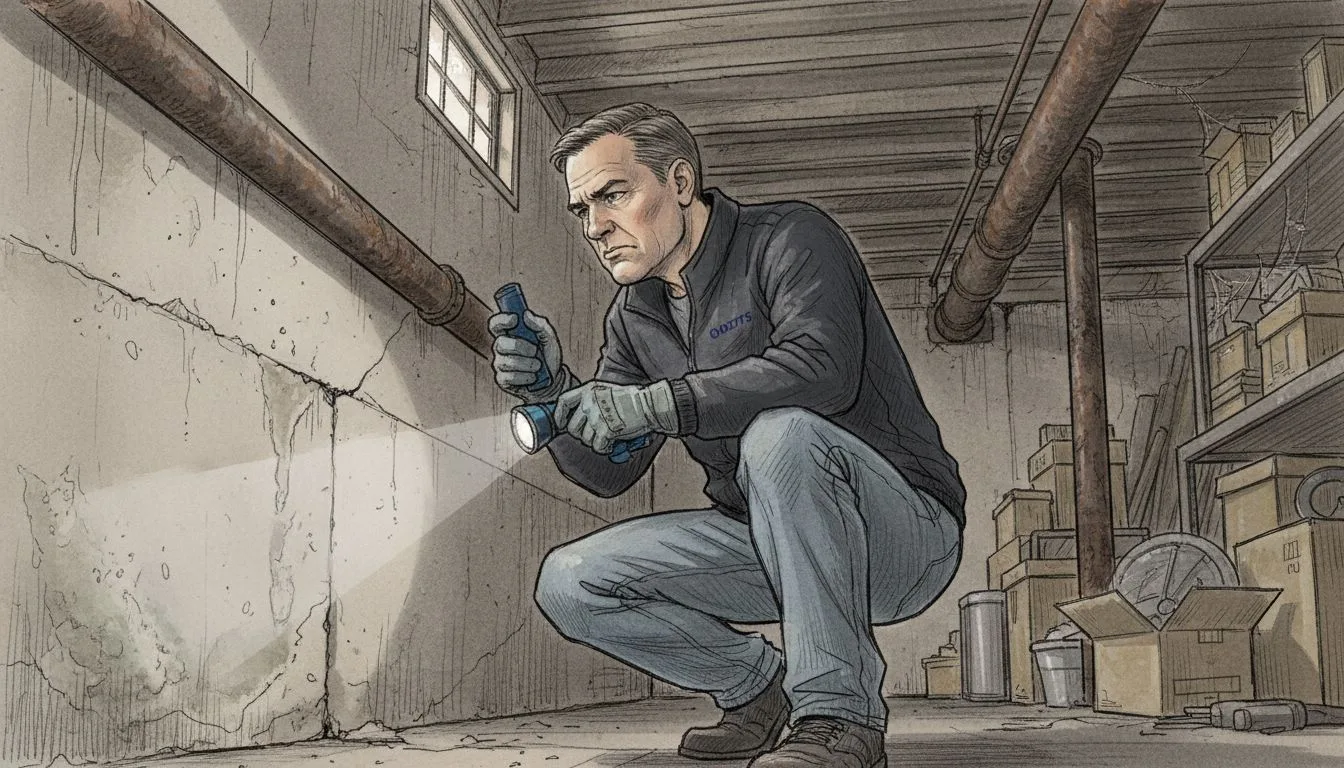
TL;DR: Most of what turns up in a Chicago inspection is age, not danger, and the report should help you tell the two apart. The findings that should actually change your decision are a short list: gas leaks, open electrical splices, combustion vents that can spill carbon monoxide, missing alarms, low guardrails, and water that has already found a way in.
Generic “red flags” lists do not help when you are under contract with five business days to decide. This is what we keep writing in real reports on Chicago two-flats, bungalows, brick condos and suburban ranches, grouped by how much each one should matter, with what to ask for when it shows up in yours.
Is this a defect, or is it just an old house?
An Illinois home inspection is performed to 68 Ill. Adm. Code 1410, Subpart C. It reports the condition of the house on the day we are there. It is not a code inspection, and Chicago does not require an existing house to be brought up to today’s code when it is sold.
So a 1920s bungalow with two-slot receptacles, a 100-amp service and no GFCI in the bathroom is not “full of violations.” Those are code-era differences: we report them and say which are worth upgrading, but they are not defects. In Chicago the metal conduit is the equipment ground, so we do not call older cloth-insulated wiring “ungrounded” either.
A defect is something installed wrong, failed, or hazardous today regardless of when the house was built. A gas joint sealed with the wrong tape is a defect in a 1900 house and a 2024 house. That is the list below.
Which safety findings do we call major?
Gas leaks at the appliance
We carry a combustible gas detector and run it over every accessible gas connection: the range flex connector, the drip legs at the furnace and water heater, the meter. On a North Side two-flat in July 2026 it went off at the range flex connector in the front unit, then again in the rear unit. Neither leak was strong enough to smell from the doorway; both went in the report as major concerns. On a suburban house the same summer it responded at the water heater and the meter, which usually means one utility leak check of the whole system rather than two point repairs.
Two related findings show up constantly: white plumber’s PTFE tape on gas threads instead of yellow gas-rated tape or pipe dope, and gas piping run through the sheet-metal furnace cabinet with no bushing at the penetration.
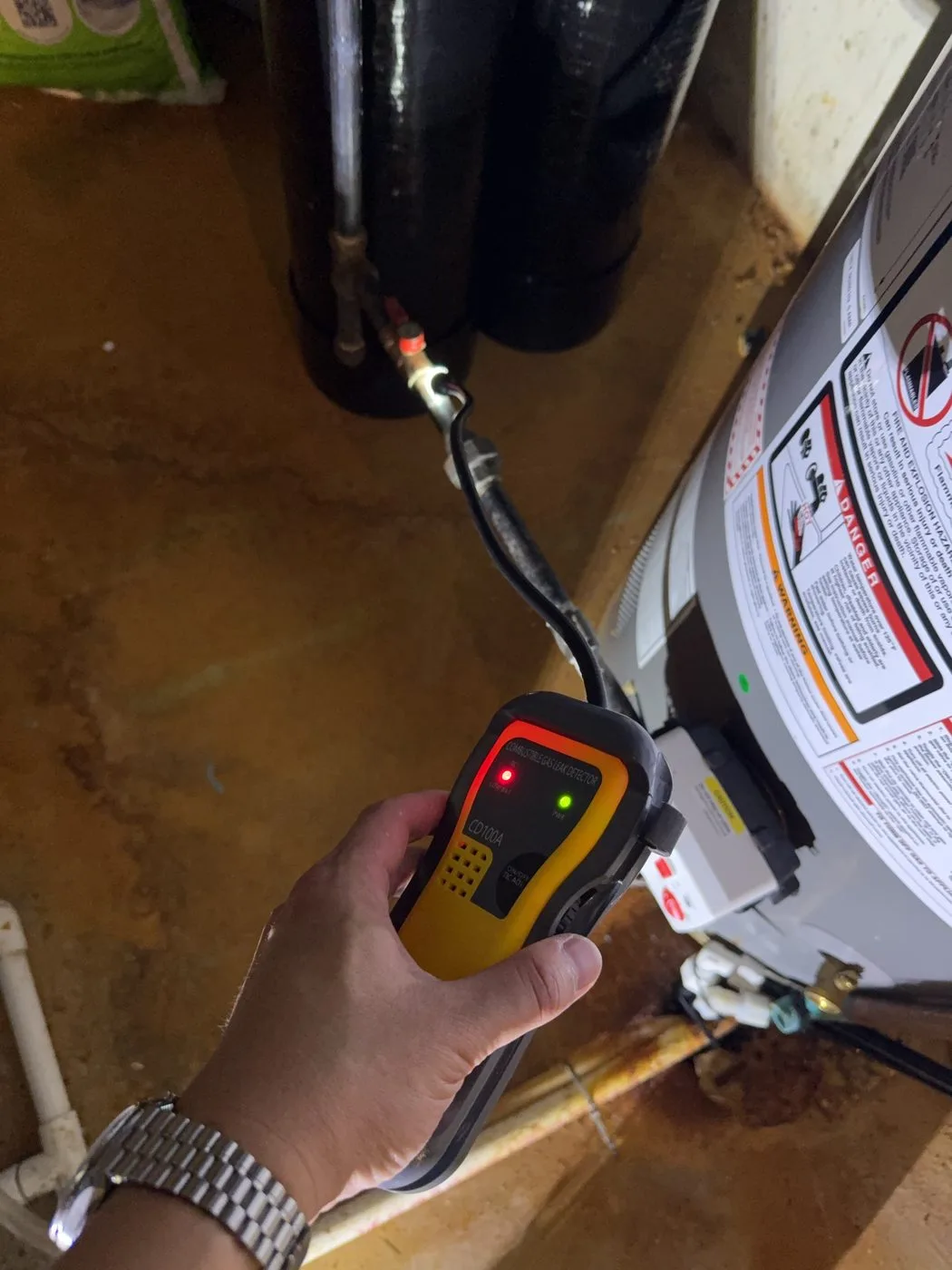
What to ask for: repair before closing by a licensed plumber, or a leak check by the utility, with the invoice in hand at the walk-through. A credit is the wrong tool for a gas leak.
The anti-tip bracket almost no range has
Every free-standing range ships with a bracket that stops it tipping when weight lands on the open oven door. We pull on the range to check, and most of the time it is not there. Same two-flat: missing in both units. A five-minute fix for the repair request, not a reason to walk.
Electrical findings that matter
- Open splices. Wires twisted together with no junction box or cover. We found them under a kitchen sink feeding the disposal on that same two-flat. Arcing next to a supply line is a fire and shock path.
- A panel that does not serve who you think. The two-flat had a panel hand-labelled “Public” whose directory listed bedroom, kitchen and laundry circuits. Either the label is wrong or a unit is fed off the common meter. Ask who pays that bill, in writing, before closing.
- A panel in a clothes closet. Chicago’s own electrical code, Title 14E, keeps the no-panel-in-a-clothes-closet rule at 14E-2-240. We still find them there, mostly in 1970s and 1980s condos.
- Open hot on a tester, loose receptacles, an extension cord as permanent wiring, rust and drip trails inside the panel. Each is a repair item; together they say nobody has looked at this system in a long time.
- Kitchen counters with no GFCI protection. A code-era item in a 1960s kitchen, a defect in one renovated in 2020 that skipped it. Why the GFCI matters.
If your report names knob-and-tube or aluminum wiring, talk to your insurer; electrical red flags in older Chicago homes covers both.
What to ask for: a licensed electrician to repair open splices, open hots and any panel finding before closing. For the rest, a credit is fine; you will want your own electrician anyway.
Furnace and water heater vents that can spill carbon monoxide
A natural-draft furnace or water heater relies on a vent connector that rises continuously, is screwed together, and ends in a chimney or common vent that draws. When any of that is off, exhaust can spill into the room. Recent reports:
- Rust staining in the burner compartment and on the vent connector from condensation draining back into the cabinet. It shows the first week the heat runs each fall.
- Connector joints held with fewer than three screws, or none, so a joint can separate.
- Foil duct tape on a water heater vent joint. One we read carried a UL 181B-FX listing, a duct closure tape, not a vent seal.
- A connector running dead level, or a water heater connector entering the common vent at or below the furnace connector. Both fight the draft.
- A power-vent tankless heater joining the same riser as a natural-draft furnace. A positive-pressure appliance cannot share a vent with a natural-draft one.
Not a defect: a single-pipe, high-efficiency furnace in a closet with louvered doors. The louvers are the combustion air.
What to ask for: an HVAC contractor to evaluate and correct before closing. These are small repairs, but the failure mode is carbon monoxide in a bedroom, so they do not go in the credit pile. If the furnace is also at end of life, read how we judge furnace and AC age first.
Missing smoke and carbon monoxide alarms
This is statutory. The Smoke Detector Act (425 ILCS 60/3) requires a working smoke detector within 15 feet of every sleeping room and on every story including the basement, with battery-only units using a sealed, non-removable long-term battery, the ten-year type. The Carbon Monoxide Alarm Detector Act (430 ILCS 135/10) requires a CO alarm within 15 feet of every sleeping room.
What we find: a River North condo in September 2026 with no alarms at all, including the room with the gas fireplace. A 1981 suburban condo whose only alarm was painted over until the paint bridged the sensing openings. A combination alarm sitting loose on a ledge behind a water heater, never mounted. Alarms that did not respond to the button.
What to ask for: list them if you like, but buy the alarms and install them the day you get the keys whatever the seller says.
Guardrails at 42 inches, and windows without limiters
Chicago’s guardrail height for porches, balconies and multi-family stairs is 42 inches, not the 36 in national articles that quote the IRC. We measure every one and grab it: a rail that wobbles on an elevated deck is a fall hazard at any height, and balusters more than four inches apart are a fall-through hazard for small children.
Windows are the one nobody thinks about. In September 2026 we wrote up a unit whose sills sat low to the floor with openings more than 72 inches above grade and no opening limiting device. The fix is a limiter that stops the sash at four inches and releases for egress.
What to ask for: a credit is reasonable for guardrail height on an otherwise sound porch. Wobbly rails and window limiters go on the repair list.
Which water findings should worry me?
Water findings split into water being invited in, which is cheap to fix and easy to negotiate, and water that has already arrived, which needs a source before you can price it.
Water being invited in
- Grading and downspouts. Soil sloping toward the foundation, downspouts ending at the wall or onto a lower roof. On one 1999 house the active ceiling stain upstairs traced to exactly that plus a missing kick-out flashing.
- The sump. An unsealed sump cover and an open slab penetration are soil-gas and odor paths. A 1900 house with a rubble foundation, a cracked slab and no sump at all is a different conversation. What a sump pump failure costs covers the pump itself.
- Backwater valve and the sewer lateral. Chicago’s combined sewers surcharge in heavy rain and the floor drain is the lowest opening in the house; a backwater valve on the building drain is the defense. The lateral needs a camera, which we refer to a sewer scope partner. When a sewer scope is worth it explains when to order one.
- Braided supply lines past five years. The braided hoses at faucets, toilets and the dishwasher are the usual source of the flood that ruins the unit below. We recommend replacement at five years; a dishwasher line leak in a 1981 condo was exactly that.
- No leak alarm at the furnace or laundry, no water heater drip pan, a T&P valve with no discharge pipe. All cheap, all recurring in condo reports, all things the downstairs neighbor cares about.
- A condo with no water shutoff in the unit. River North, September 2026: the main shutoff was not inside the unit. Ask building management where it is and who has access, in writing, before closing.
Water that has already arrived
A stain is a question, not an answer, and the report should name the likely path. Staining at a top-floor bath fan is usually duct condensation in the cold roof cavity, sometimes a roof penetration leak; the fixes differ. A bulged ceiling under a flat roof that ponds more than 48 hours after rain is the roof, not the plumbing. A soldered copper fitting with mineral crust around it has been leaking a while. Staining consistent with microbial growth on a sink cabinet base means moisture, and we sample it in-house if you want the growth identified. Signs of moisture intrusion goes deeper.
Your nose is a tool too. A rotten-egg smell near a gas appliance is the odorant in natural gas, and we confirm it with the detector. A sewer smell at a floor drain is usually a dry trap; at a fixture it points to a failed trap or vent. Musty in a basement means moisture, and we go looking with a meter.
What to ask for: grading, downspouts, supply lines and alarms are credit items. An active leak or a stain with an unknown source needs further evaluation by the right trade before you agree on a number, because the number is the source, not the stain. Old galvanized supply piping is a budget item; in a condo, ask which side of the association’s line it falls on.
Is this crack a structural problem?
Chicago is a brick city, so most “structural” questions we get are really masonry questions.
Tuckpointing. Receded or washed-out mortar joints let water into the wall, and freeze-thaw does the rest. Stair-step cracking along the joints of a 1907 brick building is the usual picture. Maintenance, not failure, unless bricks are loose or the wall is displaced. Ask for a credit and get masonry bids.
Steel lintels. The steel angle over every window and door in a brick wall rusts, and rust expands, lifting the courses above the opening and cracking the corners. A rust-jacked lintel is a repair; one that has sagged is a structural repair. Ask for evaluation by a mason.
Foundation cracks that matter. A horizontal crack in a poured or block wall, a wall that bows when you sight along it, a crack where one side sits proud of the other, a stair-step crack in block with displacement. Width matters less than displacement and direction. These get a licensed structural engineer before you agree on any credit, because the repair range is wide.
Foundation cracks that usually do not. Vertical or slightly diagonal hairline cracks in poured concrete are shrinkage. Cracks with old paint or dust in them have not moved in years. A cracked slab is a soil-gas and moisture finding, not a structural one. A 1900 rubble foundation is supposed to look rough.
Nor will we call a deck deficient on sight: 4×4 posts and treated lumber on soil are not defects, while a rotted ledger and loose rails are. Inspecting older Chicago homes has more on what age does and does not mean.
What looks scary but usually is not?
These make buyers nervous and rarely change the decision. We report them, watch-list them, and tell you to budget.
- Old but running equipment. A 1979 electric furnace still heating a condo, a 1986 R-22 condenser, a 2008 water heater. Past service life is a budget line, not a defect; the R-22 unit becomes a repair-or-replace call the first time it needs refrigerant.
- An appliance package of one vintage. Range, microwave, fridge, washer and dryer all from 2009 and 2010. Budget it as one replacement cycle, not five surprises.
- Efflorescence. The white powder on basement block is mineral left by water that evaporated. It says water has moved through the wall; it is not damage.
- Hairline slab cracks and squeaky floors. Concrete shrinks, wood dries. Neither is movement.
- Fuses, two-slot receptacles, a recirculating range hood. A fuse panel is not a defect; oversized fuses are. Two-slot receptacles on conduit have a ground already present. A recirculating hood over a gas range is worth knowing about, not a defect.
Radon is in neither list because it is invisible on a walkthrough; a 1954 basement with an open slab penetration and an unsealed sump has two entry paths, and only a test answers it. We do radon measurement and mold sampling in-house on the same visit.
What should I ask the seller for?
Three tools, and the finding decides which. Repair before closing is for anything you need done right and now, with an invoice. A credit is for anything you would rather hire your own contractor for. Further evaluation is for anything where the price depends on a source or scope you do not have yet, and it belongs inside your contingency window.
| Finding | How we tag it | What to ask for |
|---|---|---|
| Gas detector response at any joint | Major concern | Repair before closing; plumber or utility check |
| Open splice, open hot, panel finding | Major concern | Repair before closing, licensed electrician |
| Vent connector rust, missing screws, wrong tape, no rise | Major concern | Repair before closing; HVAC contractor |
| Missing or dead smoke and CO alarms | Statutory | Install yourself on day one |
| Guardrail under 42 inches, wobbly rail, no window limiter | Safety | Credit for height; repair for wobble and limiters |
| Grading, downspouts, supply lines, leak alarms | Repair or replace | Credit |
| Active leak or stain with unknown source | Evaluation needed | Trade evaluation first, then negotiate |
| Tuckpointing, rusted lintel | Repair or replace | Credit with masonry bids; evaluation if the lintel sagged |
| Horizontal, bowed or displaced foundation crack | Evaluation needed | Structural engineer before any number is agreed |
| Old but working equipment | Watch list | Budget; not a negotiating item |
If the seller agrees to repairs, we come back for a repair verification against the original observation. What to do when the inspection finds problems walks through the negotiation.
What should I do next?
If you are under contract, book now so the report lands inside your contingency window. Our online scheduler shows real-time availability and the price on screen before you commit, which almost no inspector in the city offers, and we inspect on weekends. Reports are delivered the next business day. To see how these findings read, with the photo, the reason and the action, look at a sample report. Buying a condo? The condo inspection page explains what is in scope inside the unit. Agents can start at the agent page.
Recommended
- Inspection Issues in Chicago Homes: Key Examples | Chicago Home Inspect LLC
- HVAC Checklist for New Homeowners
- How to Seal Your Driveway Like a Pro
- Structural Defects in a Home Inspection
- 7 Beispiele für Versicherungsschäden im Haus
- Drain Surveys for Home Buyers
- Home Buyer Drain Surveys
- Property Drainage Issues
- ASHI vs InterNACHI Inspection Standards
- Top Roof Repair Mistakes Homeowners Must Avoid