
The furnace venting defects that matter most are the ones nobody looks at twice: a flue pipe with pinholes rusted through it, a vent joint held together with foil tape, white plumbing tape on a gas thread, a gas pipe passing through bare sheet metal. None of them stops the furnace from heating the house, which is exactly why they survive for years. Below are the ones we photograph most often in Chicago home inspections, what each one means, and what to ask for if you are buying the house.
Table of Contents
- What we find at Chicago furnaces, with photos
- Disconnected and blocked vents: what the CPSC data shows
- Condensing furnaces: pitch, condensate, and the wrong vent material
- Where the vent ends: terminals, snow, and backdrafting
- What a home inspection checks, and what takes an HVAC technician
- If you are buying the house
- How Chicago Home Inspect LLC helps
- Sources
- FAQ
What we find at Chicago furnaces, with photos
These photos are from our own inspections in Chicago and the north suburbs.
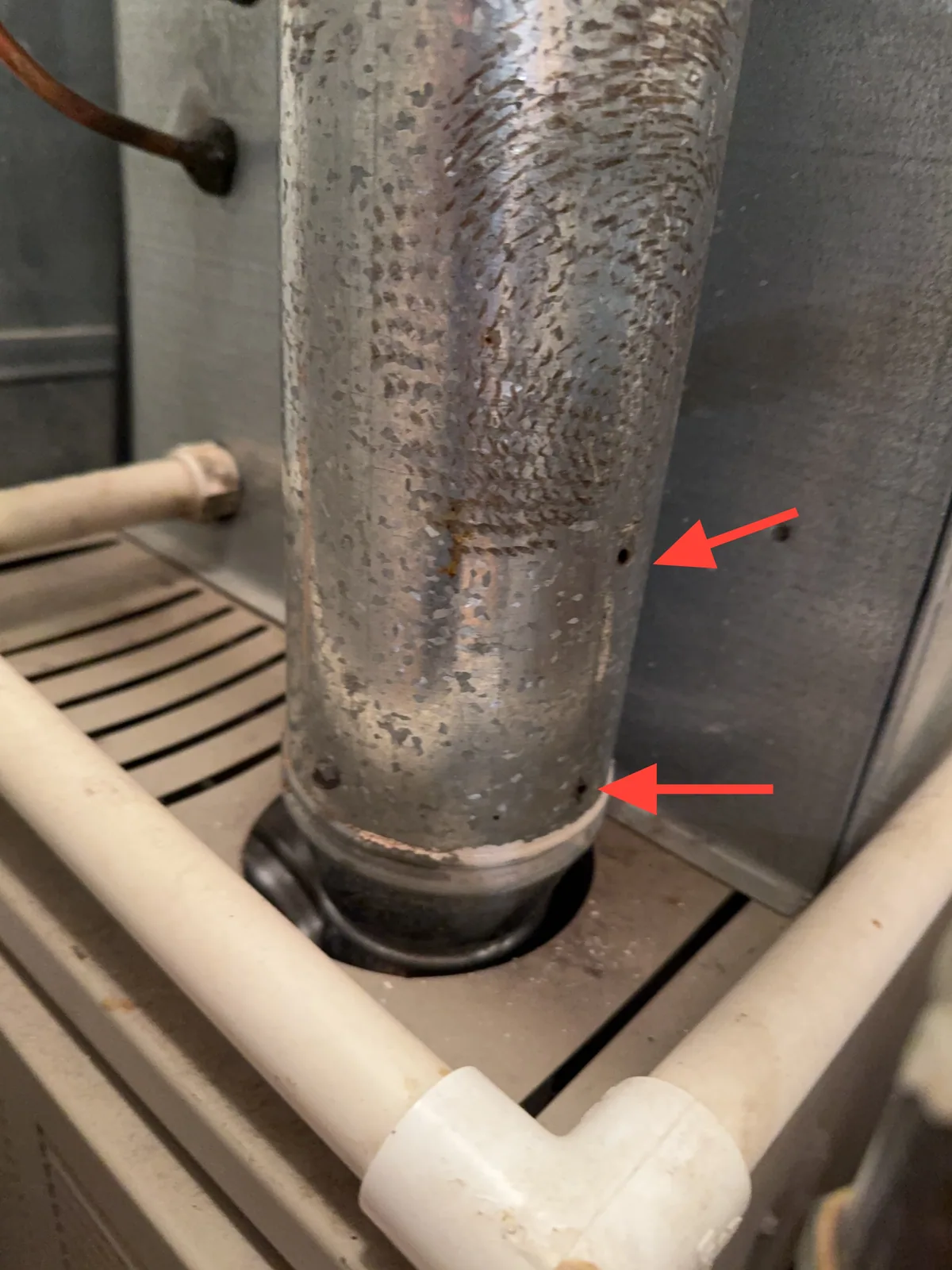
Holes in the flue. A metal vent pipe rusts from the inside, where exhaust moisture condenses on the steel, so by the time holes show on the outside the pipe wall is already thin. A breached flue lets combustion gases out into the space around the furnace instead of carrying them outdoors. Patching with tape or sealant is not a repair; the section gets replaced by an HVAC contractor.
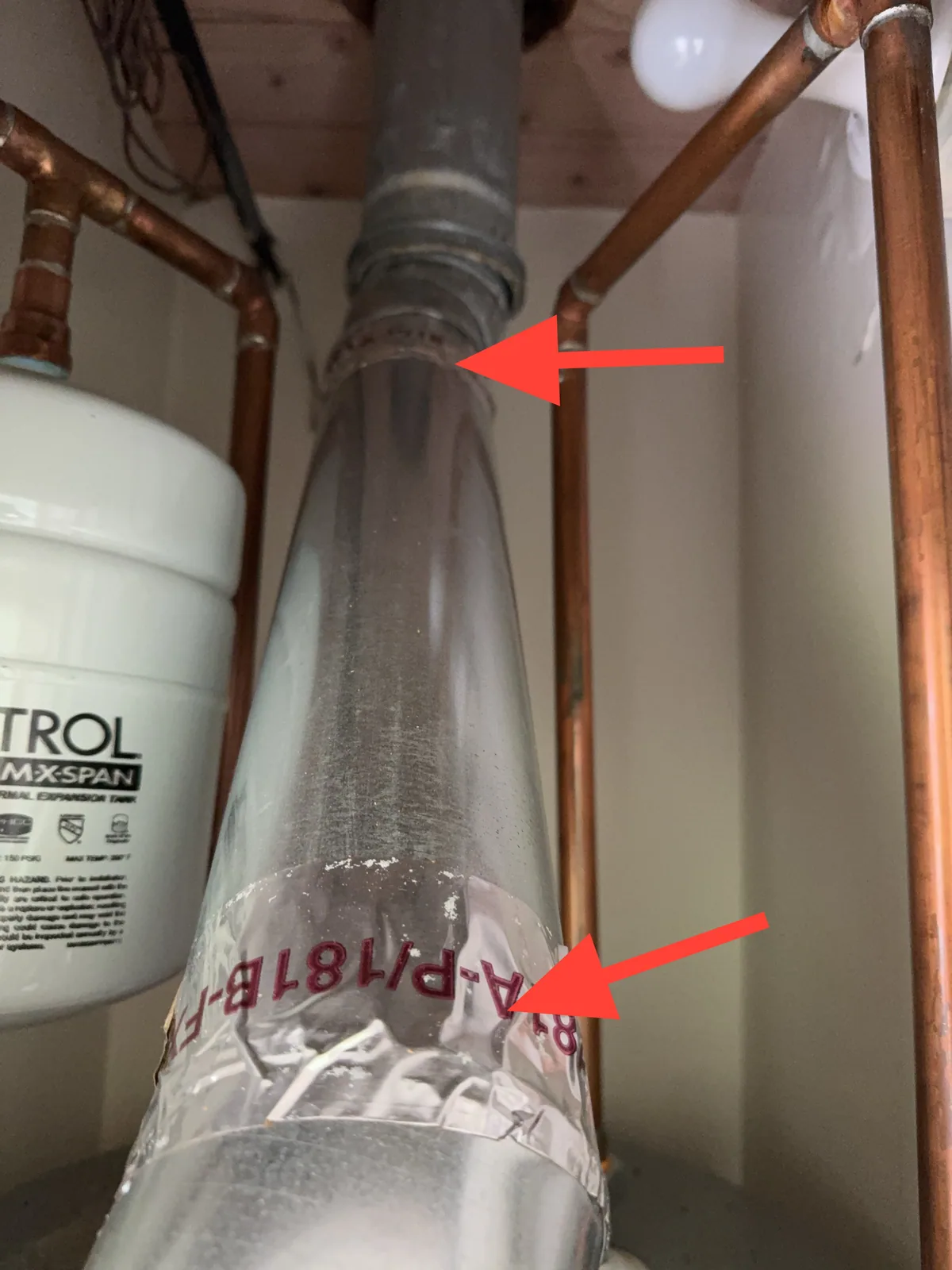
Vent joints held with tape, or with too few screws. Each joint in a single-wall metal vent connector is meant to be fastened mechanically, normally with three sheet-metal screws. Foil tape is not a fastener, and a joint with one screw is only a little better. The pipe gets bumped every time someone changes a filter or moves a storage box, and a joint that pulls apart spills exhaust, carbon monoxide included, into the house. In Chicago the furnace and water heater very often share one masonry chimney, so we check both connectors joint by joint. We cover the fewer-than-three-screws version, and the rust that condensation leaves behind, in what we find the first week Chicago furnaces run again.
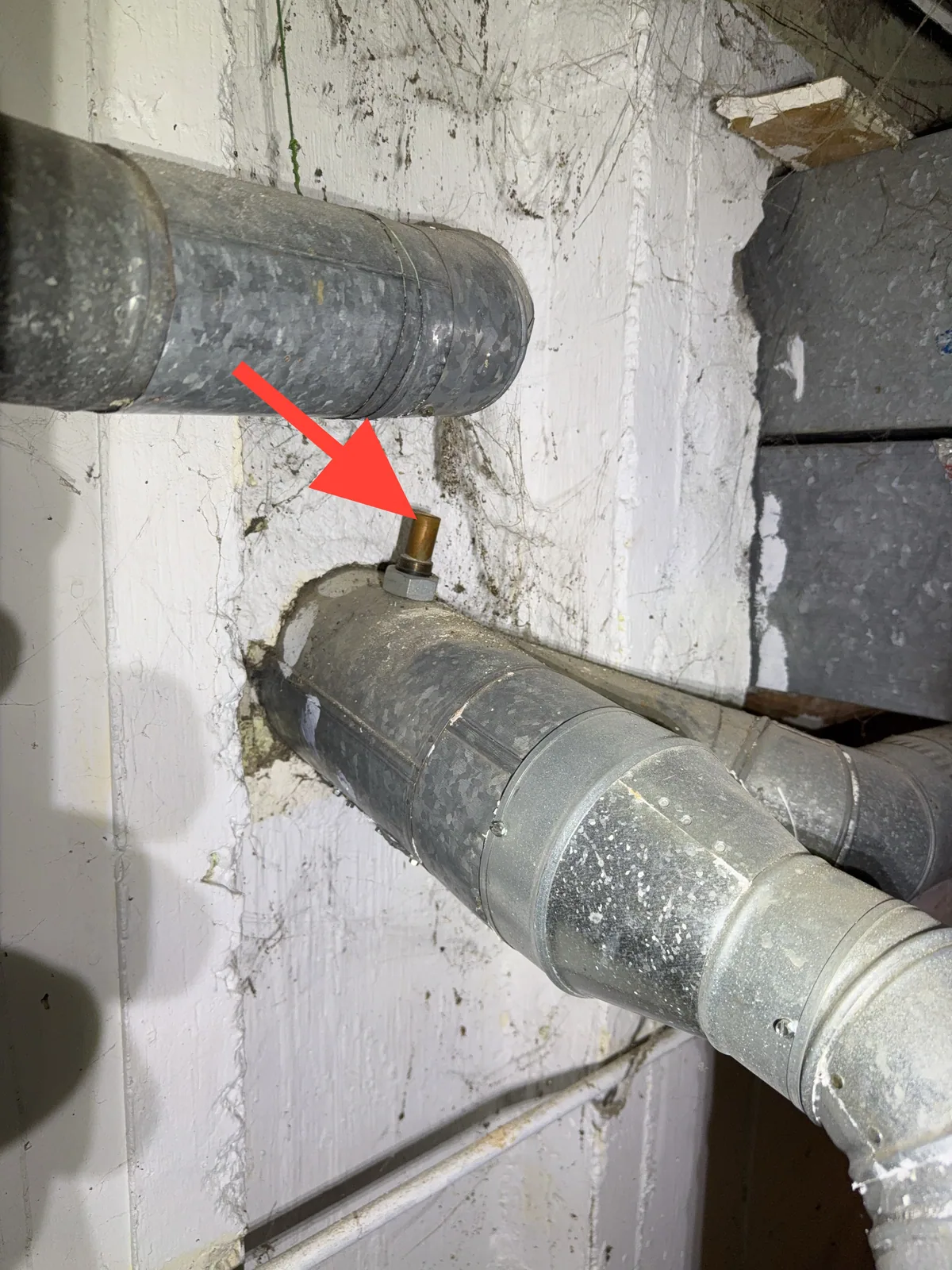
Openings left unsealed where the vent enters the chimney. The connector should enter the chimney through a sealed thimble. Gaps, crumbling mortar, or an abandoned pipe left in the opening weaken the draft and give flue gases a way back into the basement. It is a small masonry and sheet-metal repair, and it is routinely missed because it sits high on a dark wall behind the equipment.
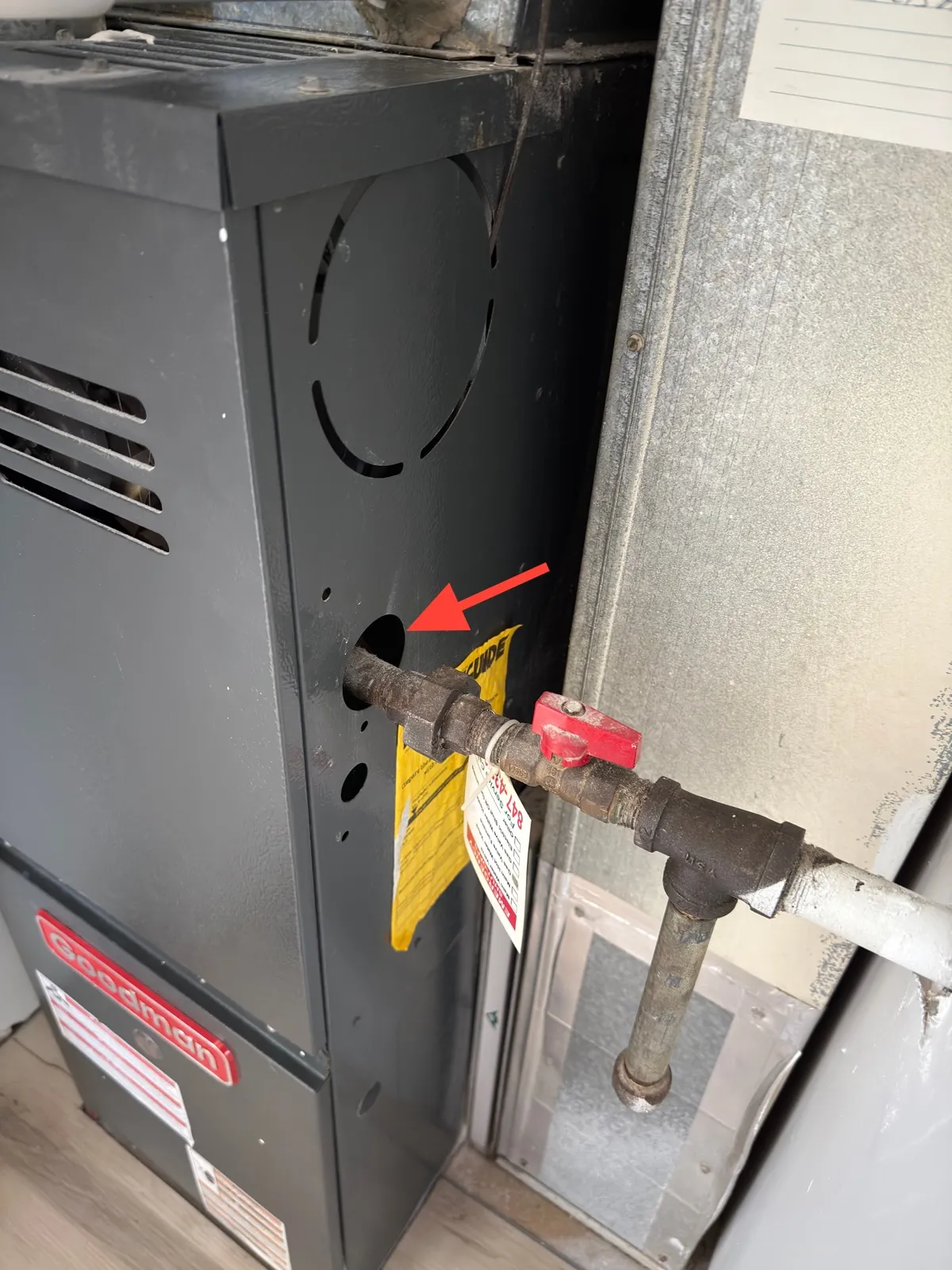
Gas pipe through the cabinet with no bushing. Where the gas pipe passes through the furnace cabinet, the opening should be closed with a bushing or grommet. Without one, the pipe sits against a raw sheet-metal edge that can chafe it as the furnace vibrates, and the burner compartment is left open to the room. The part costs very little, which makes this one of the cheapest defects on the list to correct.
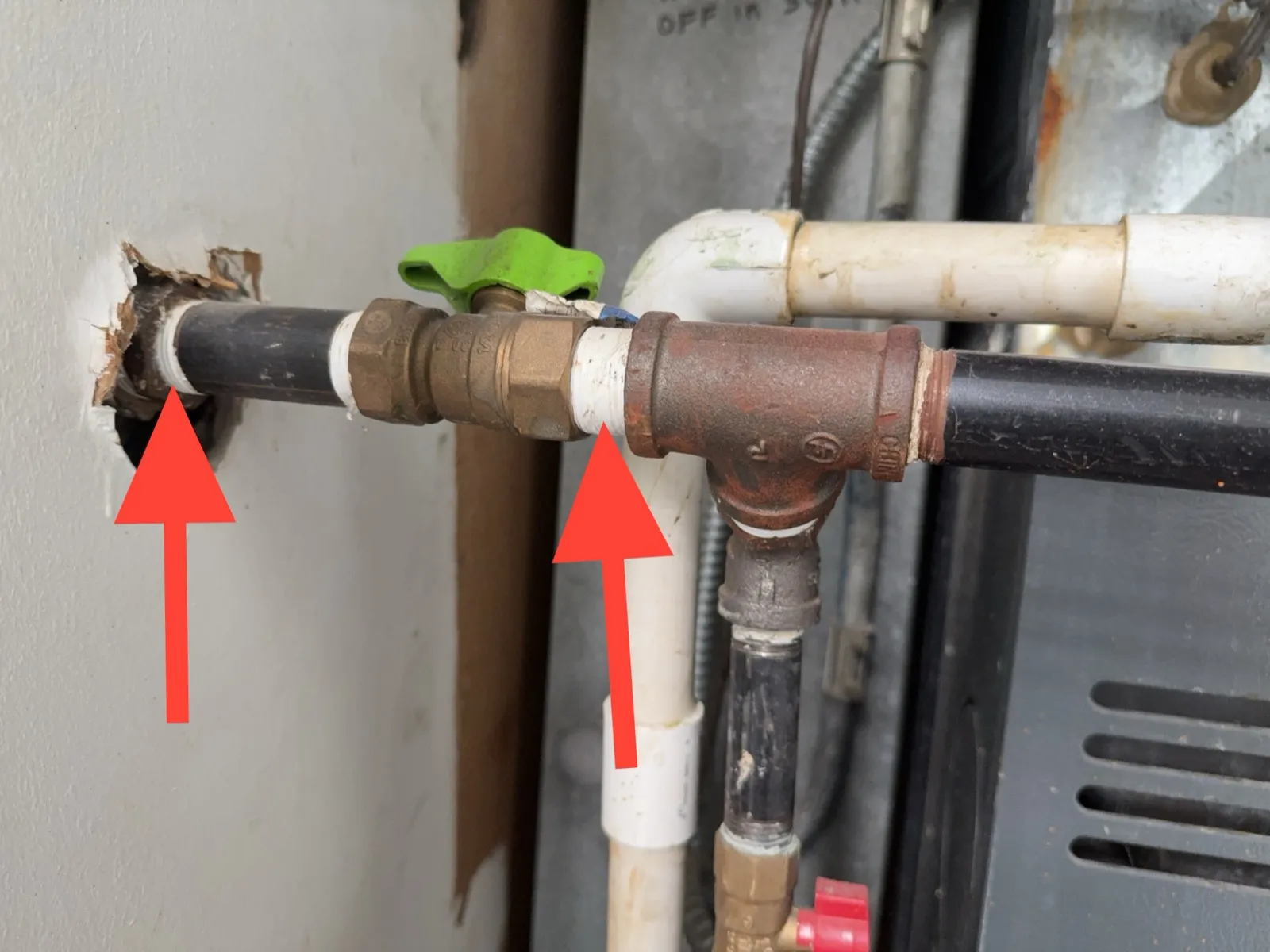
White plumbing tape on gas joints. Thread tape comes in grades. The yellow tape made for gas piping is heavier and formulated for fuel gas; the thin white tape sold for water lines is not, and a joint made with it may seep over time. It is easy to spot once you know to look, because a fringe of tape usually shows at the edge of the fitting. We note what the tape appears to be, check the joints with a combustible gas detector, and recommend a qualified plumber remake the joints correctly.
There are more examples in our HVAC inspection photo gallery.
Disconnected and blocked vents: what the CPSC data shows
A vent that has separated or is blocked is the failure with the worst record. A CPSC review of carbon monoxide incidents involving modern furnaces and boilers found that disconnected or blocked vents were the primary failure in 31 of the 83 incidents studied, and those cases were associated with 41% of the deaths and 46% of the injuries.
Vents come apart for ordinary reasons: a joint that was never fully seated after a service call, corrosion at a seam, a connector that sags because it has no support, a bird or squirrel nest at the top of the chimney. The signs are easy to miss:
- Soot, rust streaks, or chalky white deposits around the vent connector or the top of the furnace.
- Melted plastic or scorch marks near the draft hood of the furnace or water heater.
- Unexplained moisture on nearby windows or walls when the furnace runs.
- A carbon monoxide alarm that sounds, even once.
If a vent is visibly separated, or a carbon monoxide alarm sounds, turn the furnace off, get fresh air into the house, and call a licensed HVAC contractor. If anyone has symptoms, leave and call 911. If you smell gas, leave and call Peoples Gas or Nicor from outside.
Condensing furnaces: pitch, condensate, and the wrong vent material
High-efficiency condensing furnaces vent differently from older models. A standard-efficiency furnace sends hot exhaust up a metal flue. A condensing furnace pulls so much heat out of the exhaust that it leaves as cool, wet vapor, pushed by a fan through plastic pipe, usually out a side wall. The acidic water that condenses out has to drain, not pool, and the same physics is behind condensation on the roof: causes and prevention.
That drainage depends on slope. The vent pipe should pitch back toward the furnace, typically about a quarter inch per foot, so condensate runs to the trap instead of collecting in a low spot where it can freeze in a Chicago winter. DOE Building America guidance is direct that condensing and non-condensing furnaces have different venting requirements, which is why a furnace replacement that reuses the old vent run deserves a second look. What we look for:
- Sagging or unsupported plastic vent pipe with a low point instead of a steady pitch.
- Water stains or white mineral tracks at pipe joints, which mean condensate is leaking at a joint that should be sealed.
- A condensate drain line that is kinked, disconnected, or ends in a bucket.
- A water heater left alone on a masonry chimney that was sized for two appliances after the furnace was upgraded, which shows up as rust and moisture at the water heater vent.
Where the vent ends: terminals, snow, and backdrafting
A side-wall vent terminal has to stay clear. One that sits low on the wall can be buried by drifting snow, and one placed close to a window that opens, or tucked under a deck or porch, can send exhaust back toward the house. The clearances come from the furnace manufacturer’s installation instructions, so the practical checks are simple:
- Know where your furnace vents terminate, and clear snow away from them after a storm.
- Look for a terminal close to a window that opens, or directly under a deck or porch.
- Some dripping and frost at a condensing furnace terminal is normal in cold weather. Heavy ice closing off the opening is not.
Furnaces and water heaters that vent into a chimney have a different weak point. They depend on natural draft, and a strong kitchen range hood, a clothes dryer, or air-sealing work can lower the pressure in the house enough to pull exhaust back down the flue. That is backdrafting, and we go into it in how poor utility room ventilation puts you at risk.
What a home inspection checks, and what takes an HVAC technician
A home inspection is a visual, non-invasive look at the heating system. At the furnace, we:
- Follow the vent connector from the appliance to the chimney or the outside wall, checking material, support, slope, and each joint.
- Look at the chimney connection and at any side-wall terminals from outside.
- Open the cabinet door and look for rust, scorching, and water staining in the burner compartment.
- Run a combustible gas detector along the gas piping and connections at every gas appliance.
- Check for carbon monoxide alarms. Illinois law requires one within 15 feet of every room used for sleeping.
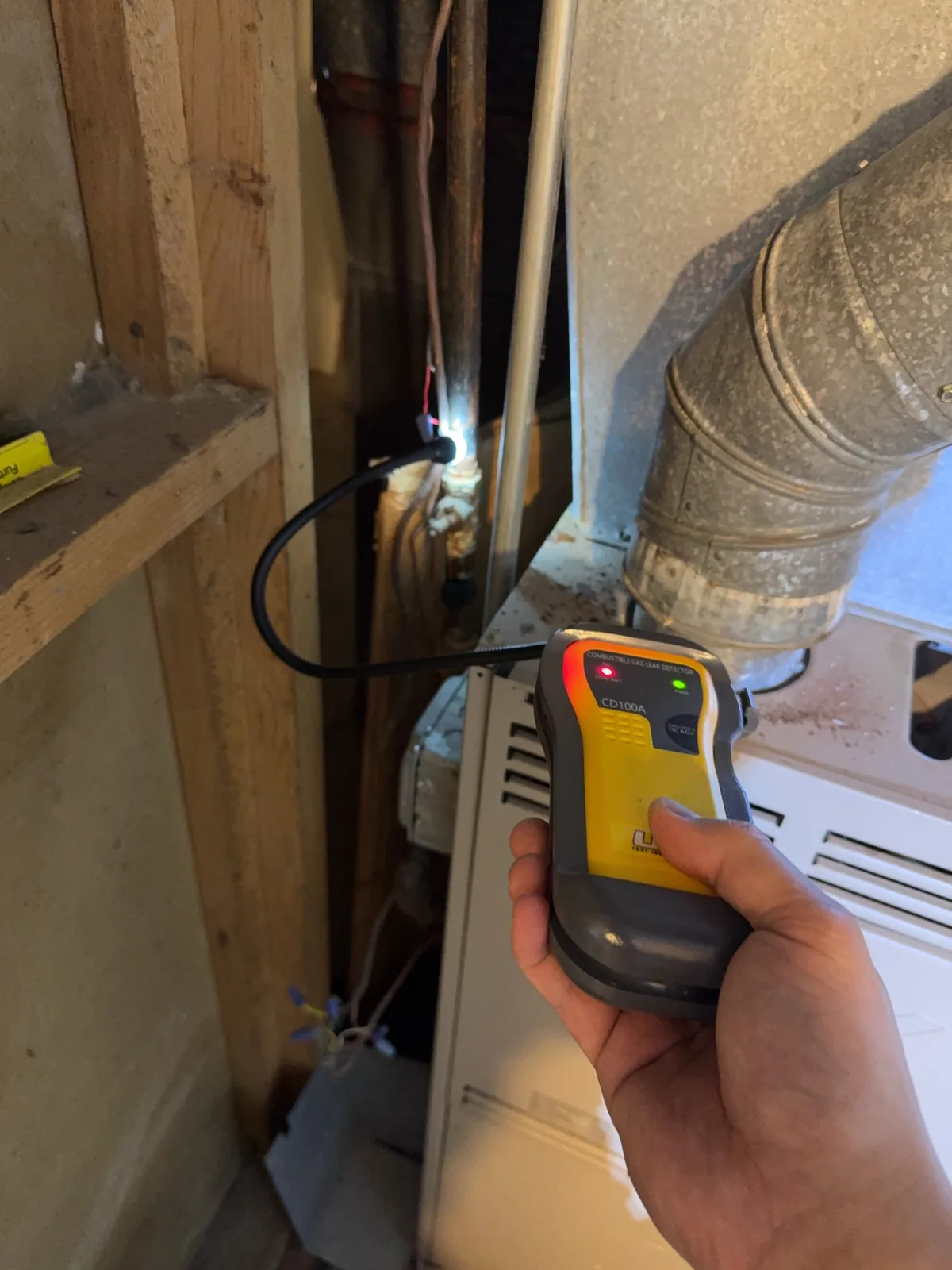
We do not take the furnace apart. Combustion analysis, draft pressure measurements, and a camera inspection of the heat exchanger are HVAC contractor work, and when what we see points that way, the report says so. The CPSC and the EPA both recommend having fuel-burning appliances professionally inspected every year, because these defects develop slowly and give little warning.
If you are buying the house
Almost every defect on this page is an inexpensive repair. The point of finding them before closing is that they are safety items, and that you can decide who corrects them. When venting or gas piping defects appear in your report:
- Ask that the repair be made by a licensed HVAC contractor or plumber, not a handyman, and ask for the paid invoice.
- Ask for the work described specifically: “replace the perforated vent connector section,” not “service furnace.”
- For a gas leak or a separated vent, ask that it be corrected now rather than credited at closing. It is a hazard to whoever is living in the house today.
- Confirm the repair before closing, either at your final walkthrough with the invoice in hand or with a repair verification visit.
A slope problem, a missing bushing, or a vent connector that is aging but intact can reasonably be a credit and a job for your own contractor after you move in.
How Chicago Home Inspect LLC helps
Every home inspection we perform includes the furnace, its venting, and the gas piping you can see, with each finding photographed and marked up so a contractor can go straight to it. Reports are delivered the next business day. If you already own the home, a Yearly Home Checkup covers the same ground before heating season. Radon and mold testing can be added to either. You can see live availability and schedule a home inspection online.
Sources
- Updated IDI review: CO and modern furnaces and boilers (CPSC)
- High-efficiency gas furnaces: Building America Best Practices (DOE)
- Sources of combustion products (EPA)
FAQ
How do I know if my furnace is venting properly?
From the outside you can only check the obvious: the vent pipe is connected at every joint with no gaps, tape, rust holes, or soot, side-wall terminals are clear, and your carbon monoxide alarms work. Whether the appliance is actually drafting and burning correctly takes instruments, which is why a yearly professional check is the standard recommendation.
Is white Teflon tape on a gas line a problem?
Yellow gas-rated tape, or a pipe joint compound listed for gas, is the right material for threaded gas joints. Thin white plumbing tape is not formulated for fuel gas and may let a joint seep over time. It does not mean the joint is leaking today, but we report it and recommend a qualified plumber correct it.
How many screws should a furnace vent pipe joint have?
Three sheet-metal screws per joint is the usual requirement for single-wall metal vent connectors. Foil tape does not count as a fastener.
What are the code requirements for gas furnace venting?
Vent sizing, materials, slope, and terminal clearances come from the fuel gas code adopted where you live and from the furnace manufacturer’s installation instructions, and the instructions govern for that appliance. A home inspection is not a code compliance inspection; we report conditions that are unsafe or not functioning as intended.
Will a home inspector find a cracked heat exchanger?
Usually not directly. Most of the heat exchanger cannot be seen without taking the furnace apart, which is outside a home inspection. We report the signs that point to one, such as rust, scorching, or flame that moves when the blower starts, and recommend an HVAC contractor evaluate it.