
If your inspection turns up a possible lead service line, treat it as a decision to make inside attorney review: confirm the pipe, price the full replacement, then ask for a credit or a complete replacement in writing. Illinois generally prohibits replacing only part of a lead service line, and the state deadline for Chicago to finish replacing them runs for decades, so assume the job is yours unless a contract says otherwise.
This guide covers what the seller has to tell you, what the Chicago home inspection can and cannot settle, who pays, and what to do before your five business days run out. To work out what the pipe is made of first, start with our guide on how to check a Chicago lead service line.
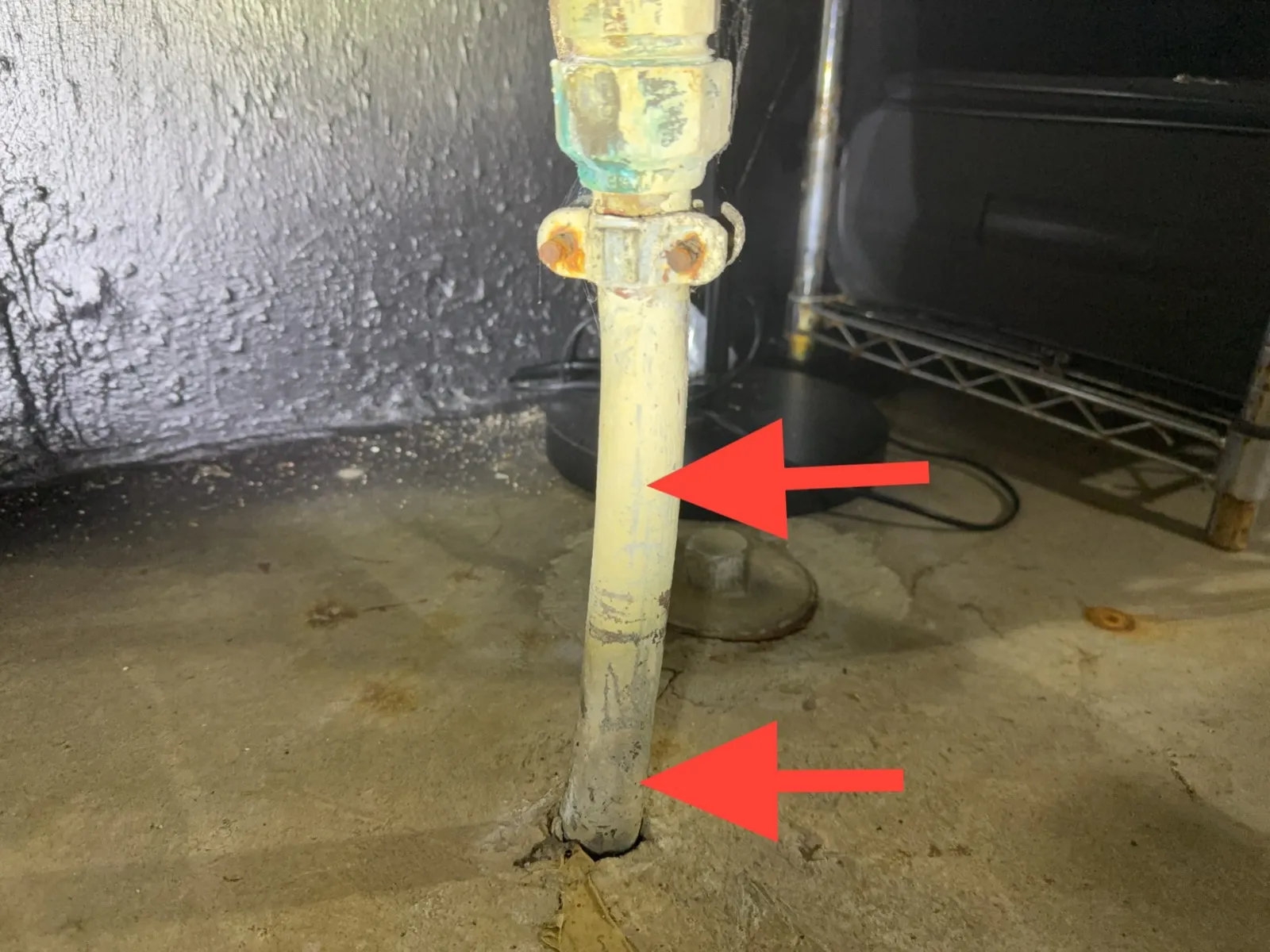
Table of Contents
- What counts as a lead line under Illinois law?
- Does the seller have to disclose lead pipes?
- What can a home inspection show about lead pipes?
- How do you confirm the pipe before attorney review ends?
- Who pays to replace a lead service line in Chicago?
- Can you ask the seller to replace the line?
- Credit or seller replacement: which is better?
- What to do if you are buying the house
- How we help
- Sources
- FAQ
What counts as a lead line under Illinois law?
A lead service line is the water pipe between the main and your house when it is made of lead, or when it is connected to a lead pigtail, lead gooseneck or other lead fitting. That definition comes from 415 ILCS 5/17.12, so a copper line with a lead gooseneck at the main still counts.
The service line ends at the first shut-off valve or 18 inches inside the building, whichever is shorter. Chicago’s service line inventory says a house, two-flat or small building built before 1986 has a high likelihood of a lead line, and that lead lines are not usually found in larger buildings.
EPA says lead service lines are typically the most significant source of lead in water in homes that have them, and it sets the health goal for lead in drinking water at zero. The city also states that its water meets all standards and that it adds corrosion control to help keep lead from dissolving into the water. So this is a reason to confirm and plan, not a reason to panic.
Does the seller have to disclose lead pipes?
The seller has to answer a direct question about it, but only from what they actually know. The Illinois Residential Real Property Disclosure Report has an item for awareness of unsafe concentrations of or unsafe conditions relating to “lead water pipes” and “lead plumbing pipes” (item 17), and a separate one for unsafe conditions in the drinking water (item 11).
“Aware” on that form means actual notice or actual knowledge, without any specific investigation. A seller who never looked can truthfully mark item 17 no, so a clean form does not clear the pipe. It applies to homes of one to four units and condo units, and some transfers are exempt. Our guide to what is missing from Chicago seller disclosures covers how to read the rest of it.
The useful question to ask. State law requires a water utility that identifies a lead line to try to notify the building owner and occupants within 15 days. Ask the seller, through your attorney, for any letter from the water department about the service line, any water test results, and any plumber invoice for work on it. A letter on file would be actual notice.
What can a home inspection show about lead pipes?
A home inspection can flag a pipe that looks like lead at the point it enters the house, but it cannot confirm the material. Inspections are visual and non-invasive, and most of a service line is underground. Here is how that reads in our reports.
- Painted pipe. Paint limited identification. Where it had worn near the floor the metal was dull gray rather than copper-toned, the pipe was non-magnetic, and it rose from the slab with a soft, bowed profile. Our report said the material could not be confirmed visually.
- Bare gray pipe. A dull gray, non-magnetic pipe at the basement entry. We recommended a licensed plumber determine the material and the scope of any replacement.
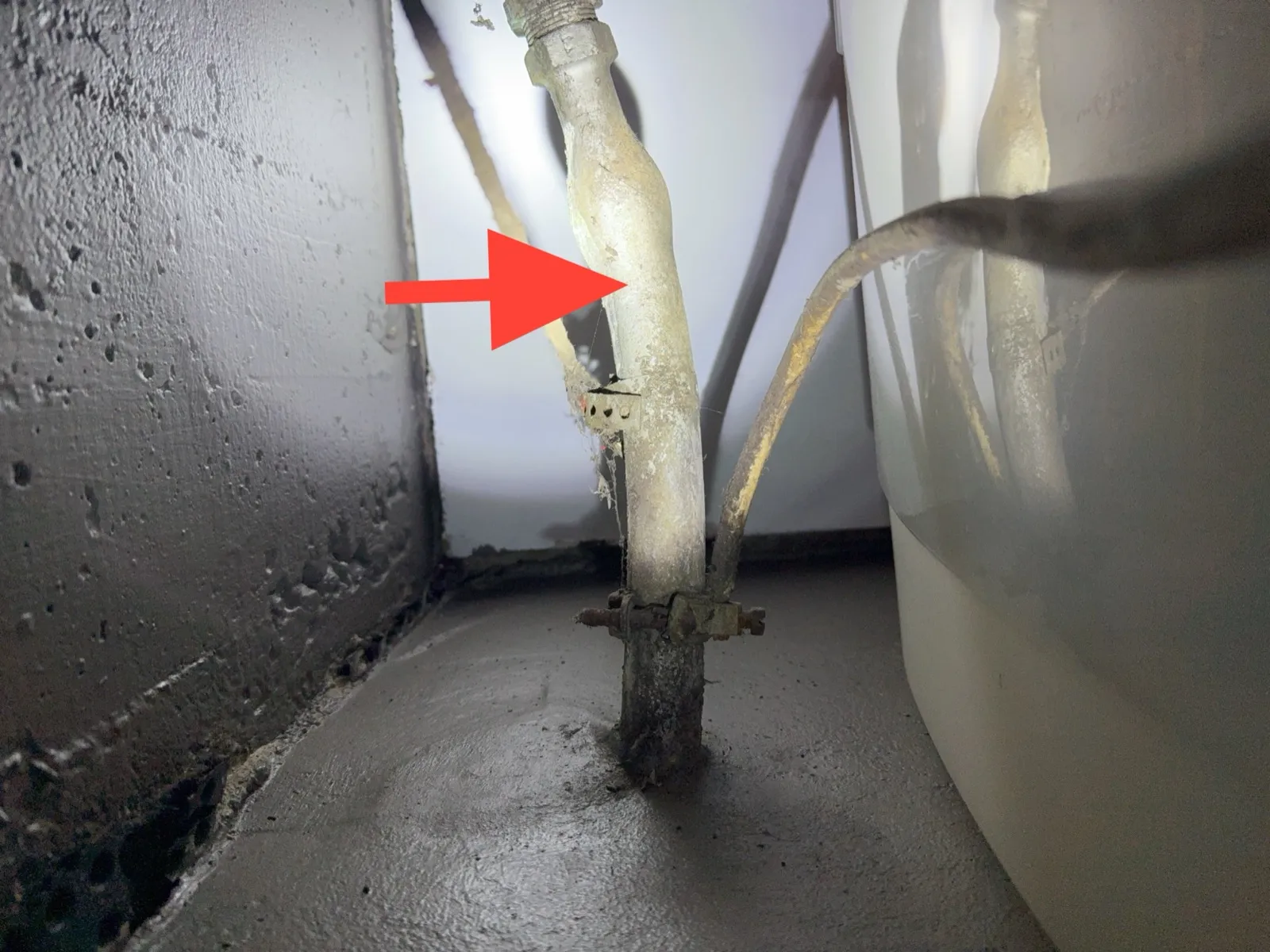
- Curve at the meter. A dull gray pipe with a hand-formed curve coming through the floor at the meter set, consistent with a lead gooseneck.
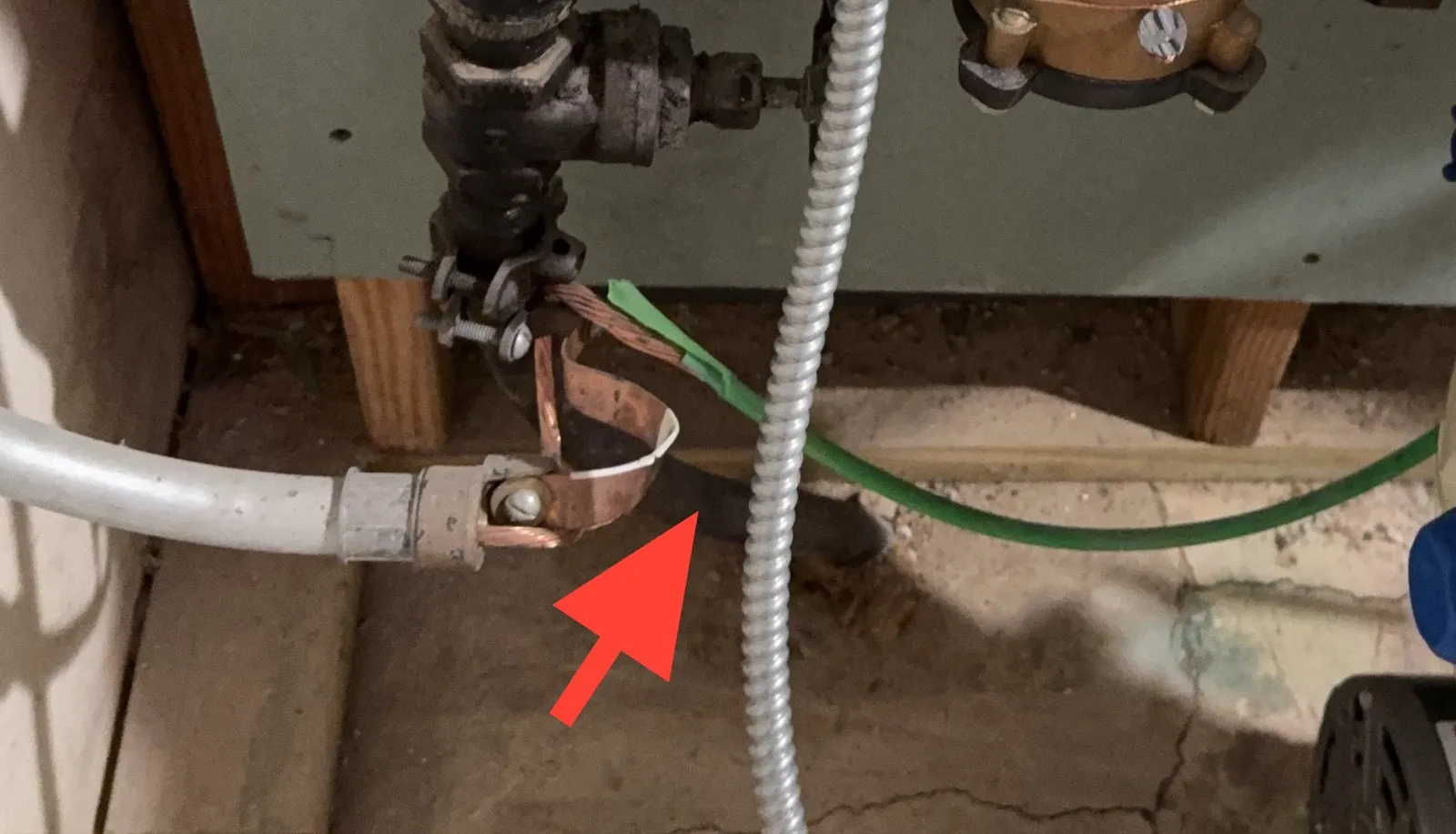
Each of those findings was written as an item for the buyer to look into, not a confirmed defect. More older plumbing is in our plumbing inspection photos. A line can also come back as galvanized, which raises its own problems with old galvanized pipe. State law puts a galvanized line that is or was connected downstream of lead piping in the utility’s replacement plan, so price a Galvanized Requiring Replacement result the same way you would price a lead one.
How do you confirm the pipe before attorney review ends?
Use three checks in this order, starting the day you get the report, because the most obvious one is too slow for your contract.
| Check | What it tells you | Timing under contract |
|---|---|---|
| Chicago inventory lookup | The city’s record: Lead, Suspected Lead, Galvanized Requiring Replacement or Not Lead. It relies partly on estimates from property descriptions, and the map location is approximate. | Minutes. Do it first. |
| Licensed plumber on site | The material at the entry, the scope, and a written price for full replacement. | Book right away. This is the check that drives your ask. |
| Water test | What is in the water on the sample day. It does not tell you what the pipe is made of. | Results from the city’s free 311 kit come by mail in 6 to 8 weeks, past your window. A private state-certified lab is the option if you want a number now. |
Copper at the entry does not clear the street side, so read both sides of the inventory result and treat Unknown as unconfirmed. Check the Category shown with the result too: Building Age is an assumption from when the building went up, not a look at the pipe.
Suburban buyers have the same steps with a different utility. Skokie, for example, publishes its own address lookup and replacement program. Call the village water department and ask what its inventory shows for the address.
Who pays to replace a lead service line in Chicago?
Unless a program covers it, the owner does. At closing, that owner is you. The city puts the value of a replacement at $16,000 to $30,000, and its programs split like this.
| Chicago program | What it covers | What it means for a buyer |
|---|---|---|
| Equity | Free full replacement for households below 80% of area median income who live in a home they own. | Funding is limited. Applications are processed in order, with priority for homes with children or elevated lead results. You apply as the owner, so it cannot help before closing. |
| Homeowner-Initiated | Owner hires a licensed contractor. The city waives permit fees and connects the new line to the main. Other agencies, such as IDOT, may still charge permit fees depending on the location. | The seller or you can use it. The request must stand alone, not be part of a renovation or expansion, which matters if you plan a gut rehab. Commercial and mixed-use properties are not eligible. |
| Breaks and Leaks | Free replacement when a line breaks or leaks. The owner must report it to 311. | Not something you can plan on or schedule. |
| Block Long | Free replacement when the city does main work on the block. | Depends on where the city is working. Ask 311 about the block. |
Waiting for the city is not a plan. State law gives a utility with more than 99,999 lead lines up to 50 years, counted from a final plan due in 2027, and extensions are possible.
Suburbs vary. Skokie pays for the public side and shares the private side with the owner, and its cost-share cap is $3,090, adjusted annually, with work scheduled as resources allow. Skokie also says a plumber hired privately for the private side would likely charge closer to $10,000 than its average of about $6,000.
Can you ask the seller to replace the line?
You can ask, but how you ask depends on which inspection box was initialed, so this is your attorney’s call and not a form letter. This section follows the Multi-Board 8.0 contract; check your own contract.
- Paragraph 15 b), inspection with requests. Plumbing is a major component, but a component counts as in operating condition if it is not a current threat to health or safety and performs its function. Whether a working lead line clears that test is a legal question. It matters, because a request outside those terms lets the seller terminate the contract. The same subparagraph also lets you void the contract by Notice within five business days if the condition is unacceptable to you.
- Paragraph 15 c), inspection with no requests. A request for credits or repairs lets the seller terminate. Your choice is to accept the condition or give notice within five business days that it is unacceptable.
- Paragraph 13, attorney review. Attorneys can propose modifications other than the purchase price. A proposal under 13 c) is a counteroffer. A proposal under 13 d) is not, and if it is not agreed, the contract stays in force and neither side can void it under Paragraph 13.
- Paragraph 14, as-is. If it is initialed, read it together with Paragraph 15, because the seller is making no promises beyond the defects it disclosed.
Watch two deadlines. Your notice is due within five business days of acceptance, and the 10 calendar days in Paragraph 15 is written for lead-based paint inspections, so do not assume it covers a water line. And after a 13 c) proposal or a 15 b) request, if there is no written agreement ten business days after acceptance, either side can terminate. Do not send the inspection report with the notice unless the seller or the seller’s attorney asks for it in writing. Our guide on what to do when the inspection finds problems walks through the wider process.
Credit or seller replacement: which is better?
A credit lets you control the work, and seller replacement leaves the line gone before you own it. A credit only helps if the amount matches a real bid and your lender allows it. Ask your lender before your attorney sends anything.
| Option | Works when | Watch for |
|---|---|---|
| Credit at closing | You have a written bid for the full line and you want to pick the contractor and timing. | Lender limits on credits. You take on the job and any cost above the bid. |
| Seller replaces before closing | There is enough time before closing and the seller will hire a licensed contractor. | The whole line must go. Illinois prohibits partial replacement by owners, with narrow exceptions. Get the permit and final city sign-off in writing. |
| Accept and plan for it | The inventory or plumber says the line is lead and the price still works for you. | Budget for it, and use a certified lead filter in the meantime. |
| Walk away | The price of replacement changes the deal and your inspection paragraph still gives you the exit. | Notice must go out on time. |
Get the bid first. The bid should cover the full run from the main to the house, the permit, street and sidewalk restoration, and the interior connection, line by line, so the number holds up with the seller.
What to do if you are buying the house
- The day you see the finding: look up the address in the inventory and reread items 11 and 17 of the disclosure report.
- Same day: ask your attorney to request any water department letter, test result or plumber invoice from the seller, and to tell you which paragraph of the contract applies.
- Within two business days: get a licensed plumber in to confirm the material and give a written price for full replacement.
- Before day five: call your lender about a credit, then have your attorney send the notice or proposal.
- Until the line is replaced: follow EPA advice. Run the tap after water has sat, use cold water for drinking, cooking and formula, and use a filter certified to remove lead. Boiling does not remove lead.
- After replacement: the city recommends an NSF-53 certified lead filter for the first three months and offers a free follow-up test.
Buying a Chicago two-flat adds one step: under Illinois law the utility’s notices go to occupants as well as the owner, so tenants may have received a letter the seller has not mentioned.
How we help
When the water service entry is visible, we look at it, and we say plainly what we saw and what we could not confirm. The report arrives the next business day, which leaves you time inside attorney review, and its Create Request List button turns the items you pick into a list for your attorney. We never refer repair contractors, so nothing in the report steers you toward a particular plumber. See our sample report for how a finding reads.
Sources
- 415 ILCS 5/17.12, Lead service line replacement and notification
- 765 ILCS 77/35, Illinois Residential Real Property Disclosure Report
- Multi-Board Residential Real Estate Contract 8.0, Paragraphs 11, 13, 14 and 15
- Chicago service line inventory
- Lead-Safe Chicago
- CHI 311, Water Lead Test Kit
- EPA, Basic Information about Lead in Drinking Water
FAQ
Does a condo building have lead pipes?
The city says lead service lines are not usually found in larger buildings. They are mostly in houses, two-flats and small buildings built before 1986. A condo in a converted two-flat or small older building is worth checking, so ask the association what it knows about the service line.
How do you check for lead pipes in Illinois outside Chicago?
Every community water supply has to keep a service line material inventory under state law. Ask the local water department what it shows for the address.
Is a “Suspected Lead” result the same as lead?
No, but it is not a clean result either. Under state law a suspected line is one the utility finds more likely than not to be lead. Have a plumber confirm it before you negotiate.
Can only the part on my property be replaced?
Generally no. Illinois prohibits partial replacement, with narrow exceptions such as emergency repairs. Ask the contractor to confirm how the public side will be handled.