TL;DR:
- Chicago has the highest number of lead service lines in the United States, with over 400,000 still in use. Homeowners should verify service line material through the city’s online inventory, physical inspections, or water testing, and take immediate steps to reduce lead exposure. Combining these methods and professional inspections provides the most comprehensive assessment, especially in older homes built before 1986.
Lead water service lines are underground pipes connecting your home to the city water main, and identifying whether yours contains lead is one of the most important steps you can take to protect your family. Chicago has more lead service lines than any other city in the United States, with estimates exceeding 400,000 still in the ground across older neighborhoods from Logan Square to South Shore. Knowing how to check lead water service lines in Chicago homes gives you a clear path forward, whether you own a century-old bungalow on the Northwest Side or are buying a two-flat in Pilsen. This guide covers the city’s official lookup tool, physical inspection methods, water testing options, and proven ways to reduce exposure.
How to check your Chicago home’s lead water service lines
The Chicago Department of Water Management maintains an interactive online inventory that lets you look up the service line material status for your address. This is the fastest first step for any homeowner or buyer. Enter your address and the tool returns one of four categories.
The four material categories are:
- Lead: The service line is confirmed as lead.
- Suspected Lead: The line is likely lead based on age, location, or building records.
- Galvanized Requiring Replacement: The line is galvanized steel that has corroded and may have trapped lead particles from a previously connected lead line.
- Non-Lead: The line is confirmed as copper or another non-lead material.
Each category carries a different level of urgency. A “Suspected Lead” result is not a clean bill of health. It means the city does not have confirmed data, not that the pipe is safe.
The inventory has real limitations. Some addresses are missing entirely. Others are estimated using the nearest intersection rather than the exact property. This is especially common in two-flats and three-flats, where one service line may serve multiple units. If your address does not appear, do not assume your home is free of lead pipes.
Pro Tip: If you live in a multi-unit building and your address returns no result, check the address of the building next door or the nearest intersection. Then follow up with a physical inspection or water test regardless of what the inventory shows.
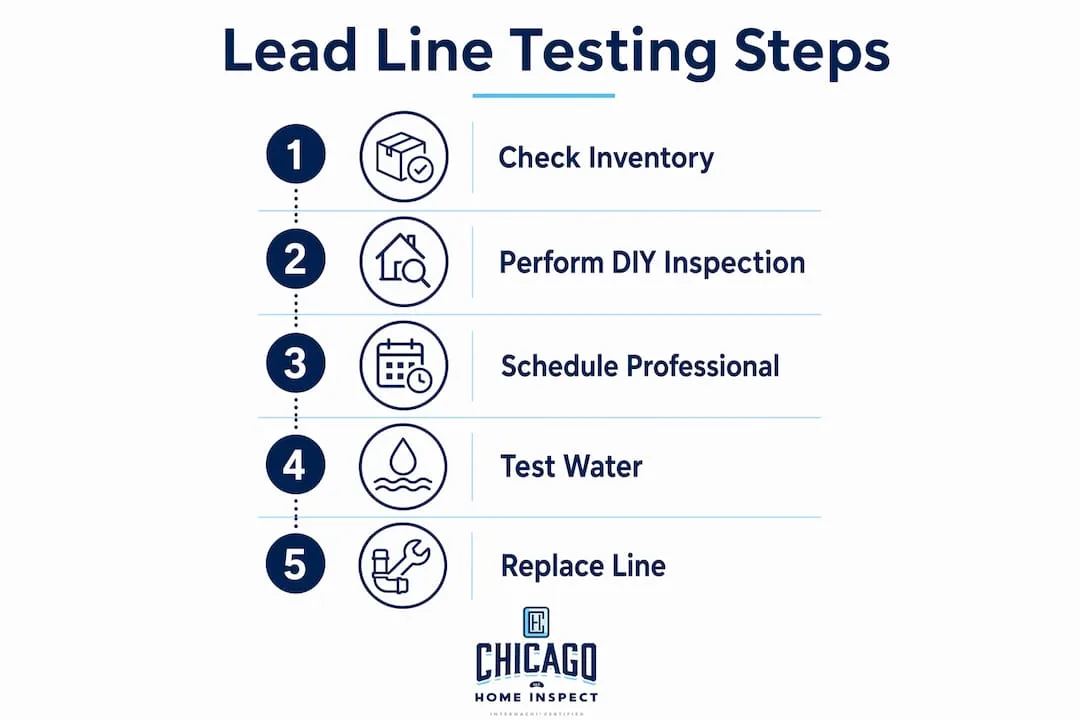
DIY physical inspection: how to identify lead pipes yourself
A physical inspection of your service line is the second layer of a Chicago home lead assessment. The service line enters your home through the basement floor or wall, typically near the water meter or main shut-off valve. Start there.
Here is a step-by-step approach:
- Locate the entry point. Find where the water line enters your basement. It usually runs from the front of the house toward the street.
- Run the magnet test. Hold a strong magnet against the pipe. Lead is not magnetic. If the magnet sticks, the pipe is likely galvanized steel or iron, not lead. If it does not stick, the pipe could be lead or copper.
- Run the scratch test. Use a coin or key to scratch a small area of the pipe surface. Lead scratches easily and reveals a shiny, silver-gray color underneath. Copper scratches to an orange-red color. Galvanized steel scratches to a dull gray.
- Check the color and shape. Lead pipes are typically gray, slightly bulging at joints, and have a soft, uneven surface. Copper pipes are orange-brown and rigid.
- Note the age of your home. Homes built before 1986 in Chicago are far more likely to have lead service lines. Chicago required lead service lines by code until 1986.
Physical tests can be inaccurate and are often misinterpreted. A non-magnetic pipe could still be lead, and a scratched surface can mislead an untrained eye. These tests give you a preliminary screen, not a confirmed answer.
There is currently no non-invasive technology available to homeowners that accurately identifies underground lead service lines without excavation. Ultrasonic sensors and machine learning models are under research but are not yet practical for residential use. This means city inventories and water testing remain the most reliable tools available right now.
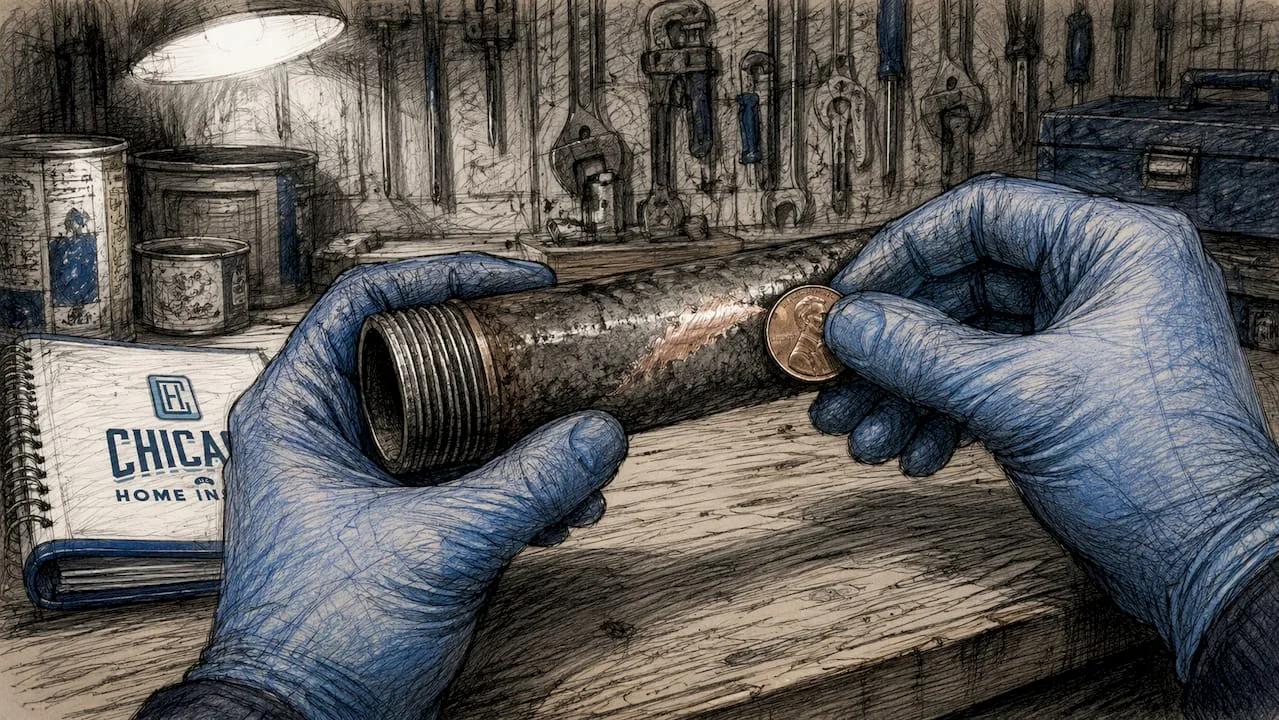
Pro Tip: Take a photo of your pipe near the entry point and bring it to your home inspection. A licensed inspector familiar with Chicago’s building stock can often confirm material type on sight.
What are your official water testing options in Chicago?
Water testing is the most direct way to confirm whether lead is reaching your tap, regardless of what the service line material turns out to be. Chicago offers two free options.
- Free lead testing kit via 311: Call 311 or visit the city’s website to request a kit. You collect water samples at home following specific instructions, then mail the kit back for lab analysis. The key requirement: avoid using any water in your home for at least six hours before collecting the sample. This “first draw” sample captures the water that has been sitting in contact with your pipes overnight, which is when lead levels are highest.
- Free in-home inspection by a city technician: The Department of Water Management offers free visits from trained technicians who test your water on-site and can visually inspect your service line. The same six-hour no-use rule applies before the technician arrives.
When results come back, any detection of lead above zero warrants action. The EPA states no level of lead in drinking water is considered safe. This applies even to homes without a confirmed lead service line, because lead can leach from interior plumbing fixtures, solder, and fittings installed before 1986.
If your results show elevated lead, the city will walk you through next steps. If results come back at zero, continue testing annually, especially after any plumbing work or after a period of low water use.
How to reduce lead exposure from your water right now
You do not need to wait for a replacement program to start protecting your household. Several proven methods reduce lead exposure immediately.
| Method | Effective? | Key Requirement |
|---|---|---|
| NSF/ANSI Standard 53 certified filter | Yes | Must be labeled specifically for lead reduction |
| Flushing tap before use | Yes | 3–5 minutes for homes with lead or galvanized lines |
| Boiling water | No | Does not remove lead; concentrates it |
| Standard pitcher filter (non-certified) | No | Must carry NSF/ANSI 53 certification |
The EPA recommends filters certified under NSF/ANSI Standard 53 with labels that explicitly state lead reduction. Brands like Brita, PUR, and ZeroWater each offer certified options, but you must verify the specific model carries the Standard 53 certification for lead, not just general filtration. Use filters only on cold tap water. Hot water dissolves lead faster and should never be used for drinking, cooking, or making baby formula.
Flushing your tap for 3–5 minutes before drawing water for drinking or cooking significantly reduces lead levels in homes with lead service lines or galvanized iron plumbing. Shorter flushing times are not sufficient when a full lead or galvanized line is present. Running the shower or another tap simultaneously speeds up the process.
Boiling water is a common misconception. It removes bacteria and some contaminants, but lead is a metal. Boiling actually concentrates lead by reducing water volume.
For permanent solutions, Chicago offers income-based replacement programs for eligible homeowners and free replacements for certain daycare facilities in priority areas. Check your eligibility through the city’s website. Replacing the full line, not just the city-owned portion, is the only complete fix.
Pro Tip: If you have an infant or are pregnant, use only NSF/ANSI Standard 53 certified filtered water or bottled water for formula and drinking until your service line status is confirmed. This is the single highest-impact step you can take immediately.
What we’ve learned inspecting Chicago homes for lead risks
We have inspected hundreds of homes across northern Cook County, DuPage, Lake, and McHenry Counties, and the same pattern comes up repeatedly. Homeowners trust the city inventory too much. They search their address, see “Non-Lead,” and stop there. What they do not realize is that the inventory reflects the service line from the street to the meter, not the interior plumbing. A home can have a copper service line and still have lead solder, lead-containing brass fixtures, or galvanized pipes that trapped lead particles years ago.
Chicago’s freeze-thaw cycles make this worse. Repeated contraction and expansion in Climate Zone 5 winters accelerates corrosion in older galvanized pipes. We see this most often in bungalows on the Northwest Side and older frame homes in the suburbs where plumbing has never been updated. The corrosion creates rough interior surfaces that trap lead sediment even after a lead line has been replaced.
Combining city resources, DIY testing, and professional inspections gives you the most complete picture. No single method is enough on its own. Public health experts also caution that federal lead thresholds may underestimate risks in cities like Chicago with aging infrastructure. We recommend annual water testing for any home built before 1986, regardless of what the inventory shows.
Chicago’s diverse building stock means inspection approaches vary. A graystone in Lincoln Park presents differently than a frame two-flat in Bridgeport. Knowing your building type and its construction era is the starting point for any honest lead risk assessment.
— Chicago Home Inspect LLC
Get a professional lead and plumbing inspection before you buy or sell
The city’s inventory and DIY scratch tests are useful starting points, but they do not replace a trained set of eyes on your actual plumbing. Chicago Home Inspect LLC provides residential home inspection services that include a full plumbing assessment covering service line materials, interior pipe conditions, and visible lead risk indicators. Our inspectors know Chicago’s building types, from vintage two-flats in Logan Square to newer construction in the suburbs, and we document what we find with detailed reports and photos. We also offer plumbing inspection photos so you can see exactly what was observed. We serve Lake, McHenry, DuPage, and northern Cook Counties, with weekend appointments available.
FAQ
What is a lead water service line?
A lead water service line is the underground pipe that connects the city’s water main to your home’s interior plumbing. In Chicago, these lines were required by city code until 1986, making homes built before that year the highest risk.
How do I check if my Chicago home has a lead service line?
Start with the Chicago Department of Water Management’s online inventory tool, which categorizes service lines as Lead, Suspected Lead, Galvanized Requiring Replacement, or Non-Lead. Follow up with a physical inspection and a water test for the most complete answer.
Does a “Non-Lead” result on the city inventory mean my water is safe?
Not necessarily. The inventory covers the service line from the street to your meter, but interior plumbing, solder, and fixtures installed before 1986 can still leach lead. The EPA states no level of lead in drinking water is considered safe, so annual testing is still recommended.
How long should I flush my tap before drinking the water?
Flush cold water for 3–5 minutes before drawing water for drinking or cooking if your home has a lead service line or galvanized iron pipes. Shorter flushing times are not sufficient to clear a full lead line.
Does Chicago offer free lead service line replacement?
Chicago offers income-based equity replacement programs for eligible homeowners and free replacements for certain daycare facilities in priority areas. Contact the city’s Department of Water Management or call 311 to check your eligibility.