
The first week a Chicago furnace fires up after months of silence, expect a brief burning dust smell that clears within a few cycles, possibly some ignition hesitation from a dirty flame sensor, and weaker airflow if filters or vents were neglected over summer. Most of this is normal startup behavior. Gas odors, visible smoke, or a carbon monoxide alarm are the exceptions that mean stop and call for help immediately, not wait and watch.
Table of Contents
- Quick First-Week Checklist: What to Check in the First 7 Days
- Why Won’t My Furnace Start, Short Cycle, or Blow Cool Air?
- What Do Different Furnace Smells Actually Mean?
- Which Furnace Noises Are Normal and Which Mean Trouble?
- What Should You Do If You Smell Gas or Hear a CO Alarm?
- Which Furnace Fixes Are Safe DIY and Which Need a Pro?
- When Should You Schedule Furnace Maintenance in Chicago?
- What We See Inside Chicago Furnaces During Inspections
- How Chicago Home Inspect LLC Can Help With Furnace and HVAC Concerns
- Sources
- FAQ
Quick First-Week Checklist: What to Check in the First 7 Days
Before you worry about anything specific, run through a five-minute check the day your furnace turns on and repeat a lighter version daily for the first week.
- Confirm the thermostat is set to “heat,” not “auto/cool,” and replace the batteries if the display looks dim or unresponsive.
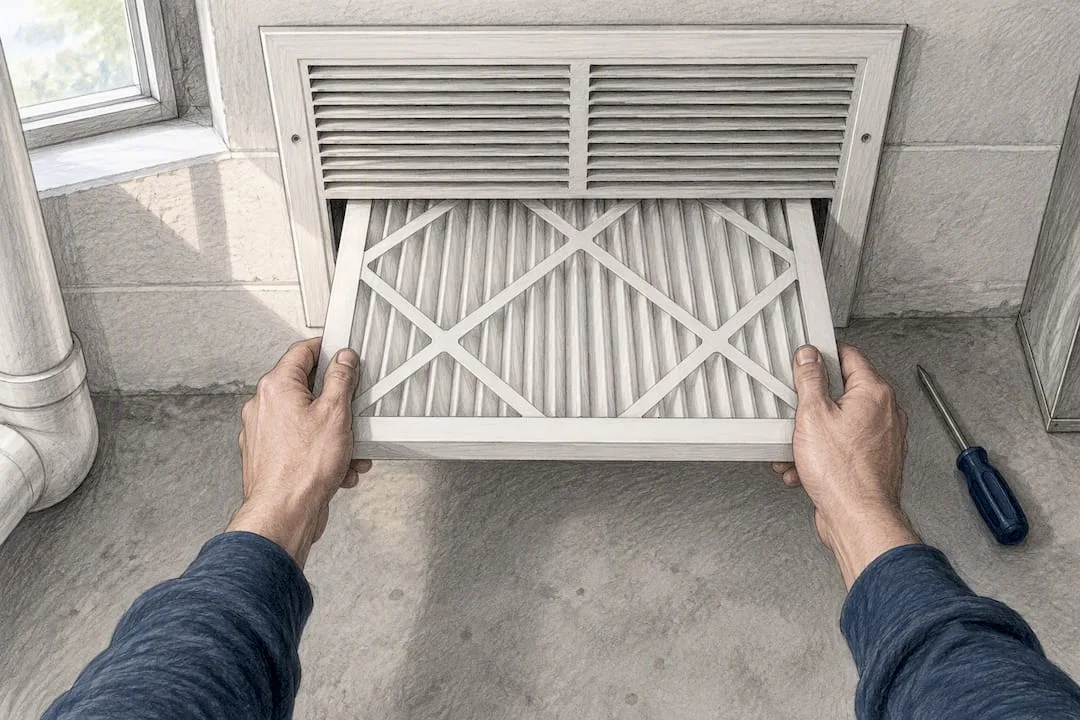
- Pull the air filter and hold it to a light. If you can’t see through it, replace it before running the system further. When you slide the new one in, make sure the filter compartment has its cover in place.
- Walk the house and open any supply vents that got closed off for summer, including ones behind furniture.
- Stand near the furnace and listen for the normal startup sequence: the inducer motor spins up, the igniter clicks or glows, then you hear a soft whoosh as the burners light.
- Test your carbon monoxide and smoke detectors the same day, and note the date so you remember when you last checked.
Over the following days, pay attention to a few things:
- Does the burning dust smell fade after two or three heating cycles, or does it linger?
- Is the air coming from the vents actually warm, or just lukewarm?
- Does the furnace cycle on and off more often than it used to, running for only a few minutes at a time?
A restricted filter is one of the most common causes of overheating and short cycling, so that filter check earns its spot at the top of the list.
Why Won’t My Furnace Start, Short Cycle, or Blow Cool Air?
Three symptoms account for most first-week furnace complaints, and each points to a different likely cause.
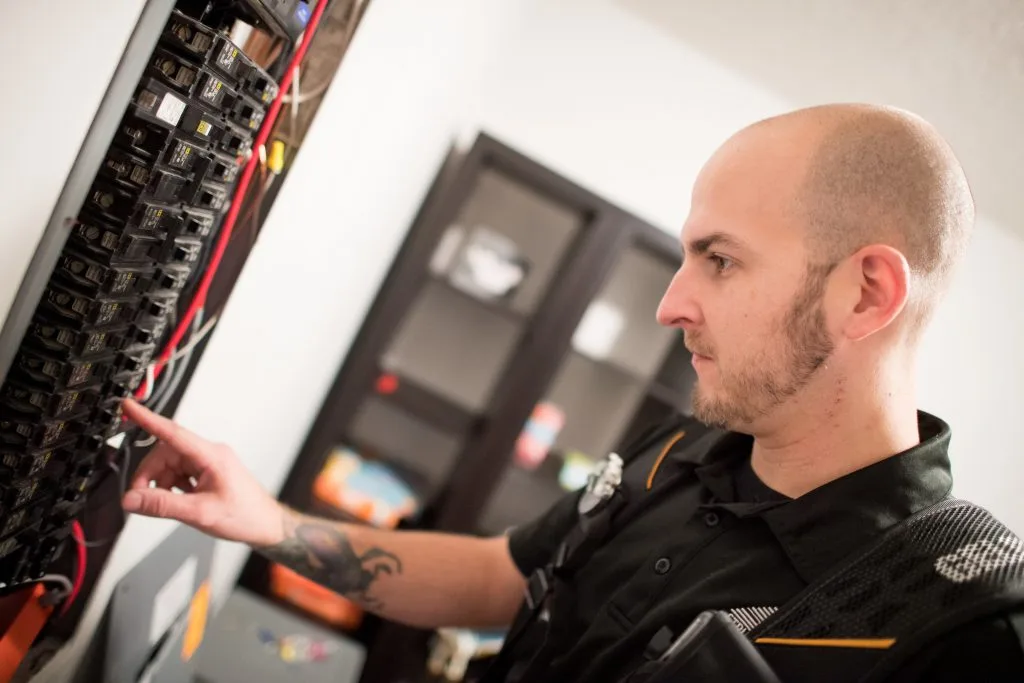
No start at all usually traces back to something simple: a tripped breaker, a furnace service switch that got turned off over summer, a thermostat set incorrectly or with dead batteries, or loose wiring at the thermostat base. Check the breaker panel and the service switch first, then confirm the thermostat display is active and set to heat. If the furnace still won’t respond, the igniter itself may have failed, which is a job for a technician.
Short cycling, where the furnace runs briefly then shuts off repeatedly, often comes from a clogged filter causing the unit to overheat and trip a safety limit switch. It can also mean a failing limit switch or a control board that’s misreading temperature. Swap the filter first. If short cycling continues with a clean filter, that’s a control issue beyond a homeowner fix.
Cool or lukewarm air points to airflow restriction or a burner that isn’t lighting or staying lit. A furnace whose burners light and then shut off within a few seconds, over and over, usually has a dirty flame sensor. Check vents and filters before assuming the worst.
Whatever you notice, write it down. Note the exact time, what sound came first, how long the cycle lasted, and whether it repeated. A technician diagnosing over the phone or on arrival can move much faster with “it clicked three times, then shut off completely, twice at 6 AM” than with “it’s not working right.”
What Do Different Furnace Smells Actually Mean?
Not all startup odors carry the same urgency, and knowing the difference saves you an unnecessary service call, or worse, a delayed one.
- Burning dust: This is the classic first-week smell, caused by dust that settled on the heat exchanger and burners over summer burning off. It’s common and expected, and it should fade within a few heating cycles, usually a day or two of normal use.
- Musty odor: Often traced to dust or mold buildup in ductwork, filters, or humidifier pads. A filter swap and a look at the humidifier pad usually clears it. If the smell persists past a week, a duct inspection or cleaning may be warranted.
- Electrical or burning plastic smell: This is not a wait-and-see situation. Power down the furnace at the breaker and call a technician. A wiring or motor problem can escalate quickly.
- Rotten-egg sulfur smell: Leave the house and call your gas utility (Peoples Gas in Chicago) from outside. Do not investigate the furnace yourself, and do not operate switches or open flames near it.
Pro Tip: Keep a simple log on your phone the first week: date, smell or sound, and how long it lasted. If you do need to call a technician, that timeline often gets the problem diagnosed on the first visit instead of the second.
Which Furnace Noises Are Normal and Which Mean Trouble?
Every furnace makes some noise on startup. The inducer motor hums, the igniter clicks, and the burners produce a soft whoosh as they light. That sequence, repeated the same way every cycle, is healthy.
Ticking, banging, or popping in the ducts as the system warms up usually means metal ductwork expanding, which is generally harmless in older homes with metal duct runs. A single loud boom from the furnace itself right as the burners light is different: that is delayed ignition, where gas builds up before it lights. Shut the furnace off and have a technician look at it before running it again. Squealing points to a blower belt or motor bearing wearing out. Rattling that wasn’t there last season often means a loose panel or a failing part working itself free.
- Check airflow by holding your hand near each vent. Weak output at one register but strong at others suggests a closed damper or blocked duct, not a furnace problem.
- Walk registers room by room and confirm none were shut for summer or blocked by furniture or rugs.
Pro Tip: If one room runs noticeably colder than the rest of the house, check that vent’s damper before assuming the furnace itself is the problem.
What Should You Do If You Smell Gas or Hear a CO Alarm?
Some signs require action within minutes, not a wait-and-see approach. Treat these as non-negotiable steps.
- If you smell gas, get everyone out of the house immediately. Don’t flip light switches or use your phone inside. Once outside, call your gas utility and, if the smell is strong, call 911.
- If a carbon monoxide alarm sounds, evacuate everyone right away and call 911. Don’t go back inside to investigate or “check if it’s real.” Wait for the fire department or gas company to clear the house.
- If you see smoke or soot, or the burner flames are yellow or orange instead of blue, shut the furnace off and call an HVAC professional before running it again. Yellow or orange flames mean incomplete combustion, which is how a furnace produces carbon monoxide.
- Keep detector batteries fresh year round, and make sure everyone in the house knows where to meet outside if you need to evacuate.
Which Furnace Fixes Are Safe DIY and Which Need a Pro?
A handful of first-week issues are genuinely fixable without a technician. Replacing the filter, resetting the thermostat, checking the breaker panel, and opening closed vents cover a large share of first-week problems. Wiping visible dust from around registers and swapping out old humidifier pads are reasonable weekend tasks too.
Call a licensed HVAC professional when you’re dealing with repeated ignition failures, any odor that doesn’t fade within a couple of days, an electrical burning smell, suspected carbon monoxide, or visible damage like rust, scorching, or cracked housing. These aren’t judgment calls worth guessing on.
Pro Tip: Booking a tune-up in September or October, before the first real cold snap, is almost always cheaper and faster than calling for an emergency repair once temperatures drop and every HVAC company in the city is booked solid.
- Filter swap, thermostat reset, breaker check, vent check: safe to handle yourself.
- Repeated ignition failure, persistent odor, electrical smell, suspected CO, visible damage: call a professional.
When Should You Schedule Furnace Maintenance in Chicago?
The best window for a pre-season tune-up in Chicago runs from September through October, before the heating season’s first real demand hits. It fits naturally alongside the rest of your annual home maintenance checklist. A proper tune-up covers the filter, flame sensor cleaning and testing, igniter condition, combustion and heat exchanger inspection, and blower and static pressure checks.
The flame sensor is worth singling out. Dust and humidity bake onto the sensor over summer, insulating it enough that the control board reads a false signal and shuts off the gas within seconds. A technician cleans it and confirms it with a microamp test, which catches a weak sensor even when it looks clean to the eye.
Annual maintenance is worth the cost because it heads off exactly the failures that generate emergency calls: fewer breakdowns, better fuel efficiency, and a documented safety check on combustion and venting. Late November through January is when Chicago HVAC companies are busiest, so waiting until the first cold snap to schedule anything, tune-up or repair, usually means a longer wait and a higher bill.
- Filter replacement
- Flame sensor cleaning and microamp test
- Igniter inspection
- Combustion and heat exchanger check
- Blower and static pressure test
What We See Inside Chicago Furnaces During Inspections
Inspecting furnaces across Chicago’s two-flats, graystones, and Northwest Side bungalows, a few conditions show up often enough that we look for them on every furnace.
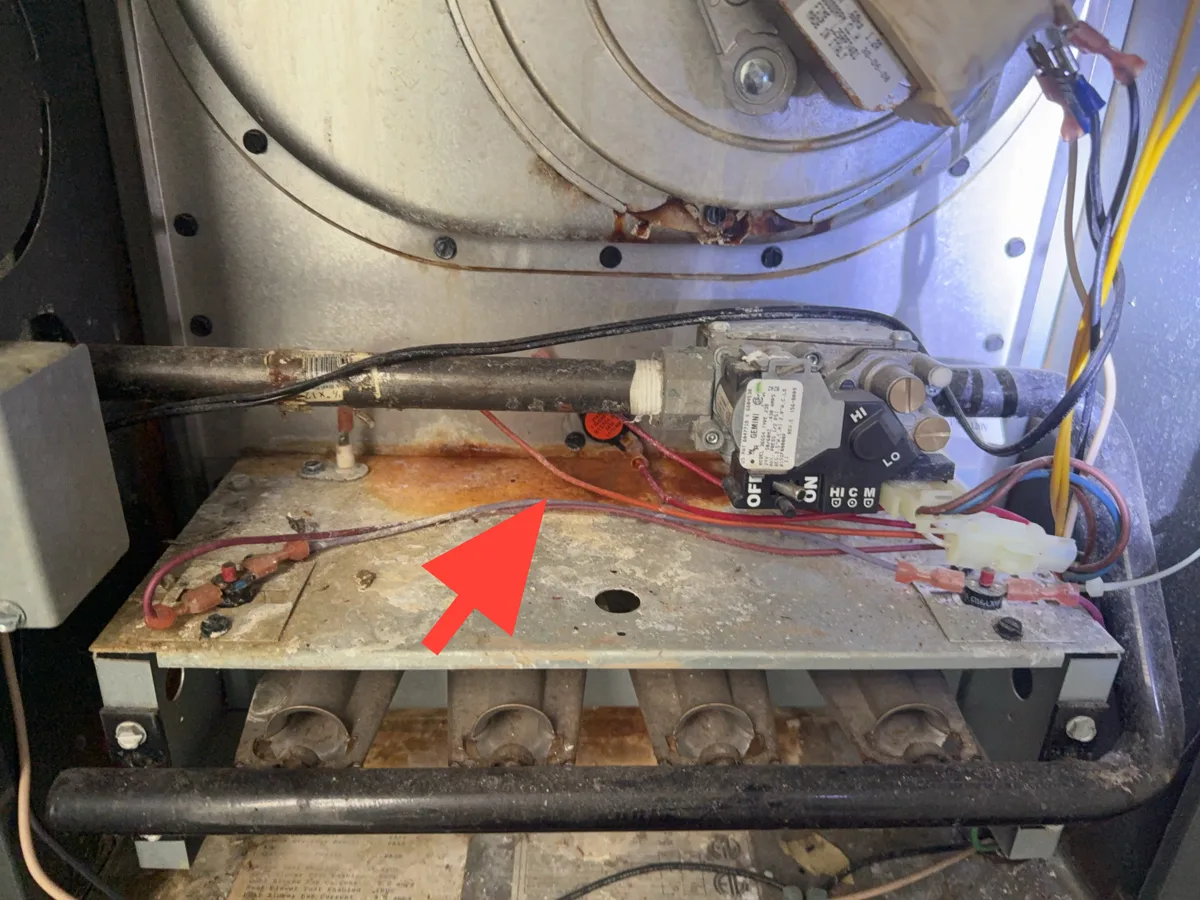
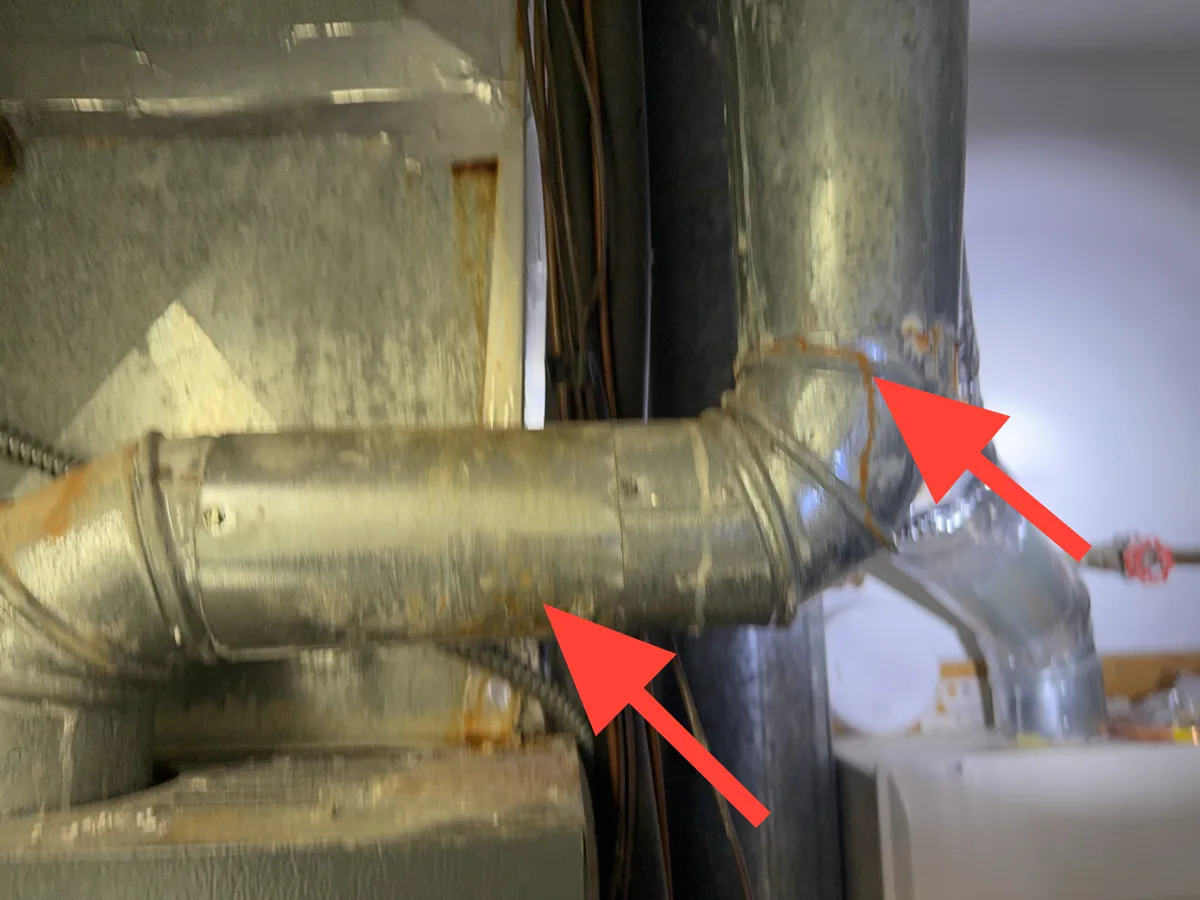
- Rust staining on the burner compartment and vent connector. On a standard-efficiency furnace with a metal vent pipe running into a chimney, rust inside the cabinet usually means the flue gases are cooling too much before they leave the house. Moisture in the exhaust condenses in the vent and runs back down into the furnace. The most common Chicago cause is an older masonry chimney that is too large, or unlined, for the furnace now venting into it, often after a water heater was replaced or moved to its own vent and the furnace was left alone in a chimney sized for two appliances. The rust is the symptom; the vent is the problem, and it needs evaluation by an HVAC contractor or chimney professional. On a high-efficiency furnace with white PVC venting, the same staining more often points to a blocked condensate trap or drain line.
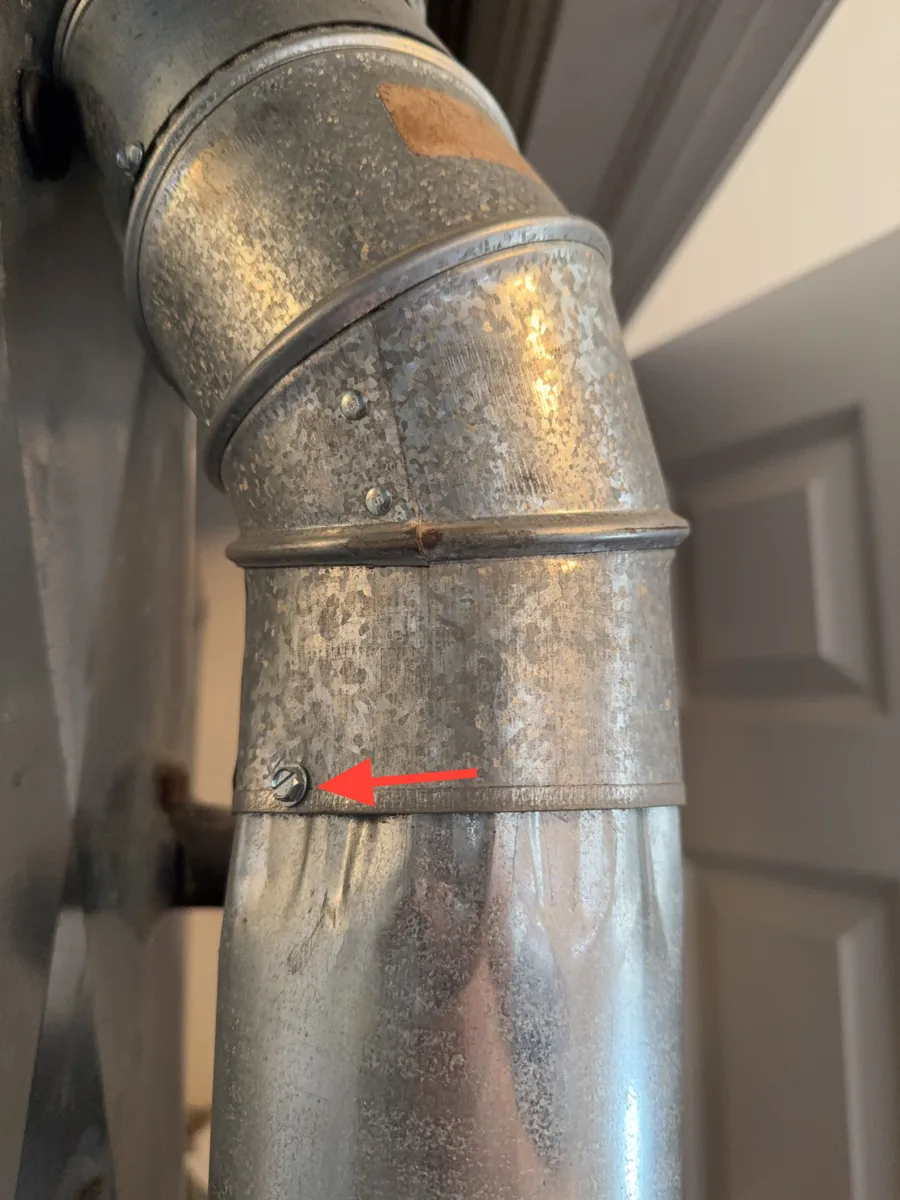
- Vent connector joints held with fewer than three screws. Each joint in a single-wall metal vent connector is meant to be fastened with at least three sheet-metal screws. A joint held by one or two can shift or pull apart, especially on a pipe that gets bumped during filter changes, and a separated joint spills exhaust, including carbon monoxide, into the house instead of up the chimney.
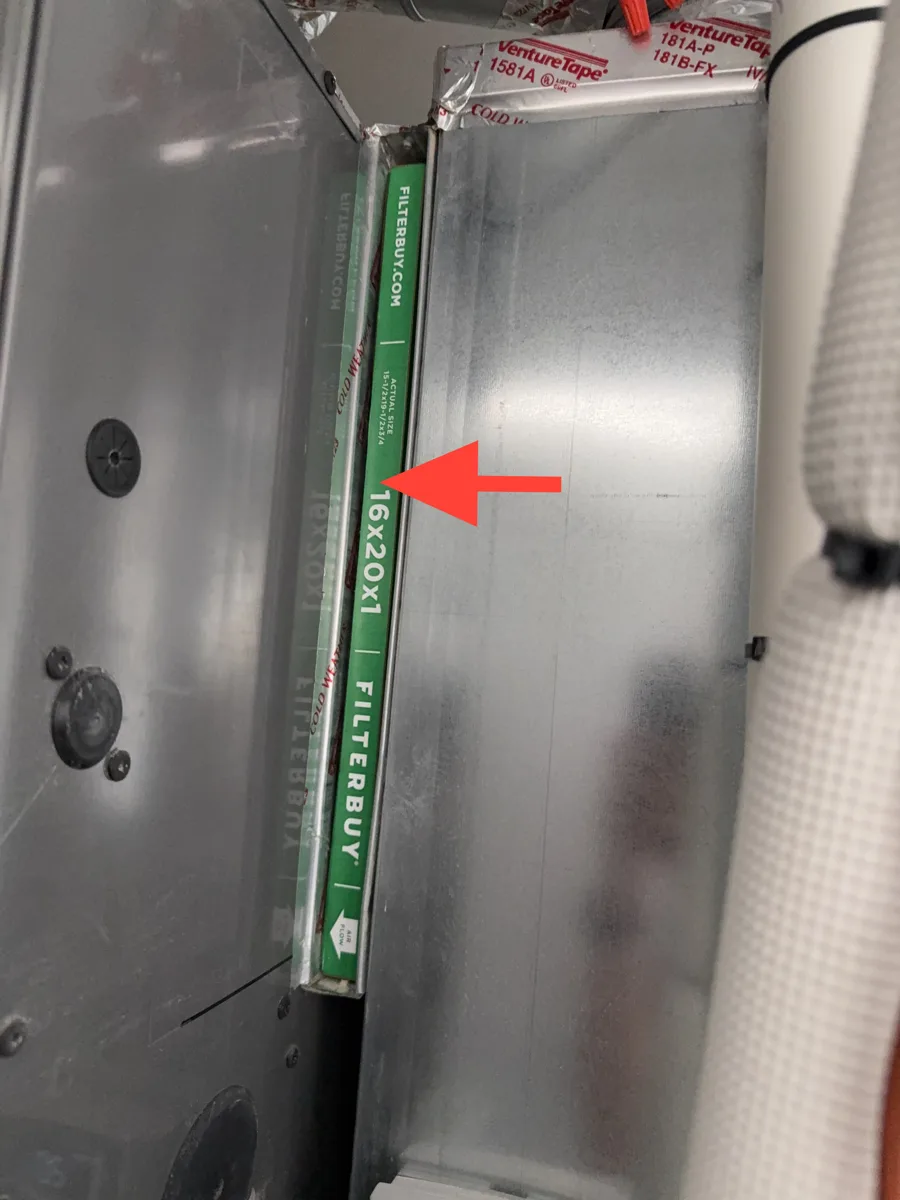
- A filter compartment with no cover. With the filter slot open, the blower pulls air straight from the utility room around the filter instead of through it, loading the blower and coil with dust. That open slot also draws air out of the room the furnace sits in, which can depressurize it enough to pull exhaust back down a water heater’s vent. A missing cover is a cheap part and an easy fix.
We photograph each of these in the inspection report, along with the vent condition and combustion notes, so you have a clear priority list to hand an HVAC contractor instead of a vague “furnace looked old” comment. The venting and gas piping defects that turn up at these same furnaces, such as holes in the flue and white plumbing tape on gas joints, are in furnace venting defects we find in Chicago home inspections.
How Chicago Home Inspect LLC Can Help With Furnace and HVAC Concerns
A comprehensive home inspection gives you a documented look at how the furnace, venting, and combustion systems fit into the condition of the whole house, not just whether the burner lights. If you already own the home, a maintenance inspection covers the same ground, including rust patterns on burner compartments, vent connector condition, and signs of restricted airflow that a quick filter swap won’t fix.
If you’re not sure whether what you’re seeing this week is normal wear or an early warning, a maintenance inspection gives you a documented answer instead of a guess. You can schedule a visit directly through our site and have a report with photos the next business day.
Sources
FAQ
Why Is My Furnace Running in the Summer?
If a furnace blower runs in summer, it’s typically because the thermostat fan setting is on “on” rather than “auto,” or because the same blower motor circulates air for central air conditioning. It’s rarely the gas burners themselves firing in warm weather.
Should I Get My Furnace Inspected Before Winter?
Yes, a pre-season tune-up in September or October catches issues like flame sensor buildup, rust from condensation in the vent, and airflow restriction before they cause a mid-winter breakdown. A maintenance inspection can document these findings with photos to clarify priorities for homeowners.