
TL;DR:
- Most spring AC failures in Chicago result from maintenance issues caused by harsh winter conditions, not equipment failure.
- Troubleshooting requires safety precautions and symptom-based diagnosis, often needing a professional for electrical or refrigerant problems.
You flip the switch on the first warm day in April, and nothing happens. No hum, no cool air, just silence and a creeping sense of dread. This is one of the most common calls we hear from Chicago homeowners every spring, and the good news is that most causes are simple and fixable if you know where to look. This guide walks you through the exact reasons your AC won’t start after winter, the safety steps you need before touching anything, and a clear troubleshooting process that separates quick DIY fixes from the problems that need a licensed pro.
Table of Contents
- Common reasons your AC won’t turn on after winter in Chicago
- What you need before troubleshooting your AC
- Step-by-step: How to troubleshoot AC startup problems after winter
- When to stop and call a Chicago HVAC professional
- A Chicago HVAC veteran’s perspective: Why post-winter AC failures are preventable (and what guides get wrong)
- Want a worry-free AC startup? See how Chicago pros help
- Frequently asked questions
Key Takeaways
| Point | Details |
|---|---|
| Check common blockages | Condensate drain clogs and dirty filters are top causes of post-winter AC failures. |
| Defrost frozen coils | Allow time for thawing if coils are icy before restarting your system. |
| Prioritize safety shutdowns | Never force restarts after breaker trips or safety lockouts—these protect you and your home. |
| Symptom-based troubleshooting | Noticing which part runs or is silent can pinpoint problems faster and save costly repairs. |
| Know when to call a pro | Persistent electrical faults or unclear causes need a certified Chicago HVAC professional. |
Common reasons your AC won’t turn on after winter in Chicago
Let’s start with the main causes your AC won’t power up after its winter break.
Chicago winters are brutal. The freeze-thaw cycles between December and March put real stress on HVAC equipment that sits idle for months. Water expands and contracts inside drain lines, debris and leaves pack into the outdoor unit, and components that haven’t moved all season can seize or corrode. A system that worked perfectly in September might struggle in April for reasons that have nothing to do with mechanical failure.
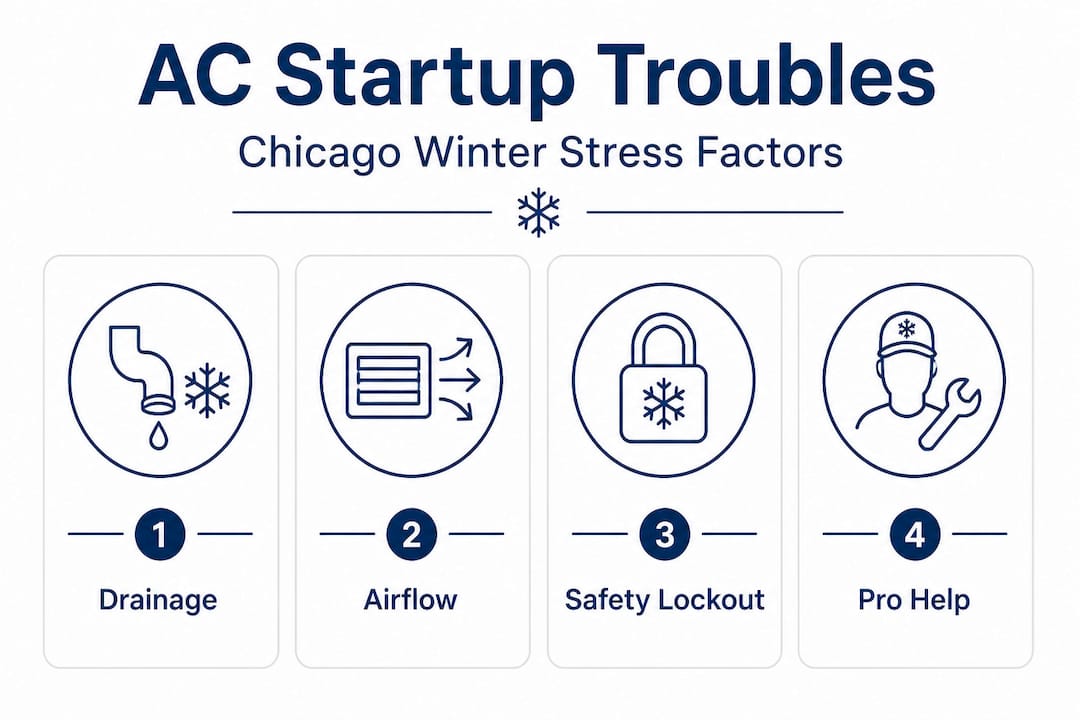
The most frequent startup blockers fall into three categories: drainage problems, airflow restrictions, and safety lockouts.
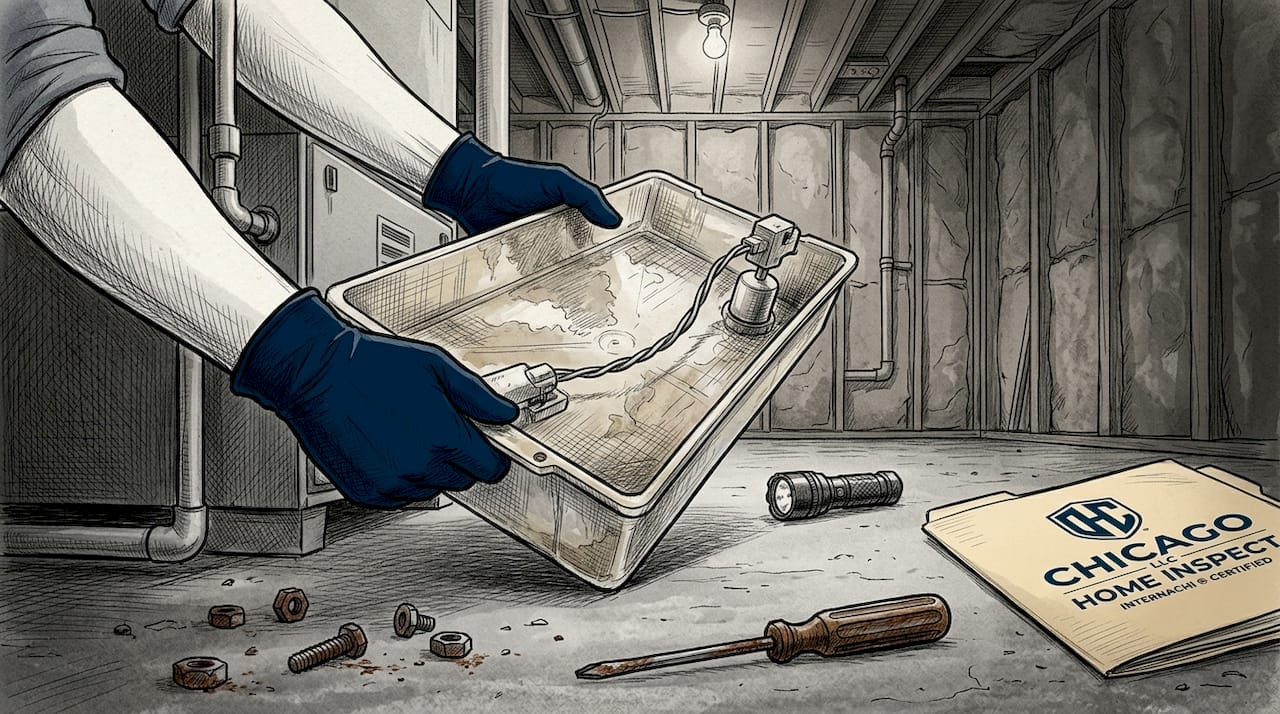
Drainage issues are the sneakiest. A clogged condensate drain or drain pan float switch can trigger a complete safety shutdown that looks identical to a dead system. The float switch is a small safety device in your drain pan. When water backs up, the float rises and cuts power to the AC to prevent water damage to your home. Many homeowners don’t even know it exists.
Airflow restrictions are just as problematic. Frozen evaporator coils and dirty filters block the airflow your system needs to run safely, causing the unit to shut itself off before it ever really gets going. After months of inactivity, filters that looked fine in fall are now clogged with dust, pet hair, and whatever else settled during winter.
Safety lockouts confuse homeowners the most because they produce no warning light, no error code, and no obvious sign of what triggered them. A tripped breaker or float switch simply makes the system look completely dead.
Here’s a quick breakdown of the most common post-winter AC problems in Chicago:
| Problem | What you see | Cause |
|---|---|---|
| Float switch triggered | AC completely unresponsive | Clogged condensate drain line |
| Dirty/frozen evaporator coil | Weak airflow, no cooling | Blocked filter or low refrigerant |
| Tripped breaker | No power to system | Electrical fault or power surge |
| Blocked outdoor unit | Fan runs, no cooling | Debris, leaves, or ice around condenser |
| Dead thermostat batteries | No response at all | Batteries drained over winter |
Staying ahead of these issues is exactly what a winter home maintenance list is designed to help you do. If you follow a solid annual maintenance checklist throughout the year, spring startup becomes much more predictable. Most of the problems we see in March and April are preventable, and the ones that aren’t are at least easier to diagnose when you know your system’s recent history.
One thing Chicago homeowners often overlook is what happens during a mild winter. You might assume your AC is in great shape because it wasn’t exposed to the worst cold. In reality, mild winters with fluctuating temperatures create more freeze-thaw cycles, not fewer, and that repeated cycling is harder on drain lines and outdoor coils than a steady deep freeze. Check out what hidden winter maintenance tasks most homeowners miss to see how winter affects more of your home than you’d expect.
What you need before troubleshooting your AC
Knowing what can go wrong, here’s what to have ready and check before you get hands-on.
Before you touch your AC system, take five minutes to gather the right tools and set up safely. Rushing into diagnostics without cutting power or having the right gear is how small problems become expensive ones.
What to gather before you start:
- Flashlight (the indoor air handler closet is usually dark)
- Work gloves (sharp metal edges inside units)
- Your owner’s manual (thermostat settings vary by brand)
- A dry cloth or small bucket (for condensate drain inspection)
- Your phone, charged, in case you need to call a pro
Locate your AC disconnect box, which is usually a gray weatherproof box mounted on the exterior wall near your outdoor condenser unit. Also find your main electrical panel so you can check the breakers. Cut power at both the disconnect and the breaker before you open any access panels.
Here’s a quick comparison of what’s safe for homeowners versus what requires a licensed technician:
| Task | Homeowner safe? | Notes |
|---|---|---|
| Replacing air filter | Yes | Easy, no tools needed |
| Resetting tripped breaker | Yes, once | Stop if it trips again |
| Clearing condensate drain line | Yes | Use flush or wet/dry vac |
| Checking thermostat settings | Yes | Replace batteries first |
| Inspecting refrigerant lines | No | Requires EPA certification |
| Testing capacitors or contactors | No | Electrical hazard |
| Recharging refrigerant | No | Licensed only |
One thing worth following are the winter home safety tips that apply directly to HVAC work. Working around electrical components in a damp basement or utility room carries real risk.
Pro Tip: Never force your AC to restart multiple times in a row. If a safety condition triggers a shutdown, like a tripped breaker or float switch lockout, repeated restarts can turn a minor problem into a burned-out motor or failed compressor. Reset once, observe, and stop if the fault returns.
Step-by-step: How to troubleshoot AC startup problems after winter
With your tools and safety strategy lined up, here’s how to systematically find the cause.
Work through these steps in order. Skipping ahead is tempting, but a systematic approach saves you time and prevents misdiagnosis.
Check the thermostat first. Replace the batteries even if you think they’re fine. Set the mode to COOL and the temperature at least 5 degrees below the current room temperature. Many spring “no-start” calls are resolved at this step alone.
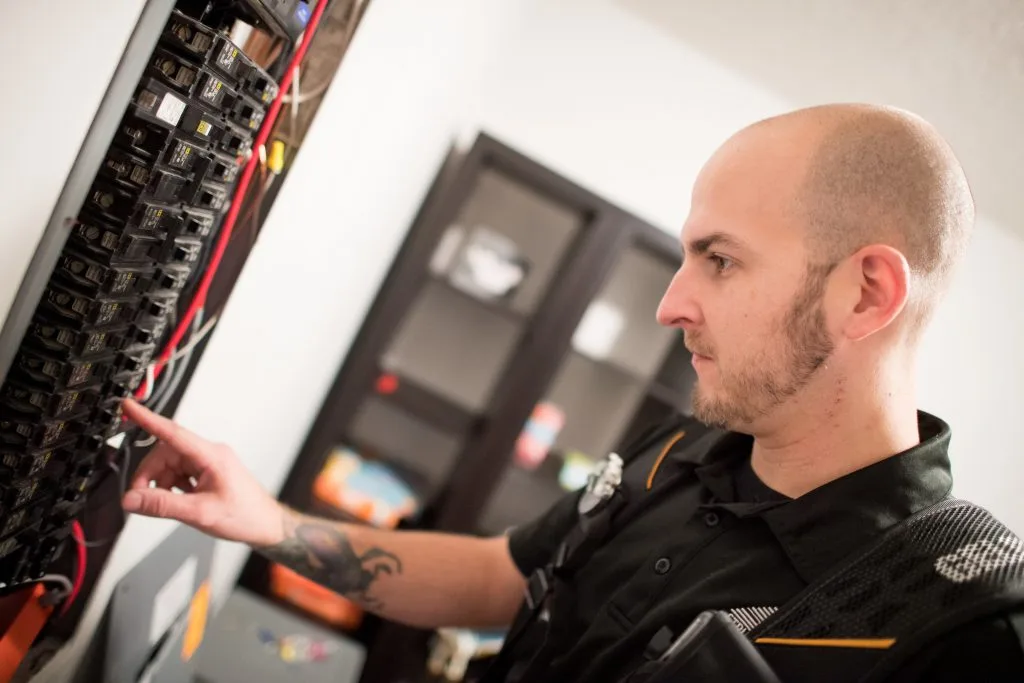
Check your circuit breakers. Go to your electrical panel and look for any breakers in the tripped position (usually halfway between ON and OFF). Reset it once by switching it fully off, then back on. If it trips again, stop. Repeated breaker trips signal an electrical fault that a homeowner cannot safely diagnose.
Locate and clear the condensate drain. Find the PVC drain line near your indoor air handler. If the drain pan has standing water, the float switch has likely cut power to the system. Clear the blockage using a wet/dry vac on the drain outlet or by flushing the line with distilled white vinegar. Once cleared and dried, the float switch should reset automatically.
Replace the air filter. Pull the filter and hold it up to light. If you can’t see light through it, it’s clogged. A blocked filter causes frozen evaporator coils within hours of running the system. Replace it before doing anything else that involves powering on the unit.
Inspect the outdoor condenser unit. Look for debris, leaves, or ice packed against or inside the unit. Remove debris by hand or with a gentle garden hose spray. Never use a pressure washer. If you see ice, leave the system off and let it thaw completely before restarting. This can take several hours.
Listen carefully when you attempt a restart. Once you’ve cleared obvious obstructions, restore power and set the thermostat to cool. Listen for the indoor blower fan. Here’s what different symptoms tell you:
Indoor fan runs but outdoor unit is silent: This pattern typically points to a power path problem at the outdoor unit, such as a failed capacitor, a tripped disconnect, or a faulty contactor. These are not homeowner repairs. A symptom-based approach like this one lets you give the technician precise information, which cuts down diagnostic time and your bill.
You can view real HVAC inspection examples from Chicago homes to understand what normal and abnormal components look like before you start poking around. If you notice the fan is running but cooling isn’t happening, the signs of a bad blower motor are worth knowing before you call a technician.
When to stop and call a Chicago HVAC professional
There comes a point when a persistent problem or repeated resets mean a pro needs to step in.
Knowing when to stop is just as important as knowing how to start. The DIY steps above handle the most common issues, but some symptoms require tools and certifications that go beyond what any homeowner should attempt.
Stop troubleshooting and call a pro when you see:
- The breaker trips more than once after a single reset
- The indoor blower runs normally but the outdoor unit never starts
- Unexplained puddles near the indoor air handler that return after clearing the drain
- Ice buildup on refrigerant lines or the indoor coil that keeps returning
- A burning smell or any smell of electrical burning when the system runs
- The system starts but cycles off within a few minutes repeatedly
These symptoms point to electrical faults, refrigerant problems, or failed components like capacitors and contactors. Capacitors store electrical charge and can deliver a dangerous shock even after power is cut. Refrigerant handling requires EPA Section 608 certification. Neither of these is a DIY situation.
| Symptom | Likely cause | DIY or pro? |
|---|---|---|
| Breaker trips repeatedly | Electrical short or failed component | Pro only |
| Outdoor unit silent, fan runs | Capacitor, contactor, or disconnect | Pro only |
| Return puddles after drain clearing | Cracked drain pan or secondary drain clog | Pro assessment |
| Refrigerant line frosting over | Low refrigerant or airflow restriction | Pro only |
| System short cycles repeatedly | Thermostat calibration or refrigerant issue | Pro assessment |
If you force the system to keep running through a safety lockout condition, you risk damaging a compressor that can cost $1,500 or more to replace. A service call costs a fraction of that.
Chicago springs can be unpredictable. A system you need to run comfortably in May might have spent the last week dealing with temperatures below freezing. The combination of hidden exterior problems after winter and internal AC issues is more common than most homeowners expect, especially in homes older than 15 years.
A Chicago HVAC veteran’s perspective: Why post-winter AC failures are preventable (and what guides get wrong)
Let’s step back and look at what most troubleshooting advice misses, direct from a Chicago HVAC pro’s experience.
Here’s what we see that most online guides skip entirely: the majority of spring AC failures we encounter in Chicago are not equipment failures. They’re maintenance failures. A homeowner who replaced the filter in October, flushed the condensate drain before winter, and covered the outdoor unit properly is almost never the person calling us in April because nothing works.
Most troubleshooting articles treat the symptom without addressing the system. They’ll tell you to reset the breaker or clear the drain, but they don’t explain why those problems happen in Chicago specifically. Our winters create conditions that accelerate failure in ways that milder climates simply don’t produce. Freeze-thaw cycles crack drain pan connections. Humidity fluctuations cause coil corrosion. Extended inactivity lets debris build up in places you can’t see without removing panels.
The other thing most guides get wrong is oversimplifying the restart process. “Just flip the switch and see what happens” is genuinely bad advice here. If your system has a safety condition active, forcing it to start repeatedly converts a $150 service call into a $1,200 compressor repair. We’ve seen it happen dozens of times.
What actually works is symptom-based troubleshooting. Listening carefully to which part of the system is responding tells you more in 30 seconds than most visual inspections reveal in 20 minutes. Indoor fan running with a silent outdoor unit is a completely different problem from total silence. Knowing that distinction before you call a technician helps you explain the problem accurately, and that alone can cut your diagnostic time significantly.
Following solid seasonal maintenance basics through every season is the actual answer to preventing these calls. Not better troubleshooting, better prevention.
Want a worry-free AC startup? See how Chicago pros help
Ready for absolute peace of mind this spring? Here’s how experts can help.
A spring home inspection that includes your HVAC system catches the kind of problems this guide describes before they strand you in a hot house in July. Our InterNACHI-certified inspectors document everything with real photos and plain-language explanations so you understand exactly what your system needs. You can see detailed HVAC inspection photos from Chicago homes to get a clear picture of what a professional inspection actually covers, and view interior home system results to see how we document air handlers, drain pans, and more. Booking early in the season means you beat the summer rush and have time to address any issues before you need the system running at full capacity. Book your HVAC spring inspection today and go into summer with confidence.
Frequently asked questions
Why does my AC’s float switch stop it from turning on?
If the drain pan fills up or the condensate line clogs, the float switch triggers a safety shutdown to prevent water damage until the blockage is cleared and the pan drains completely.
How long should I wait for a frozen AC coil to thaw before restarting?
Wait several hours with the system fully off, since forcing a frozen coil to run causes further damage. Watch for water around the indoor unit as a sign it’s thawing correctly.
What should I do if resetting my AC’s breaker doesn’t work?
If the breaker trips a second time, stop resetting it immediately, because repeated trips indicate an electrical fault that requires a licensed technician to diagnose safely.
Is it safe to open my outdoor AC unit for troubleshooting?
You can safely remove debris from the exterior, but only open access panels with the power fully disconnected. For anything involving electrical components, stop and contact a pro rather than risk a shock from a charged capacitor.
Recommended
- Annual home maintenance checklist for Chicago homeowners
- 7 Winter Prep in Chicago: Hidden Maintenance Tasks Most Homeowners Miss | Chicago Home Inspect LLC
- Winter Home Maintenance List to Prevent Damage in Chicago | Chicago Home Inspect LLC
- Fall Home Maintenance Checklist | Chicago Home Inspector Tips
- Solve Common HVAC Issues for Cleaner, Efficient Air
- Fix common air conditioning problems: solutions that last