

April has a way of exposing what winter tried to hide. One week your home looks fine, and the next you’re staring at a cracked driveway, a sagging gutter, or a suspicious water stain on your ceiling. For Chicago homeowners, this isn’t bad luck. It’s a predictable pattern driven by freeze-thaw cycles, snowmelt, and spring rains that stress every surface of your home’s exterior. The good news is that once you know what to look for and why it happens, you can catch these problems early, before a minor repair turns into a major bill.
Table of Contents
- Why winter damage hides until spring
- Roofing issues revealed by April rains
- Concrete, foundations, and why cracks appear in spring
- Gutter and water flow issues emerging with the thaw
- What most homeowners miss: Subtle warning signs
- The real reason spring reveals your home’s weak points
- Get a professional spring exterior inspection
- Frequently asked questions
Key Takeaways
| Point | Details |
|---|---|
| Spring exposes hidden damage | Winter masks many exterior problems that only emerge when thaw and rain return in April. |
| Roof, concrete, gutters at risk | Roofs, driveways, patios, and water management systems are common trouble spots after Chicago winters. |
| Early detection saves money | Catch subtle warning signs or call a pro in April to avoid major repairs later. |
| Pro tips prevent surprises | Knowing what to look for—like granules in gutters or unusual cracks—can prevent costly escalation. |
Why winter damage hides until spring
Winter in Chicago is brutal, but it’s also deceptive. Snow and ice act like a blanket over your home’s exterior, physically covering cracks, gaps, and damaged surfaces. Frozen ground holds concrete in place even when the soil beneath has already shifted. You simply can’t see the full picture until everything thaws.
The real culprit is the freeze-thaw cycle. Water seeps into tiny gaps in your roof, siding, concrete, and foundation, then freezes and expands. That expansion widens the crack. When it thaws, the crack stays wider. This repeats dozens of times over a Chicago winter, quietly compounding damage that stays invisible under snow cover.
Spring doesn’t create these problems. It just pulls back the curtain. The damage was already done during winter. What you’re seeing in April is the result of months of stress your home absorbed while it looked perfectly fine from the outside.
Here are the types of damage that commonly stay hidden until April:
- Roof damage from ice dams, shingle lifting, granule loss, and flashing failures
- Concrete spalling and cracking on driveways, patios, and walkways
- Foundation cracks caused by soil movement and frost heave
- Gutter separations, sagging, and blockages from ice and debris
- Siding gaps and paint peeling from moisture intrusion
Even if you followed a solid winter maintenance list last fall, some damage is unavoidable. Chicago winters are simply that hard on structures. Knowing the common Chicago exterior issues that show up every spring puts you ahead of most homeowners on your block.
Roofing issues revealed by April rains
Your roof takes more punishment than any other part of your home during a Chicago winter. Ice dams form when heat escapes through your attic, melts snow on the roof, and that water refreezes at the cold eaves. The ice backs up under shingles, forcing water into your home. You often don’t see the result until April rains hit.
Roof damage from ice dams, shingle lifting, granule loss, and flashing issues frequently reveals itself only after the snow is gone and rain starts falling. By then, the leak is already inside your walls or attic.
| Problem | Likely April symptom | Winter hiding factor |
|---|---|---|
| Ice dam damage | Ceiling water stains | Snow covered affected area |
| Shingle lifting or curling | Visible gaps or missing shingles | Frozen flat under snow load |
| Granule loss | Bare shingle patches | Granules washed into gutters |
| Flashing failure | Leaks around chimney or vents | Frozen sealant masked gaps |
For spring roof tips that go beyond a visual scan, start inside your attic. New water stains on the sheathing or insulation after the first April rain are a clear signal that your roof has a breach somewhere.
Pro Tip: After the first significant spring rain, go into your attic with a flashlight and look for fresh dark spots or wet insulation. This is often the earliest warning you’ll get before a leak becomes visible on your ceiling below.
For hard-to-see moisture damage, professionals use thermographic imaging to detect hidden wet spots inside roofing assemblies. You can also browse Chicago roofing inspection photos to get a sense of what real winter roof damage looks like up close.
Concrete, foundations, and why cracks appear in spring
April also brings a wave of cracking and shifting to driveways, patios, and the base of your home. This surprises a lot of homeowners because the concrete looked fine all winter. Here’s what actually happened.
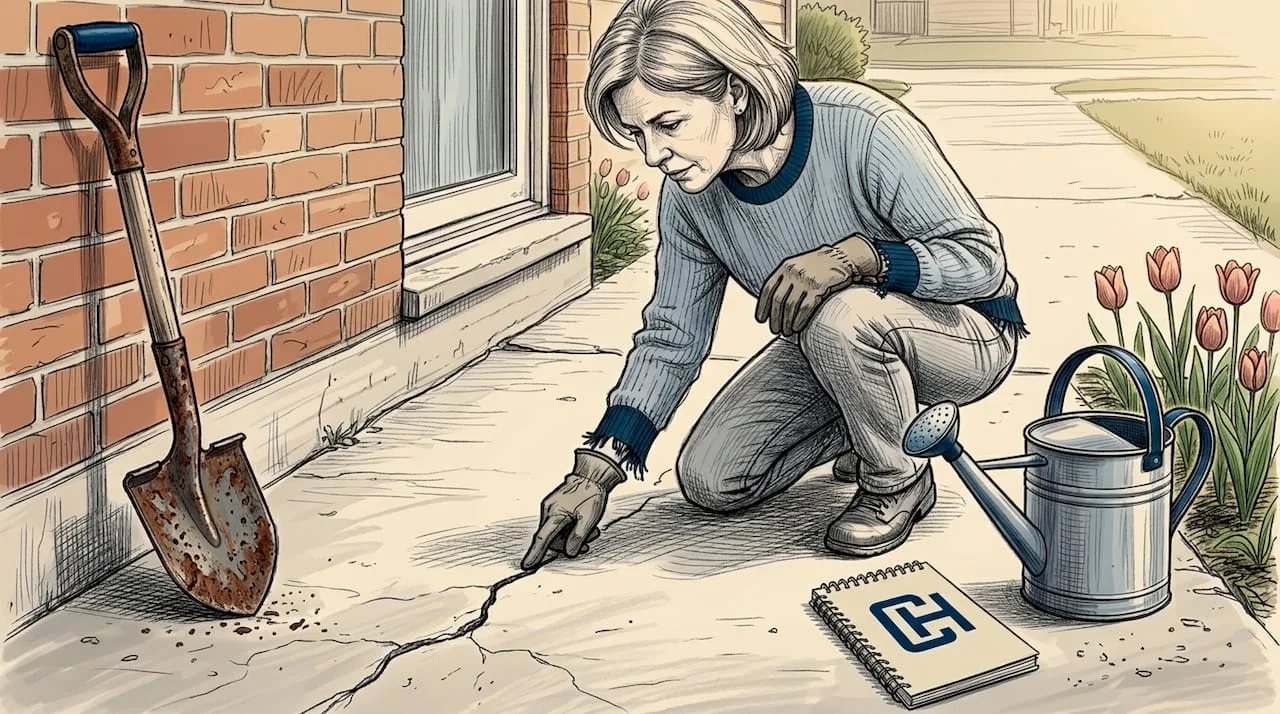
As frozen ground softens, the soil beneath your concrete loses its rigid support. Concrete surfaces often show new cracks after thawing ground softens soil, erodes support, and causes uneven settlement. In Chicago, where clay-heavy soils are common, this movement is even more pronounced because clay expands when wet and contracts when dry.
| Crack type | What it looks like | Risk level |
|---|---|---|
| Hairline crack | Thin surface line, no displacement | Low, monitor it |
| Horizontal crack | Runs across foundation wall | High, structural concern |
| Stair-step crack | Follows mortar joints in block or brick | Moderate to high |
| Vertical crack | Straight up-down line | Moderate, check for water entry |
Horizontal cracks in a foundation wall are the most serious. They can signal lateral soil pressure pushing against the wall, which is a structural issue that needs a professional right away.
Watch for these foundation warning signs in April:
- New cracks wider than a quarter inch
- Doors or windows that suddenly stick or won’t close properly
- Gaps between your foundation and the sill plate above it
- Water pooling against the foundation after rain
- Uneven or sunken sections of your driveway or patio
If you notice any of these, reviewing rain-related foundation issues can help you understand how water flow makes these problems worse. For brick or stone surfaces showing surface flaking, brick spalling solutions specific to Chicago’s climate are worth reviewing before you attempt any repairs.
Gutter and water flow issues emerging with the thaw
Foundation and concrete problems almost always have a water flow component. That’s why your gutters deserve serious attention every April. They are the first line of defense between your roof and your foundation, and winter is not kind to them.
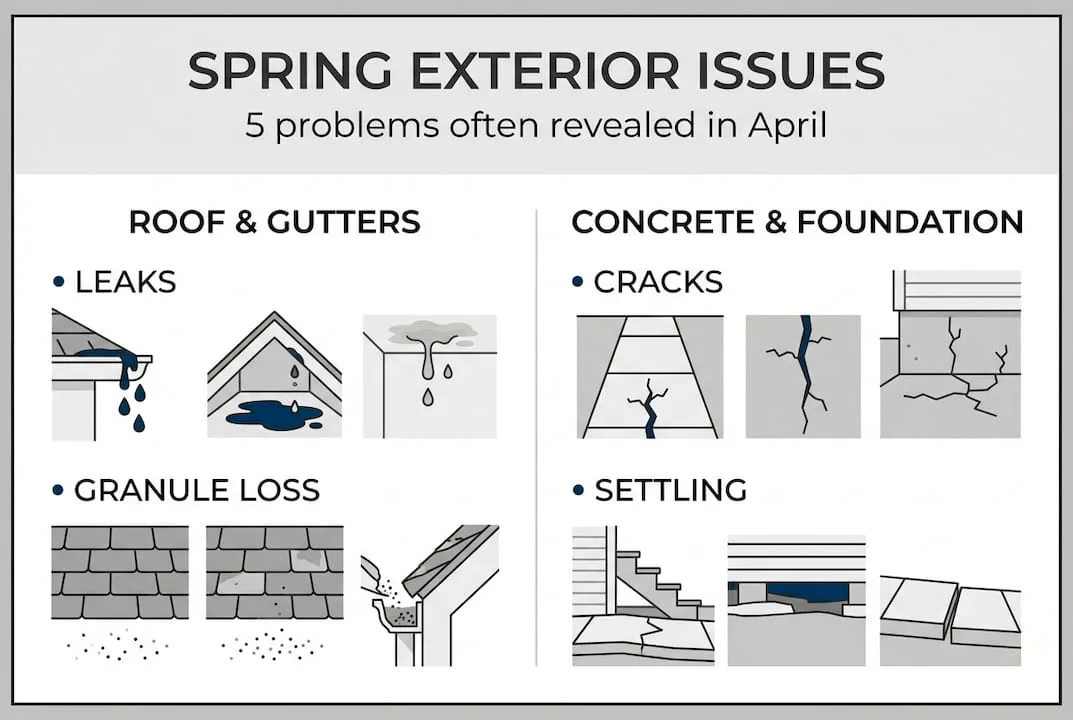
Ice and heavy snow loads pull gutters away from the fascia board. Debris and ice freeze inside the channels, and when everything thaws, gutters sagging or pulling away and clogged with granules and debris lead directly to overflow and foundation erosion during April melt.
Here’s how to check your gutters this spring:
- Walk the perimeter of your home after a rain and watch for water spilling over the sides instead of flowing through downspouts.
- Look up at the gutter line from the ground. Any visible sagging or sections pulling away from the house need to be reattached or replaced.
- Check where downspouts connect to the gutter. Separated joints are a common failure point after winter.
- Clear any debris from the gutter channel and flush with a garden hose to confirm water flows freely to the downspout.
- Check where downspouts discharge. Water should empty at least four to six feet away from your foundation.
Pro Tip: Look inside your downspouts for a buildup of shingle granules. A heavy accumulation means your roof shingles are wearing down faster than normal, which is a signal to get your roof evaluated before the next heavy rain season.
For a full spring gutter maintenance plan, check the spring gutter checklist that covers Chicago-specific conditions.
What most homeowners miss: Subtle warning signs
Even with the checklists above, many warning signs slip past the untrained eye. The most expensive repairs we see are almost never the dramatic ones. They’re the small clues that got ignored for one more season.
Here are the subtle exterior warning signs that most homeowners overlook:
- Efflorescence (white chalky residue) on brick or block walls, which signals water is moving through the masonry
- Paint bubbling or peeling on wood trim, which means moisture is trapped underneath
- Soft or spongy wood around window frames or door thresholds
- Rust stains running down from fasteners or flashing
- Soil pulling away from the foundation perimeter, creating a gap
One stat worth knowing: thermographic imaging used by professional inspectors can detect moisture hidden inside walls and roofing assemblies that no visual check will catch. This technology has changed how early we can identify problems before they cause structural damage.
A common myth is that small ice dams are harmless and will melt on their own. In reality, even a modest ice dam can force water under shingles repeatedly over a winter, and by April the damage is already done. The hidden maintenance tasks that most homeowners skip in fall are often what allow these small problems to grow.
When you see any of the subtle signs above, don’t wait. The gap between a minor repair and a major one is usually just a few weeks of inaction.
The real reason spring reveals your home’s weak points
After years of inspecting Chicago homes, here’s what we’ve learned that most articles won’t tell you: spring doesn’t break your home. Winter does. But spring is when you find out.
The “wait and see” approach is a gamble that almost always costs more. A small flashing gap caught in April might cost a few hundred dollars to seal. Left until June, after three months of rain, you’re looking at damaged decking, wet insulation, and potential mold. The repair cost multiplies fast.
What surprises most homeowners is that weather damage accumulates in layers. Each Chicago winter adds stress to whatever was already weakened. A roof that survived five winters might fail in the sixth because the cumulative damage finally crossed a threshold. That’s why April inspections matter every year, not just when something looks wrong.
Professionals use thermographic imaging for hidden moisture precisely because visible symptoms are a lagging indicator. By the time you see a stain, the moisture has usually been there for weeks. Getting ahead of that curve is the single most cost-effective thing a Chicago homeowner can do in spring.
Get a professional spring exterior inspection
If anything in this article made you think twice about your roof, gutters, concrete, or foundation, that instinct is worth acting on. Our team inspects Chicago homes and suburbs every spring, and we consistently find issues that homeowners walked past for months without realizing the risk. Browse our exterior inspection photos to see real examples of what winter damage looks like on Chicago homes. If moisture or mold is a concern after a wet winter, we also offer mold testing in Chicago homes as part of our services. We’re InterNACHI Certified, BBB Accredited, and available on weekends. Schedule an inspection today and know exactly where your home stands before small problems get expensive.
Frequently asked questions
What are the most common exterior home problems revealed in April?
Leaks, cracks in concrete, foundation settlement, gutter failures, and damaged shingles often become obvious when snow melts and April rains begin. Roof damage and foundation issues emerge in spring because thaw and rain expose what winter stress caused.
Why did I see no issues in winter but now my driveway or patio is cracking?
Frozen ground holds concrete in place even when the soil beneath has already shifted. As thawing soil softens and shifts, cracks and uneven settlement show up in spring that were completely hidden all winter.
How can I tell if my roof or gutters were damaged over winter?
Check for sagging gutters, shingle debris on the ground, granules in downspouts, and new leaks inside after April rains. Gutters clogged with debris and roof damage become visible once ice and snow are gone.
When should I call a professional for spring exterior problems?
If you see large cracks, persistent leaks, or suspect hidden moisture, call a pro before the problem grows. Thermographic imaging for hidden moisture lets inspectors find damage that no visual check will catch.
Recommended
- Top 5 Hidden Issues Buyers Miss During Showings | Chicago Home Inspect LLC
- Most Overlooked Defects Found in Chicago Home Inspections
- Spring Home Maintenance Tips from Home Inspectors in Chicago
- 5 Simple Things to Inspect Before Home Inspection Services in Chicago
- Travertine Decor Workflow: Cut Cracking Risk 50% in 2026 – Marmorique