
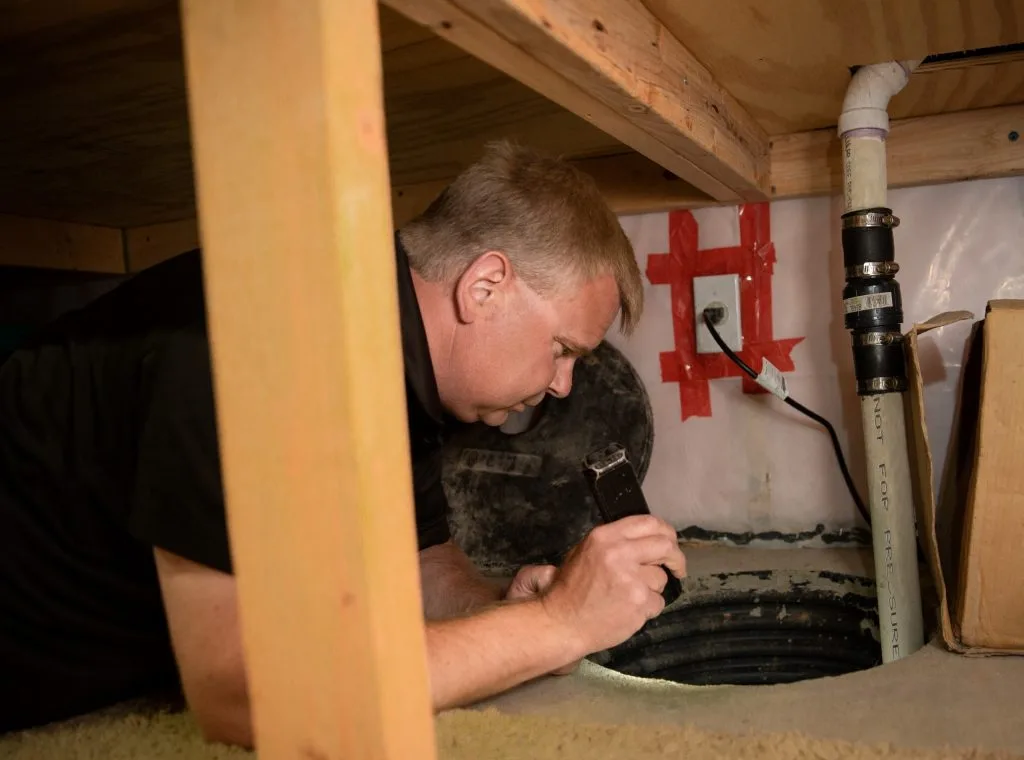
What’s in this library
The following photos document attic conditions during a home inspection. These images highlight safety concerns, maintenance issues, and areas where repairs or further evaluation are recommended. They are provided for your reference and to help illustrate the findings noted in the inspection report.
Free Use for Educational & Media Purposes
We believe in sharing knowledge. Students, content creators, bloggers, educators, journalists, and other media professionals are welcome to use these images for free — as long as proper credit is given.
How to Give Credit:
When using our images, please include:
- A visible credit line near the image or in your content footer
- A link back to our website
Example citation format:
Photo courtesy of Chicago Home Inspect LLC
Step-by-step:
- Download the image you’d like to use
- Add it to your content (blog, article, video, presentation, etc.)
- Place the credit line exactly as shown above, linking to our site
- If using on social media, tag @chicagohomeinspect in the caption
We appreciate your support in helping more people learn about home maintenance and inspection issues.
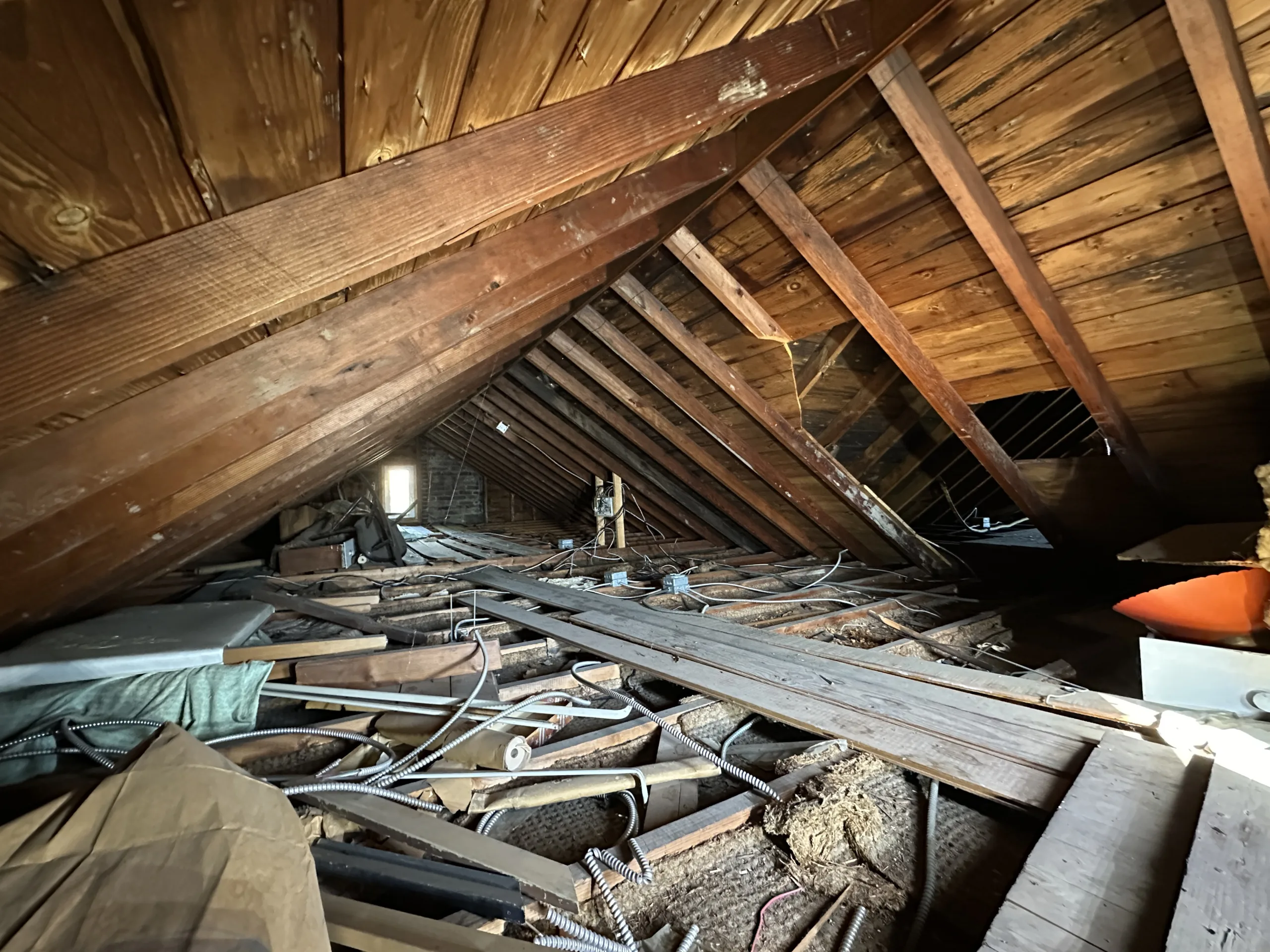
Attic – Debris and Abandoned Wiring
The attic floor is covered with debris, scrap wood, and old wiring, which reduces safety and makes inspection or insulation upgrades difficult, so the area should be cleaned out.
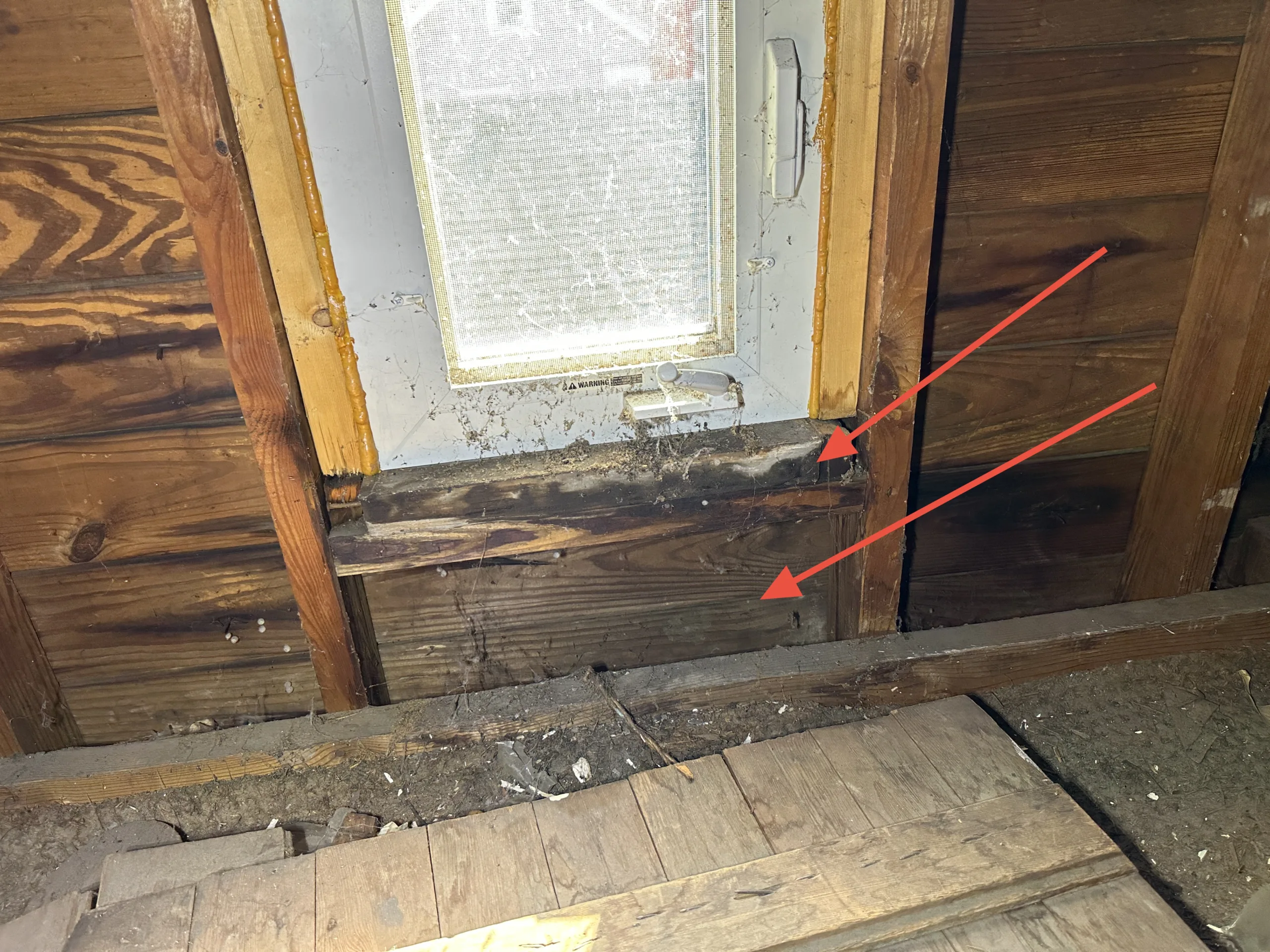
Attic Window – Water Staining at Leak
Water stains are visible around the attic window, showing past or current leakage, so the window flashing and seals should be repaired.
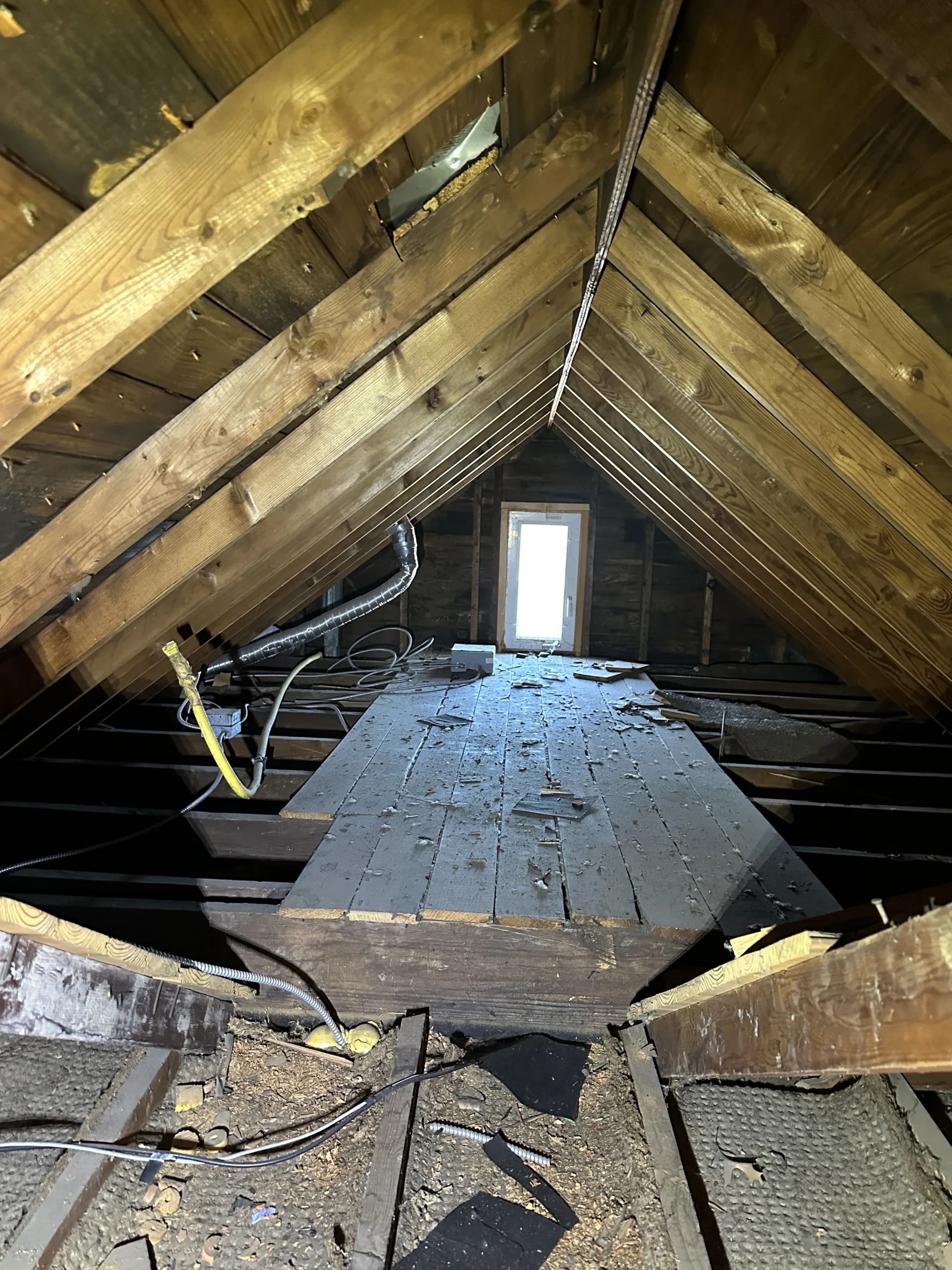
Attic – Inadequate Insulation Depth
The attic has very little insulation, leaving the home under-insulated and less energy-efficient, so additional insulation should be installed to meet recommended levels.
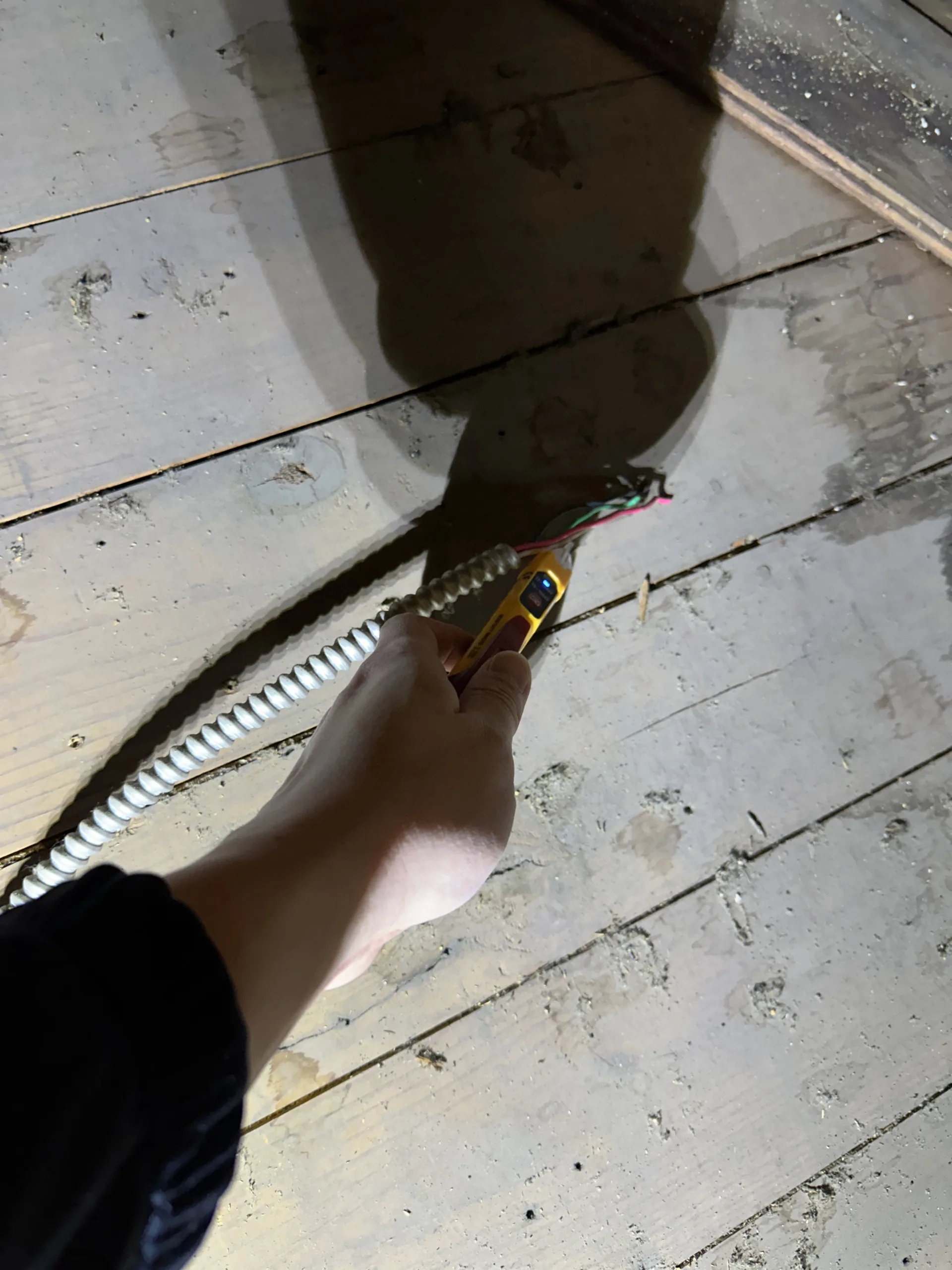
Attic – Exposed Live Wire
An exposed live wire is present in the attic, which is a serious shock hazard, so it should be properly terminated in a junction box or removed by an electrician.
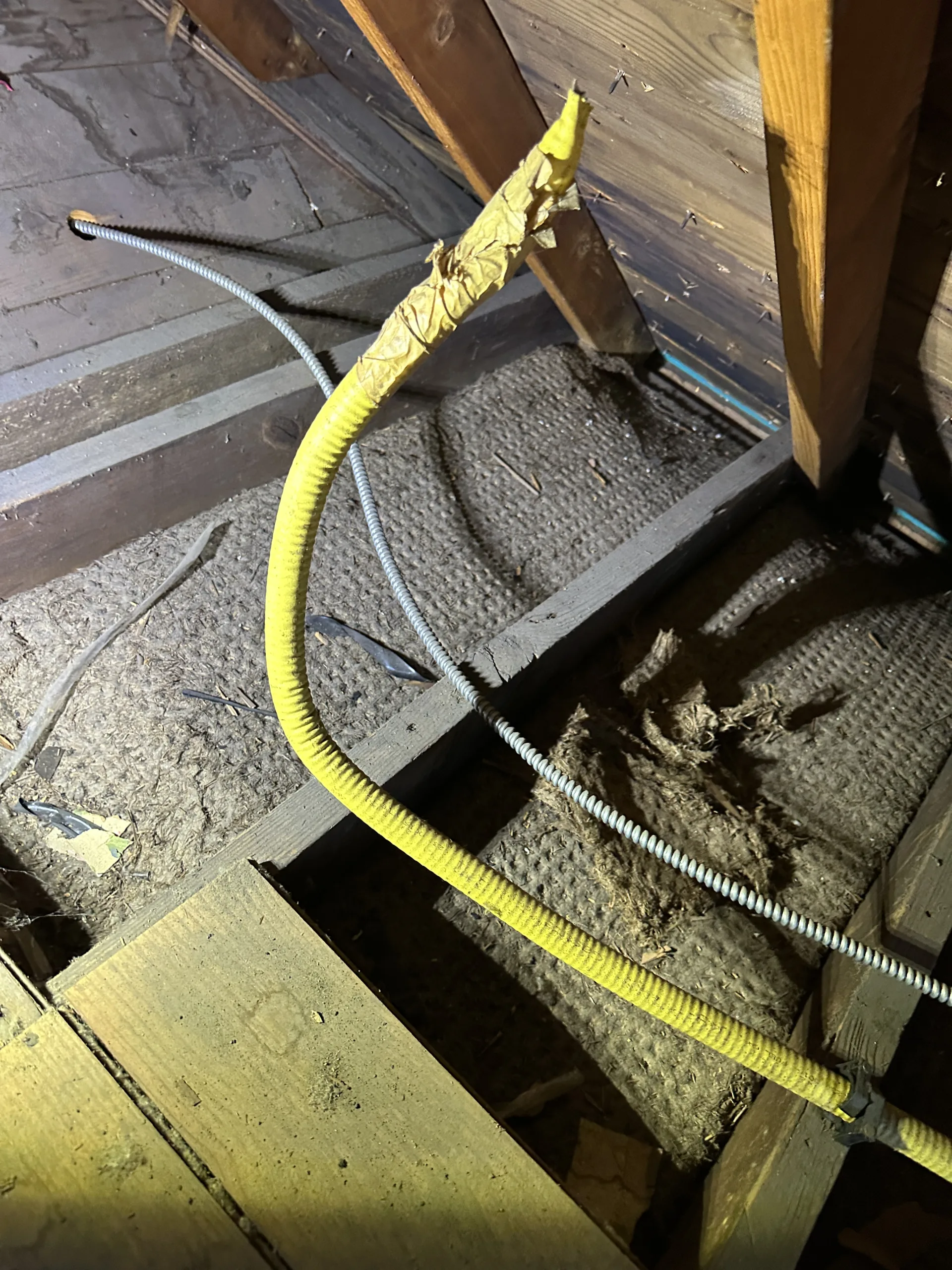
Attic – CSST Gas Line Capped with Tape
A flexible yellow gas pipe (CSST) ends in the attic and is capped with tape, which is unsafe and improper, so it should be corrected by a licensed plumber or gas contractor.
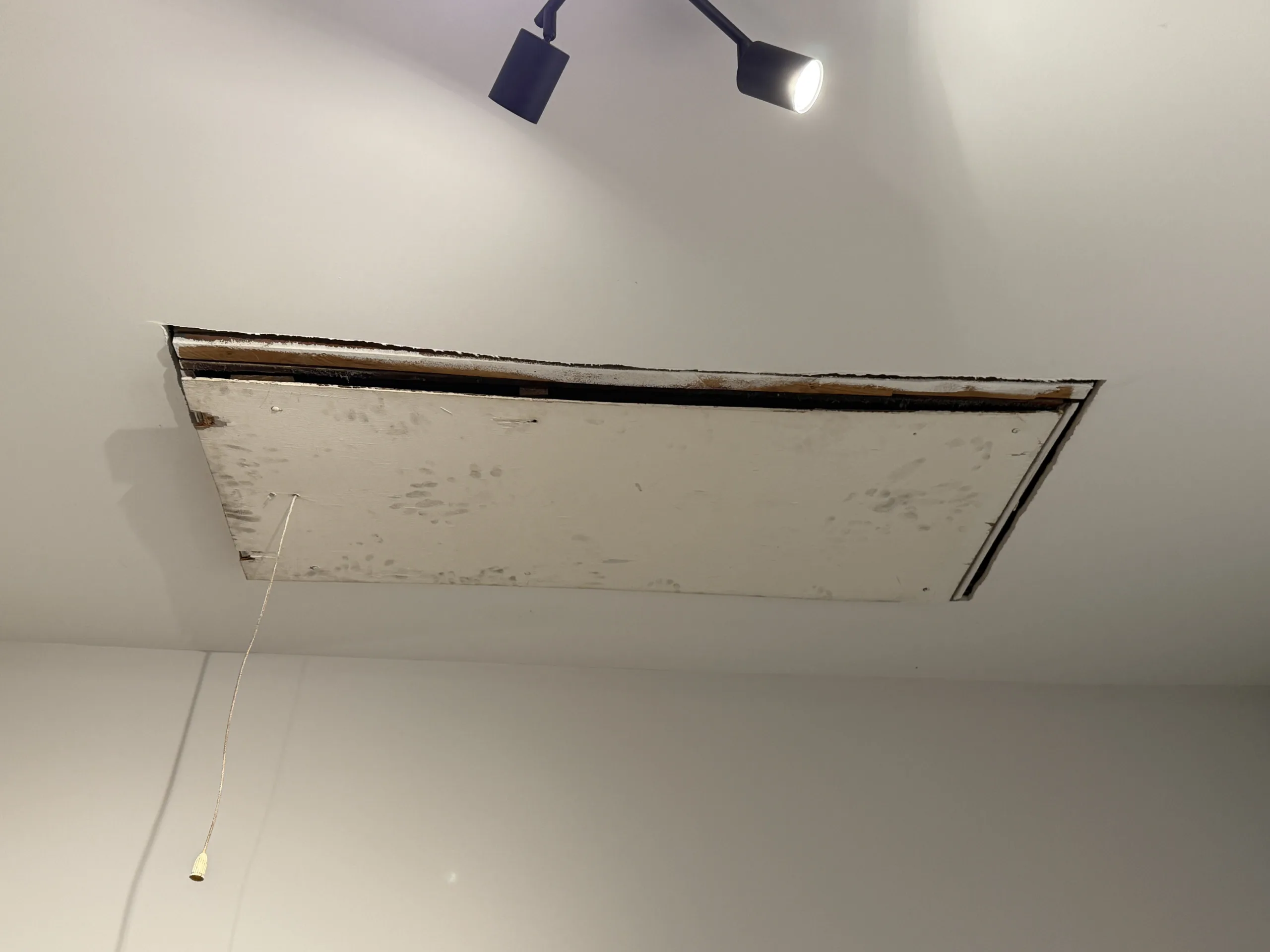
Attic Hatch – Not Sealed
The attic hatch is not sealed tightly around the edges, allowing air leaks into the attic, so weatherstripping or an insulated cover should be installed.
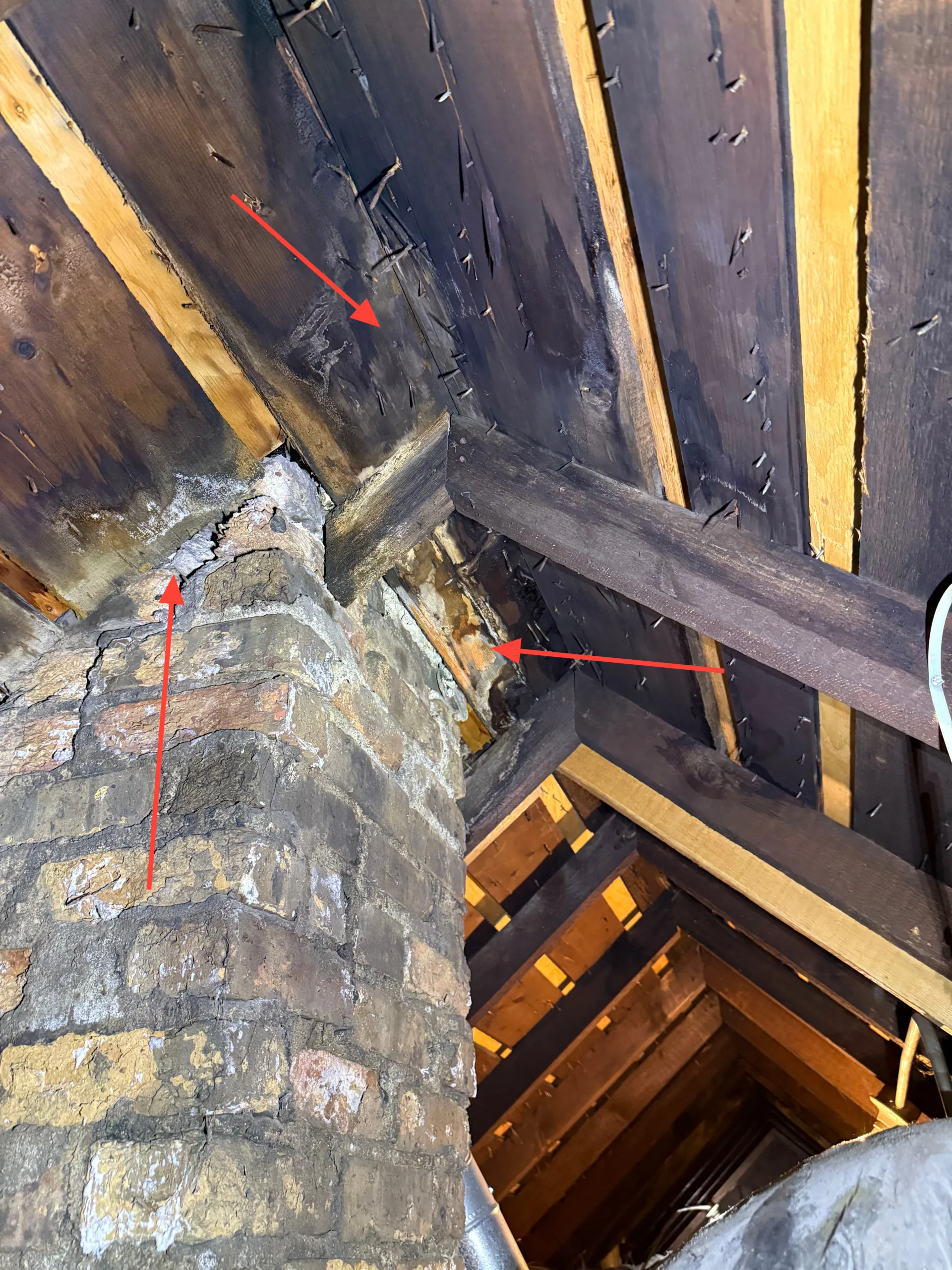
Attic – Water Staining at the Chimney
Water stains are present on the framing and roof deck around the chimney, showing evidence of leakage, so flashing and roof materials in this area should be repaired.
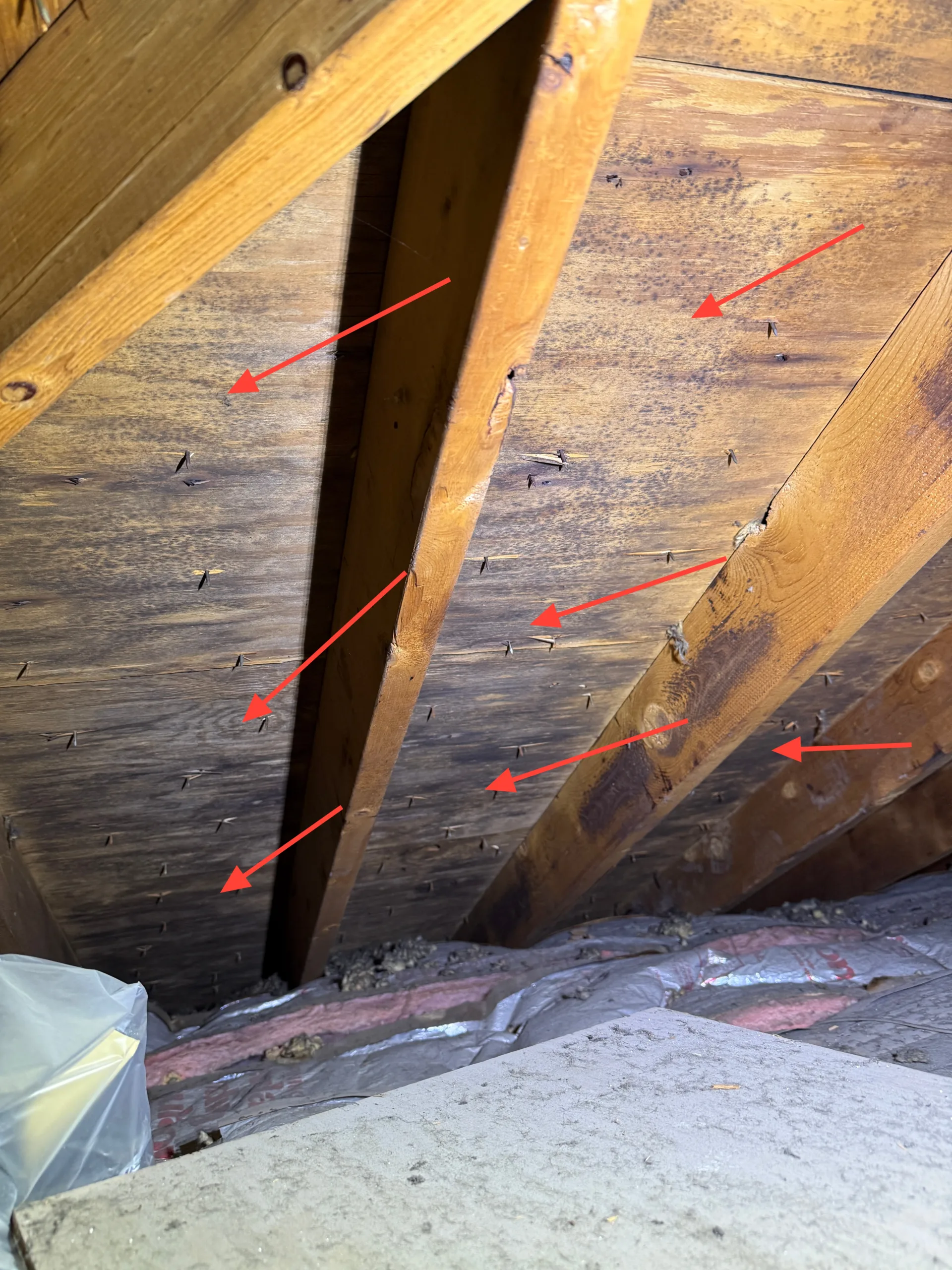
Roof Sheathing – Mold-Like Staining
Dark staining consistent with mold is visible on the roof sheathing, which is often caused by poor ventilation or moisture, so the attic should be evaluated and treated to correct the problem.
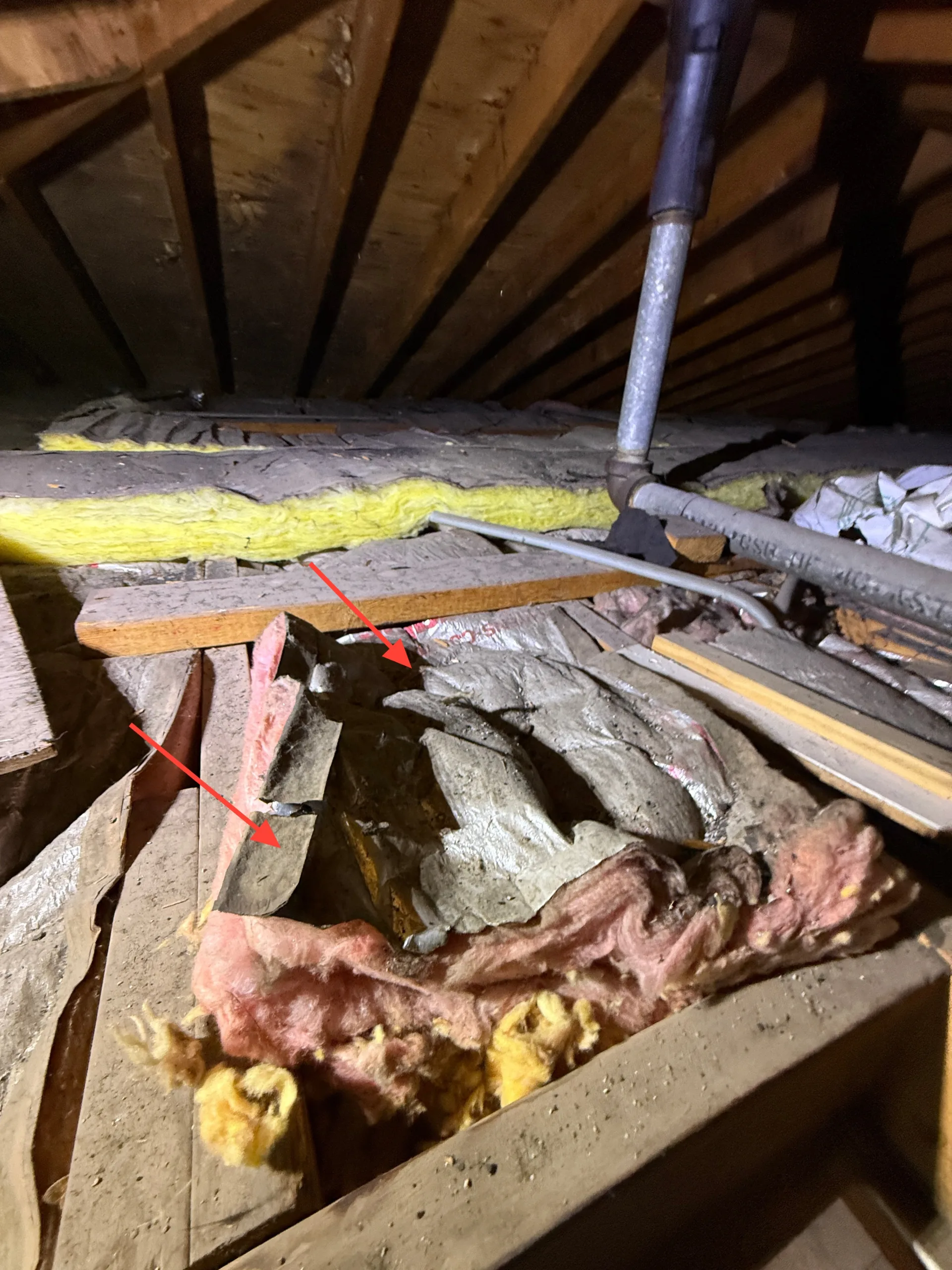
Attic – Batt Insulation Installed Upside Down
Some insulation batts are installed with the vapor barrier facing the wrong way, which can trap moisture and cause damage, so they should be reinstalled with the vapor barrier facing the living space.
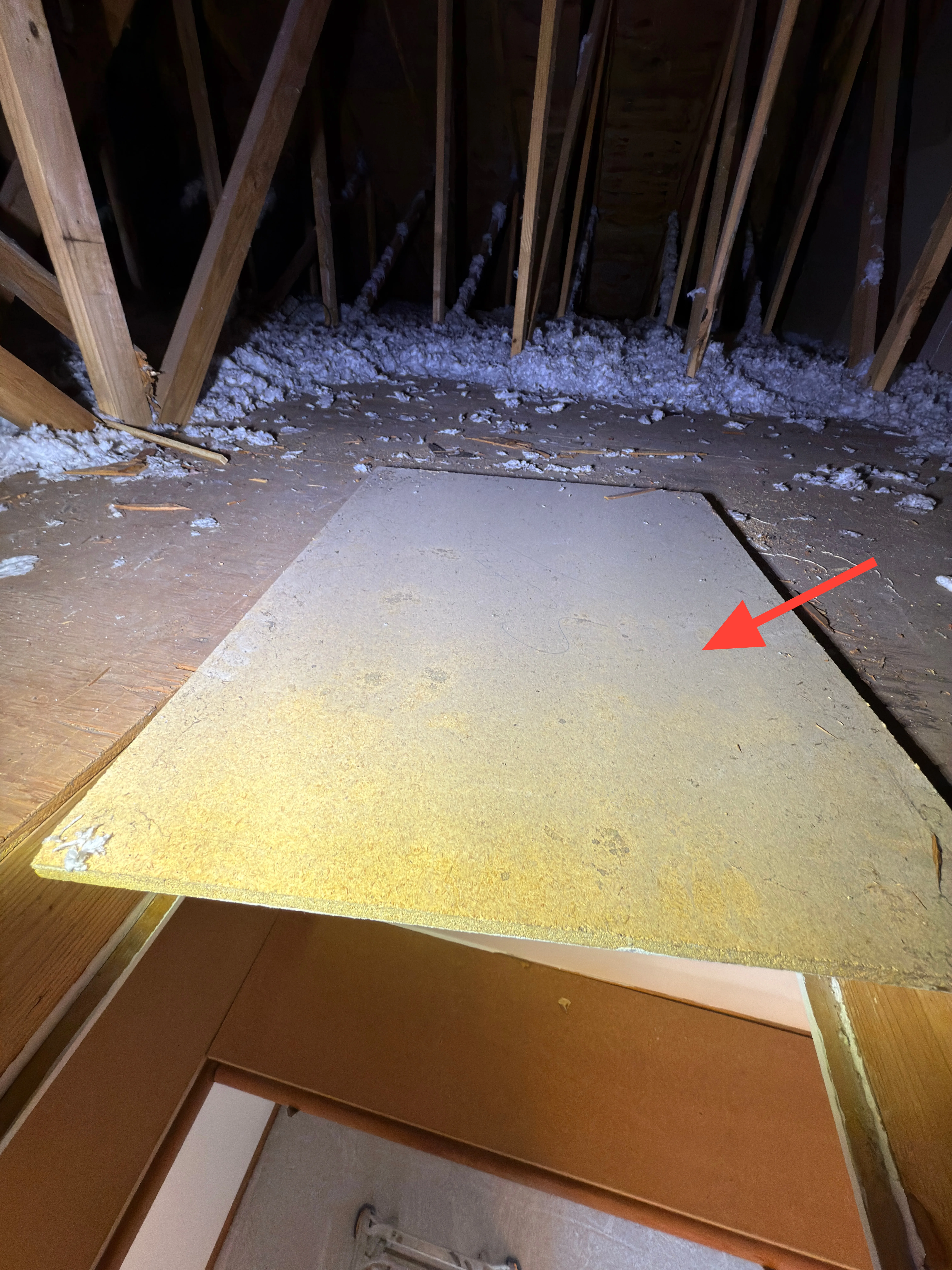
Attic Hatch – No Insulation
The attic hatch has no insulation on top, which allows heat to escape into the attic and reduces energy efficiency, so insulation should be added to improve comfort and efficiency.
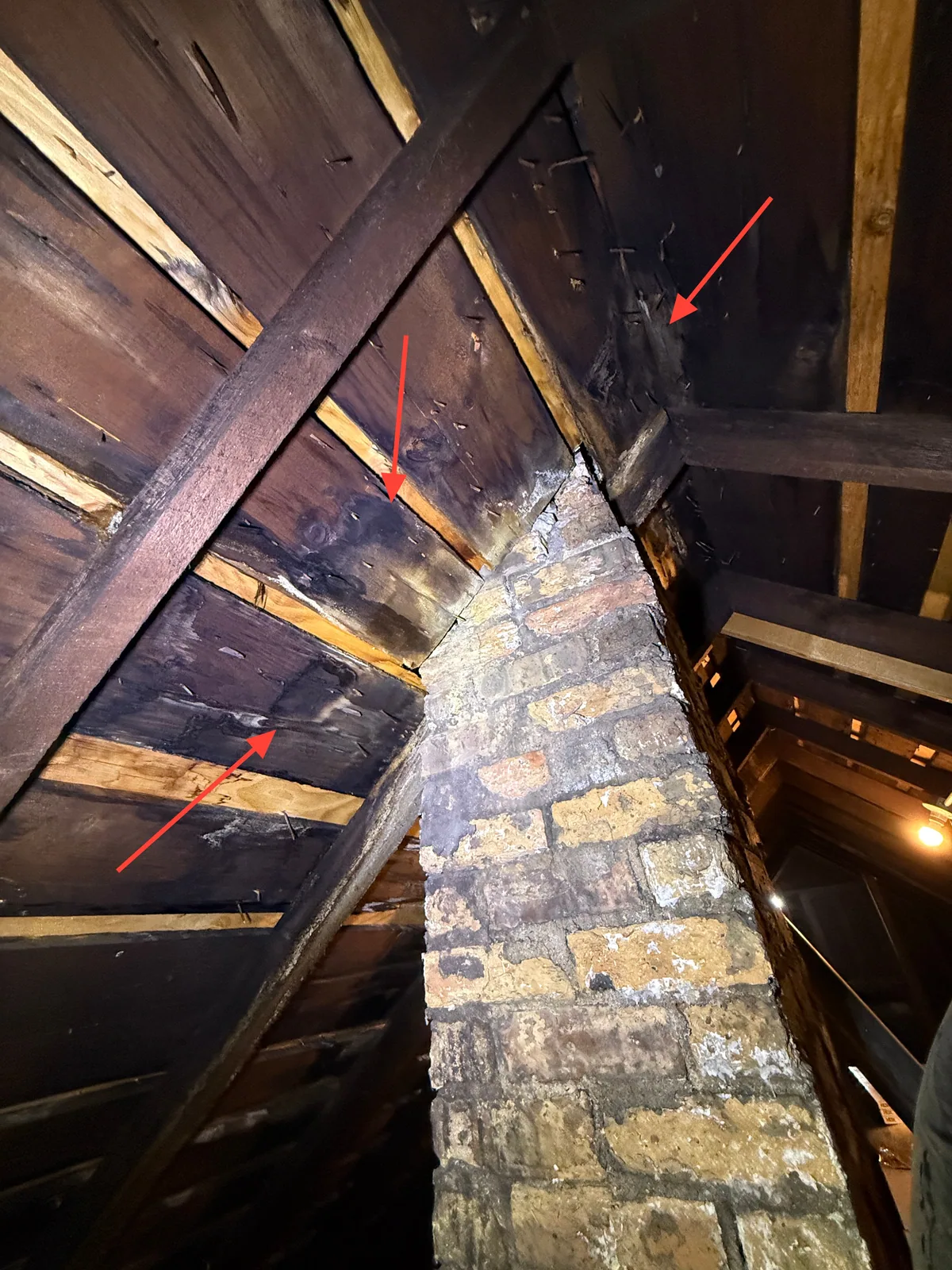
Attic – Water Stains at the Chimney
Water stains were observed on the roof sheathing where the chimney passes through the roof, indicating past moisture intrusion, though the area read dry on a moisture meter at the time of inspection. Stains without active moisture usually mean a leak that has been repaired or one that only shows in certain conditions. Keep the chimney flashing maintained and watch the area for recurrence.
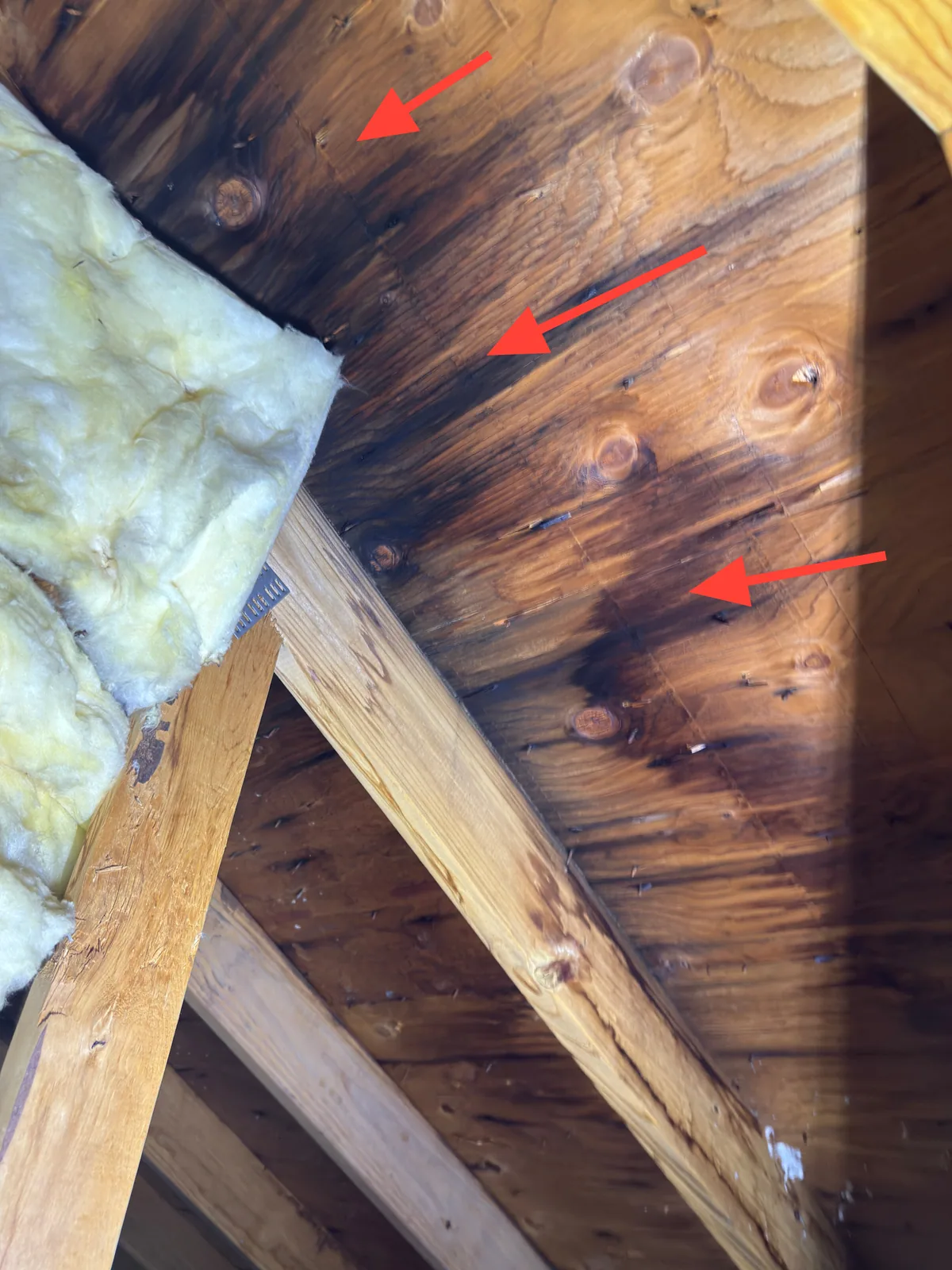
Attic – Water Stains Around the Skylights
Water stains were observed on the roof sheathing around the skylights, and the areas read dry on a moisture meter at the time of inspection. The staining shows prior leakage even though nothing was active. Monitor the area for recurrence and have a qualified roofing contractor evaluate and repair if it returns.
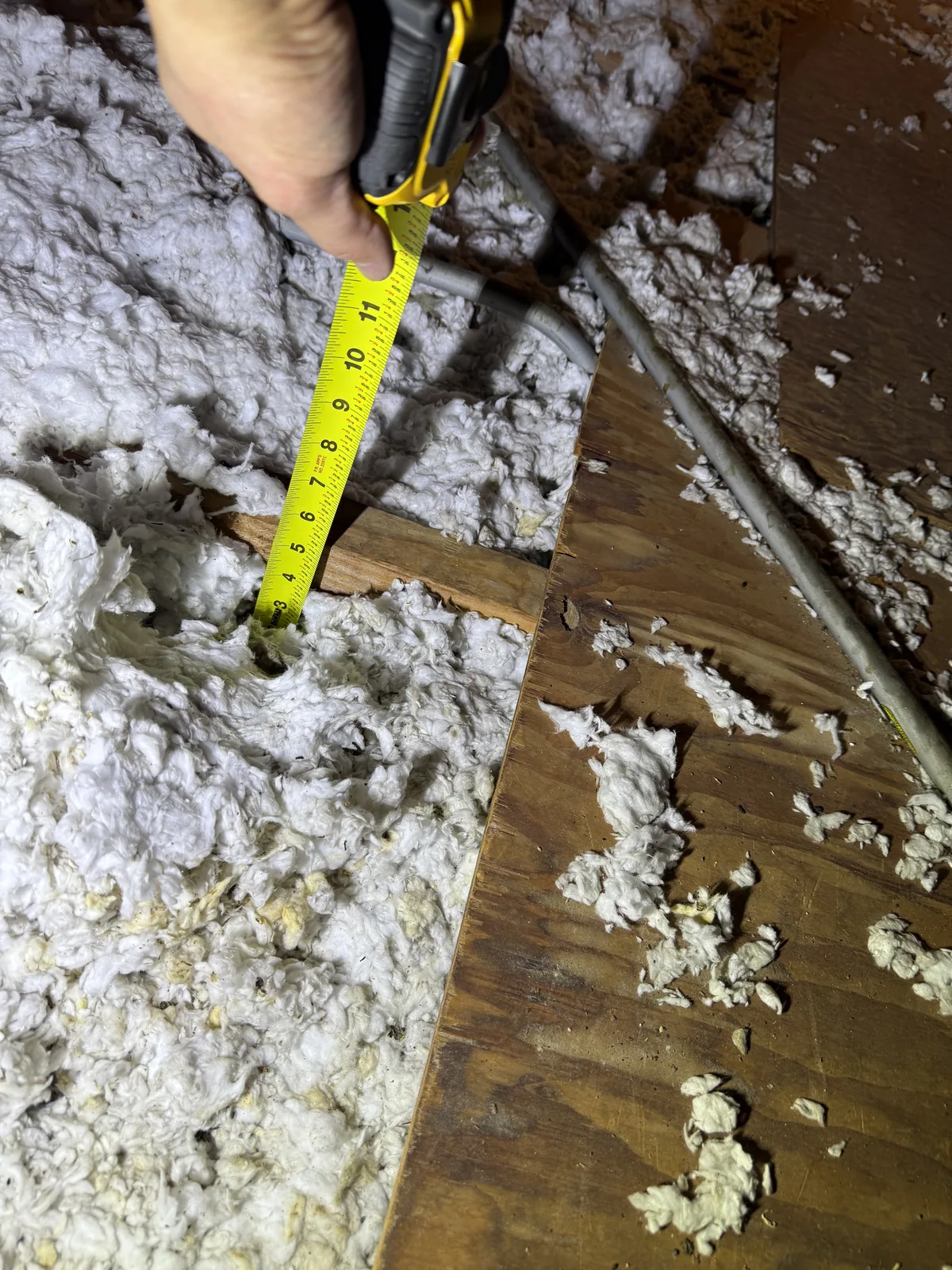
Attic – Insulation Depth Well Below Code
Attic floor insulation averages only 4 to 6 inches deep. That is far short of current energy code levels and shows up directly in heating and cooling costs and in comfort on the floor below. Additional insulation should be installed to bring the attic up to the required depth.
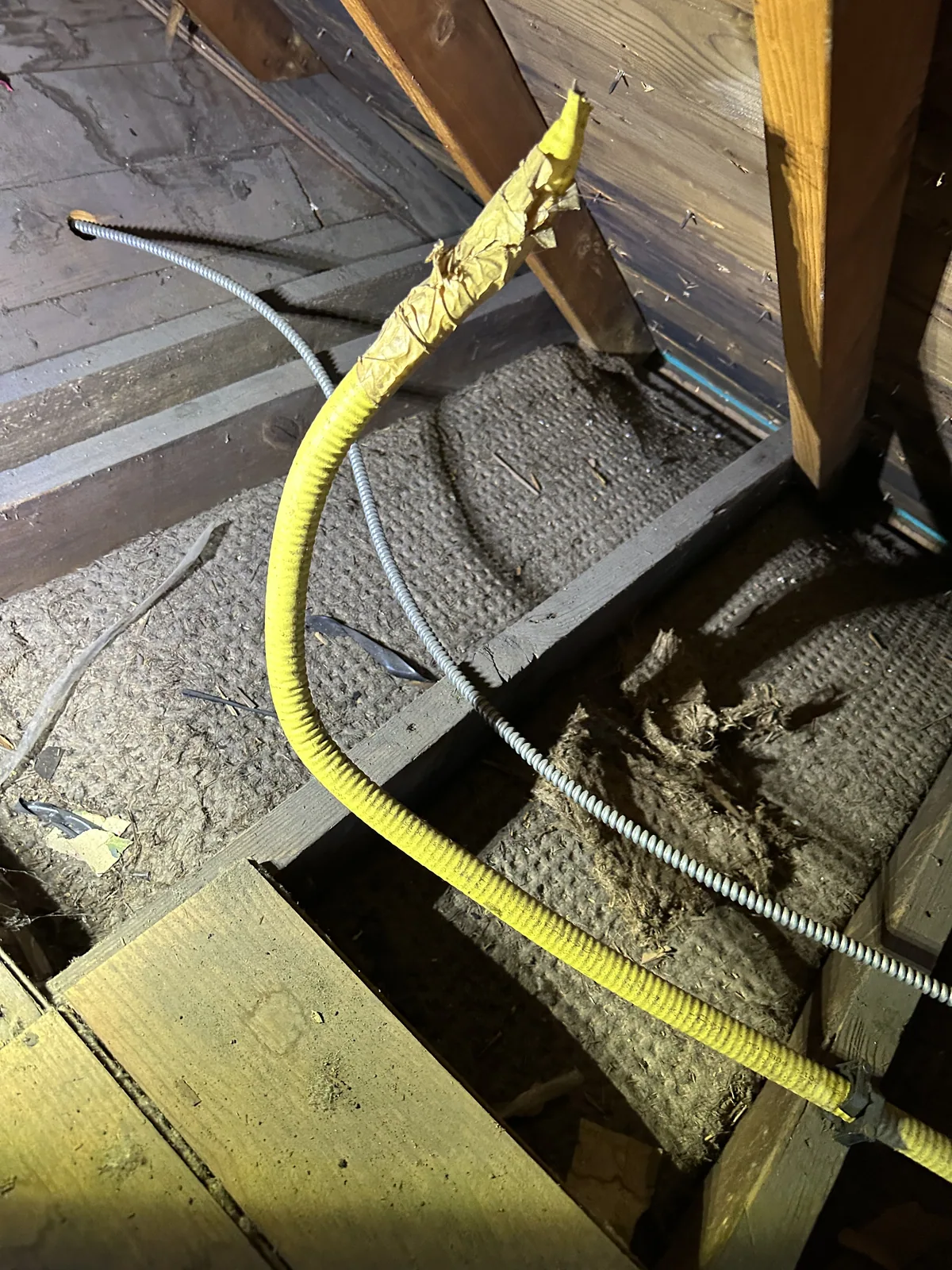
Attic – Gas Line Improperly Terminated
A gas line was found improperly terminated in the attic. It did not appear to be carrying gas, but an abandoned line left open is not a safe way to leave a gas system. It should be properly capped or removed by a qualified contractor.
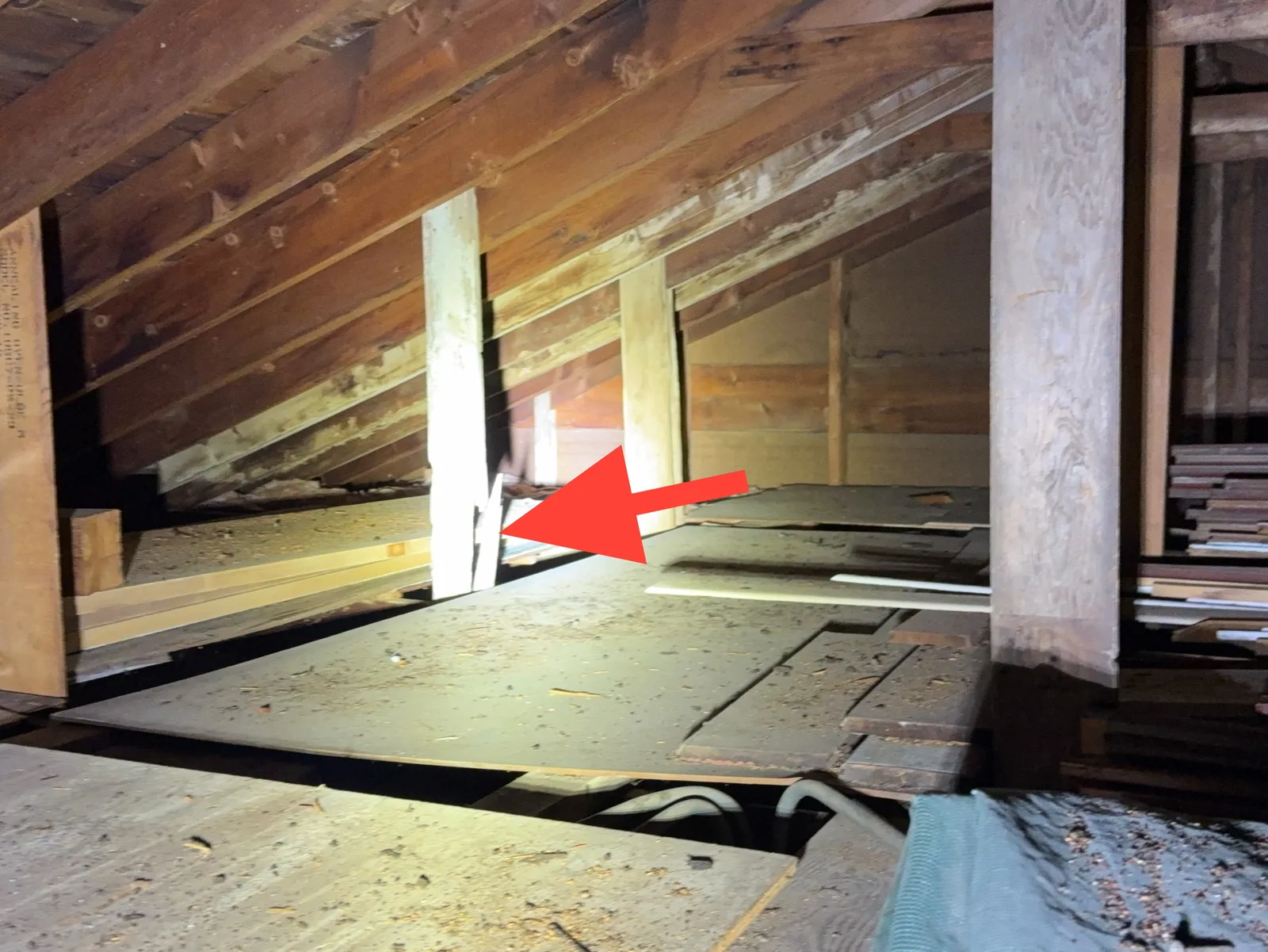
Roof Framing – Support Member Split at Its Base
A vertical framing member supporting the roof structure is split near its base, with the lower portion separated along the grain. A split at the bearing end reduces how much roof load the member can carry and can allow movement or deflection above. A qualified contractor should repair or replace it.
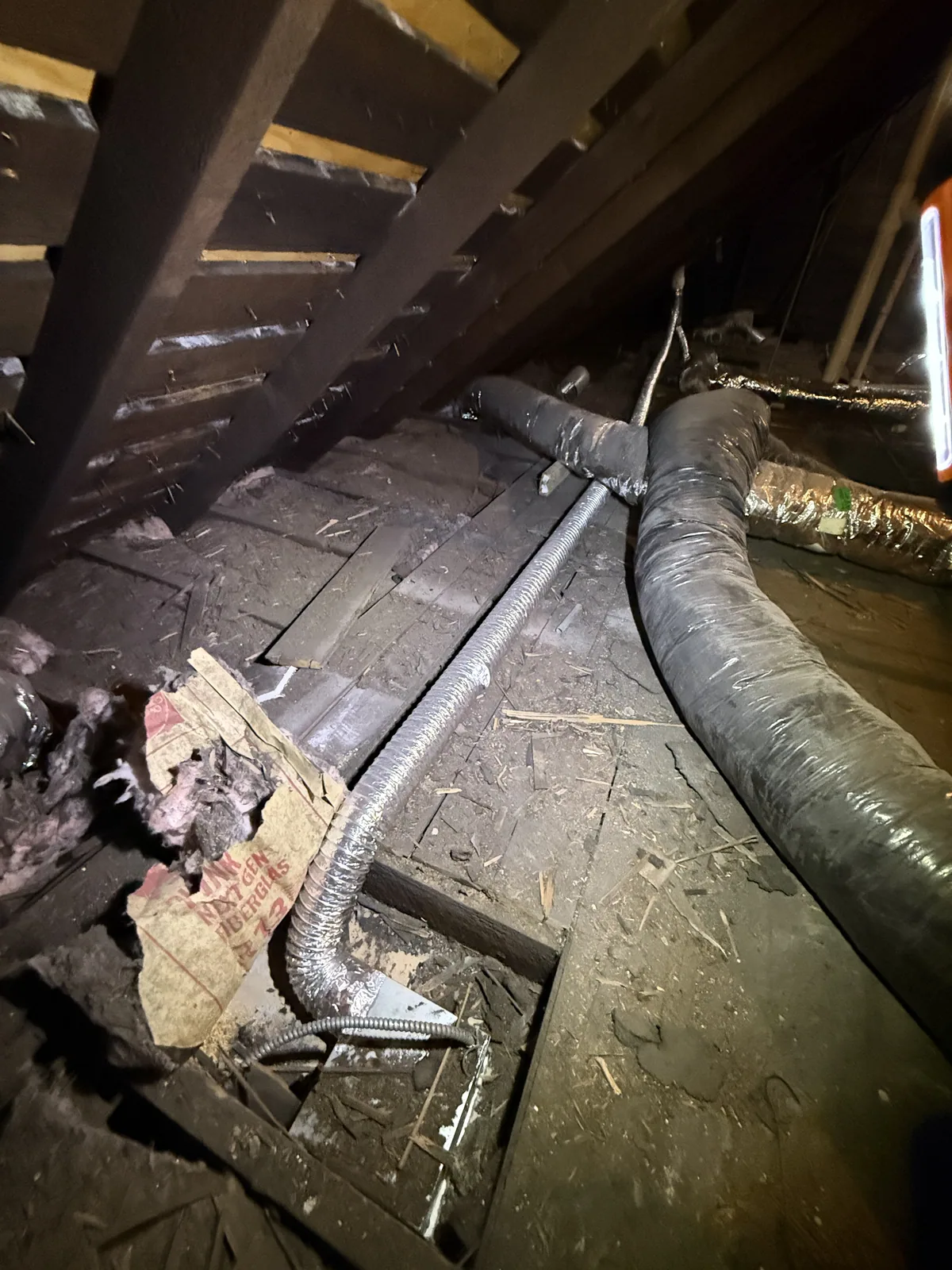
Bathroom Exhaust Duct – Uninsulated in the Attic
The bathroom exhaust duct runs through the attic without insulation. Warm, moist air moving through a cold duct condenses inside it, and that water ends up in the duct, the insulation, or the ceiling below. Insulating the duct reduces the condensation and improves how well the fan actually works.