

TL;DR:
- An information-only inspection in Chicago provides a detailed, visual assessment of major accessible home systems without guarantees or repairs.
- Buyers can use the resulting report within a limited review period to request repairs, negotiate credits, or cancel the contract.
Buying a home in Chicago is exciting until the inspection language starts to blur. “Information-only inspection” is a phrase you’ll hear from agents and inspectors across the city, but most buyers don’t fully understand what it means or what they’re actually getting. In the industry, the more precise term is a pre-purchase buyer inspection, conducted as an informational review rather than a repair contingency demand. Understanding the distinction matters, because information-only inspections what Chicago buyers actually get is often more useful than buyers realize. This article will walk you through exactly what’s covered, what it costs, and how to turn that report into real leverage during your purchase.
Table of Contents
- What information-only inspections give Chicago buyers
- Costs and what you can expect to pay
- Using the report during Illinois’s attorney and inspection review
- How to get the most out of attending the inspection
- My honest take on information-only inspections in Chicago
- See what a real inspection report looks like before your closing
- FAQ
What information-only inspections give Chicago buyers
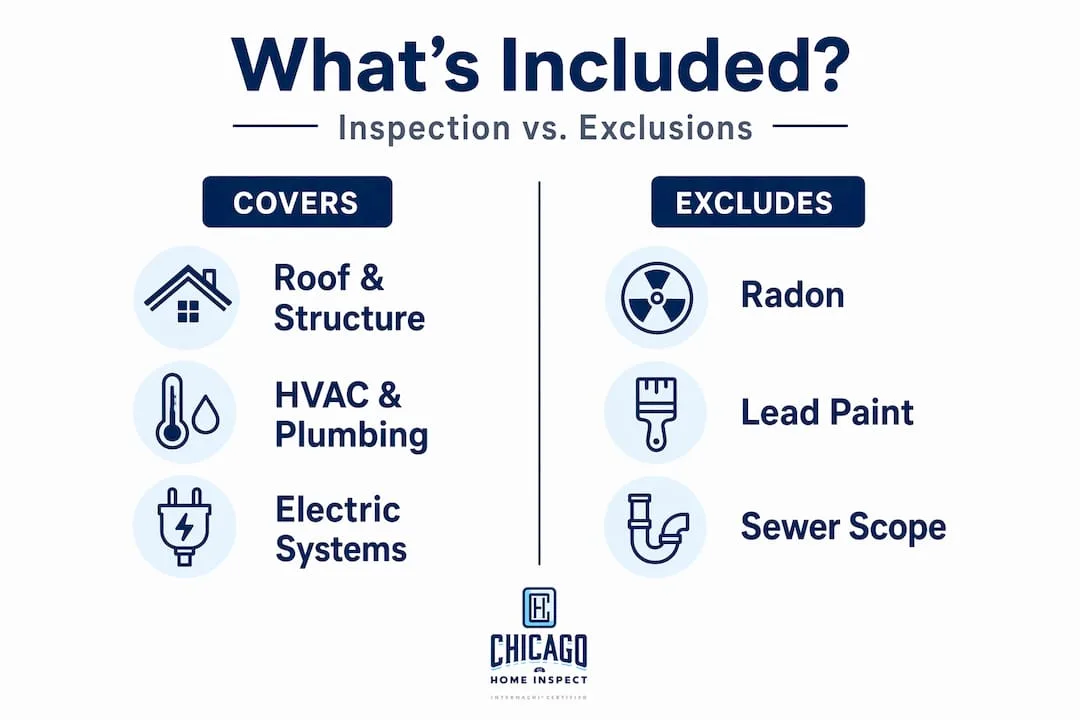
A standard pre-purchase inspection in Chicago covers the major systems and structural components that are visible and accessible at the time of the visit. Think roof, foundation, electrical panels, plumbing, HVAC, windows, and exterior grading. As a professional noninvasive snapshot, it captures what the inspector can see and reach without opening walls or damaging any part of the property.
Here’s what a standard information-only report typically covers:
- Roof and attic: Shingles, flashing, ventilation, insulation, and signs of water intrusion
- Foundation and structure: Visible cracks, settling, moisture in basements or crawlspaces
- Electrical systems: Panel condition, breaker types, visible wiring, GFCI outlets in kitchens and bathrooms
- Plumbing: Supply and drain lines, water heater age and condition, fixture function
- HVAC: Heating and cooling equipment operation, filter condition, ductwork observations
- Exterior and site: Grading, walkways, decks, window and door conditions, siding
- Interior: Walls, ceilings, floors, stairs, doors, and built-in appliances
What the inspection does NOT include by default is just as important to understand. Environmental hazards like radon and mold, swimming pools, chimneys, septic systems, and underground components are excluded from standard inspections unless separately ordered. The inspector also cannot predict future performance or remaining lifespan of any system.
Chicago’s housing stock adds specific complexity. A vintage three-flat in Logan Square, a graystone in Bronzeville, or a pre-war condo in Hyde Park each carry unique structural and mechanical quirks. Chicago-specific property types require inspectors familiar with knob-and-tube wiring remnants, drain tile systems, and masonry common in older Chicago construction. An inspector without local experience may miss issues that someone who has worked these neighborhoods for years would flag immediately.
One thing that surprises many buyers: the inspection is not a code compliance check. Your inspector is not a city official, and a passing inspection does not mean the home meets current building codes. It means that what was visible and accessible appeared to be in acceptable condition at that moment in time.
Costs and what you can expect to pay
Home inspection fees depend mostly on size and property type. Condos come in on the lower end. Larger homes, multi-units, or properties with complex systems push costs higher. Nationally, the same pattern holds, but Chicago’s older housing stock means add-ons are not optional luxuries. They’re often necessary.
Here’s a breakdown of typical inspection costs and what each adds:
| Service | Why It Matters in Chicago |
|---|---|
| Standard buyer inspection | Core evaluation of all visible systems |
| Radon testing | Chicago-area homes frequently test above EPA action levels |
| Sewer scope | Older clay sewer lines are common in Chicago neighborhoods |
| Mold testing | Basements and older construction increase mold risk |
| Chimney inspection | Many Chicago homes have fireplaces or unused flues |
Specialty inspections like radon and sewer scope are not upsells. They address real risks specific to where Chicago homes were built and how they were built. A sewer scope on a 1920s Pilsen two-flat could save you from a $15,000 lateral replacement you had no idea was coming.
Pro Tip: If the home was built before 1978 and hasn’t been recently renovated, add a lead paint inspection to your checklist. It’s not standard, but it’s relatively inexpensive and incredibly relevant in Chicago’s older housing market.
Even when you pay for an information-only inspection and don’t receive any contractual repair guarantees, you still walk away with data. That data has real value in what happens next.

Using the report during Illinois’s attorney and inspection review
Illinois operates differently than most states when it comes to buyer protections after an inspection. Once you’re under contract, you enter a five business day Attorney and Inspection Review period. During this window, your attorney reviews the contract and you review the inspection report. Your options are broader than most buyers realize.
- Request repairs. You can ask the seller to fix specific items before closing. This works best when supported by a professional report and contractor estimates that show actual costs.
- Request a price credit. Instead of repairs, you can negotiate a reduction in the purchase price or a closing cost credit. Sellers often prefer this because it avoids scheduling contractors before closing.
- Cancel the contract. If the inspection reveals serious issues you didn’t anticipate, you can walk away without losing your earnest money, provided you act within the contingency window.
- Accept the property as-is. If the issues are minor or you’ve already priced them in, you can proceed without making any requests.
- Negotiate a hybrid. Request repairs on the most critical safety items and accept a credit for cosmetic or deferred maintenance items.
The key is acting fast. Contingency deadlines typically expire within five to ten business days. If you miss that window, you lose your right to negotiate based on inspection findings. That urgency is why having your inspector, attorney, and agent aligned from the start matters so much.
Your inspection report is not just a document. Used correctly, it becomes a negotiation tool with the seller. Focused, reasonable repair requests backed by a professional report are far more effective than a laundry list of minor complaints. Prioritize safety issues and big-ticket systems. Leave the scuffed baseboards out of it.
Pro Tip: Get at least one contractor estimate for any major repair you’re requesting before submitting your repair addendum. A written estimate turns your request from a complaint into a documented cost, which makes it much harder for the seller to dismiss.
Combining inspection findings with contractor estimates promptly is one of the most underused moves in Chicago real estate negotiations. Most buyers submit requests with no dollar figures attached. The ones who come in with estimates consistently get better outcomes.
How to get the most out of attending the inspection
Showing up at your inspection is not just encouraged. It’s one of the best decisions you can make during the entire buying process. Buyer presence at the inspection allows you to ask questions in real time, understand what systems are in the home, and hear the inspector’s explanations before they’re filtered through a written report.
Here’s how to make the most of your time on site:
- Arrive at the end, not the beginning. Let the inspector work without interruption, then join them for a walkthrough of findings. Most inspections run two to three hours.
- Ask about maintenance, not just defects. “How old is this water heater and what should I expect?” is a better question than “Is this bad?” You want context, not just red flags.
- Take your own notes and photos. The report will be thorough, but your personal observations help you ask follow-up questions later.
- Keep the seller and listing agent off-site. Their presence, even with the best intentions, can change what gets said and how freely the inspector communicates.
- Bring your agent. A good buyer’s agent who understands Chicago real estate inspections will flag items relevant to your negotiation that might not rise to the level of a defect in the report itself.
Too many unvetted opinions during the inspection create confusion. Bringing a contractor friend along sounds helpful, but competing assessments in the moment often lead buyers to fixate on the wrong things. Save those conversations for after you have the written report in hand.
You can also use the inspection to compare what you see with the seller’s disclosure form. The disclosure is a legal document. If the inspection reveals conditions that contradict what the seller disclosed, that is important information for your attorney to review immediately.
My honest take on information-only inspections in Chicago
I’ve seen buyers walk into closings thinking their inspection report was a form of insurance. It isn’t. As Illinois inspection contracts make clear, inspector liability is typically limited to refunding the inspection fee. The real protection is in how you use the report before closing, not after.
What I find most buyers get wrong is timing. They treat the Attorney and Inspection Review period as something their attorney handles while they wait. That five-day window closes fast. I’ve worked inspections in Wicker Park, Bridgeport, and Oak Park where buyers had everything they needed to negotiate a significant credit, but waited too long and lost their leverage entirely.
The other thing worth saying directly: not all inspectors are the same, especially in Chicago. A home built in 1895 in Ukrainian Village requires a different eye than a new construction unit in the West Loop. When you’re choosing an inspector, ask specifically about their experience with the property type you’re buying. Local expertise is not a marketing phrase. It’s the difference between catching a failing drain tile system and missing it entirely.
Waiving an inspection entirely is a growing trend in competitive markets, and I understand the pressure. But an information-only inspection gives you data without fully surrendering your right to negotiate. That middle ground is worth protecting.
See what a real inspection report looks like before your closing
If you’re preparing to buy in Chicago and want to know exactly what you’re getting before you schedule, Chicagohomeinspector makes that easy. You can review a sample inspection report directly on the site to understand the format, photo documentation, and level of detail included in every buyer inspection. Want to see what interior findings actually look like? The interior inspection photo gallery shows real-world examples from Chicago homes across different property types. Chicago Home Inspect LLC is InterNACHI Certified, BBB Accredited, and available weekends to fit your schedule. Whether you’re buying in Lincoln Square, Evanston, or anywhere in between, the right inspector makes the difference.
FAQ
What does an information-only inspection include?
An information-only inspection covers all major visible and accessible systems in the home, including the roof, foundation, plumbing, electrical, and HVAC. It produces a detailed written report with photos but does not include environmental testing or code compliance review.
Can I negotiate repairs after an information-only inspection in Illinois?
Yes. During Illinois’s five business day Attorney and Inspection Review period, buyers can request repairs, ask for a price credit, or cancel the contract based on inspection findings. Acting within that window is critical.
How much does a home inspection cost in Chicago?
Standard buyer inspection prices depend on size and property type, and our price list shows each tier. Specialty add-ons like radon testing, sewer scopes, and mold testing each add to the total but are often necessary given Chicago’s older housing stock.
Should I attend my home inspection?
Attending the inspection is one of the most valuable things you can do as a buyer. Being present lets you ask questions, understand the home’s systems, and hear the inspector’s findings before they’re summarized in the written report.
What is the difference between an information-only inspection and a standard inspection?
The term “information-only” refers to the buyer’s intent, not a different type of inspection. It means the buyer is using the inspection for knowledge and potential negotiation rather than making it a hard repair contingency. The scope of what gets inspected is the same either way.