
TL;DR: A home inspection with us in Chicago runs from $395 for a small condo to $725 for a house up to 5,500 square feet, with two-flats, three-flats and four-unit buildings priced by unit count. The fee covers the full inspection and a photo report delivered the next business day, and the price is shown on screen when you book online, so there is nothing to call around for.
What does a home inspection cost in Chicago?
These are our actual prices, current as of October 2026, not estimates. They are set by square footage for houses and condos and by unit count for multi-family buildings, and they are the same numbers the booking page shows before you pick a time. What you see is what you pay; we do not quote a range and settle up afterwards.
| Property | Our Price |
|---|---|
| Condo, under 1,200 sq ft | $395 |
| Home or condo, up to 2,500 sq ft | $475 |
| Home or condo, 2,500 to 4,000 sq ft | $595 |
| Home or condo, 4,000 to 5,500 sq ft | $725 |
| Home or condo, over 5,500 sq ft | Quote (call after booking) |
| Multi-family, 2 units (two-flat) | $695 |
| Multi-family, 3 units (three-flat) | $895 |
| Multi-family, 4 units | $1095 |
Square footage means finished living area, the number on the listing sheet. If the listing does not give one, use your best estimate when booking and we will confirm it before the visit. Nobody gets surprised on site.
What actually sets the price?
The price is set by two things: square footage and property type. The age of the building does not change the price, but it does change where the time on site goes.
Square footage
More floor area means more rooms, more windows, more outlets to test, more ceiling to look at for stains, and usually more bathrooms and a second HVAC system. A 4,500-square-foot house in Lincoln Park with two furnaces and two condensers is a different afternoon than a 1,400-square-foot bungalow in Portage Park.
Age of the building (no effect on price)
Age does not change the price tier, but it changes what the time gets spent on. In a pre-1950 Chicago house we are tracing cloth-covered conductors inside metal conduit at the panel (the conduit is the equipment ground here, so that wiring is not “ungrounded”), looking for galvanized supply piping that has narrowed with rust, checking the brick for spalling and the steel lintels above windows for rust jacking, and looking hard at the flat or low-slope roof and its parapet walls. A 2015 rehab of the same house still has the 1920s foundation and clay sewer line underneath the new finishes, so the report is rarely shorter.
Condo, house or two-flat
A condo inspection covers the unit and what serves it: the furnace or fan coil, the water heater, the electrical panel, the in-unit plumbing and fixtures, windows, doors, and the balcony if there is one. The roof, the boiler in the basement and the common hallways belong to the association and are outside the scope, which is why a condo under 1,200 square feet is the lowest tier. We also check whether the unit’s main water shutoff is actually inside the unit, because in a lot of downtown buildings it is not, and you want to know that before the first leak.
A two-flat is priced as two dwellings because that is what it is. Each unit has its own kitchen, bathroom, furnace, water heater and panel, and each one gets fully inspected, including a combustible gas detector pass at every gas appliance in every unit. Then there is the shared part: the basement, the roof, the porch stairs, the exterior brick, the service entrance. Chicago two-flat porches and any multi-family guardrail also get checked against the 42-inch guardrail height the city requires, not the 36 inches you will read about in generic guides. Three-flats and four-units scale the same way.
Which add-ons should I budget for?
Four services come up in almost every Chicago transaction. Two are done by us in-house on the same visit, one is a referral, and one happens later in the deal.
| Service | Our Price | Who does it and when |
|---|---|---|
| Radon test | $299 | In-house. We are IEMA-licensed for radon measurement. A continuous monitor is placed at the inspection and picked up after the minimum 48-hour test period. |
| Mold sampling | $249 | In-house, same visit. Air samples inside plus an outdoor baseline, or surface samples where growth is visible, sent to an accredited lab. |
| Sewer scope | Referral | Booked with a partner camera company, priced by them. Worth it on any pre-1960 house with the original clay lateral. |
| Repair verification visit | Quoted at booking | A separate follow-up visit after the seller completes negotiated repairs. Scope is a written list agreed before the visit. |
Radon and mold can be added to the booking in the same screen as the inspection, so the total is visible before you commit. Add radon whenever the home has a basement or slab-on-grade living space. The Multi-Board contract hands you IEMA’s Radon Testing Guidelines for Real Estate Transactions at signing and even builds in a retest rule (Paragraph 15 b) if mitigation is performed, which tells you how routine the test has become in Chicago deals. Add mold sampling when you saw staining, smelled a musty basement, or there is a finished basement with no visible vapor barrier. Skip both if the numbers do not change your decision.
We do not test well water or inspect septic systems, and neither comes up inside the city. If your purchase is in the far suburbs on well and septic, book those with a specialist before the contingency clock runs out.
What is included in the fee?
The base price buys the full inspection defined by the Illinois Standards of Practice, 68 Ill. Adm. Code 1410, Subpart C: roof, exterior, structure, electrical, heating, cooling, plumbing, interior, insulation and ventilation, and fireplaces. In practice that means:
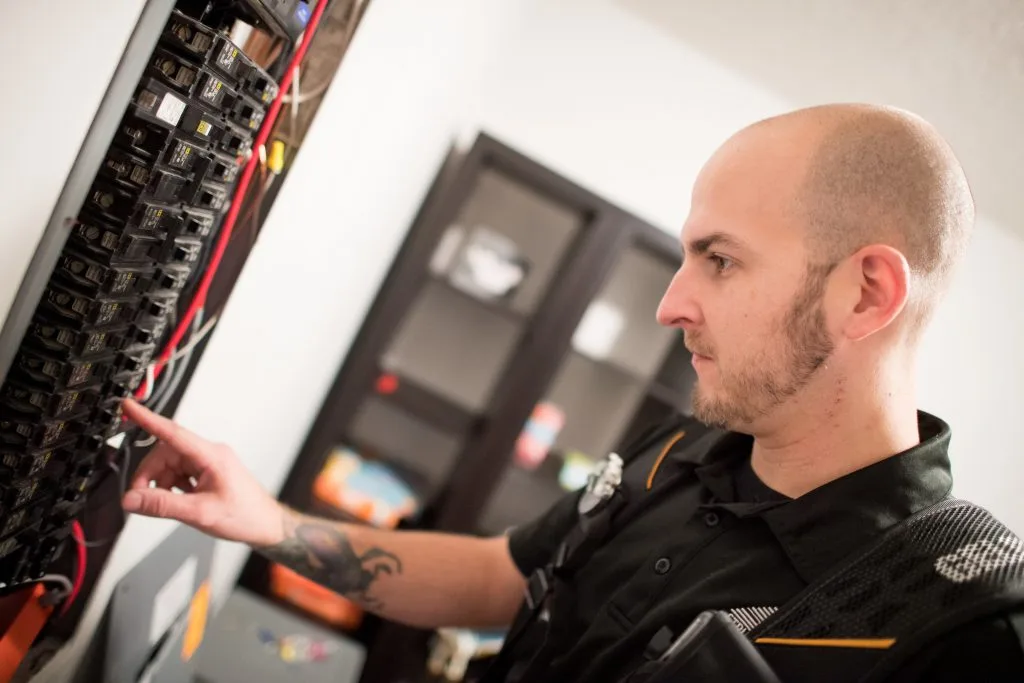
- Panel cover off, every accessible breaker and conductor looked at, outlets tested for polarity and GFCI function, and a check that the panel is not in a clothes closet (Chicago Electrical Code 14E-2-240 keeps that rule).
- Furnace and water heater run, vent connector and gas piping inspected, and a combustible gas detector pass at the range, dryer, water heater and furnace connections.
- Every fixture run, every toilet flushed, tub and shower filled, visible supply and drain piping identified by material and age.
- Roof walked when it is safe to walk, otherwise inspected from the edge and from the ground; flat roofs, parapets and scuppers get particular attention in Chicago.
- Attic and crawlspace entered wherever there is access.
- Smoke and CO alarms checked against the Illinois Smoke Detector Act (425 ILCS 60) and the Carbon Monoxide Alarm Detector Act (430 ILCS 135), which wants an alarm within 15 feet of every sleeping room.
- A written photo report delivered the next business day, with a summary of major concerns and safety items at the top.
- Follow-up questions answered after you read it. Reading the report together with your agent is part of the job, not an extra.
- Thermal imaging on every inspection at no extra charge, to help spot hidden moisture and missing insulation.
Before you book anyone, read one of their real reports. Ours is here: sample inspection report. Look for photos of the actual defect, a plain statement of why it matters, and a recommendation you could hand to a contractor. If a sample report is a checklist of green checkmarks, the price is not the problem.
What is not in the base price?
An inspection is visual and non-invasive. We do not open walls, move furniture or stored belongings, dismantle appliances, or run a camera down the sewer. Common elements of a condo building are excluded. Lead paint sampling, asbestos sampling, and wood-destroying insect reports are separate specialists. Houses over 5,500 square feet are quoted individually after you book, because an 8,000-square-foot house with three zones and an elevator is not a formula.
Why is booking online with the price shown different from calling around?
You see real availability, not “let me check”
Most inspection companies still take a phone call, quote a price, and call back with a time. Our booking page shows the open slots on our actual calendar, including Saturdays and Sundays, and shows the price for your property type before you pick one. You can book at 11 p.m. the night the offer is accepted, which matters when the contract gives you five business days.
The price is the price
What you see on screen is what you pay. There is no “older home” surcharge and nothing gets added at the door. Add-ons are chosen by you, on the same screen, with their prices next to them.
The inspection agreement arrives immediately
The inspection agreement is sent for signature before the visit, so scope, fee and delivery time are in writing before anyone shows up. That is also where the licence number lives: Chicago Home Inspect LLC is licensed as an Illinois home inspection entity under 451.001520.
Is the cheapest inspection a mistake?
Not automatically, and we are not going to publish anyone else’s prices. What the fee should buy is time. A two-flat cannot be inspected properly in ninety minutes; there are two of everything. A pre-war house with a flat roof, a crawlspace under the rear addition and a hundred-year-old sewer cannot be done from the sidewalk. If a quote is far below the range in the table above, ask how long the inspector expects to be on site and whether the report is written from that visit or from a template. Then read their sample report.
Frequently asked questions
How much does a home inspection cost in Chicago?
With us, $395 for a condo under 1,200 sq ft, $475 for a home or condo up to 2,500 sq ft, $595 from 2,500 to 4,000 sq ft, and $725 from 4,000 to 5,500 sq ft. Two- to four-unit buildings run $695 to $1,095, and homes over 5,500 sq ft are quoted after booking.
Does the age of the home change the price?
No. The price is set by square footage and property type only. An older home changes where the time goes, not what you pay.
Do I need radon or mold testing?
Radon testing ($299) is worth adding whenever the home has a basement or slab-on-grade living space. Mold sampling ($249) makes sense when there is staining, a musty odor, or a history of water. Both are done by us on the same visit.
Is thermal imaging extra?
No. Thermal imaging is included in every inspection at no extra charge.
What should I do next?
If you are under contract, the Multi-Board Residential Real Estate Contract 8.0 gives you five business days after acceptance to serve notice about inspection findings, and the report comes the next business day after the visit. So the practical move is to book within a day of acceptance, pick a slot in the first two or three business days, and add radon at the same time if the home has a basement.
- Find the square footage and property type on the listing sheet.
- Open the booking page, choose the matching tier, and add radon or mold sampling if they apply.
- Pick a time, sign the agreement, and forward the confirmation to your agent so access is arranged and utilities are on.
- Read the sample report before inspection day so you know what the summary will look like.
Agents who want the request list and report format explained for their clients can start at our page for agents. Wondering how long the visit itself takes? See how long a Chicago home inspection takes and what happens after.