
TL;DR:
- Outdoor faucets and sprinkler systems in Chicago often suffer damage from winter freeze-thaw cycles, causing leaks, cracked pipes, and costly repairs. Proper spring activation involves waiting until nighttime temperatures exceed 40°F for ten days and cautious step-by-step opening of valves to prevent pressure shocks. Regular fall maintenance, such as disconnecting hoses and insulating faucets, can prevent most damage, while professional inspections help identify hidden issues early.
Spring in Chicago arrives like a relief, and the first thing many homeowners do is head outside to turn the water back on. That impulse makes sense, but outdoor faucets and sprinklers first use failures after winter catch thousands of homeowners off guard every single year. What looks like a simple twist of a handle can trigger a cascade of problems, from dripping faucets and soggy basements to burst pipes hiding inside your walls. This guide covers exactly when to turn things on, what to inspect first, and how to protect your outdoor plumbing so spring does not become an expensive repair season.
Table of Contents
- Why outdoor faucets and sprinklers fail after first use following winter
- Safe timing and startup steps for spring activation
- How to inspect outdoor faucets and sprinklers in spring
- Preventative maintenance to avoid failures next season
- Common mistakes that lead to costly spring repairs
- My take on winter faucet failures from years in Chicago homes
- Let Chicagohomeinspector check your outdoor plumbing this spring
- FAQ
Why outdoor faucets and sprinklers fail after first use following winter
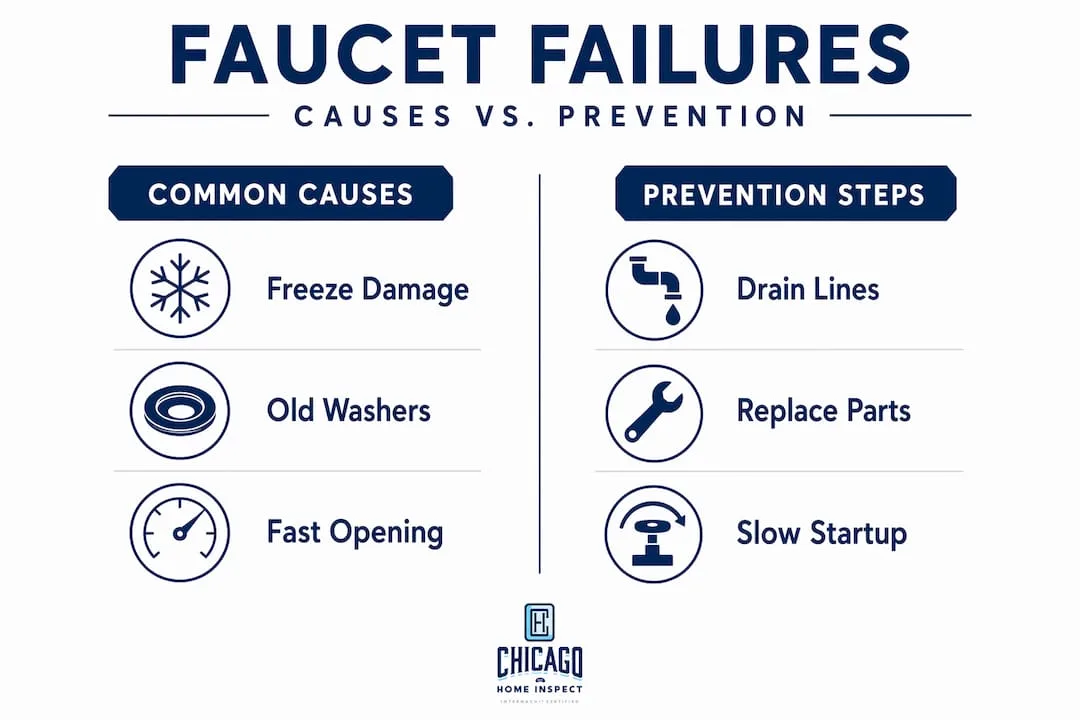
The short answer is physics. Water expands by 9% when it freezes inside pipes and faucet bodies. That expansion creates enough pressure to crack cast brass, split copper fittings, and shatter plastic valve seats. The frustrating part: the damage happens in December, but you do not discover it until April when water pressure finally returns.
Several specific causes drive these winter faucet failures:
- Attached garden hoses. This is the single most common mistake. A connected hose blocks the drainage path inside frost-free faucets, trapping water in the stem. That water freezes, and what could have been a $10 washer repair turns into a $200 to $500 fix.
- Worn seals and washers. Repeated freeze-thaw cycles silently degrade O-rings, packing, and rubber washers over several years. By spring, pressure reveals the damage as a steady drip or a full spray.
- Backflow preventers. These are the most vulnerable and costly components in any sprinkler system. Water freezing inside the device often means full replacement, which can run several hundred dollars in parts and labor.
- Vacuum breakers. Located on top of outdoor hose bibs, these small devices crack easily in freezing temperatures and are frequently overlooked until water starts spraying from an unexpected spot.
Pro Tip: If your outdoor faucet has a functional lifespan of 10 to 20 years and you have been in your home for a decade or more, any post-winter drip is worth taking seriously. It likely signals compounding wear, not just a one-time event.
The worst part about these failures is that they often stay hidden. A cracked pipe inside a wall or under a slab does not announce itself until water has already soaked insulation, framing, or drywall. By that point, you are dealing with a mold assessment on top of a plumbing repair.
Safe timing and startup steps for spring activation
The most dangerous misconception in outdoor faucet maintenance is that one warm day is enough to safely turn the water back on. Experts advise waiting until nighttime temperatures have stayed consistently above 40°F for at least 10 consecutive days before activating any irrigation system. In Chicago and suburbs like Naperville or Evanston, that window typically falls in late April, sometimes pushing into early May after a rough winter.
Here is the right sequence for a safe spring startup:
- Check nighttime temps for 10 days. Use a weather app that shows overnight lows, not just daytime highs. Daytime warmth is misleading when the ground is still frozen beneath the surface.
- Probe the soil near irrigation lines. If the ground is still hard a few inches down, the pipes below grade are still at risk. Give it more time.
- Locate your interior shutoff valve. This is typically in the basement or a utility room. Turn it on slowly rather than in one full motion.
- Open outdoor valves in quarter-turn increments. Pause about 15 seconds between each turn. This prevents water hammer, the sudden high-pressure shockwave that bursts freeze-stressed joints.
- Test each sprinkler zone individually. Run one zone at a time and watch for pooling water, low pressure, or heads that are not popping up correctly.
- Inspect hose bibs one at a time. Attach a hose briefly at low pressure and look for drips around the handle, the spout, and where the faucet meets the wall.
Pro Tip: Never do your full irrigation startup on a weekend when your plumber is harder to reach. Schedule it early in the week so if you find a burst pipe or a broken backflow preventer, you can get a professional out the same day.
How to inspect outdoor faucets and sprinklers in spring
Knowing what to look for transforms a spring faucet inspection from a guessing game into a reliable diagnostic routine. Some signs are obvious. Others hide in plain sight.
Visual clues to look for outside:
- Drips from the spout or around the handle when the faucet is fully closed
- Water spraying from the vacuum breaker on top of the hose bib
- Visible cracks, green corrosion, or mineral staining on the faucet body
- Sprinkler heads that are crooked, sunken, or not retracting after a cycle
Signs to check inside your home:
- Dampness, water stains, or soft drywall in the basement ceiling or wall near where faucets pass through
- Unexplained water marks on lower floors after the first outdoor run
- The early warning signs include low pressure and slight discoloration around wall penetrations
Here is a quick comparison to help you decide whether a problem is a DIY fix or a call to a plumber:
| Symptom | Likely Cause | DIY or Pro? |
|---|---|---|
| Drip from spout, faucet closed | Worn washer or O-ring | DIY (under $15) |
| Spray from vacuum breaker | Cracked or failed vacuum breaker | DIY replacement |
| Water behind wall or wet drywall | Cracked pipe inside wall | Call a pro |
| Broken backflow preventer | Freeze damage inside device | Call a pro |
| Sprinkler head not retracting | Debris or worn head seal | DIY cleaning or swap |
| No water pressure at all | Main line issue or burst pipe | Call a pro |
Reviewing inspection photos of real plumbing failures can help you calibrate what normal wear looks like versus something that needs immediate attention.
Preventative maintenance to avoid failures next season
The best time to prevent spring problems is the previous fall, before temperatures drop below freezing. In Chicago, that window closes fast. Most years, you have from mid-October through early November before the first hard freeze.
These habits make the biggest difference:
- Disconnect hoses every fall without exception. Even frost-free faucets fail when hoses stay connected through winter because they block the internal drainage that makes frost-free designs work.
- Shut off the interior valve supplying each outdoor faucet. Then open the outdoor handle briefly to drain any water left in the exterior pipe section.
- Install insulated faucet covers. Foam covers cost a few dollars and add a meaningful layer of protection for standard faucets in unheated areas. They are not foolproof, but they reduce freeze risk in borderline temperatures.
- Consider upgrading to a frost-free sillcock. These models move the shutoff point inside the heated wall, where pipes cannot freeze. In a climate like Chicago’s, the long-term savings typically justify the upgrade cost within one or two winters.
- Have irrigation systems blown out professionally. Compressed air forces water out of underground lines and heads. Skipping this step leaves enough water in the system to crack poly pipe, copper fittings, and manifolds during a deep freeze.
Pro Tip: Walk your outdoor plumbing every October and treat it like a checklist, not an optional task. Five minutes of fall preparation can prevent a $500 spring repair call. Chicagohomeinspector includes exterior plumbing checks as part of yearly home checkup services that catch these issues before they compound.
Common mistakes that lead to costly spring repairs
Most spring plumbing disasters trace back to one of a handful of predictable errors. Understanding them makes them easy to avoid.
Turning on water too fast is the most damaging. Fully opening an irrigation valve in one motion creates water hammer, a pressure shockwave that can split freeze-weakened joints instantly. Slow and steady is not optional; it is the only safe method.
Ignoring minor drips is the second most expensive mistake. A small drip in fall is a warning. If that faucet goes into winter with a compromised seal, freeze expansion turns that minor leak into a cracked pipe inside your wall. The repair bill grows from $15 to potentially $500 or more.
Leaving hoses connected through winter ranks third. Most homeowners know they should disconnect hoses. Many still skip it, especially during a busy October. That one skipped step creates the conditions for internal freeze damage every single time.
Finally, skipping annual inspection and hidden exterior issues allow damage to compound quietly over multiple winters until a catastrophic failure forces the repair.
The homeowners who spend the most money on spring plumbing repairs are almost always the ones who skipped fall preparation and then rushed the spring startup. Slow down in both seasons and you will rarely face an emergency.
My take on winter faucet failures from years in Chicago homes
I have walked through hundreds of basements in Chicago, Schaumburg, Oak Park, and everywhere in between. The pattern is remarkably consistent. Homeowners who call with a spring plumbing emergency almost always did one of three things: left a hose connected, skipped the fall shutoff, or turned the water on too fast after a cold winter.
What I have learned is that the cost of ignoring a small leak before winter is always higher than fixing it in September. People rationalize it. “It’s just a drip.” But that drip, frozen and expanded inside a wall all winter, becomes a wet basement, a mold issue, and a multi-trade repair job.
In my experience, the single upgrade that pays for itself fastest in Chicago is switching to frost-free sillcocks. If your home still has standard faucets, you are paying an annual freeze-damage lottery tax. The upgrade is not glamorous, but I have seen it eliminate recurring repair calls entirely.
The other thing I tell every client: do not DIY the diagnosis if you are not sure what you are looking at. Catching something early is worth every penny of a professional inspection. The plumbing problems I find during a residential home inspection in spring are almost always cheaper to fix than the ones that sat undetected through summer.
Let Chicagohomeinspector check your outdoor plumbing this spring
If your outdoor faucets or sprinkler system showed any signs of trouble this spring, or if you simply want confirmation that your exterior plumbing survived winter intact, Chicagohomeinspector is ready to help. Our residential inspection services include a thorough exterior plumbing review with photo documentation, covering outdoor faucets, hose bibs, irrigation system components, and the interior plumbing areas affected by freeze events. We serve Chicago and surrounding suburbs, with weekend appointments available and same-week scheduling during the busy spring season. Whether you are buying, selling, or simply protecting what you own, a professional eye on your outdoor plumbing now is far cheaper than a burst pipe in December.
FAQ
Why do outdoor faucets drip after winter ends?
Post-winter drips usually mean that freeze-thaw cycles damaged internal washers, O-rings, or the faucet body itself. Water expands when it freezes, and even small cracks in seals produce visible leaks once pressure returns in spring.
When is it safe to turn on sprinklers after winter in Chicago?
Wait until nighttime temperatures have stayed above 40°F for at least 10 consecutive days. In the Chicago area, that is typically late April to early May depending on the severity of the winter.
Can I leave my garden hose connected during winter?
No. A connected hose blocks drainage in frost-free faucets, trapping water in the stem where it freezes and cracks internal components. Disconnecting hoses every fall is one of the most effective ways to prevent spring failures.
How do I open irrigation valves safely in spring?
Turn valves in quarter-turn increments and pause about 15 seconds between each turn. Opening valves too quickly creates water hammer, a pressure spike that can burst freeze-weakened joints.
When should I call a plumber instead of doing it myself?
DIY repairs like washer or vacuum breaker replacement are reasonable when symptoms are minor and localized. Call a plumber if you see water stains inside walls, have no pressure at all, or find a damaged backflow preventer, since those repairs involve components and access points that require professional tools.