

TL;DR:
- Home inspectors focus on safety, major systems, and structural components, not cosmetic details.
- They flag only issues impacting safety, structure, or major systems, leaving minor wear out.
- Understanding inspection scope helps buyers negotiate effectively and set realistic expectations.
Most buyers walk into a home inspection expecting the inspector to note every scratch, scuff, and squeaky hinge. That’s not how it works. Inspectors follow a defined scope built around health, safety, and major systems, which means some things get flagged with urgency while others never make the report at all. For Chicago buyers and sellers, understanding this distinction is not just useful context, it’s a real advantage at the negotiating table. This guide breaks down exactly how inspectors decide what to flag, what to skip, and how you can use that knowledge to make smarter decisions before closing.
Table of Contents
- The basics of home inspection: What’s in, what’s out
- What inspectors flag: High-impact issues
- What often gets ignored (and why)
- Why inspectors draw the line: Standards and legal limits
- How to use your inspection report: Smart moves for buyers and sellers
- A home inspector’s perspective: Why what’s ignored matters as much as what’s flagged
- Book your Chicago home inspection with confidence
- Frequently asked questions
Key Takeaways
| Point | Details |
|---|---|
| Flagging priorities | Inspectors highlight health, safety, and costly defects, not minor flaws. |
| Limits of inspections | Many cosmetic and inaccessible issues are excluded by professional standards. |
| Actionable reports | Focus on flagged items for negotiations and repairs; ignored details rarely affect value. |
| Ask for clarity | If unsure why something was ignored, consult your inspector directly. |
The basics of home inspection: What’s in, what’s out
A home inspection is not a code compliance audit, a repair estimate, or a guarantee. It’s a professional assessment of a home’s visible and accessible components on the day of the inspection. Chicago inspectors operate under Illinois state licensing requirements and follow recognized industry standards, which define both what must be evaluated and what falls outside the inspector’s responsibility.
Knowing what inspectors actually look for helps set realistic expectations from the start. The core focus is always health, safety, and major systems. That means:
- Structural components: Foundation, framing, roof, and walls
- Electrical systems: Panel condition, wiring type, outlet safety
- Plumbing: Visible pipes, water heater, fixtures, and drainage
- HVAC systems: Heating, cooling, ventilation, and ductwork
- Interior elements: Ceilings, floors, windows, and doors (functional condition)
- Exterior: Siding, grading, gutters, and visible drainage
What stays off the list? Anything cosmetic, anything behind finished walls, and anything inaccessible without causing damage. Personal property, underground utilities, and features hidden by furniture or stored items are also excluded.
“Home inspectors prioritize health, safety, and major systems above all else, ensuring buyers understand what truly affects the livability and value of a home.”
This structured approach is not a shortcut. It’s a professional standard designed to deliver consistent, actionable information rather than an overwhelming list of every imperfection.
What inspectors flag: High-impact issues
Some defects are simply too serious to leave out of a report, regardless of how well the home shows or how motivated everyone is to close. These are the items that affect safety, structure, or cost enough to change the value of a deal. The most common inspection red flags fall into three main categories:
- Safety hazards: Exposed wiring, double-tapped breakers, gas leaks, carbon monoxide risks, missing smoke detectors, and improper stair railings all get flagged immediately.
- Structural and moisture damage: Foundation cracks, water intrusion, rot, mold, and compromised framing are high-priority findings that affect the integrity of the entire home.
- Major system failures: A failing furnace, roof at the end of its life, faulty water heater, or collapsed sewer line are costly enough that buyers and sellers both need to know.
Here’s a quick look at how flagged issues are typically categorized by urgency:
| Issue type | Urgency level | Typical action |
|---|---|---|
| Gas leak or exposed wiring | Immediate | Do not occupy; repair before closing |
| Foundation crack (active) | High | Engineer evaluation required |
| Roof leak or major damage | High | Repair or credit negotiation |
| HVAC system failure | Moderate to high | Replacement cost estimate |
| Plumbing leak (active) | Moderate | Repair before or at closing |
| Old but functional system | Low to moderate | Budget for near-term replacement |
Chicago homes, especially older ones, come with their own specific concerns. Common issues inspectors find in the Chicago area include knob-and-tube wiring in vintage two-flats, clay sewer lines prone to root intrusion, and flat roof systems with short lifespans. Knowing these patterns in advance gives buyers real negotiating leverage.
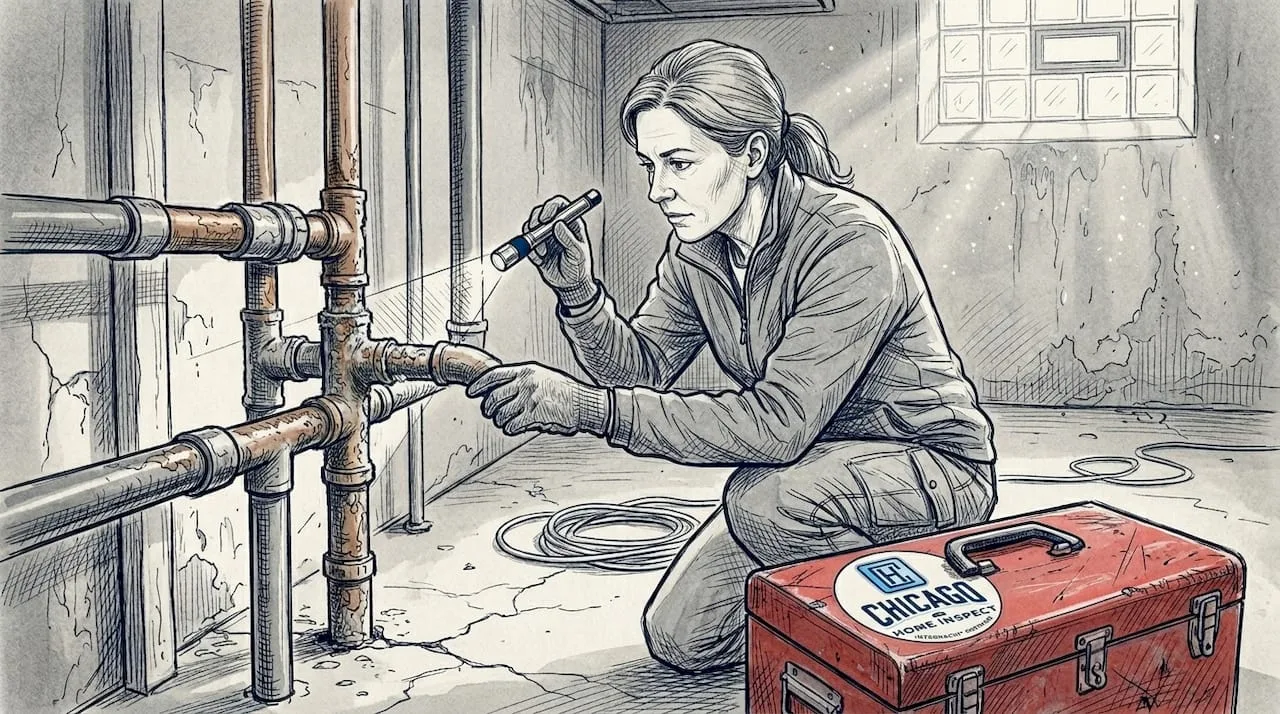
Also worth noting: Chicago plumbing problems are among the most frequently flagged issues in older neighborhoods, from corroded galvanized pipes to outdated drain configurations.
Pro Tip: A ceiling stain might look minor, but it could indicate an active roof leak, a plumbing failure above, or previous water damage that was never properly remediated. Always ask your inspector to explain the likely source before assuming it’s cosmetic.
What often gets ignored (and why)
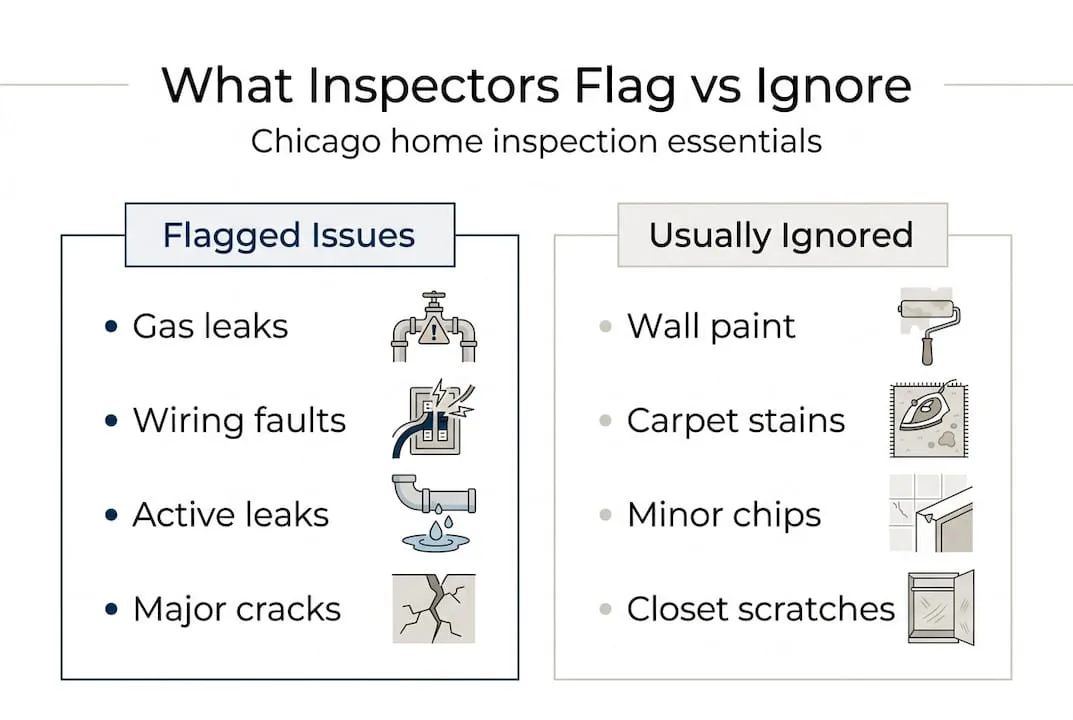
If you’ve ever read an inspection report and wondered why something obvious wasn’t mentioned, you’re not alone. Cosmetic issues and typical wear are almost never included in a standard report because they don’t affect safety, structure, or function.
Here’s what typically stays off the report:
- Superficial wall cracks: Hairline cracks in drywall from normal settling are expected in any home.
- Worn or stained carpet: Aesthetic condition, not a structural or safety concern.
- Chipped paint or minor trim damage: Cosmetic wear that does not indicate hidden damage.
- Aging but functional appliances: If it works, it’s generally not flagged, even if it’s old.
- Landscaping and drainage beneath soil: Inspectors assess visible grading but cannot evaluate buried drainage systems.
Here’s a reference table for common items left out of reports and the reasoning behind each:
| Item | Why it’s excluded |
|---|---|
| Paint condition (interior) | Aesthetic only; no safety or structural impact |
| Old but working appliances | Function is intact; replacement is owner’s choice |
| Fence condition | Non-structural; not part of standard scope |
| Personal property | Not part of the real estate transaction |
| Code compliance | Inspectors observe conditions, not code violations |
| Inaccessible areas | Can’t report what can’t be safely seen |
This doesn’t mean these details don’t matter. It means they fall outside the professional scope of the inspection. A thorough look at overlooked defects can help you understand the difference between omissions that are intentional and those that need follow-up. You can also review the common findings guide for a broader picture of what typically appears in Chicago area reports.
Pro Tip: If something concerns you and it didn’t show up in the report, just ask. A good inspector will take a moment to explain whether it was intentional or worth a second look.
Why inspectors draw the line: Standards and legal limits
Inspectors don’t make arbitrary calls about what to include. The boundaries are set by professional standards, state licensing requirements, and real legal liability. Understanding this helps you see selective reporting not as a flaw but as a feature that protects buyers, sellers, and inspectors alike.
Illinois law and ASHI standards define what inspectors must and must not report, creating a consistent framework across the industry. Here’s how this plays out in practice:
- Only visible and accessible components are evaluated. Inspectors cannot open walls, move furniture, or operate systems that appear unsafe to activate.
- Reports focus on conditions, not causes. An inspector notes water staining but does not diagnose the exact plumbing failure that caused it, that requires a licensed plumber.
- Code compliance is excluded. Inspectors report observable conditions, not whether the home meets current building codes, which change over time.
- Liability shapes the scope. Inspectors carry errors and omissions insurance, but only for what falls within their defined standards. Going outside that scope creates risk for everyone.
“Professional inspection standards exist not to limit what inspectors find, but to ensure that what they do report is accurate, defensible, and genuinely useful to buyers and sellers.”
Those standards also protect buyers from analysis paralysis. A report that flagged every nail, every aging fixture, and every paint color choice would bury the findings that actually matter. Structure, safety, and systems are the signal. Everything else is noise.
If you want to understand what’s hiding behind the walls before you buy, our post on hidden issues buyers miss is worth a read before your next showing.
How to use your inspection report: Smart moves for buyers and sellers
Getting the inspection report is not the finish line. It’s the starting point for some of the most important decisions in the transaction. Understanding inspection reports empowers better negotiations, and knowing how to read one strategically is a skill worth developing.
For buyers:
- Separate flagged items into three buckets: urgent safety issues, major repair needs, and deferred maintenance. Prioritize accordingly.
- Use high-impact findings to negotiate repair credits or price reductions. Focus your energy on items that affect safety or will cost significant money.
- Don’t over-fixate on the ignored items. Cosmetic concerns are yours to address post-closing at your own timeline and budget.
- If anything feels unclear, call your inspector before signing off. A quick conversation can save you from misreading a finding.
For sellers:
- Consider a pre-listing inspection. Discovering major issues before buyers do gives you time to repair, disclose, or price accordingly.
- Fix what you can access and see. Small visible repairs reduce buyer anxiety, even if they’re not technically flagged.
- Ensure all areas of the home are accessible on inspection day. Blocked crawl spaces, padlocked panels, and cluttered attic hatches create red flags before the inspector even starts.
- Review inspection issues examples from Chicago homes to understand what buyers in this market are watching for.
The smartest approach for both sides is the same: treat the inspection as objective information, not a scorecard. Use it to make decisions, not to win arguments.
A home inspector’s perspective: Why what’s ignored matters as much as what’s flagged
Here’s something most buyers don’t realize until after their second or third transaction: the absence of a finding is itself informative. When an inspector walks through a Chicago two-flat and doesn’t flag the electrical panel, that silence tells you something meaningful about the home’s condition and the care it received over the years.
Most clients fixate on the list of defects, which is understandable. But experienced buyers and agents pay just as much attention to what’s not there. A short report on an older home can be more telling than a long one on a newer build. It suggests consistent maintenance, quality construction, or both.
Inspections are designed to filter critical risks from the normal reality of living in an imperfect home. No home is flawless. The goal is livability and safety, not perfection. When clients understand that, they make better decisions, negotiate more calmly, and close with confidence.
We’ve seen buyers walk away from solid homes over cosmetic issues that never should have made the report, and we’ve seen others overlook genuine red flags because the home showed beautifully. Neither outcome serves anyone well. Looking at real-world issue examples from Chicago inspections helps ground expectations in what actually matters.
The pattern and context of findings, not just the count, is what tells the real story of a home.
Book your Chicago home inspection with confidence
If you want a clear, balanced inspection from someone who knows exactly what to flag and what to leave out, we’re ready to help. At Chicago Home Inspect, we’re InterNACHI Certified, BBB Accredited, licensed and insured, and available on weekends to fit your schedule across Chicago and the suburbs. You can browse interior inspection photos to see exactly what our team evaluates, and review a sample report so you know what to expect before your inspection day. When you’re ready to move forward, schedule your inspection online in minutes. We offer buyer, seller, mold, radon, and yearly checkup inspections to cover every stage of your transaction.
Frequently asked questions
What types of home issues do inspectors usually ignore?
Inspectors typically skip cosmetic issues and wear such as paint chips, surface cracks, and aging finishes that don’t affect safety or function. Personal property, underground systems, and inaccessible areas are also outside the standard scope.
Why don’t inspectors flag every small detail?
Professional standards keep reports focused on what actually affects safety and major systems, not minor details. As inspectors focus on health and safety, this approach ensures the report delivers clear, actionable findings rather than an unmanageable list.
Can I ask the inspector to check things not in their standard report?
Yes, you can request additional checks beyond the standard scope, but the inspector may charge extra or limit what’s feasible based on safety, access, and legal boundaries. It’s always worth asking before the inspection begins.
How can sellers reduce issues that get flagged?
Address visible maintenance items, make sure all areas of the home are accessible, and strongly consider a pre-listing inspection. Reviewing pre-listing tips from real Chicago inspection cases can help you prioritize what to tackle first.