
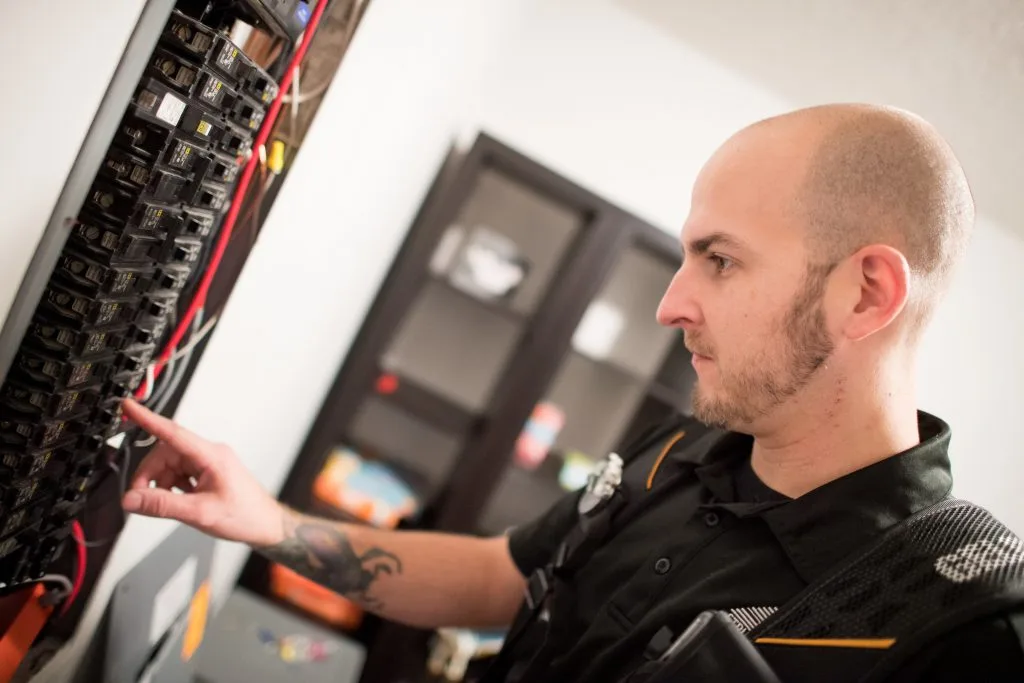
TL;DR:
- New homes in Chicago often have hidden defects despite being newly built.
- Independent inspections reveal common issues like electrical miswiring and waterproofing problems.
- Conduct thorough inspections before closing to avoid costly repairs and ensure quality.
Buying a brand-new home in the Chicago area feels like a safe bet. No previous owners, fresh materials, modern systems. What could go wrong? Quite a lot, actually. Hidden defects in new builds are far more common than most buyers expect, and discovering them after closing can cost thousands. This article breaks down why new construction homes in Chicago still need professional inspections, which defects show up most often, what hides beneath the surface, and how you can protect yourself before and after you move in.
Table of Contents
- Why new homes still need inspections
- The most frequent issues found in Chicago’s new builds
- Hidden problems: The defects you don’t see at closing
- How to protect yourself: Inspection steps and maintenance advice
- Our take: What most buyers and builders get wrong about new construction inspections
- Get peace of mind with a thorough Chicago inspection
- Frequently asked questions
Key Takeaways
| Point | Details |
|---|---|
| New homes have defects | Even brand-new builds can hide costly issues that only inspections reveal. |
| Inspections protect buyers | A professional inspection is your best defense against unexpected repairs and losses. |
| Chicago-specific risks | Local climate and construction trends mean certain defects are especially common in Chicago. |
| Maintenance matters | Ongoing attention after you move in helps uncover and prevent hidden problems early. |
| Independent inspectors are essential | Do not rely solely on builder walk-throughs; hire your own inspector who works for you. |
Why new homes still need inspections
There is a deeply held belief among homebuyers that a new home equals a perfect home. It is easy to understand why. You see fresh drywall, shiny fixtures, and a builder’s warranty that seems to cover everything. But that assumption can be expensive.
New construction in 2026 involves layers of subcontractors, tight deadlines, and municipal inspectors who are often stretched thin across dozens of active job sites. A city inspector’s visit is brief and focused on code minimums, not on catching every workmanship error. Mistakes made during rushed or subcontracted construction are found regularly by independent inspectors, even in homes that passed every official checkpoint.
Here are the top five reasons new homes can still have problems:
- Rushed timelines: Builders face financial pressure to close homes quickly, which pushes crews to cut corners on finishing work.
- Untrained crews: Subcontractors vary widely in skill level, and not every trade worker on your home is equally experienced.
- Inspection gaps: Municipal inspections happen at specific phases, leaving room for errors introduced between visits.
- Untested systems: HVAC, plumbing, and electrical systems may be installed but never fully tested before closing day.
- Builder cost-cutting: Material upgrades get swapped for cheaper alternatives without the buyer’s knowledge.
The good news is that a home inspection on new construction gives you an independent set of trained eyes before you sign anything final. Understanding what inspections are needed when buying a house helps you plan ahead and avoid surprises. Even first-time buyers benefit enormously from knowing what to expect during the process.
Pro Tip: Always schedule an independent inspection before closing, even if the builder offers their own walkthrough. The builder’s inspector works for the builder. Your inspector works for you.
The most frequent issues found in Chicago’s new builds
With the rationale for inspections clear, let’s examine the real-world issues inspectors find most often in new Chicago homes.
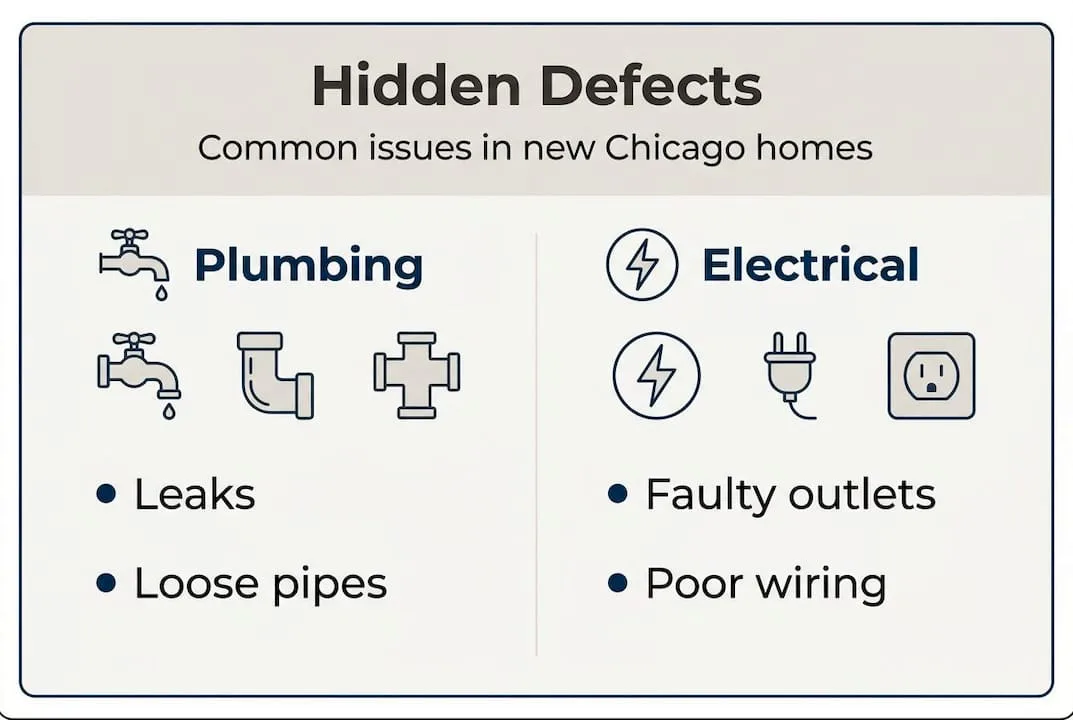
Electrical, HVAC, and water leaks are found routinely in new Chicago-area homes, and plumbing errors rank among the top defects in recent Chicago home constructions. That number is not a scare tactic. It reflects what happens when speed takes priority over precision.
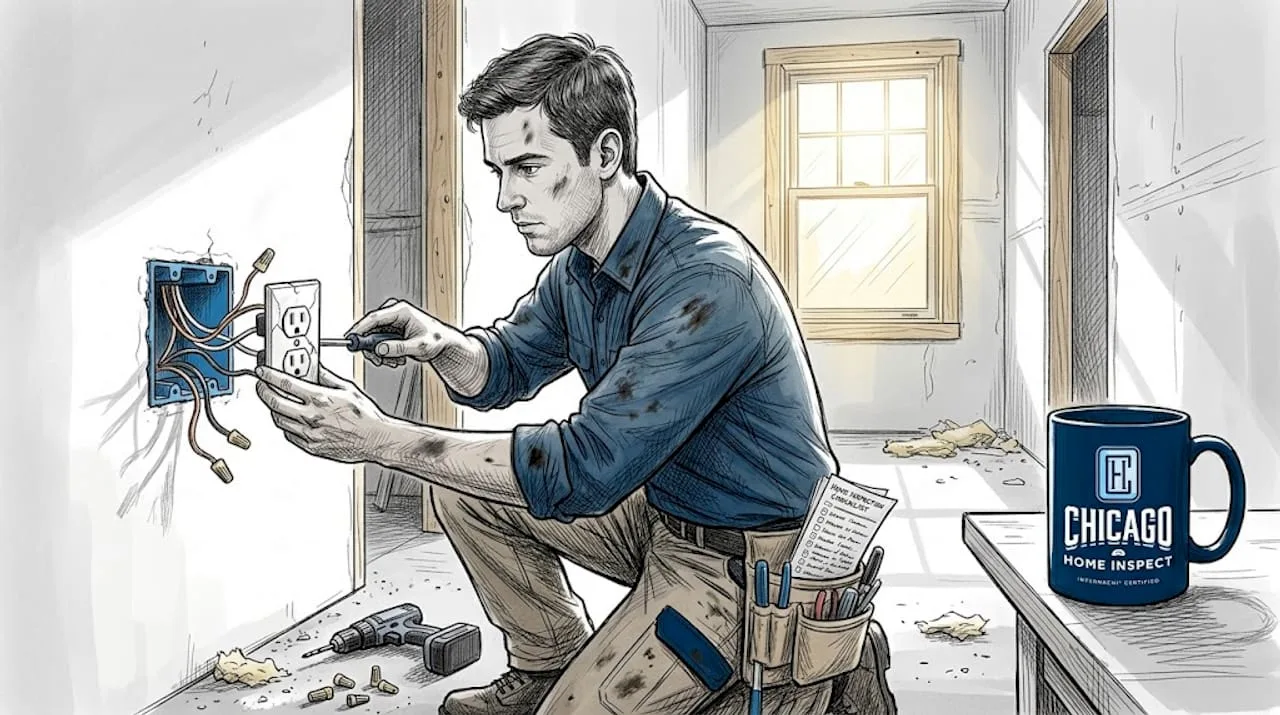
Here is a breakdown of the most common defect categories inspectors encounter:
| Defect category | Common examples | Risk level |
|---|---|---|
| Electrical | Miswired outlets, missing GFCI protection | High |
| HVAC | Improper venting, undersized equipment | High |
| Plumbing | Leaking joints, improper slope | Medium to High |
| Exterior envelope | Incomplete caulking, poor flashing | Medium |
| Mold and moisture | Trapped moisture behind walls | High |
Three real-world defect scenarios that inspectors find in new Chicago builds include:
- Miswired outlets: Outlets wired with reversed polarity or missing ground connections. These pass a visual check but fail under testing and can damage electronics or cause shock hazards.
- Improper venting: Bathroom or dryer vents that terminate inside the attic instead of outside. Moisture builds up fast, and mold follows within months.
- Incomplete waterproofing: Foundation walls or window rough openings left without proper flashing or sealant, setting the stage for water intrusion during Chicago’s heavy rain seasons.
These are not rare edge cases. Inspectors who work Chicago’s overlooked defects beat see these patterns repeatedly across different builders and neighborhoods. Understanding plumbing problems in new homes alone can save you from a flooded basement or a mold remediation bill that runs into the tens of thousands.
Hidden problems: The defects you don’t see at closing
Beyond obvious surface-level mistakes, some defects remain invisible to untrained homebuyers. Here’s what inspectors look for beneath the surface.
Small leaks or insulation gaps can cause major costs if not caught early, and certain defects only become visible months after moving in, reinforcing the need for professional inspection. Chicago’s climate makes this especially true. Freeze-thaw cycles expose gaps in waterproofing. Summer humidity reveals ventilation failures. What looked perfect in April can look very different by January.
Here is how common hidden issues compare to their long-term effects:
| Hidden issue | Potential long-term effect |
|---|---|
| Insulation gaps in attic | Higher energy bills, ice dams in winter |
| Improperly sealed windows | Water intrusion, rot, mold |
| Undersized electrical panel | Tripped breakers, fire risk |
| Poor grading around foundation | Basement flooding |
| Inadequate attic ventilation | Premature roof deck damage |
Inspectors use a systematic approach to uncover these hidden flaws:
- Attic inspection: Check insulation depth, ventilation, and signs of moisture or pest activity.
- Electrical panel review: Look for double-tapped breakers, improper wire gauges, and labeling errors.
- Moisture scanning: Use moisture meters along exterior walls, around windows, and near plumbing fixtures.
- HVAC airflow testing: Confirm that all rooms receive adequate conditioned air and that returns are properly sized.
- Exterior grading check: Verify that soil slopes away from the foundation to prevent water pooling.
Pro Tip: Ask your inspector to check for recent repairs or patches during the walkthrough. Fresh caulk over a crack, new paint on a small section of ceiling, or a replaced floor tile can all signal that someone tried to cover something up before closing.
How to protect yourself: Inspection steps and maintenance advice
Knowing the risks, here are the steps every Chicago homebuyer should follow, plus ongoing maintenance tips after moving in.
Professional home inspectors follow a systematic process to ensure nothing is overlooked, even in new construction. Your job as a buyer is to make sure you hire the right one and show up prepared.
Follow this checklist before and during your inspection:
- Verify credentials: Confirm your inspector is InterNACHI certified and licensed in Illinois. Ask for a sample report before booking.
- Schedule before the final walkthrough: Do not wait until the builder’s walkthrough. Book your independent inspection a few days earlier so you have time to negotiate repairs.
- Attend the inspection: Walk through with your inspector and ask questions. This is your best opportunity to learn about your home’s systems firsthand.
- Review the report carefully: Read every section, not just the summary. Flag items marked as safety concerns for immediate follow-up.
- Request re-inspection if needed: If the builder agrees to fix defects, schedule a follow-up inspection to confirm the work was done correctly.
Once you move in, keep up with these first-year maintenance tasks:
- Test all GFCI outlets and smoke detectors monthly.
- Check caulking around windows, doors, and tubs every six months.
- Clean gutters and inspect downspout extensions after every heavy rain season.
- Run water in every fixture to confirm drainage and check for slow drains.
- Inspect the attic after the first winter for signs of ice damming or moisture.
Knowing what inspectors actually look for helps you ask better questions. Reviewing simple things to inspect on your own between professional visits keeps small issues from becoming big ones.
A professional inspection is not just a formality. It is the single most cost-effective step a new construction buyer can take to protect a purchase that likely represents the largest investment of their life.
Our take: What most buyers and builders get wrong about new construction inspections
After years of inspecting homes across Chicago and the suburbs, one pattern stands out clearly. Buyers consistently overestimate what a builder’s warranty actually covers and underestimate how much can go wrong before they even move in.
A warranty sounds reassuring. But warranties are reactive. They respond after something breaks. An independent inspection is proactive. It catches problems before they become warranty claims, before they cause damage, and before you are the one paying for repairs that should have never happened.
Builders are not villains. They are businesses with timelines and budgets. Their incentive is to finish and close, not to achieve perfection on every detail. That is not a criticism. It is just reality. The value of independent inspections comes precisely from that independence. Your inspector has no relationship with the builder and no reason to overlook anything.
We have also seen experienced buyers skip steps under pressure. A builder says closing must happen by Friday. The buyer feels rushed and skips the independent inspection to avoid conflict. Months later, they are dealing with a flooded basement or a failed HVAC system. Do not let urgency override diligence. New does not mean defect-free. It never has.
Pro Tip: Take your time, ask probing questions at every stage of the process, and never assume that a fresh coat of paint means the work behind it was done right.
Get peace of mind with a thorough Chicago inspection
If you are buying a new construction home in Chicago or the suburbs, you deserve more than a builder’s assurance. Our pre-purchase inspection service is designed specifically to catch what others miss, with detailed reports, clear photos, and plain-language explanations that make sense to real homeowners. You can review a sample home inspection report to see exactly what you will receive, and browse our interior inspection photos to understand the level of detail we bring to every job. We are InterNACHI certified, BBB accredited, licensed and insured, and available on weekends. Book your inspection before you close.
Frequently asked questions
Do I really need to inspect a brand-new home in Chicago?
Yes. New home inspections regularly uncover hidden defects that neither the builder nor the buyer noticed, and catching them before closing is far cheaper than fixing them after.
What are the most common defects in new Chicago homes?
Inspectors most often find problems with electrical systems, plumbing connections, and HVAC installation. Common defects in new homes include miswired outlets, improper venting, and incomplete waterproofing.
How does a new construction inspection differ from a regular one?
A new construction inspection focuses on recently completed work and code compliance rather than wear and aging. New construction inspections target features that were just installed and may not yet show visible signs of failure.
Should I get a final walk-through with my own inspector?
Absolutely. A walk-through inspection with a qualified independent inspector gives you a final chance to identify last-minute defects before you sign closing documents.
What if my builder says their inspection is enough?
It is not. Buyers should not rely solely on builder-provided inspections because that inspector’s loyalty is to the builder, not to you.