

TL;DR:
- Hidden problems in Chicago homes often show subtle signs that require careful inspection to avoid costly repairs.
- Outdated electrical systems, small foundation cracks, and exterior flaws are common hidden issues that can escalate if ignored.
- Early detection through professional inspections can save homeowners thousands by addressing problems before they worsen.
Chicago homes have a way of looking perfectly fine on the surface while quietly building up expensive problems underneath. Older neighborhoods across the city are full of homes that passed a quick visual check but later surprised their owners with five-figure repair bills. The tricky part is that the most costly issues rarely announce themselves. No alarms, no obvious damage, just small clues that are easy to dismiss. This article walks you through five of the most common “looks fine” problems hiding in Chicago homes, what to watch for, and how catching them early can save you thousands.
Table of Contents
- How inspectors spot ‘looks fine’ issues
- 1. Outdated electrical systems: More than flickering lights
- 2. Small foundation cracks and subtle shifts
- 3. Plumbing: Tiny leaks that eat your wallet
- 4. Attic and roof ventilation: Out of sight, out of budget
- 5. ‘Minor’ exterior flaws that open the door to big damage
- Why small problems are worth your attention (even if they aren’t obvious yet)
- Get ahead of costly repairs with a professional inspection
- Frequently asked questions
Key Takeaways
| Point | Details |
|---|---|
| Small issues add up | Most major home repairs start with tiny problems that are easy to miss during routine checks. |
| Function over cosmetics | Subtle signs like flickering lights or minor cracks deserve investigation even if the home looks fine overall. |
| Inspect regularly | Routine, detailed home inspections can catch expensive risks before they escalate. |
| Act fast | Addressing minor flaws quickly avoids much higher repair costs later. |
How inspectors spot ‘looks fine’ issues
With hidden problems becoming more common in Chicago’s aging housing stock, it helps to understand what a home inspection can and cannot catch.
A standard home inspection covers a wide range of systems and components. Inspectors trained to visual checks standards walk through the property and assess what they can see, touch, and test. That includes the roof, foundation, electrical panel, plumbing fixtures, HVAC, and more. It is a thorough process, but it has real limits.
Here is what a standard inspection typically covers:
- Visible structural components like walls, floors, and ceilings
- Electrical panels, outlets, and visible wiring
- Plumbing fixtures and accessible pipes
- Roof condition from the ground or rooftop
- HVAC equipment operation
What it cannot always catch:
- Concealed rot behind walls or under flooring
- Buried foundation damage
- Problems inside walls or sealed spaces
- Active pest damage hidden from view
“Inspectors follow ASHI/InterNACHI standards and visual checks, but some problems, like concealed rot or buried damage, require specialists.”
This is why inspectors sometimes refer buyers to structural engineers, electricians, or mold specialists after spotting a clue that warrants a deeper look. Reviewing common inspection issues found in Chicago homes shows just how often subtle signs point to bigger underlying problems. Many buyers skip follow-up referrals to save time or money, and that is often where the real cost begins. Understanding what overlooked inspection defects look like helps you ask the right questions before you close.
1. Outdated electrical systems: More than flickering lights
Electrical trouble is one of the riskiest invisible hazards in older Chicago homes, and it rarely looks dangerous at first.
You flip a switch and the light flickers. A breaker trips once, you reset it, and life goes on. These moments feel minor, but they can be early warnings of a system that is overloaded, improperly grounded, or built with materials that no longer meet safety standards. Many Chicago homes built before 1970 still have original wiring or outdated panels that were never upgraded.
Common signs that seem harmless but deserve attention:
- Lights that flicker or dim when appliances run
- Breakers that trip more than once a month
- Outlets that feel warm to the touch
- A panel labeled Federal Pacific or Zinsco
- Two-prong outlets throughout the home
The risks go beyond inconvenience. Outdated panels and faulty wiring are a leading cause of house fires. Insurance companies are also paying attention. Some carriers refuse to insure homes with certain older panels, or they charge significantly higher premiums.
Stat to know: Old electrical panels, like Federal Pacific, flickering lights, or improper grounding could work now but often require $5,000 to $15,000 in rewiring and are especially common in pre-1970s Chicago homes.
Pro Tip: If your home has a Federal Pacific or Zinsco panel, do not wait for a problem to appear. Get it evaluated by a licensed electrician before your next inspection. Knowing about electrical inspection red flags in older Chicago homes can help you prioritize what to address first.
2. Small foundation cracks and subtle shifts
Foundation problems are not always dramatic. Sometimes they show up as a crack you can barely see or a door that sticks a little more than it used to.
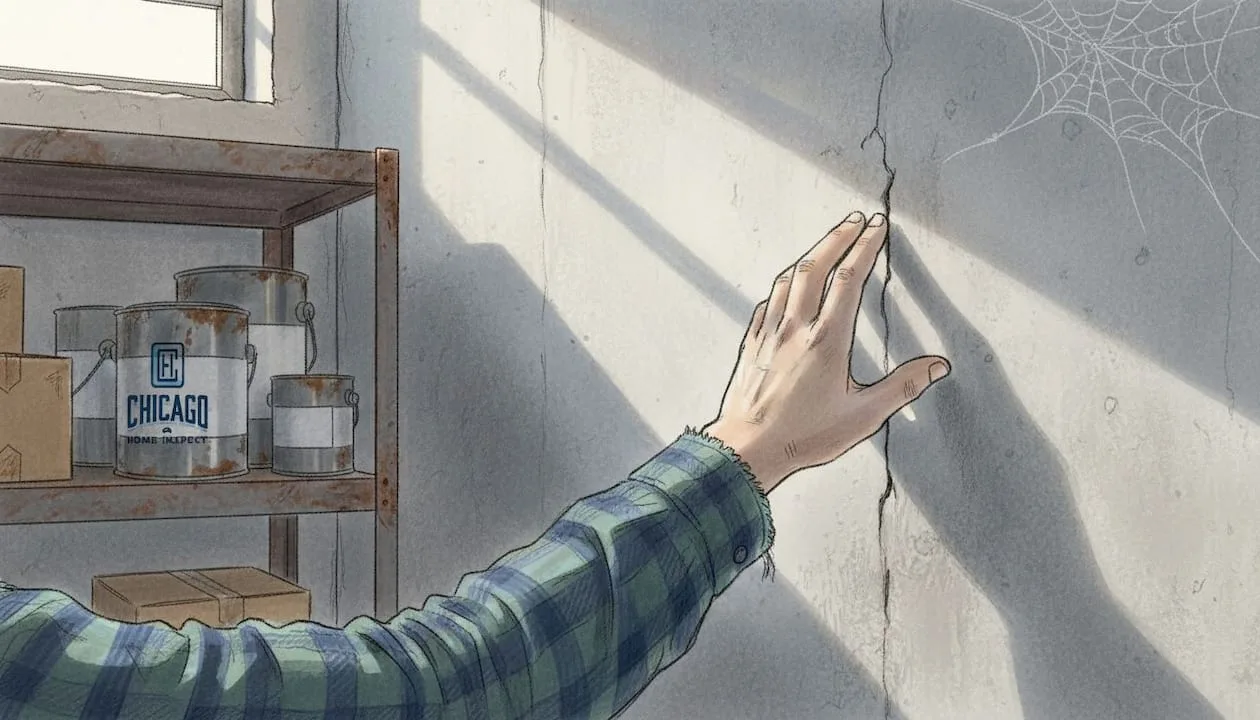
Not every crack in a foundation is a crisis. Hairline shrinkage cracks from concrete curing are common and usually harmless. The problem is when cracks start pairing with other symptoms. A crack alone might be nothing. A crack combined with a door that suddenly will not close right, floors that feel uneven, or windows that stick in their frames is a different story.
Watch for these warning combinations:
- Horizontal cracks in basement walls (more serious than vertical)
- Cracks wider than 1/4 inch
- Stair-step cracks in brick or block foundations
- Doors or windows that recently started sticking
- Sloping or bouncy floors on the main level
“Minor cracks are often benign, but cracks combined with sticking doors or windows signal bigger issues that need professional evaluation.”
Foundation repairs can range from a few hundred dollars for simple crack injection to $20,000 or more for full underpinning. The earlier you catch movement, the cheaper the fix. Visual inspections often miss early-stage foundation shifts because the signs are subtle and spread across different parts of the home. Understanding when foundation cracks are serious in Chicago’s freeze-thaw climate is key to protecting your investment.
3. Plumbing: Tiny leaks that eat your wallet
Next, let’s go from the foundation upward and look at the pipes running through your home, because small plumbing issues are some of the sneakiest budget killers.
A slow drip under the sink. A faint musty smell in the basement. A small water stain on the ceiling that has not changed in months. These feel manageable, even ignorable. But small leaks often seem to “work” while silently corroding pipes and creating conditions for mold to grow behind walls.
Signs that deserve a closer look:
- Water stains on ceilings or walls, even old-looking ones
- Musty or earthy smells near plumbing walls
- Slow drains throughout the home (not just one fixture)
- Unusually high water bills with no clear cause
- Soft or discolored flooring near bathrooms or the kitchen
Pro Tip: Run your hand along accessible pipes under sinks and in the basement. Any moisture, white mineral buildup, or green discoloration on copper pipes is worth flagging for a plumber.
Here is a quick comparison of how plumbing issues scale when ignored:
| Issue | Quick fix cost | Delayed repair cost |
|---|---|---|
| Dripping faucet | $50 to $150 | $300 to $800 (pipe corrosion) |
| Slow drain | $100 to $200 | $1,500 to $4,000 (sewer line) |
| Small pipe leak | $200 to $500 | $5,000 to $15,000 (rot and mold) |
| Water heater drip | $150 to $300 | $1,000 to $3,000 (replacement) |
Reviewing common plumbing problems found during Chicago home inspections shows how often these small signs are present but dismissed before a purchase.
4. Attic and roof ventilation: Out of sight, out of budget
Water problems are not just underfoot. Move up to the attic and roof, where issues can quietly grow for years without a single visible leak inside the home.
Most homeowners never go into their attic. That is exactly why problems there tend to get expensive. Poor ventilation causes heat and moisture to build up, which leads to rot in the roof decking, mold on the rafters, and shingle failure from the inside out. In Chicago winters, poor attic ventilation is also a primary cause of ice dams, which force water under shingles and into the home.
Here is how to evaluate your attic ventilation situation:
- Check for hot or cold spots on your upper floor ceilings, which often signal poor airflow above.
- Look for any visible mold or dark staining on attic rafters or sheathing.
- Inspect soffit vents from outside to confirm they are not blocked by insulation.
- Note any unusual smells in the attic, musty or sharp odors point to moisture or pest activity.
- After a heavy snow, watch the roofline. Uneven melting often means uneven heat loss from ventilation problems.
“Edge-case issues like underventilated attics or small roof leaks often require specialist inspection to uncover hidden damage before it spreads.”
Roof repairs from ventilation-related damage can run $3,000 to $12,000 depending on how far the rot has spread. Catching it at the early mold stage is far cheaper. Homes covered in older homes inspection tips frequently show attic issues as one of the top findings.
5. ‘Minor’ exterior flaws that open the door to big damage
Finally, let’s step outside to the flaws most homeowners walk past every day without a second thought.
A small gap in the caulk around a window. Peeling paint on the trim. A tiny crack in the brick mortar. In Chicago’s climate, these are not cosmetic problems. They are open invitations for water, cold air, and pests to enter the home. Freeze-thaw cycles turn small cracks into large ones fast, and once water gets behind siding or into masonry, the damage compounds quickly.
Exterior red flags that are easy to dismiss:
- Gaps or missing caulk around windows, doors, and utility penetrations
- Peeling or bubbling paint on wood trim or siding
- Cracked or crumbling mortar between bricks
- Soft spots in wood trim or around window frames
- Downspouts that discharge water too close to the foundation
Experts warn to prioritize functional flaws over cosmetic ones, since small weaknesses in exteriors often create pathways for much bigger problems inside.
| Exterior issue | Cosmetic or functional? | Potential repair cost if ignored |
|---|---|---|
| Peeling paint | Cosmetic | $500 to $2,000 (rot repair) |
| Cracked caulk | Functional | $1,000 to $5,000 (water damage) |
| Crumbling mortar | Functional | $3,000 to $10,000 (tuckpointing) |
| Soft wood trim | Functional | $2,000 to $8,000 (rot and pest) |
Seasonal maintenance, especially before and after Chicago winters, is the most cost-effective way to stay ahead of these issues. Browse inspection issue examples from local homes to see how these exterior flaws show up in real inspections.
Why small problems are worth your attention (even if they aren’t obvious yet)
Here is something we have learned from years of inspecting Chicago homes: the homeowners who end up with the biggest repair bills are rarely the ones who ignored obvious damage. They are the ones who noticed something small, told themselves it was probably nothing, and moved on.
A door that started sticking last spring. A faint smell in the basement that comes and goes. A small stain on the ceiling that has not grown in a year. These are the things that feel easy to dismiss, and Chicago’s climate makes them worse faster than most people expect. Freeze-thaw cycles, heavy moisture, and temperature swings accelerate hidden damage in ways that simply do not happen in milder climates.
The mindset shift that actually protects your home is this: stop evaluating things by how they look and start evaluating them by how they function. A door that sticks is not an aesthetic issue. It is a clue. A crack that appears near a window is not just wear and tear. It is a question worth asking. Knowing the major red flags Chicago buyers and owners should watch for gives you a real advantage before small problems become expensive ones.
Get ahead of costly repairs with a professional inspection
Ready to spot problems before they balloon into major expenses? The issues covered in this article are exactly what a professional inspection is designed to find, and catching even one of them early can easily save you $5,000 or more. Our team is InterNACHI Certified, BBB Accredited, and available on weekends to work around your schedule. You can see a sample report to understand exactly what you will receive, or browse interior inspection photos to see what our inspections look like in real Chicago homes. When you are ready, it is easy to schedule an inspection online. We serve Chicago and the surrounding suburbs.
Frequently asked questions
What are the most expensive hidden home repairs homeowners miss?
Electrical rewiring and foundation work often start as minor-looking issues but can each cost $5,000 to $15,000 or more if not caught early.
How can I tell if a small crack is serious or just cosmetic?
Cracks paired with sticking doors or sloping floors could be serious; a home inspector or structural engineer should evaluate them.
Are plumbing leaks always a big problem if they don’t drip much?
Even slow or hidden leaks can corrode pipes and foster mold, leading to repairs that cost far more than the original fix would have.
What should I ask a Chicago inspector about older homes?
Discuss electrical panel age, attic ventilation, and check for exterior flaws, especially if your home predates 1970, since pre-1970s Chicago homes are prone to outdated and risky electrical panels.
Recommended
- Top 5 Hidden Issues Buyers Miss During Showings | Chicago Home Inspect LLC
- Spot hidden exterior issues in April: 5 key problems
- 5 Simple Things to Inspect Before Home Inspection Services in Chicago
- 7 Common Home Inspection Findings You Should Know | Chicago Home Inspect LLC
- 7 typische Beispiele für Versicherungsschäden im Haus