
TL;DR:
- Home inspections in Illinois are limited to visible, accessible areas and do not guarantee defect-free homes.
- Legal responsibility for inspectors depends on whether defects were visible, accessible, and within scope at the time of inspection.
- Buyers should actively participate, document issues, and understand both inspector and seller disclosure rights to protect their investment.
Most Chicago homebuyers treat the inspection report like a clean bill of health. If nothing major shows up, they assume they’re safe. That belief feels reasonable until three months after closing, when a wet basement or failing foundation wall sends repair estimates through the roof. A home inspection is not a warranty, and Illinois law draws a very specific line around what your inspector is responsible for. This guide breaks down exactly what inspectors are and aren’t liable for, what counts as negligence under Illinois law, what legal options you have when something slips through, and how to protect yourself before it ever gets to that point.
Table of Contents
- What inspectors are (and aren’t) responsible for in Illinois
- Why inspectors miss defects—and what counts as negligence
- Legal options when your inspector misses something
- Sellers, inspectors, and your rights: How Chicago law protects buyers
- The tough truth: Inspections aren’t insurance—here’s what Chicago buyers really need to do
- Need expert help? Chicago specialists are ready
- Frequently asked questions
Key Takeaways
| Point | Details |
|---|---|
| Inspector limits exist | Inspectors are only liable for defects that are visible and accessible during a standard inspection. |
| Legal options for buyers | You may have recourse if a critical issue was missed, but contracts often limit the inspector’s liability. |
| Seller responsibilities | Sellers must disclose known defects, and buyers can take action if critical facts are withheld. |
| Take fast action | If you find a missed issue, document it and start the claims process quickly due to Illinois statutes of limitations. |
What inspectors are (and aren’t) responsible for in Illinois
Understanding where your inspector’s responsibility begins and ends can save you enormous frustration. The Illinois Home Inspector License Act governs what a licensed inspector must examine during a standard visual inspection. The law requires a walkthrough of accessible systems and components, including electrical panels, roofing, HVAC, plumbing, and the visible structure. What it does not require is opening walls, digging up buried pipes, or accessing areas blocked by personal property or building design.
Chicago adds a layer of complexity that many buyers underestimate. The city’s inspection uniqueness includes older housing stock, clay-heavy soil that stresses foundations, and multi-unit buildings where access to mechanical systems is often restricted. An inspector working a 1920s greystone on the Northwest Side faces challenges that simply don’t exist in a new suburban build. Clay soil, for example, causes seasonal foundation movement that only becomes visible over years, not during a single walkthrough.
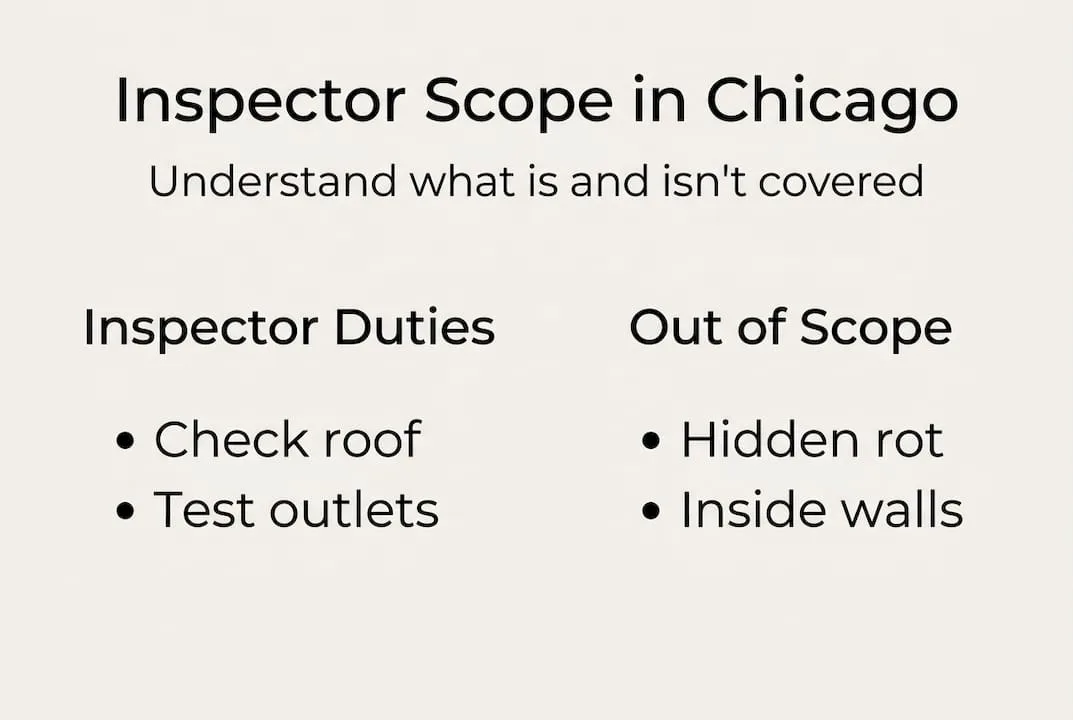
Under Illinois law, inspector liability explained comes down to one central question: was the defect visible and accessible? Inspectors are liable only if missed defects were visible, accessible, and within the scope of a standard visual inspection under Illinois Home Inspector License Act standards. If it wasn’t visible that day, it generally doesn’t create liability.
What’s typically within scope:
- Roof condition (from ground or ladder access)
- Electrical panel and visible wiring
- HVAC operation and accessible ductwork
- Plumbing fixtures and visible supply/drain lines
- Foundation walls where visible
- Insulation in accessible attic spaces
What’s typically out of scope:
- Inside wall cavities
- Buried sewer or water lines
- Areas blocked by furniture or stored items
- Systems not turned on or accessible at the time of inspection
- Underground fuel tanks
| Inspector obligation | Typically out of scope |
|---|---|
| Inspect visible roof surface | Detect hidden deck rot beneath shingles |
| Test all accessible outlets | Identify wiring inside finished walls |
| Assess visible foundation | Diagnose buried footing cracks |
| Operate installed HVAC | Inspect sealed mechanical rooms |
| Check for common findings | Detect concealed mold behind drywall |
Pro Tip: Never rely on the seller’s inspector. In Chicago, always hire your own independent inspector so you receive a report written in your interest, not the seller’s.
Why inspectors miss defects—and what counts as negligence
Even a thorough, experienced inspector can miss something. That’s not automatically negligence. Understanding the difference matters enormously before you consider any legal action.
The most common reasons for missed defects include weather conditions at the time of inspection, limited physical access due to locked doors or blocked areas, cosmetic concealment by sellers, and systems that weren’t operational during the walkthrough. A leaking roof might look perfectly dry after two weeks of sunshine. A basement seepage issue might only appear during spring thaw, long after the inspection date.
Legally, negligence means the inspector failed to meet the standard of care expected of a licensed professional. That means they missed a defect that was visible, accessible, and within their scope at the time of inspection. Missing a crack that was covered by furniture is not negligence. Missing a visibly deteriorated electrical panel is a different matter entirely.
Legal claims against inspectors can include negligence (breach of standard of care), breach of contract, and violations of the Illinois Home Inspector License Act or Consumer Fraud Act. These are distinct claims, and some carry stronger remedies than others.
Defects that are typically detectable (and inspectors’ responsibility):
- Visibly cracked or bowed foundation walls
- Missing or damaged electrical covers
- Active roof leaks leaving water stains
- Non-operational HVAC units
- Corroded or leaking visible plumbing
Defects that are typically undetectable (and usually not inspectors’ fault):
- Sewer line root intrusion below grade
- Mold inside sealed wall cavities
- Hidden asbestos in encapsulated materials
- Intermittent electrical faults that don’t trigger during testing
- Overlooked Chicago defects buried beneath finished surfaces
Under Illinois standards, only visible and material defects count toward inspector liability. Knowing this gap exists helps you use the inspection process smarter rather than treating it as a final word.
Pro Tip: Attend your inspection in person. Being there lets you see exactly what areas couldn’t be accessed and ask the inspector directly what limitations affected the walkthrough. That conversation may matter later.
Legal options when your inspector misses something
If you discover a significant defect after closing that wasn’t in your inspection report, your first instinct might be panic. Here’s a practical roadmap instead.
- Contact your inspector in writing. Before anything else, reach out to your inspector and document the issue. Many contracts require notification before repairs begin, so don’t fix anything yet if you intend to pursue a claim.
- Document everything thoroughly. Take dated photos and video. Get written estimates from licensed contractors. Keep every communication and the original inspection report.
- Review your inspection contract. Most contracts include limitation clauses that cap liability, often at the cost of the inspection itself. However, as bringing a claim experts note, those caps aren’t always enforceable, especially in cases of gross negligence.
- Pursue mediation or arbitration first. Most inspection contracts require this before litigation. It’s faster and less costly than court.
- Consult a real estate attorney. If mediation fails, an attorney can evaluate whether you have a viable negligence, breach of contract, or Consumer Fraud Act claim.
“Negligence requires proving the defect was visually detectable at the time of inspection; damages may cover repair costs and diminished property value.”
Legal claims include negligence, breach of contract, and Consumer Fraud Act violations. Contracts may limit liability, but those caps aren’t always ironclad, particularly when gross negligence is involved.
| Liability scenario | Likely outcome |
|---|---|
| Minor missed item, limited contract | Refund of inspection fee only |
| Negligence, visible accessible defect | Insurance claim, repair cost coverage |
| Gross negligence or fraud | Broader damages possible |
| Seller concealment involved | Separate claim against seller |
Time matters here. Illinois statutes of limitations for property claims are often based on the date of discovery, not closing. If you handle post-inspection problems without documenting them first, you may lose options. Act quickly, even if you’re still deciding what to do. Consider your position around inspection repair negotiation and whether backing out is still a possibility in your situation.
Sellers, inspectors, and your rights: How Chicago law protects buyers
Here’s something many buyers don’t realize until it’s too late: inspector liability and seller liability are completely separate. You may have a claim against both parties, or just one, depending on the circumstances.
Under Illinois law, sellers must disclose known material defects before the sale closes. This is governed by the Illinois Residential Real Property Disclosure Act, which requires sellers to complete a written disclosure form covering structural defects, water infiltration, environmental hazards, and more. If a seller knew about a defect and concealed it, that’s a legal violation separate from anything the inspector did or didn’t find.
Chicago buyers benefit from robust seller disclosure duties that go further than many other markets. If you suspect the seller painted over mold, covered cracks before photos, or misrepresented the age of a roof, you may have a nondisclosure claim against them regardless of what the inspection report says.
“Sellers have separate disclosure duties under Illinois law. If known defects were hidden, buyers may have legal claims independent of any inspector-related action.”
Key buyer rights in Illinois:
- Right to request repairs or a price reduction based on inspection findings before closing
- Right to review the seller’s written disclosure form before finalizing purchase
- Right to pursue legal action against a seller for fraudulent concealment of known defects
- Right to file a complaint against a licensed inspector with the Illinois Department of Financial and Professional Regulation
- Right to pursue arbitration or litigation based on your inspection contract terms
If you notice suspicious repairs or cosmetic work that seems designed to hide something rather than fix it, flag it immediately. A second inspection or targeted specialist evaluation can document concerns before you close.
The tough truth: Inspections aren’t insurance—here’s what Chicago buyers really need to do
After seeing how Chicago closings play out, one pattern stands out clearly. The buyers who avoid costly surprises are not the ones who simply hired an inspector and trusted the report. They’re the ones who treated the inspection as a starting point, not a conclusion.
An inspection finds most problems, but not all of them. That’s not a flaw in the system. It’s the honest limit of a visual walkthrough conducted over a few hours. The buyers who get burned are those who hand the process off entirely and assume someone else caught everything.
Attending your inspection matters. Reading the full report matters. Asking your inspector about every limitation noted in the report matters. Reviewing your contract for liability caps before you sign it matters. And if your gut tells you something is off in a basement or attic, getting a second opinion from a specialist matters more than your desire to close on schedule.
Review the final checklist for buyers once your report is in hand. The most protected buyers aren’t luckier. They’re more involved, more skeptical, and more willing to slow down when something doesn’t add up.
Need expert help? Chicago specialists are ready
Choosing an experienced, local inspector is the most effective way to reduce your risk before closing. Our team is InterNACHI Certified, BBB Accredited, and licensed and insured to serve Chicago and the surrounding suburbs, with weekend availability for buyers on tight timelines. Whether you need a thorough pre-purchase inspection, want to view a sample report before scheduling, or want to add mold testing or radon testing to your walkthrough, we make it easy to get the full picture. Don’t walk into closing hoping nothing was missed. Book your inspection with a team that treats every property like the major investment it is.
Frequently asked questions
What should I do first if my inspector missed a problem?
Notify your inspector in writing immediately and document the issue with photos before making any repairs, since contracts usually detail the required next steps and may require notification before any remediation begins.
Can I sue my home inspector in Chicago for missing a defect?
You may have a case if the missed defect was visible and accessible during the inspection, but legal claims require the missed issue to fall clearly within the inspector’s scope, and many contracts limit what you can recover.
What defects are usually not the inspector’s fault?
Hidden issues such as sewer line root intrusion or corrosion inside wall cavities are typically not the inspector’s responsibility, since the scope excludes hidden issues like buried pipes, wall interiors, or physically inaccessible areas.
If the seller hid a problem, can I make a claim?
Yes. Sellers have disclosure duties under Illinois law, and concealing a known material defect may give you grounds for a legal claim independent of any action against your inspector.
Recommended
- What to Do if a Home Inspection Finds Problems in Chicago
- Inspecting Century Homes in Chicago: What Buyers Should Know
- Home inspection blind spots: what Chicago buyers should know
- Seller Inspection Checklist for Chicagoland Home Buyers | Chicago Home Inspect LLC
- Essential residential moving checklist: streamline your move