
Stepping into the Chicago home market brings excitement and tough choices, especially when inspection repairs become part of the conversation. Understanding inspection repairs negotiation basics helps buyers and realtors in Illinois spot potential deal-breakers and build realistic expectations for both property condition and cost. This guide explains how to handle repair priorities, legal responsibilities, and strategic options so you know exactly what to expect and how to protect your investment.
Table of Contents
- Inspection Repairs Negotiation Illinois Basics
- Types of Inspection Repairs and Priorities
- Illinois Laws and Disclosure Requirements
- Buyer And Seller Roles In Negotiating Repairs
- Costs, Credits, And Common Mistakes To Avoid
Inspection Repairs Negotiation Illinois Basics
Buying a home in Illinois requires strategic understanding of inspection repair negotiations. When sellers list a property, buyers have critical opportunities to evaluate potential maintenance issues and negotiate repairs before finalizing the purchase. Home inspection repair negotiations involve complex interactions between buyers and sellers, establishing clear expectations for property condition.
Illinois home buyers should understand several key components of inspection repair negotiations:
- Identifying material defects during initial home inspection
- Determining which repairs are reasonable to request
- Understanding seller obligations under state real estate regulations
- Establishing clear repair timelines and expectations
- Deciding between repair requests or price adjustments
The negotiation process typically begins after the professional home inspection reveals specific property issues. Buyers can request repairs or credits based on documented findings, which gives them leverage in the transaction. Repair requests must be reasonable, substantiated by professional inspection reports, and focused on significant structural or safety concerns rather than minor cosmetic issues.
Repair negotiation strategies often involve three primary approaches:
- Request seller complete specific repairs before closing
- Request monetary credits equivalent to repair costs
- Reduce overall home purchase price to compensate for needed repairs
Legal considerations play a crucial role in these negotiations. Home repair responsibilities in sales contracts depend on clear communication and documented agreements between parties.
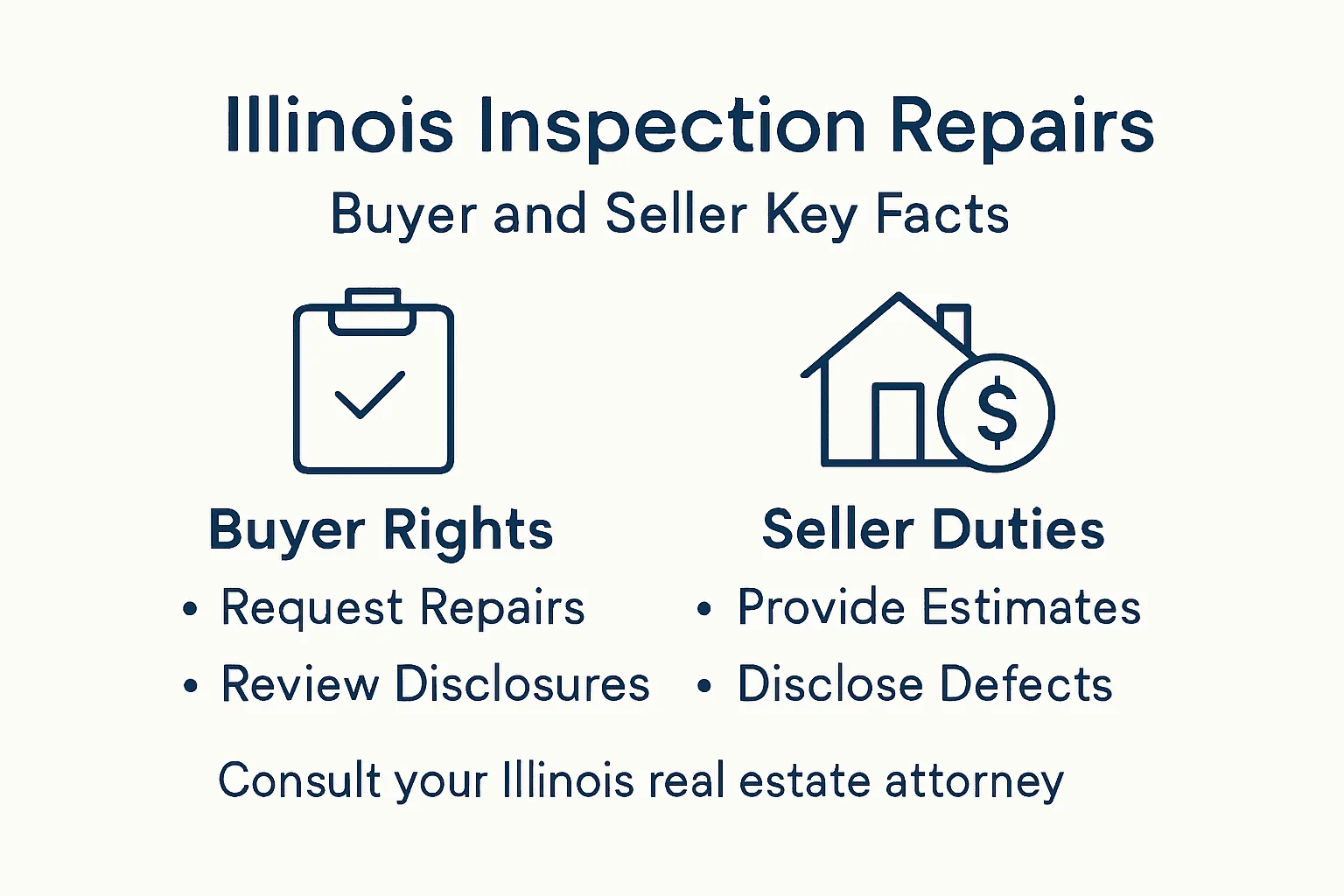
Pro tip: Always obtain multiple professional repair estimates to support your negotiation position and ensure you have accurate documentation of potential repair costs.
Types of Inspection Repairs and Priorities
Home inspection repairs in Illinois cover a wide range of critical issues that can significantly impact property value and livability. Home repair programs prioritize repairs based on health, safety, and structural integrity, guiding buyers in understanding the most crucial maintenance needs for their potential home.
The primary types of inspection repairs can be categorized into several key priority levels:
- Structural Repairs
- Foundation issues
- Roof damage
- Wall and frame structural problems
- Safety Critical Repairs
- Electrical system defects
- Plumbing code violations
- Fire hazard mitigation
- Functional System Repairs
- HVAC system integrity
- Water heater functionality
- Insulation and weatherproofing
Illinois home inspection protocols emphasize a hierarchical approach to repair prioritization. Critical repairs are those that directly impact the home’s safety, structural integrity, and basic functionality. These typically take precedence over cosmetic or minor aesthetic improvements. Buyers should focus on repairs that prevent potential health risks, structural degradation, or significant future expenses.
Repair priority ranking typically follows this strategic approach:
- Immediate safety hazards
- Structural integrity issues
- Major system failures
- Code compliance problems
- Functional performance concerns
- Cosmetic and aesthetic improvements
Home repair prioritization strategies in Illinois often consider both the immediate impact and long-term sustainability of potential repairs. Professional home inspectors provide detailed reports that help buyers understand the severity and potential cost implications of identified issues.
Pro tip: Request a comprehensive written estimate for each identified repair, prioritizing those that could compromise the home’s safety or lead to more expensive future damage.
Illinois Laws and Disclosure Requirements
Homebuyers in Illinois must navigate a complex legal landscape of property disclosure requirements designed to protect their interests. Illinois real estate disclosure statutes establish clear legal obligations for sellers to transparently communicate property conditions and potential defects before finalizing a home sale.
Key disclosure requirements in Illinois include:
- Material Defect Disclosure
- Structural issues
- Known electrical or plumbing problems
- Environmental hazards
- Past flood or water damage
- Mandatory Seller Responsibilities
- Complete written disclosure form
- Truthful reporting of known issues
- Potential liability for intentional misrepresentation
- Buyer Protection Mechanisms
- Right to comprehensive inspection
- Legal recourse for undisclosed defects
- Potential contract cancellation
The legal framework governing these disclosures is comprehensive and designed to create transparency in real estate transactions. Sellers are legally required to disclose any known material defects that could significantly impact the property’s value or habitability. These requirements extend beyond simple cosmetic issues and focus on substantive problems that might affect the home’s structural integrity or safety.
Specific disclosure obligations typically include:
- Structural foundation problems
- Roof and water damage history
- Presence of hazardous materials
- Pest or termite infestations
- Ongoing maintenance issues
- Previous insurance claims
Repair and disclosure rights provide buyers with critical protections, ensuring they receive comprehensive information about the property’s condition. Professional home inspections serve as an additional layer of protection, allowing buyers to verify the seller’s disclosures and identify potential issues not initially reported.
The table below compares disclosure obligations versus inspection rights for Illinois home buyers and sellers:
| Topic | Seller Responsibility | Buyer Right |
|---|---|---|
| Disclosing known defects | Provide truthful written statements | Receive accurate defect details |
| Handling hidden issues | Liability for misrepresentation | Legal recourse if undisclosed |
| Addressing new discoveries | Respond to inspection findings | Negotiate repairs or walk away |
| Pre-sale preparation | Complete state-mandated forms | Hire qualified inspectors |
Pro tip: Request a comprehensive seller disclosure statement and compare it meticulously with the professional home inspection report to identify any potential discrepancies or undisclosed issues.
Buyer And Seller Roles In Negotiating Repairs
Successful home inspection repair negotiations in Illinois require clear understanding and strategic collaboration between buyers and sellers. Home repair negotiation roles are governed by specific legal expectations and contractual frameworks that define each party’s responsibilities and potential actions.
Key roles and responsibilities include:
- Buyer Responsibilities
- Conduct comprehensive home inspection
- Document discovered defects
- Prioritize repair requests
- Provide professional repair estimates
- Seller Responsibilities
- Review inspection report thoroughly
- Respond to repair requests professionally
- Disclose known property issues
- Negotiate repair solutions
- Mutual Negotiation Objectives
- Maintain transaction transparency
- Protect property value
- Resolve significant defects
- Reach mutually acceptable agreements
The negotiation process typically follows a structured approach where buyers identify potential issues and sellers respond with repair or compensation options. Professional home inspections serve as the foundational document driving these discussions, providing objective evidence of property condition and necessary repairs.
Negotiation strategy stages often include:
- Professional home inspection
- Detailed repair request documentation
- Seller review and response
- Potential counterproposals
- Final agreement or contract modification
- Verification of completed repairs
Buyer and seller negotiation dynamics require open communication and willingness to compromise. Successful negotiations balance the buyer’s desire for a sound investment with the seller’s goal of completing the transaction efficiently.

Pro tip: Always document repair requests and seller responses in writing, and consider obtaining independent contractor estimates to support your negotiation position.
Costs, Credits, And Common Mistakes To Avoid
Home inspection repair negotiations involve complex financial considerations that can significantly impact the overall transaction. Inspection repair cost strategies require careful planning and understanding of potential financial approaches to addressing property issues in Illinois.
Typical financial negotiation options include:
- Repair Cost Approaches
- Seller-completed repairs before closing
- Closing cost credits
- Purchase price reduction
- Buyer-managed repairs with seller credit
- Financial Negotiation Strategies
- Obtain multiple repair estimates
- Request detailed repair specifications
- Negotiate fixed dollar credits
- Consider proportional cost sharing
- Cost Allocation Methods
- Full seller responsibility
- Partial seller contribution
- Buyer-assumed repair costs
- Shared repair expenses
Buyers must be strategic about repair cost negotiations, understanding that not all issues warrant full seller intervention. Minor repairs might be more efficiently handled through price adjustments or credits, while major structural problems could require more comprehensive seller involvement.
Here is a summary of how different repair negotiation approaches can impact buyers and sellers in Illinois:
| Approach | Buyer Advantage | Seller Consideration | Typical Usage Scenario |
|---|---|---|---|
| Seller-completed repairs | Immediate remedy, move-in ready | Must manage repairs, higher cost | Significant safety defects |
| Monetary credit at closing | Flexibility to choose contractors | No post-sale obligations | Functional system issues |
| Purchase price reduction | Lower mortgage amount, flexibility | Faster closing, less oversight | Broad maintenance needs |
| Shared repair expense | Reduced out-of-pocket cost | Lower financial impact | Negotiations on large repairs |
Common financial negotiation mistakes to avoid include:
- Failing to get professional repair estimates
- Accepting vague repair commitments
- Neglecting to document repair agreements
- Overlooking potential hidden costs
- Not verifying repair completion
- Ignoring long-term property maintenance implications
Home repair financial considerations require meticulous documentation and clear communication to protect both buyer and seller interests. Professional documentation helps prevent future disputes and ensures transparent financial transactions.
Pro tip: Always request itemized repair estimates and include specific repair specifications in the purchase contract to avoid ambiguity and potential future conflicts.
Secure Your Investment With Expert Home Inspection Services
Navigating inspection repair negotiations in Illinois can be overwhelming. Understanding material defects, repair priorities, and the legal framework is critical yet complex. Buyers often face challenges like gathering reliable repair estimates and ensuring sellers meet their disclosure obligations. Avoid common pitfalls by partnering with experienced professionals who provide thorough and impartial inspections, helping you build a strong negotiation position based on clear, documented findings.
Take control of your home buying journey today by scheduling a comprehensive buyer pre-purchase inspection. Our licensed and insured team, certified by InterNACHI and accredited by BBB, offers detailed reports on critical repairs—from structural risks to safety hazards—equipping you to confidently negotiate repairs or credits. Don’t wait until it’s too late. Visit Schedule Your Inspection to book now and access expert guidance. Learn more about how a Buyer Pre-Purchase Inspection safeguards your investment and ensures peace of mind throughout the negotiation process.
Frequently Asked Questions
What should buyers prioritize during inspection repair negotiations?
Buyers should prioritize critical repairs that affect the safety, structural integrity, and functionality of the home, such as foundation issues, major system failures, and safety hazards over cosmetic concerns.
How can buyers effectively negotiate repairs after a home inspection?
Buyers can negotiate repairs by presenting a professional home inspection report, requesting specific repairs or monetary credits, and suggesting adjustments to the purchase price based on the identified issues.
What legal obligations do sellers have regarding property disclosures?
Sellers are obligated to provide a written disclosure form detailing any known material defects, including structural problems, environmental hazards, and ongoing maintenance issues, as failure to do so can result in legal liability.
What are the common mistakes buyers make during repair negotiations?
Common mistakes include failing to obtain professional repair estimates, not documenting agreements in writing, accepting vague repair commitments, and overlooking potential hidden costs associated with repairs.
Recommended
- Step by Step Home Inspection for Chicagoland Buyers | Chicago Home Inspect LLC
- Can a Home Inspection Report Lower the Price? | Chicago Home Inspectors
- What to Do if a Home Inspection Finds Problems in Chicago
- Seller’s Repairs or Cover-Up? How Buyers Can Tell
- 7 Key Items In Your Plumbing Inspection Checklist – Legacy Plumbing & Drain – Emergency Plumbers Of Sacramento