

You move in, hang your pictures, and three weeks later you notice water stains spreading across the basement wall. The seller checked “No” on flooding. Sound familiar? 28% of buyers discover hidden defects after closing, and a third of them blame the seller. In Chicago’s older housing stock, where century-old foundations and aging pipes are the norm, that number feels low. This guide walks you through exactly how to read an Illinois seller disclosure, what it legally must include, where it routinely falls short, and what to do when something slips through.
Table of Contents
- What is a seller disclosure and how does it work in Illinois?
- Breakdown: What the Illinois disclosure covers (and doesn’t)
- How to read a seller disclosure form step by step
- What seller disclosures may leave out and typical issues in Chicago homes
- Why expert inspections and local knowledge are essential
- Legal recourse: What if you find a defect after closing?
- Protect your purchase with expert Chicago inspections
- Frequently asked questions
Key Takeaways
| Point | Details |
|---|---|
| Know the disclosure’s limits | Seller disclosures reveal only known problems and don’t guarantee complete transparency. |
| Always get a local inspection | Independent inspections find hidden defects that disclosures often miss, especially in Chicago homes. |
| Act quickly if issues arise | Buyers have options if undisclosed defects are found post-sale—but timing and proof are critical. |
| Question unexplained ‘No’ answers | Probe for more information about issues that are common in Chicago but marked as not present. |
What is a seller disclosure and how does it work in Illinois?
Before you tour a home, you should understand what a seller disclosure actually is and what it means for your purchase. In Illinois, sellers of residential property are required to complete the Residential Real Property Disclosure Report, commonly called the RRPDR. This form covers 23 specific categories of known defects and conditions, and the seller must hand it over before you sign a purchase contract.
One thing that surprises many Chicago buyers: there is no special city form or suburban variation. State law applies uniformly across all of Illinois, whether you are buying in Lincoln Park, Naperville, or Evanston. Once you receive the disclosure, you typically have 3 to 5 business days to review it before your contract becomes binding.
Here is a quick overview of how the process works:
- Seller completes the RRPDR before listing or at contract time
- Buyer receives the form and has a review window to accept or rescind
- Buyer signs an acknowledgment confirming receipt
- The form becomes part of the transaction record
| Step | Who acts | Timing |
|---|---|---|
| Complete RRPDR | Seller | Before contract |
| Deliver to buyer | Seller or agent | At or before contract |
| Review window | Buyer | 3 to 5 business days |
| Sign acknowledgment | Buyer | Before binding contract |
Breakdown: What the Illinois disclosure covers (and doesn’t)
Now that you know the disclosure’s purpose, let’s examine what information is actually provided and what is not. The Illinois form uses checkboxes for Yes, No, or N/A across 23 issues including occupancy status, flooding history, roof condition, foundation integrity, and lead paint presence. Each “Yes” answer is supposed to include a written explanation.
For Chicago buyers specifically, local issues like basement flooding and clay soil settling are common but still reported on the standard state form. That means the depth of detail depends entirely on how honest and thorough the seller chooses to be.
What the disclosure covers:
- Structural issues: foundation, roof, walls, floors
- Mechanical systems: plumbing, electrical, HVAC
- Environmental hazards: lead paint, underground storage tanks, flooding
- Legal matters: zoning violations, boundary disputes, HOA issues
What the disclosure does NOT cover:
- Results from any prior inspection reports
- Cosmetic or aesthetic flaws
- Issues the seller genuinely did not know about
- Buyer’s own due diligence responsibilities
This is exactly why overlooked defects in Chicago homes show up so often after closing. The form captures seller knowledge, not objective property condition. For a deeper look at what turns up in the field, common inspection issues in Chicago paint a clearer picture of what buyers actually face.
How to read a seller disclosure form step by step
Understanding what the form covers, let’s work through how to analyze each answer for the biggest insights and red flags.
- Start with every “Yes” answer. These are the seller’s admissions. Read every written explanation carefully. Vague language like “minor issue, repaired” should prompt follow-up questions.
- Review “N/A” answers critically. Not applicable is only valid when a system genuinely does not exist. If a home has a basement and the seller marks flooding as N/A, that is a red flag.
- Question suspicious “No” answers. For common Chicago issues like sewer backups or foundation movement, a flat “No” on an older home deserves scrutiny.
- Cross-reference with the property’s age and location. A 1920s bungalow in Bridgeport almost certainly has original knob-and-tube wiring or galvanized pipes. If nothing is disclosed, ask why.
- Ask about recent repairs. A freshly painted basement wall or a brand-new water heater can signal a covered-up problem rather than a simple upgrade.
Pro Tip: Pull up satellite images and street view history of the property. If the backyard was flooded two summers ago and the seller checked “No” on water intrusion, you have grounds to ask hard questions before you commit.
When you spot patterns, cross-check them against known Chicago inspection red flags so you walk into your inspection with a targeted list of concerns.
Common red flags to watch for:
- Inconsistencies between the disclosure and visible conditions during showings
- Disclosures completed by an estate or trust with limited knowledge of the property
- Multiple recent repairs with no explanation of the underlying cause
- Blank or incomplete sections on the form
What seller disclosures may leave out and typical issues in Chicago homes
Even after carefully reading the disclosure, there are important risks buyers need to know, especially in older or tricky Chicago properties. The core limitation is this: sellers disclose only known defects, and the form carries no warranty. If a seller claims ignorance, proving otherwise is your burden.
The form also does not require disclosure of deaths on the property, neighborhood crime patterns, or so-called stigmas. Foreclosures, estate sales, and certain trust transfers are often exempt from disclosure requirements entirely.
“The disclosure form is a starting point, not a finish line. It tells you what the seller admits to knowing. Your inspection tells you what is actually there.”
In Chicago specifically, 28% of buyers find hidden defects after the sale closes. The most commonly unreported issues include:
- Sewer line backups or root intrusion (especially in homes built before 1970)
- Foundation cracks masked by fresh drywall or paint
- DIY electrical or plumbing work done without permits
- Mold behind finished basement walls
- Radon levels that were never tested
Pro Tip: Ask your agent to request any permits pulled on the property in the last 10 years. Unpermitted work is a major liability and often signals exactly the kind of problem the disclosure form misses.
For buyers looking at multi-unit properties, hidden defects in two-flats are especially common, and the disclosure form rarely captures the full picture. Reviewing common home issues in Chicago before your inspection gives you a real advantage.
Why expert inspections and local knowledge are essential
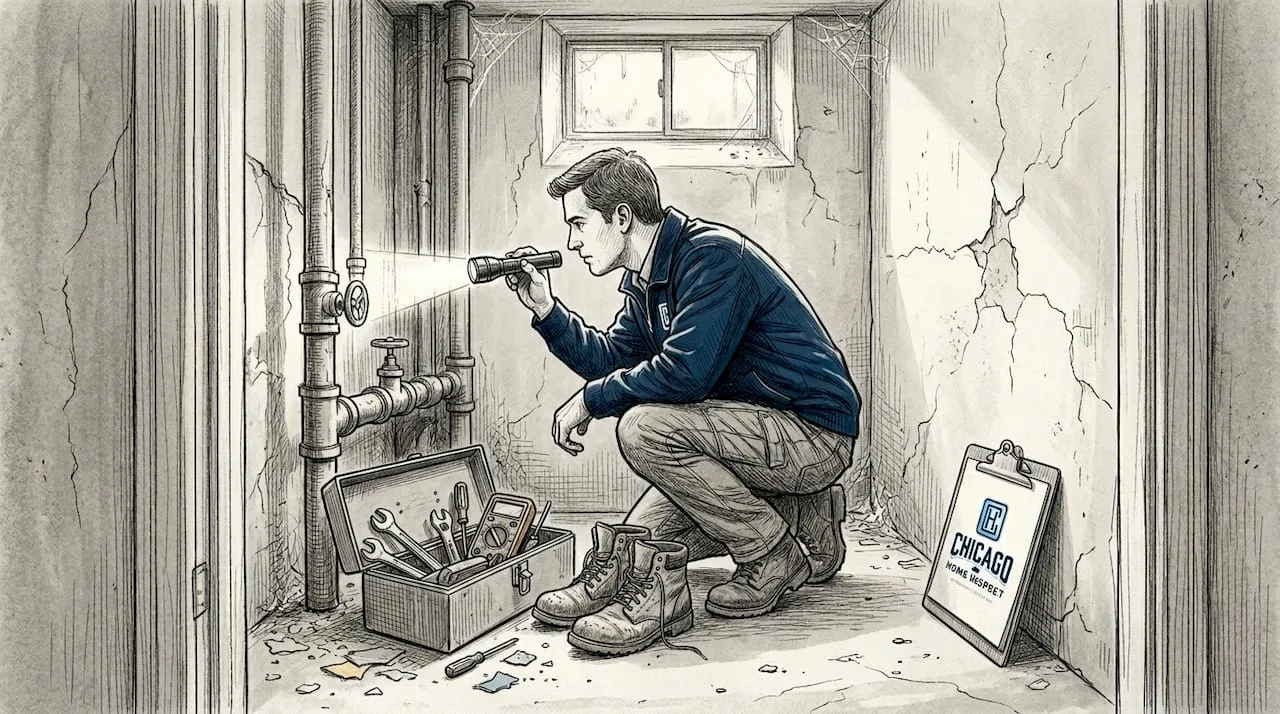
Given these critical gaps, here is why hiring a qualified local inspector is your best protection. A professional home inspection goes far beyond what any disclosure form can capture. Independent inspections including sewer scope, radon, and mold testing are especially important in Chicago’s older housing stock, where problems hide behind finished surfaces and decades of deferred maintenance.
Here is what a thorough inspection can uncover that a disclosure form typically will not:
- Active foundation movement caused by Chicago’s clay-heavy soil
- Cast iron or galvanized pipes nearing the end of their service life
- Knob-and-tube wiring still live behind walls
- Lead paint on surfaces not visible during a showing
- Elevated radon levels in lower-level living spaces
- Mold colonies growing inside wall cavities or under flooring
Pro Tip: Always request a sewer scope inspection on any Chicago home built before 1980. Tree root intrusion into clay tile sewer lines is one of the most expensive surprises buyers face, and it never shows up on a disclosure form.
Beyond finding problems, a documented inspection report gives you real negotiating leverage. You can request repairs, a price reduction, or credits at closing based on specific findings. For real examples of what inspectors find, inspection issues in Chicago and foundation cracks in Chicago are worth reviewing before your inspection day.
Legal recourse: What if you find a defect after closing?
Despite best efforts, defects still turn up after you move in. So what can you do if the seller did not disclose them? Illinois law does give buyers options, but the path is not simple.
- Document everything immediately. Photographs, contractor estimates, and written timelines all strengthen your case.
- Consult a real estate attorney. Illinois buyers can sue for damages, rescind the contract, or claim attorney fees if the seller knowingly concealed a defect.
- Gather evidence of seller knowledge. This is the hardest part. Neighbor testimony, prior inspection reports, or contractor invoices showing the seller knew about the issue are all valuable.
- Act quickly. Illinois has statutes of limitations on these claims. Waiting too long can eliminate your legal options entirely.
“The central question in Illinois disclosure disputes is always the same: did the seller actually know? Proving that is the buyer’s job.”
Important limitations to understand:
- Foreclosures and estate sales often carry no disclosure obligation and therefore no legal recourse
- “I didn’t know” is a valid defense for sellers, making cases hard to win without strong evidence
- Cosmetic issues and items not covered by the RRPDR are generally not actionable
If you are already dealing with post-closing surprises, what to do after inspection troubles is a useful starting point. If you are still under contract and considering your options, canceling a Chicago home purchase and negotiating inspection repairs both offer practical guidance.
Protect your purchase with expert Chicago inspections
Knowing your rights is critical, but prevention is far better than a lawsuit. A seller disclosure tells you what the seller admits to. A professional inspection tells you what is actually there. At Chicago Home Inspect LLC, our InterNACHI-certified inspectors know Chicago’s housing stock inside and out, from century-old two-flats to newer suburban builds. We offer Buyer Pre-Purchase Inspections, mold testing in Chicago homes, and Radon Testing so you have the full picture before you close. Want to see what a real inspection report looks like? View our sample report and then schedule your inspection today. We are available weekends and serve the entire Chicago area and suburbs.
Frequently asked questions
Are seller disclosures legally required for all Chicago home sales?
Most residential sellers in Illinois must provide the RRPDR, but exempt sales like foreclosures and estate transfers are not required to provide one, which means buyers in those transactions have less legal protection.
Can I trust everything in the seller’s disclosure form?
Not entirely. The disclosure reflects seller knowledge only and carries no warranty, so unknown or intentionally concealed issues will not appear on the form.
What if the seller lies or withholds known issues?
You have legal options, but you must prove the seller had actual knowledge of the defect. Evidence of seller knowledge such as prior repair records or contractor invoices is essential to any successful claim.
How can I tell if something important is missing from the disclosure?
Compare the seller’s answers against the property’s age, location, and visible conditions, then get an independent inspection. Local issues often go unreported, and a qualified inspector is your best tool for closing that gap.