TL;DR:
- Standard home inspections in Chicago often miss hidden issues like sewers, mold, and structural problems.
- Buyers should order specialty add-ons such as sewer scopes, radon, and mold testing before closing.
- Proactive inspections and thorough due diligence can save buyers from costly repairs and legal disputes later.
Buying a home in Chicago is one of the biggest financial decisions you’ll ever make, and a standard home inspection is supposed to give you confidence. But here’s the uncomfortable reality: even a thorough visual inspection can leave serious, costly problems completely undetected. Standard inspections often miss hidden or intermittent issues, leaving buyers to discover them only after they’ve signed the closing documents. This guide walks you through exactly what inspectors can’t see, what those blind spots have cost real Chicago buyers, and the concrete steps you can take to protect yourself before you hand over your money.
Table of Contents
- What standard inspectors can’t see: Hidden risks in Chicago homes
- Real consequences: What buyers in Chicago discover after move-in
- Step-by-step: How buyers can protect themselves before closing
- The legal landscape: Seller disclosure and your due diligence
- Our perspective: What most buyers (and agents) overlook about inspection blind spots
- Get real peace of mind: Protect yourself with expert Chicago inspections
- Frequently asked questions
Key Takeaways
| Point | Details |
|---|---|
| Inspections have blind spots | Standard home inspections miss critical hidden issues like sewers, mold, and foundation defects. |
| Supplemental checks matter | Add-on inspections such as sewer scope or radon can prevent massive post-purchase expenses. |
| Legal protection is limited | Illinois seller disclosure laws help, but buyers must act proactively to minimize risk. |
| Attend and question | Being present and involved during inspection is your best defense against overlooked problems. |
What standard inspectors can’t see: Hidden risks in Chicago homes
A home inspection is a visual, non-invasive evaluation. That sounds straightforward until you realize how much of a house is hidden behind drywall, under concrete, or buried underground. Standard home inspections exclude sewers, environmental hazards, pests, chimneys, concealed structures, code compliance, and septic systems by design. These aren’t oversights. They’re industry-standard limitations that every buyer needs to understand before relying on a single report.
Inspectors rely on non-invasive tools and cannot open walls, cut into floors, or test systems that aren’t accessible during the inspection window. Even with thermal imaging cameras, moisture meters, and other modern equipment, what’s hidden stays hidden unless you order specialty testing.
Chicago’s housing stock makes this especially risky. The city has a massive number of pre-1970s homes, many with clay sewer laterals that crack and collapse over time, galvanized pipes that corrode from the inside out, and decks that look solid but are rotted at the ledger board. These are issues home inspectors commonly find in older Chicago properties, but only when they’re visible. When they’re concealed, they get missed.
Here’s a quick look at what’s typically in versus out of a standard inspection:
| Included in standard inspection | Not included (requires add-ons) |
|---|---|
| Visible roof condition | Sewer line condition |
| Electrical panel and outlets | Radon gas levels |
| Plumbing fixtures and water pressure | Mold behind walls |
| HVAC system operation | Asbestos or lead paint |
| Foundation walls (if visible) | Chimney flue interior |
| Attic insulation and framing | Pest or termite damage |
Some of the most expensive overlooked defects in Chicago inspections include:
- Foundation settlement concealed by finished basements or fresh flooring
- Intermittent HVAC failures that don’t show up during a single test cycle
- Chimney flue blockages or cracked fireboxes hidden from view
- Sewer line root intrusion that only shows up on a camera scope
- Radon infiltration through foundation cracks with no visible signs
What makes Chicago inspections unique is the combination of aging infrastructure, extreme seasonal temperature swings, and dense urban construction. These factors create failure points that simply don’t exist in newer suburban builds. See what makes Chicago inspections unique for a deeper look at local risk factors.
Understanding inspection standards compared across industry organizations also helps clarify why these limitations exist and what certified inspectors are actually required to check.
Real consequences: What buyers in Chicago discover after move-in
Now that we’ve seen what’s missed, how does this play out for Chicago buyers? The answer is often expensive, stressful, and sometimes dangerous.
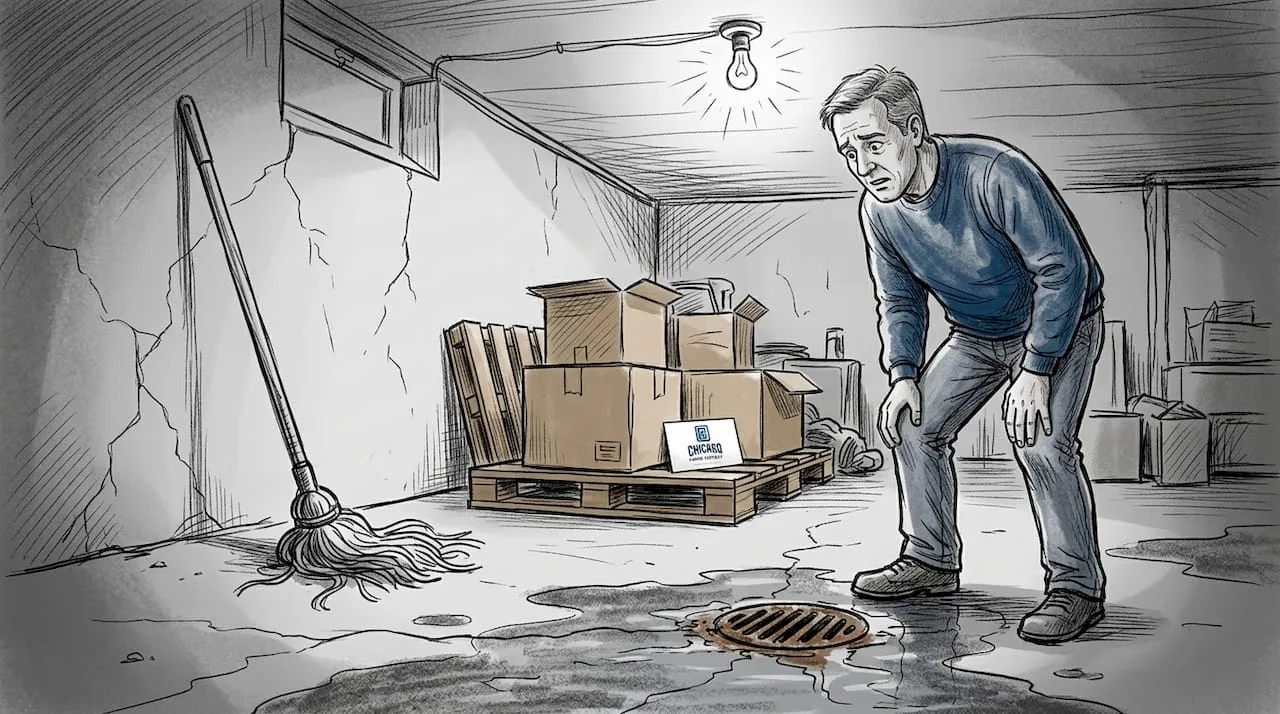
Sewer backups are one of the most common post-purchase nightmares in Chicago’s older neighborhoods. Tree roots from mature elms and oaks are notorious for cracking clay lateral lines. Sewer replacements can cost $5,000+, rot repairs $15,000+, foundation issues up to $100,000+. These aren’t rare edge cases. They’re predictable outcomes in homes with aging infrastructure and no sewer scope in the inspection package.
Environmental hazards are just as serious. 40% of Illinois homes test above recommended radon levels, yet radon testing is still treated as optional by many buyers. Mold remediation costs typically range from $2,000 to $20,000 depending on the extent of the problem, and mold behind walls or in crawl spaces won’t show up in a standard walkthrough.
Here’s a breakdown of common post-purchase discoveries and their typical repair costs:
| Problem discovered after closing | Typical repair cost range |
|---|---|
| Sewer line replacement | $5,000 to $15,000+ |
| Foundation repair | $10,000 to $100,000+ |
| Mold remediation | $2,000 to $20,000 |
| Radon mitigation system | $800 to $2,500 |
| Rotted deck or ledger board | $5,000 to $15,000 |
Real Chicago home inspection examples show buyers discovering these problems within the first few months of ownership, often after a heavy rain or the first winter freeze. The timing is never convenient.
The most common sequence looks like this:
- Buyer closes on a 1950s bungalow with a finished basement.
- First major rainstorm causes sewage backup through the floor drain.
- Buyer calls a plumber, who scopes the line and finds root intrusion throughout.
- Repair costs exceed $8,000. No sewer scope was ordered before closing.
Legal recourse is limited and difficult. Illinois law requires sellers to disclose known defects, but proving the seller actually knew about a hidden problem is a high bar. Inspecting century homes in Chicago reveals just how many of these issues develop slowly and invisibly, making it nearly impossible to prove knowledge after the fact. Understanding property drainage issues can also give buyers context for how common these problems are in older urban housing.
The bottom line: Waiting until after closing to discover these problems is the most expensive approach. Prevention costs a fraction of repair.
Step-by-step: How buyers can protect themselves before closing
Understanding the risks, here’s how to take real control during your purchase. This isn’t about being paranoid. It’s about being prepared.
- Hire your own inspector, not the seller’s. Never rely on a report ordered by the seller or their agent. Use a licensed, certified inspector you found independently. This protects your interests from the start.
- Attend the inspection in person. Show up, walk through every room, and ask direct questions about anything that looks worn, patched, or recently painted. Inspectors share far more detail in person than in a written report.
- Order a sewer scope. For any Chicago home built before 1980, this is non-negotiable. A camera scope of the lateral line costs $150 to $300 and can save you from a five-figure repair bill.
- Test for radon. Given that add-on inspections like radon and mold are essential protective steps, skipping them is a calculated risk that rarely pays off. Radon testing takes 48 hours and is inexpensive.
- Schedule mold testing if there’s any moisture history. Musty smells, water stains, or previous flooding are red flags. Don’t accept a visual check as sufficient.
- Request a structural engineer if the foundation looks questionable. Cracks, uneven floors, or sticking doors in older homes warrant a second opinion from a licensed engineer.
- Use the contingency period strategically. Bundle your add-on inspections during the inspection contingency window. If problems surface, you have leverage to negotiate credits or repairs before closing.
Pro Tip: If the seller pushes back on specialty inspections or tries to limit your access, treat that as a red flag, not a negotiating tactic. Sellers with nothing to hide rarely object to a sewer scope.
Here are the home inspection red flags that should always trigger an add-on inspection request:
- Fresh paint in isolated spots, especially in basements
- New flooring installed directly over a slab
- Dehumidifiers running in the basement during the showing
- Mismatched or recently replaced drywall sections
- Evidence of patched cracks on foundation walls
Knowing what to do if the home inspection finds problems is just as important as knowing what to look for. Always review Chicago seller disclosures carefully alongside your inspection report. And if you’re ready to schedule, pre-purchase inspections in Chicago are available with local experts who know these neighborhoods. You can also learn more about home buyer drain surveys to understand why sewer scoping is standard practice in older housing markets.
The legal landscape: Seller disclosure and your due diligence
Beyond inspections, legal rules also impact your risk. Here’s what to know before you assume disclosure laws will protect you.
Illinois law requires sellers to disclose known defects, but the word “known” carries enormous weight. If a seller genuinely didn’t know about a cracked sewer line or mold behind a wall, they have no legal obligation to disclose it. The burden of proof falls entirely on you as the buyer to show the seller knew and concealed the problem.
Here’s what Illinois disclosure law covers and where it falls short:
- Covered: Known structural defects, water intrusion history, roof leaks, HVAC problems, pest damage
- Not covered: Defects the seller was unaware of, conditions that developed after the sale, issues not visible during occupancy
- Gray area: Problems a seller “should have known” about but claimed ignorance of
Disclosure forms are only as honest as the person filling them out. A seller who patches a crack and repaints isn’t necessarily lying, but they may not be telling the whole story either.
If you discover a serious issue after closing, act quickly. Contact a real estate attorney, document everything with photos and contractor estimates, and pull any permits or code violation records from the city. Chicago’s building permit database is publicly accessible and can reveal unpermitted work or past violations. Review Illinois seller disclosures to understand exactly what sellers are required to tell you. You can also find guidance on legal recourse after purchase if you’re already past closing.
The most important takeaway here is that legal protection is a last resort, not a safety net. Proactive inspection is always cheaper and less stressful than litigation. Reading the Chicago home inspection blog regularly gives buyers ongoing insight into what’s showing up in local homes right now. And reviewing overlooked defects before you tour a property helps you know what questions to ask.
Our perspective: What most buyers (and agents) overlook about inspection blind spots
Let’s step back and share candid insights learned right here in Chicago. After working through hundreds of inspections across the city and suburbs, one pattern stands out clearly: buyers and even experienced agents consistently overestimate what a standard inspection covers.
The assumption is that a certified inspector will catch “everything major.” That assumption is wrong, and it’s expensive. A standard inspection is a snapshot of visible conditions on a single day. It’s a starting point, not a finish line.
What we’ve seen work, time and again, is buyers who show up to their inspection, ask direct questions, and push for add-on specialty reviews when anything looks off. These buyers almost never regret the extra $300 to $500 they spent on a sewer scope and radon test. The buyers who skip those steps sometimes regret it for years.
The other thing most people miss is the value of in-depth advice from inspectors who know Chicago specifically. Local knowledge matters. An inspector who has seen hundreds of 1920s two-flats or post-war bungalows in Rogers Park or Beverly knows exactly where to look and what questions to ask. That experience doesn’t show up in a generic checklist.
Long-term peace of mind is worth the up-front effort. Every dollar spent on thorough pre-purchase testing is a dollar that might save you ten on the other side of closing.
Get real peace of mind: Protect yourself with expert Chicago inspections
If you’re ready to take these extra steps, here’s how to connect with real local experts. The advice in this guide only works if you act on it before closing, not after. Our team at Chicago Home Inspection Services is licensed, insured, InterNACHI Certified, and BBB Accredited. We serve Chicago and the surrounding suburbs, including weekends, so your schedule doesn’t have to be the reason you skip critical testing.
Schedule mold testing in Chicago or Chicago radon testing as add-ons to your inspection and get results before you’re locked in. Our pre-purchase inspections are tailored to local vulnerabilities, with sample reports available so you know exactly what you’re getting. Don’t leave one of the biggest purchases of your life to chance.
Frequently asked questions
What is not included in a standard Chicago home inspection?
Standard inspections exclude sewer lines, radon, mold, and asbestos, along with concealed components and code compliance checks. Buyers need to order these separately as specialty add-ons.
How can I protect myself from hidden home defects?
Add-on inspections reduce the risk of missed defects significantly. Order a sewer scope, radon test, and mold inspection alongside your standard report for the most complete picture.
What should I do if I discover a major issue after closing?
Document the problem immediately with photos and contractor estimates, then consult a real estate attorney. Illinois law protects buyers if the seller knowingly concealed a defect, but you’ll need solid evidence to make that case.
How common is hidden radon or sewer damage in Chicago homes?
40% of Illinois homes test high for radon, and sewer damage is extremely common in older Chicago homes surrounded by mature trees. Both issues are preventable with the right pre-purchase testing.