
TL;DR:
- Chicago homes face higher repair costs due to harsher climate and older housing stock.
- Major surprises include HVAC, roof, plumbing, and masonry repairs often costing tens of thousands.
- Preventive maintenance and thorough local inspections are key to protecting your budget.
Buying your first home in Chicago is exciting until a $12,000 HVAC bill lands in your lap three months after closing. Lead service line replacement alone can exceed $10,000, and that’s just one item on a long list of surprises that catch first-time buyers off guard. Roofs, plumbing, masonry, and more can all fail faster here than in most other American cities. This article breaks down the costliest hidden repairs in Chicago homes, what causes them, what they actually cost, and how to protect your budget before you sign anything.
Table of Contents
- Chicago’s harsh climate: Why repair shocks are bigger here
- Major repair shocks: The costliest offenders in Chicago homes
- The annual maintenance trap and why small fixes prevent big bills
- Inspection gaps: What most buyers miss when budgeting for repairs
- Don’t trust averages: Chicago homes break the repair rule
- Protect your investment with a smarter Chicago inspection
- Frequently asked questions
Key Takeaways
| Point | Details |
|---|---|
| Major repair surprises | HVAC, roof, and plumbing top the list of unexpected and costly home repairs in Chicago. |
| Budget for Chicago | Reserve 1–4% of your home value yearly, but expect higher bills for older homes and harsh climates. |
| Preventive maintenance pays | Regular upkeep can reduce the chance of huge repair bills by up to 30%. |
| Get thorough inspections | Add radon, sewer, and lead tests to your inspection to avoid big financial surprises. |
Chicago’s harsh climate: Why repair shocks are bigger here
Chicago isn’t just cold. It’s a city that punishes homes year after year with one of the most brutal weather combinations in the country. Understanding why your future home is more vulnerable here helps you budget smarter from day one.
Freeze-thaw cycles, lake-effect moisture, and city wind are the three biggest drivers of accelerated home wear in this area. When water seeps into brick, concrete, or roofing materials and then freezes, it expands and causes cracks. This happens dozens of times every winter. Over years, those micro-cracks become major structural problems.
Chicago’s weather wears down homes faster than the national average, and older housing stock makes this worse. Many Chicago neighborhoods are filled with homes built before 1970, some before 1940. These homes were built with materials and standards that weren’t designed to last forever. Furnaces, roofs, and masonry in vintage homes are often already near the end of their useful life when a first-time buyer walks through the door.
Labor costs add another layer. Chicago’s strict building codes mean licensed contractors are required for most significant repairs, and their rates reflect that. A repair that costs $3,000 in a smaller Midwest city can easily run $5,000 or more here.
Here’s what the climate specifically accelerates:
- Roof wear: Wind-driven rain and ice dams shorten shingle life significantly
- Masonry damage: Freeze-thaw cycles crack mortar joints faster than in warmer climates
- Furnace strain: Extreme cold forces heating systems to work harder and wear out sooner
- Pipe stress: Temperature swings put pressure on older plumbing materials
- Foundation movement: Frost heave can shift foundations in homes without proper insulation
“Chicago’s combination of lake-effect moisture, harsh winters, and aging housing stock creates repair risks that buyers from warmer regions rarely anticipate. Budget accordingly.”
Smart buyers also look at winter prep tasks before closing, because what a seller skipped last fall could become your emergency this December.
Major repair shocks: The costliest offenders in Chicago homes
Now that you understand why Chicago homes wear down faster, let’s talk about which repairs actually drain bank accounts. These are the systems that hit first-time buyers hardest.
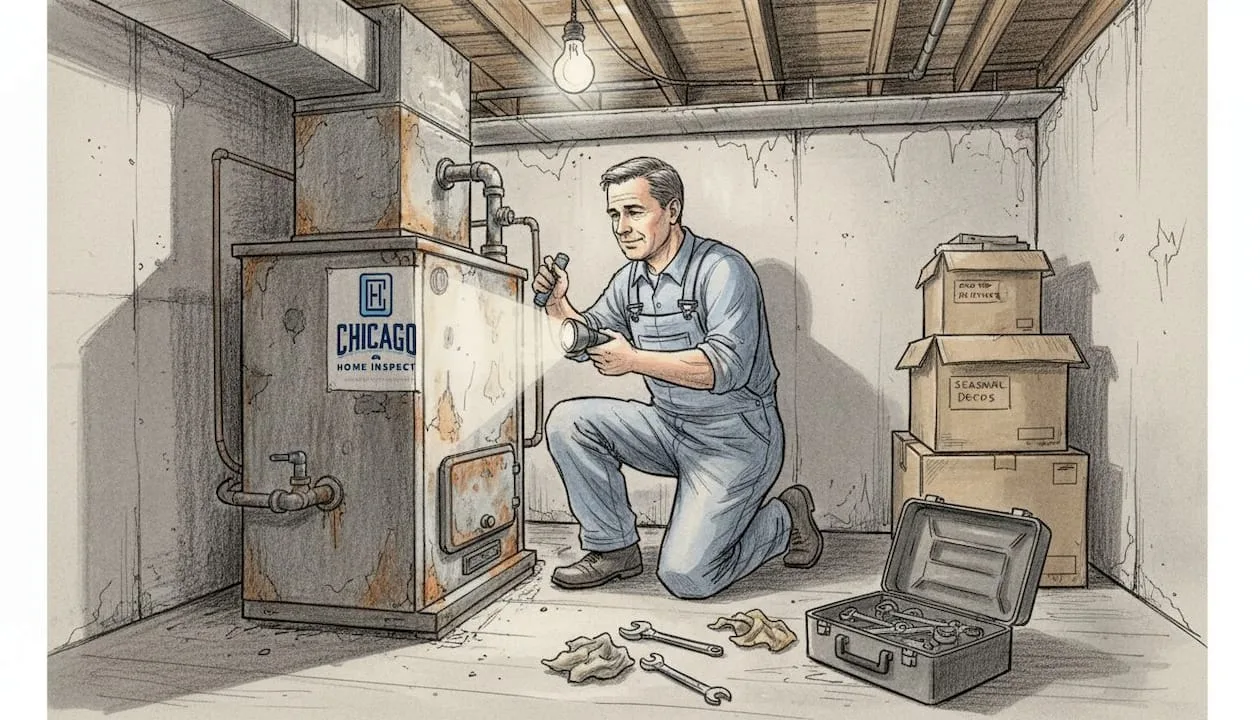
HVAC systems are the single biggest shock for most buyers. A furnace or central air unit that’s 15 to 20 years old looks fine on a walkthrough but can fail in its first winter under new ownership. HVAC replacement can cost $5,000 to $12,000, and in Chicago’s winters, you can’t wait weeks for a deal on a new unit.
Roofs are the second major offender. Flat roofs, common on Chicago bungalows and two-flats, are especially prone to pooling water and membrane failure. Roof repair can hit $1,471 for minor work, while a full replacement runs $8,000 to $18,000 depending on size and material.
Plumbing in vintage Chicago homes is a category all its own. Many older homes still have lead, cast iron, or galvanized steel pipes. Plumbing repairs or full replacement in vintage homes can cost $10,000 or more, and that doesn’t include the city permit fees.
Masonry is unique to Chicago’s brick-heavy housing stock. Tuckpointing, which is the process of repairing deteriorated mortar between bricks, is essential maintenance that many sellers defer. Left alone, failing mortar lets water into walls and causes interior damage that multiplies the repair bill.
| System | Typical repair cost | Full replacement cost |
|---|---|---|
| HVAC | $300–$1,500 | $5,000–$12,000 |
| Roof (shingle) | $500–$1,471 | $8,000–$18,000 |
| Plumbing (vintage) | $1,000–$3,000 | $10,000+ |
| Masonry/tuckpointing | $500–$2,500 | $5,000–$15,000 |
Watch for these warning signs before you make an offer:
- Uneven heating or cooling in different rooms
- Discolored water or low water pressure
- Visible cracks or crumbling mortar on exterior brick
- Roof shingles that are curling, missing, or covered in moss
Pro Tip: In Chicago vintage homes, always add sewer and radon testing to your standard inspection. These are the two add-ons most buyers skip and most regret skipping. You can also use a detailed repair cost estimator to plan your budget before closing. For national context, major home maintenance costs confirm these aren’t outliers.
The annual maintenance trap and why small fixes prevent big bills
Here’s something most first-time buyers don’t hear until it’s too late: the repairs above are often the result of skipped maintenance, not bad luck. Staying ahead of small tasks is the most effective financial strategy a homeowner has.
Routine annual repairs average $8,808 nationally, and can reach 3% of home value each year. In Chicago, with older homes and harsher weather, that number can push even higher. The general rule is to budget 1% to 4% of your home’s purchase price annually for maintenance and repairs.
The trap most first-timers fall into is treating maintenance as optional. It isn’t. Skipped gutter cleaning leads to water intrusion. Ignored masonry cracks become full wall repairs. A furnace filter that’s never changed shortens the system’s lifespan by years.
Here are the maintenance tasks that protect your budget most:
- Clean gutters twice a year to prevent water from backing up under roofing and into walls
- Inspect and seal masonry cracks every spring after the freeze-thaw season ends
- Replace furnace filters every 1 to 3 months during heating season
- Check the roof after major storms for missing shingles or flashing damage
- Flush your water heater annually to prevent sediment buildup and extend its life
- Inspect caulking around windows and doors each fall before temperatures drop
“Preventive maintenance isn’t glamorous, but it’s the single most reliable way to avoid five-figure repair bills in a Chicago home.”
Pro Tip: Studies suggest that consistent preventive maintenance can reduce major repair costs by up to 30% over time. Use a detailed annual maintenance checklist to stay organized, and don’t skip the winter maintenance list specific to Chicago’s climate.
Inspection gaps: What most buyers miss when budgeting for repairs
A standard home inspection is a strong starting point, but it doesn’t cover everything. Many buyers assume that if the inspector didn’t flag it, it doesn’t exist. That assumption is expensive.
Standard inspections typically cover visible and accessible components. They don’t automatically include radon testing, sewer scope inspections, lead water line checks, or mold testing. In Chicago, all four of these add-ons carry real financial risk if skipped. Thorough inspections reduce unexpected repair costs, but after closing, every surprise cost becomes yours to handle alone.
This is what buyers call the ownership shift. The moment you close, the seller’s problems become your problems. There’s no going back to negotiate once you have the keys.
Here are the add-on tests worth ordering for any Chicago home:
- Radon testing: Chicago-area homes have elevated radon risk; mitigation systems can run $800 to $2,500
- Sewer scope inspection: Older clay or cast iron sewer lines can collapse; replacement can cost $3,000 to $15,000
- Lead water line check: Many pre-1986 Chicago homes have lead service lines; city replacement programs exist but aren’t instant
- Mold testing: Basement moisture and old insulation create conditions for hidden mold growth
Building a smart repair reserve means knowing what you’re walking into. Read up on what to do after inspection problems so you can negotiate credits or repairs before closing rather than absorbing the full cost yourself. A good inspector will give you the information you need to make that call confidently.
Don’t trust averages: Chicago homes break the repair rule
Here’s an uncomfortable truth we’ve seen play out with real buyers in this market. National repair cost guides are built on averages that simply don’t apply to Chicago. A buyer who reads that the average first-year repair cost is around 1% of home value and plans accordingly is often in for a painful surprise.
We’ve seen first-time buyers in Chicago neighborhoods with vintage housing stock face first-year repair bills approaching 3% to 4% of their purchase price. That’s $15,000 to $20,000 on a $500,000 home, in year one alone. The reason is straightforward: older homes, harsher climate, higher labor costs, and stricter code requirements all stack on top of each other.
Our honest advice is to ask your inspector for area-specific cost estimates, not national ranges. A good local inspector knows what tuckpointing runs in Pilsen versus what a furnace replacement costs in Evanston. That local knowledge is worth more than any online calculator. Also, if you’re buying a condo, review the HOA reserves carefully. Underfunded reserves mean a special assessment could hit you for thousands in shared building repairs. Use local cost estimates as your baseline, not national data.
Protect your investment with a smarter Chicago inspection
The best financial decision you can make before buying a Chicago home is investing in a thorough, local inspection. Our team is InterNACHI Certified, licensed, insured, and BBB Accredited, with weekend availability across Chicago and the suburbs. We check every major system and deliver detailed reports with photos so you know exactly what you’re buying. Browse our interior inspection photo examples to see the level of detail we provide, and review a sample inspection report before you book. When you’re ready, schedule your inspection online in minutes. Don’t let a surprise repair bill define your first year as a homeowner.
Frequently asked questions
What home repairs surprise first-time Chicago buyers most often?
The biggest surprises are HVAC, roof, and plumbing replacements, along with masonry repairs, especially in older or vintage homes where deferred maintenance is common.
How much should I budget yearly for Chicago home repairs?
Experts recommend 1% to 4% of your home’s value annually; national averages exceed $8,800 per year, and Chicago’s older housing stock and harsh climate often push that figure higher.
Why do repair costs seem higher in Chicago than other cities?
Chicago’s weather and city codes drive up labor costs and accelerate wear on major home systems, making repairs more frequent and more expensive than national averages suggest.
What extra inspections or add-ons should I order for a Chicago home?
Always order radon, sewer, and lead testing in addition to a general inspection; these catch the surprise costs that standard inspections are not designed to uncover.
Do HOAs cover any of these surprise repair costs?
For condos, HOAs may cover some exterior repairs, but reserves and coverage vary widely, so always review the HOA’s financial documents and by-laws before closing.
Recommended
- Home inspection blind spots: what Chicago buyers should know
- Home Inspection Blog – Chicago Home Inspect LLC
- Most Overlooked Defects Found in Chicago Home Inspections
- 7 Major Home Inspection Red Flags Chicago Buyers Must Know | Chicago Home Inspect LLC
- Top roof repair mistakes: what homeowners must avoid – Sunflowers Energy LLC A Roofing and Solar Companys