

TL;DR:
- Post-winter damage in Chicago homes is often hidden in walls, under floors, and underground.
- Spring thaw can cause foundation cracks, sewer line damage, and basement moisture issues.
- Professional inspections with tools like camera scopes and moisture meters are essential for early detection.
Chicago homeowners often breathe a sigh of relief when winter finally ends, but the real damage often shows up after the snow is gone. Unlike a burst pipe you notice right away, post-winter damage hides inside walls, under floors, and deep in your sewer lines. Chicago’s brutal freeze-thaw cycle puts unique stress on older housing stock, clay-heavy soil, and aging infrastructure. The spring thaw creates ground movement that can shift sewer lines, push water into basements, and crack foundations in ways that won’t become obvious for weeks. Knowing what to look for, and when to call a professional, can save you thousands before small problems become major repairs.
Table of Contents
- Why snow melt reveals hidden damage in Chicago homes
- The most common hidden damages after snow melts
- How to inspect your home for post-snowmelt damage
- What to do when you find hidden damage
- Our perspective: What most Chicago homeowners miss after snow melts
- Get expert help for post-winter inspections
- Frequently asked questions
Key Takeaways
| Point | Details |
|---|---|
| Hidden damage risk | Most post-winter home damage is invisible at first and gets worse if ignored. |
| Key danger zones | Basements, sewers, and foundations are the most likely places for hidden issues after snow melts. |
| Inspection essentials | A systematic inspection inside and out is crucial for catching problems early. |
| Professional expertise | Home inspectors use advanced tools like camera scoping to find damage homeowners miss. |
Why snow melt reveals hidden damage in Chicago homes
Winter in Chicago is not just cold. It is a cycle of freezing, thawing, and refreezing that puts constant mechanical stress on every part of your home. When temperatures drop, water trapped in concrete, brick, and soil expands. When it warms up, that water contracts. Repeat this dozens of times over a single season and you have a recipe for cracked foundations, shifting slabs, and compromised sewer lines.
Here is the irony most homeowners miss: snow actually acts as insulation during winter. It covers roof damage, fills in foundation cracks, and masks pooling water near your home’s perimeter. The moment it melts, all of that hidden stress becomes exposed at once. You are not seeing new damage in spring. You are seeing damage that built up all winter long.
Chicago’s housing stock and climate conditions make this especially serious. Many homes here were built before modern waterproofing standards. The city sits on clay-heavy soil that swells when wet and shrinks when dry, which amplifies foundation movement. Older cast-iron and clay sewer pipes are particularly vulnerable to root intrusion and cracking under ground movement.
The most commonly affected areas include:
- Roofs and gutters: Ice dams force water under shingles, causing leaks that only appear after the ice melts
- Foundations: Freeze-thaw cycles widen existing cracks and create new ones
- Basements: Saturated soil pushes water through walls and floor joints
- Sewer lines: Spring thaw causes sewer damage through ground movement, groundwater infiltration, and root intrusion
- HVAC systems: Condensation and moisture entry during winter can corrode components
“The most expensive repairs we see every spring started as something a homeowner noticed but decided to wait on. Post-winter is not the time to wait.”
If you skipped your winter home maintenance list this past season, spring is your window to catch what you missed. Problems identified early cost a fraction of what they cost after they spread. Foundation issues in Chicago are a perfect example: a hairline crack in October can become a structural concern by May if water keeps entering and freezing inside it.
The most common hidden damages after snow melts
Not all post-winter damage looks the same. Some of it you can see with your eyes. Most of it you cannot. Understanding the difference helps you prioritize where to focus your attention first.
| Damage type | Visible signs | Hidden signs |
|---|---|---|
| Foundation cracks | Visible gaps in walls or floors | Water seepage behind drywall |
| Basement moisture | Standing water, stains | Mold behind walls, musty odor |
| Sewer line damage | Slow drains, backups | Cracks detected only by camera |
| Roof leaks | Water stains on ceilings | Wet insulation, rot in attic |
| HVAC issues | Unusual sounds, poor airflow | Corroded components, mold in ducts |
Here are the most common problems to look for, in order of frequency:
- Foundation cracks: Water that entered cracks during winter expands when it freezes and widens the gap. By spring, what was a hairline crack may now allow significant water entry.
- Basement moisture and mold: Saturated soil after snowmelt pushes moisture through basement walls. Mold often grows behind insulation or under flooring where you cannot see it. The risk of basement flooding spikes significantly in March and April.
- Sewer line problems: Ground movement and groundwater infiltration after snowmelt can shift or break sewer lines. You may notice slow drains or gurgling sounds before a full backup occurs.
- Roof leaks from ice dams: Ice dams form when heat escapes through your roof, melts snow at the peak, and refreezes at the cold eaves. Water backs up under shingles and enters your attic or ceiling.
- Electrical and HVAC damage: Water that entered through gaps around windows, vents, or the roof can reach electrical panels, junction boxes, or HVAC components. This is a safety issue, not just a comfort one.
Many of these are commonly overlooked defects that even attentive homeowners miss because they develop slowly and stay out of sight.
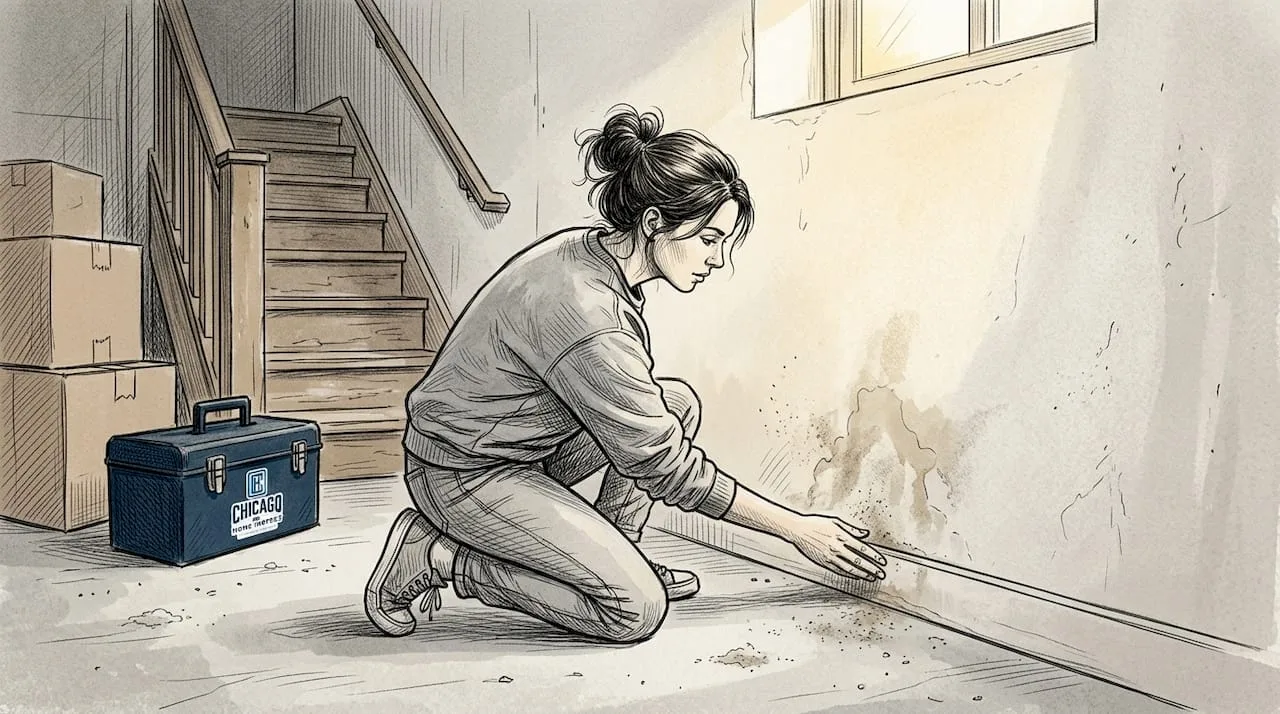
Pro Tip: If your basement smells musty after snow melts but you don’t see standing water, run your hand along the base of the walls. Dampness or efflorescence (white mineral deposits) means water is moving through the concrete, even if it evaporates before pooling.
How to inspect your home for post-snowmelt damage
A systematic approach makes the difference between catching a problem early and discovering it after it has caused serious damage. Here is a step-by-step process you can start with:
- Walk the exterior perimeter: Look for new cracks in the foundation, soil pulling away from the house, or areas where water is pooling near the home. Grade should slope away from the foundation.
- Check the roof and gutters: Look for missing or lifted shingles, sagging gutters, and granules from asphalt shingles collecting in downspout runoff. Binoculars work fine from the ground.
- Inspect the basement: Look for new stains, cracks, or efflorescence on walls. Check your sump pump to confirm it is running and the discharge line is clear.
- Test all drains: Run water in every sink, tub, and toilet. Slow drainage or gurgling sounds in multiple fixtures often point to a main sewer line issue.
- Check the attic: Look for wet insulation, staining on rafters, or daylight showing through the roof deck. These are signs of ice dam damage.
- Inspect windows and doors: Look for new gaps, condensation between panes, or difficulty opening and closing, which can indicate foundation movement.
| Area | What to check | When to call a pro |
|---|---|---|
| Foundation | Cracks wider than 1/4 inch | Any horizontal or stair-step crack |
| Sewer lines | Slow drains in multiple fixtures | Backups, odors, or suspected root intrusion |
| Roof | Missing shingles, staining inside | Wet insulation or structural sagging |
| Basement | Moisture, stains, musty smell | Visible mold or recurring flooding |
For sewer lines specifically, camera scoping is essential for identifying problems after thaw. No visual inspection from the surface can tell you whether your line has shifted, cracked, or been invaded by roots. A main sewer line inspection is one of the most valuable checks you can do every spring.
Pro Tip: Use your phone camera to document every crack, stain, or area of concern you find. Timestamped photos are invaluable for insurance claims and contractor quotes. A home inspection checklist can help you stay organized room by room.
What to do when you find hidden damage
Finding damage is not a crisis. It is information. The key is responding to that information in the right order so you protect your home without overspending or missing something critical.
Here is how to prioritize:
- Safety first: Any issue involving electrical systems, structural integrity, or sewage backup needs immediate professional attention. Do not wait.
- Water intrusion second: Active leaks or moisture entry will cause mold and structural damage quickly. Address these before cosmetic repairs.
- Foundation and sewer issues third: These are slow-moving but expensive if ignored. Schedule professional evaluations within weeks, not months.
- Cosmetic damage last: Peeling paint, minor staining, and surface cracks can wait until urgent issues are resolved.
When you document damage, take photos with good lighting and include something for scale, like a coin or ruler next to a crack. Write down the date and location. This record protects you when dealing with insurance adjusters and helps contractors give you accurate quotes.
For sewer line concerns, camera inspection confirms damage after winter thaw and gives you a clear picture of what repair is actually needed. Without it, contractors are guessing and you may pay for work that does not solve the problem.
Building a habit of annual checks is the best long-term strategy. An annual home maintenance checklist tailored to Chicago’s climate helps you stay ahead of seasonal damage before it compounds year over year. Finding trustworthy local professionals matters too. Look for licensed, insured contractors with verifiable reviews and clear written estimates before any work begins.
Our perspective: What most Chicago homeowners miss after snow melts
After inspecting hundreds of Chicago homes, we have seen the same pattern repeat itself. Homeowners walk the yard, check the roof, maybe peek in the basement, and declare everything fine. What they miss are the systems operating invisibly underground and inside walls.
Sewer lines are the biggest blind spot. Most homeowners have no idea their sewer line is failing until sewage backs up into the basement. By then, the repair cost is five to ten times what it would have been with early detection. The same applies to mold growing behind a finished basement wall or moisture slowly rotting the rim joists around your foundation.
The uncomfortable truth is that DIY inspections have real limits. You can spot a stain. You cannot see what is causing it without tools. Professional inspectors use moisture meters, thermal imaging cameras, and sewer scopes that reveal what no amount of careful looking can find on your own.
We also see homeowners skip spring inspections because nothing looks wrong. That is exactly when you should be most cautious. Checking your home’s overlooked winter prep tasks and following up with a professional in spring is not overcautious. It is how you protect a major investment from Chicago’s most damaging season.
Get expert help for post-winter inspections
If your post-winter walkthrough turned up questions you cannot answer on your own, that is exactly what we are here for. Our team is licensed, insured, and InterNACHI certified, and we specialize in uncovering the hidden damage Chicago winters leave behind. We offer mold testing services to identify growth before it spreads, and you can browse interior inspection examples to see the kinds of issues we regularly find. From foundations to sewer lines to attics, a professional inspection gives you a complete picture, not just what is visible from the surface. Weekends are available, and we serve Chicago and the surrounding suburbs. Schedule your home inspection today and go into spring with confidence.
Frequently asked questions
What signs indicate hidden water damage after winter in Chicago homes?
Look for new stains, musty odors, bubbling paint, or sudden cracks, especially in basements and crawl spaces. These are common signs that basement moisture and foundation cracks have developed after snow melts.
How can sewer lines be checked for post-winter damage?
A sewer camera inspection is the most reliable method to spot cracks, clogs, or root intrusion after snow melts. Camera scoping identifies sewer problems that no surface inspection can reveal.
Is mold growth common in Chicago homes after snow melts?
Yes, melting snow leads to basement leaks and elevated humidity, making mold growth very common in hidden areas. Basement moisture and mold are among the most frequent post-winter findings in Chicago homes.
Should I attempt post-winter home inspections or hire a professional in Chicago?
DIY checks cover the basics, but only professionals have the tools to uncover hidden problems, especially with sewers and foundations. Expert camera scoping identifies hidden sewer line issues that homeowners simply cannot detect on their own.
Recommended
- Most Overlooked Defects Found in Chicago Home Inspections
- 7 Winter Prep in Chicago: Hidden Maintenance Tasks Most Homeowners Miss | Chicago Home Inspect LLC
- Winter Home Maintenance List to Prevent Damage in Chicago | Chicago Home Inspect LLC
- Home Inspection Blog – Chicago Home Inspect LLC
- Leak detection explained: Protect your home from water leaks