
TL;DR:
- A pre-purchase inspection workflow guides Chicago homebuyers through evaluating a property’s condition before closing, including scheduling, attending, reviewing reports, and negotiating repairs within strict deadlines. Specialty tests like radon and sewer scope are essential due to local risks and should be scheduled promptly to inform negotiations. Attending inspections in person and managing findings systematically enhance negotiation leverage and ensure informed decision-making.
A pre-purchase inspection workflow is a structured, multi-step process that Chicago homebuyers and real estate investors use to evaluate a property’s condition before closing. The process runs from scheduling a general home inspection immediately after offer acceptance through attending the inspection in person, reviewing the detailed report, ordering specialty tests like radon and sewer scope, and using documented findings to negotiate repairs or credits. In Chicago’s market, where bungalows on the Northwest Side, two-flats in Logan Square, and graystones in Lincoln Park routinely carry decades of deferred maintenance and aging infrastructure, executing this workflow correctly is the difference between a sound investment and a costly surprise.
What are the main steps in a pre-purchase inspection workflow?
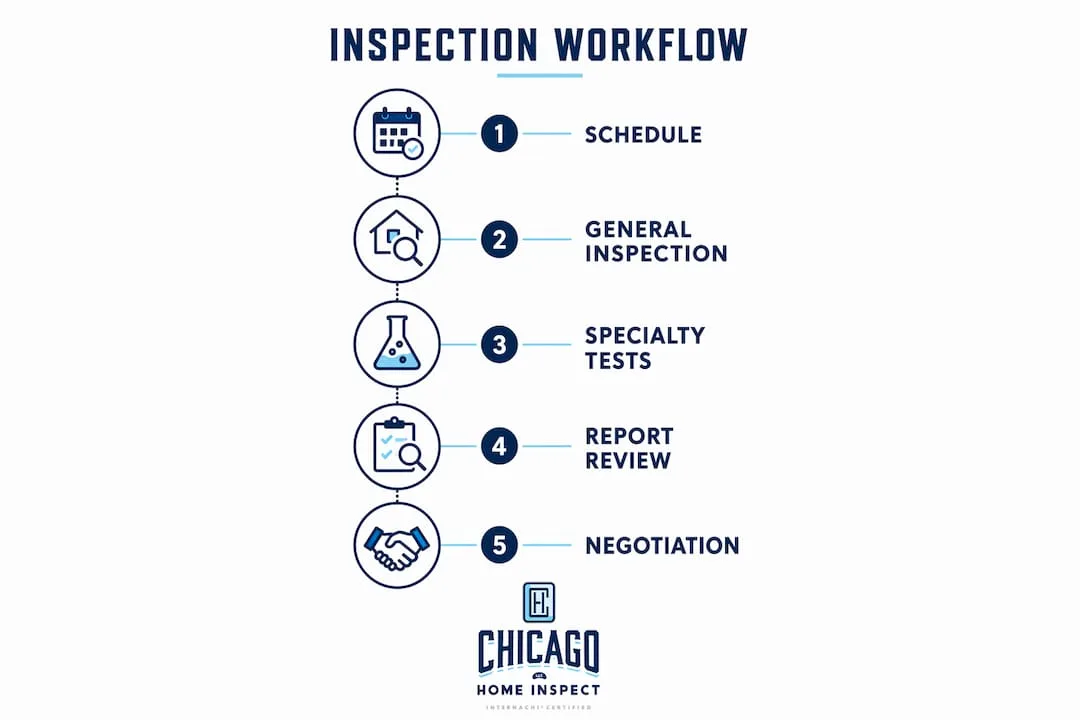
The inspection workflow steps follow a clear sequence. Each phase builds on the last, and skipping any one of them creates gaps that sellers and their agents will not fill for you.
Book the inspection immediately after offer acceptance. Chicago contracts typically allow 5 to 10 calendar days for inspection contingencies. A typical home inspection runs 2 to 4 hours, with the report delivered the next business day. That leaves almost no buffer if you wait even two days to schedule. Book the same day your offer is accepted.
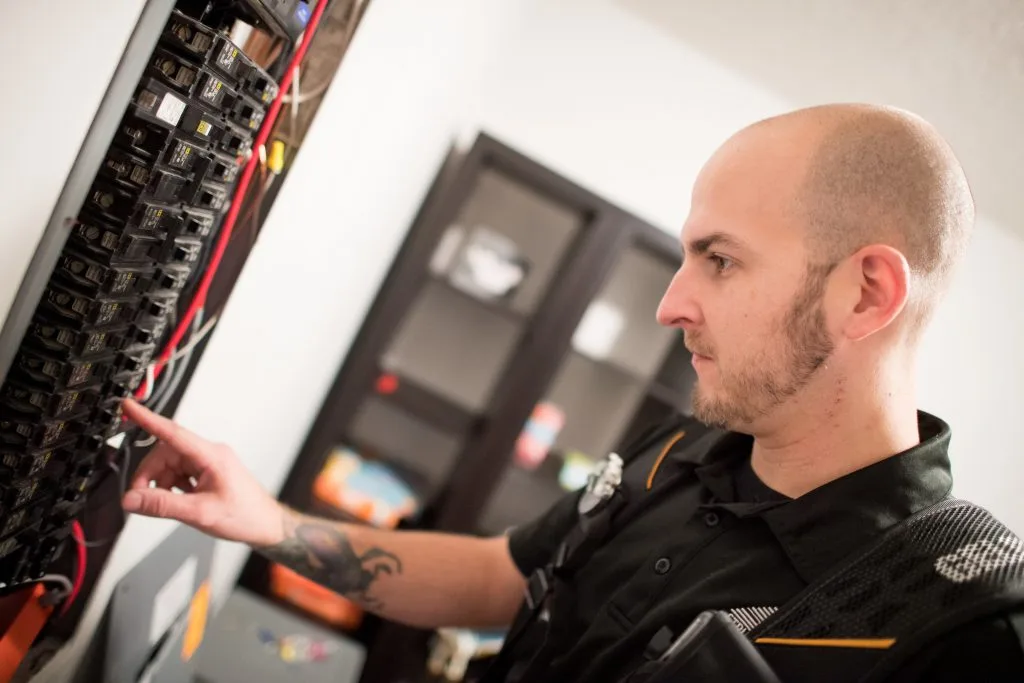
Attend the inspection in person. Attending in person gives you access to the inspector’s verbal commentary, which rarely appears in full detail in the written report. A crack in a foundation wall reads differently when an inspector points to it and says “this is active movement” versus “this is old and stable.” Bring a notepad and take photos of anything the inspector flags.
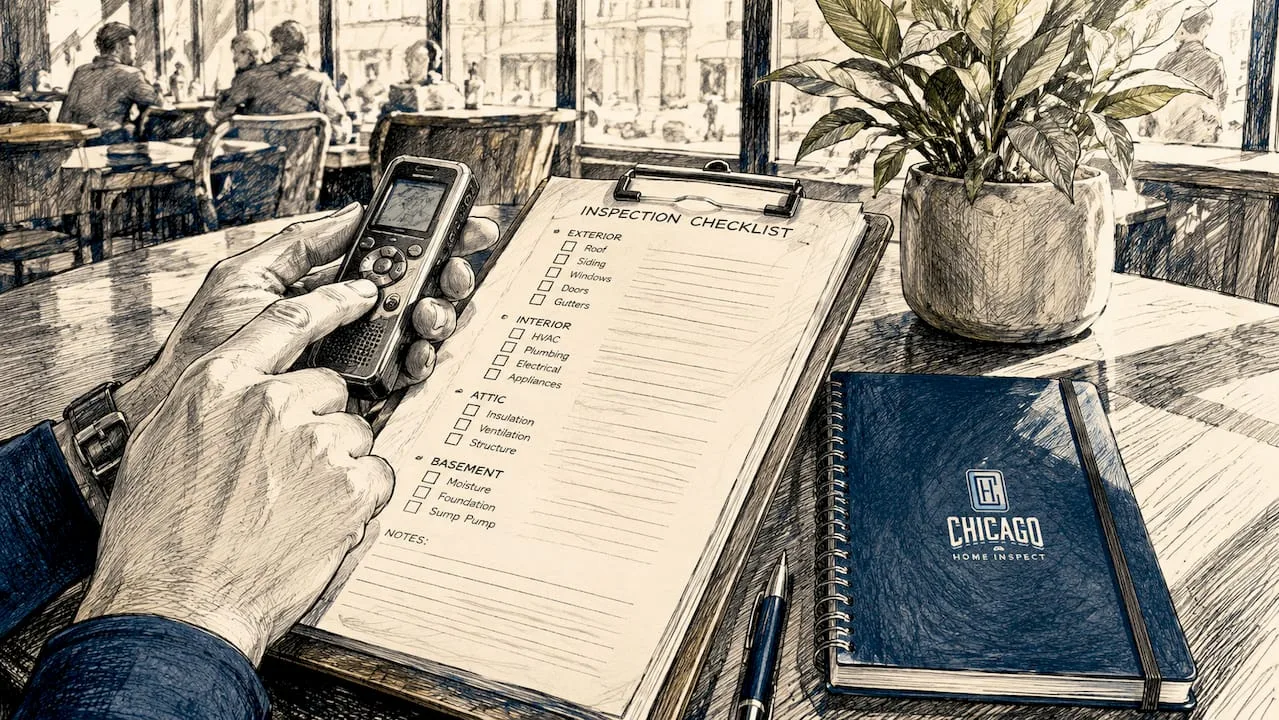
Receive and review the report within 24 hours. Inspection reports are condition diligence tools that inform negotiation rather than official legal or appraisal documents. Read the full report, not just the summary. Pay attention to photos, which often show context the written descriptions compress.
Prioritize findings by category. Buyers prioritize findings into safety, structural, and maintenance categories. Safety items, such as a double-tapped breaker panel or a cracked heat exchanger, go to the top of every list. Structural concerns like foundation movement or roof decking failure come next. Cosmetic items, peeling paint or dated fixtures, stay at the bottom and typically remain the buyer’s responsibility.
Decide on your negotiation position. Post-inspection negotiations give buyers three options: request repairs, ask for a price reduction or credit, or walk away. Your decision should be driven by the severity of findings and the cost to remediate, not by emotion.
Order specialty inspections as recommended. If the general inspector flags elevated radon risk, older cast-iron sewer laterals, or visible mold, schedule those specialty tests before your contingency window closes. We cover this in detail in the next section.
Pro Tip: Take a short video walkthrough of each room immediately after the inspection while the inspector’s verbal comments are still fresh. This gives you a personal record that supplements the written report and is especially useful when reviewing findings with your attorney two days later.
How do specialty inspections like radon and sewer scope fit into the workflow?
Specialty inspections are not optional add-ons in Chicago. They address specific local risks that a general home inspection is not designed to fully quantify.
Radon testing in Illinois
Illinois sits in a high-radon zone, and many Chicago-area properties test above the EPA’s action level of 4 picocuries per liter (pCi/L). Radon testing is a separate add-on, and mitigation runs $800 to $2,000 in Illinois if levels exceed the threshold. That cost makes radon a real budget line item in any buying inspection guide, not a footnote.
The test itself requires closed-building conditions: windows and exterior doors must remain shut for at least 12 hours before and during the 48-hour monitoring period. Coordinating this with the seller is a practical step that buyers frequently overlook. If the seller opens windows during the test period, results will read artificially low, and you may negotiate based on misleading data.
Sewer scope inspections for Chicago homes
Sewer scope inspections are particularly critical for older Chicago homes with private lateral lines connecting to the city main. Many properties in neighborhoods like Pilsen, Bridgeport, and Avondale still have original clay or Orangeburg pipe that is decades past its service life. A full lateral replacement can run $8,000 to $15,000 or more, which is a negotiating point worth having before you close, not after.
| Specialty inspection | Turnaround | Key local risk |
|---|---|---|
| Radon test | 48 to 72 hours | High-radon zone; many homes exceed 4 pCi/L |
| Sewer scope | Same day | Aging clay and Orangeburg laterals in older neighborhoods |
| Mold testing | 3 to 5 days | Moisture intrusion common in Chicago basements |
Pro Tip: Schedule radon and sewer scope tests on the same day as your general inspection whenever possible. This compresses the specialty inspection timeline and gives you all findings before the midpoint of your contingency window, leaving time to negotiate without rushing.
What are best practices for managing and documenting inspection findings?
Managing findings well is where most buyers lose negotiating leverage. The inspection report arrives, they feel overwhelmed, and they either ask for too much or too little. A structured approach prevents both outcomes.
The most effective tool is a repair decision log. An effective repair decision log includes item classification, photo references from the inspection report, estimated repair costs, and your negotiation stance for each item. This document becomes the foundation of your attorney’s inspection objection letter.
Key practices for managing findings:
- Separate safety and structural items from cosmetic ones. Categorizing findings into negotiation zones, such as safety, negotiable, and cosmetic, improves clarity and bargaining power. Sellers respond to organized, evidence-backed requests. They push back on vague lists.
- Record the inspector’s verbal insights during the walkthrough. Inspectors often provide context during the walkthrough that does not appear word-for-word in the report. A note like “inspector said the furnace is at end of life and should be replaced within one heating season” is more useful in negotiation than a report line that reads “furnace: functional, older unit.”
- Attach cost estimates to every item you plan to negotiate. A request for a $12,000 sewer lateral repair lands differently than a request to “fix the sewer.” Get a contractor quote or use published cost ranges to anchor the conversation.
- Communicate with your agent and attorney promptly. Chicago contracts move fast. Your attorney needs your prioritized findings list to draft an inspection objection within the contingency window.
Pro Tip: If specialty inspection results arrive late due to lab processing or scheduling delays, request a written contingency extension from the seller before the deadline passes. Verbal agreements are not enforceable in Illinois real estate contracts.
How does the inspection workflow fit Chicago’s contract timeline?
Chicago real estate contracts operate on tight deadlines, and the inspection workflow must align with them precisely. Missing a deadline can waive your rights entirely.
The standard inspection contingency in Chicago runs 5 to 10 calendar days from contract execution. Attorney review often overlaps with this window, meaning your attorney may be reviewing contract language at the same time you are reviewing inspection findings. These two tracks must run in parallel, not sequentially.
| Contract phase | Typical timing | Inspection workflow action |
|---|---|---|
| Offer acceptance | Day 0 | Book general inspection immediately |
| General inspection | Days 1 to 3 | Attend in person; order specialty tests same day |
| Report delivery | Days 2 to 4 | Review report; build repair decision log |
| Specialty results | Days 3 to 6 | Integrate radon and sewer findings into log |
| Attorney review | Days 1 to 5 | Share findings with attorney for objection letter |
| Contingency deadline | Days 5 to 10 | Submit inspection objection or waive contingency |
Earnest money deposits are typically due within a few days of contract execution, which means your financial commitment is real before inspection results are complete. This is not a reason to delay the inspection. It is a reason to move faster. If specialty inspection results will not arrive before the contingency deadline, request a written extension from the seller’s attorney before the window closes, not after.
Home inspectors in Illinois are not federally regulated, which means quality varies significantly. Vet your inspector before the contingency clock starts. Look for InterNACHI certification and a track record with Chicago’s specific building types. Hiring an unqualified inspector and discovering it after the contingency expires is an expensive lesson.
What we have learned from running inspections across Chicago
We have inspected properties from Evanston to Joliet, from vintage two-flats in Wicker Park to newer construction in the western suburbs. The single most consistent mistake we see buyers make is treating the inspection report as a verdict rather than as evidence.
Inspection reports are condition diligence tools. They document what exists at a point in time. A report that lists 40 items is not a catastrophe. It is a negotiating document. Buyers who understand this walk into repair conversations with confidence. Buyers who do not often either panic and walk away from a sound property or accept findings without negotiating anything.
We also see buyers underestimate how much local knowledge matters. A general inspector who does not regularly work in Chicago may not recognize that a knob-and-tube wiring system in a 1920s bungalow on the Northwest Side is a common finding, not a unique disaster. Context shapes the negotiation. We bring that context to every inspection we conduct in Lake, McHenry, DuPage, and northern Cook Counties.
The other pattern worth naming: buyers who attend the inspection in person consistently negotiate better outcomes than those who only read the report. The written document compresses nuance. The walkthrough conversation does not. Show up, ask questions, and take notes. That hour of engagement is worth more than any single line in the report.
— Chicago Home Inspect LLC
Schedule your inspection with Chicago Home Inspect LLC
Chicago Home Inspect LLC is InterNACHI Certified, BBB Accredited, and licensed and insured to serve Lake, McHenry, DuPage, and northern Cook Counties. We offer residential home inspections, radon testing services, sewer line inspections, and mold testing, all scheduled to fit within your contingency window, including weekends. Our reports are photo-documented and delivered the next business day so your attorney has what they need before deadlines arrive. You can review a sample inspection report on our website to see exactly what you will receive before you book. When you are ready to move forward, we are ready to schedule.
FAQ
What is a pre-purchase inspection workflow?
A pre-purchase inspection workflow is a structured sequence of steps a homebuyer follows to evaluate a property’s condition before closing, from scheduling the general inspection through reviewing specialty test results and negotiating repairs within the contract contingency period.
How long does the home inspection process take in Chicago?
A typical home inspection takes 2 to 4 hours on site, with the written report delivered the next business day. Specialty inspections like radon testing require an additional 48 hours for the monitoring period, so buyers should schedule all tests within the first two days of the contingency window.
Do I need a radon test when buying a Chicago home?
Yes. Illinois is a high-radon state, and many Chicago-area properties test above the EPA action level of 4 pCi/L. Radon testing takes 48 hours under closed-building conditions, making it a practical and budget-relevant step in any Chicago buying inspection guide.
Why is a sewer scope inspection important for older Chicago homes?
Many Chicago properties, particularly those built before 1970, have clay or Orangeburg sewer laterals that are prone to cracking, root intrusion, and collapse. A sewer scope inspection identifies these issues before closing so buyers can negotiate repairs or a price reduction rather than absorbing the cost after the sale.
What happens if I miss my inspection contingency deadline?
Missing the contingency deadline without a written extension typically waives your right to object to inspection findings, which means you proceed to closing without recourse for discovered defects. Always request a written extension from the seller’s attorney if specialty inspection results will not arrive in time.