

TL;DR:
- A pre-listing inspection allows sellers to identify and address issues before listing.
- It helps reduce renegotiation risks and builds buyer trust through transparency.
- Costs range from $350 to $520, best scheduled 2 to 12 months before listing.
Most Chicago sellers assume that home inspections are purely the buyer’s domain. You list the home, accept an offer, and then brace yourself while a stranger walks through your property with a flashlight and a checklist. That assumption is costing sellers money, deals, and serious stress. A pre-listing inspection is a professional home inspection ordered by the seller before the home hits the market, and it gives you the kind of control over your transaction that most sellers never realize they can have.
Table of Contents
- What is a pre-listing inspection?
- What does a pre-listing inspection include?
- Why consider a pre-listing inspection in Chicago?
- Cost, timing, and when is a pre-listing inspection worth it?
- Legal and disclosure considerations for Chicago sellers
- Why pre-listing inspections are a game-changer but not a silver bullet
- Ready for a pre-listing inspection? See how Chicago Home Inspect LLC can help
- Frequently asked questions
Key Takeaways
| Point | Details |
|---|---|
| Proactive risk reduction | A pre-listing inspection helps you discover and address home issues before buyers do. |
| Empowered negotiation | You can fix, disclose, or price transparently, making buyer negotiations less stressful. |
| Essential legal disclosures | Major findings typically must be disclosed to buyers under Illinois law to avoid legal headaches. |
| Strategic timing matters | Schedule your inspection 2–12 months before listing for optimal results. |
What is a pre-listing inspection?
A pre-listing inspection, also called a seller’s inspection, is a professional evaluation of your home’s condition conducted before you officially list it for sale. It mirrors the scope of a standard buyer’s inspection in almost every way. The key difference is who orders it and when. You, as the seller, are the one who initiates it, and you do it early enough to actually act on the results.
Chicago pre-listing inspectors examine the same systems and components a buyer’s inspector would look at. The written report you receive documents the current condition of your home, flags safety concerns, and identifies issues that could surface later in the transaction and derail it.
Here’s why this matters more than sellers typically realize:
- You see the problems first, before a buyer’s inspector does
- You can choose to repair issues, disclose them, or reflect them in your asking price
- You remove the element of surprise from the negotiation table
- You reduce the chance that a buyer will use inspection findings to renegotiate aggressively or walk away entirely
- You signal to buyers that you’re a transparent, organized seller
“A pre-listing inspection gives sellers a rare advantage in real estate: the chance to know exactly what they’re selling before anyone else does.”
Understanding the What does a pre-listing inspection include?
A licensed inspector examines all major home systems and components and produces a written report documenting findings, covering roof through foundation as well as electrical, plumbing, HVAC, and related safety and condition items throughout the property.
Here’s a breakdown of what’s typically covered:
| System or component | What the inspector evaluates |
|---|---|
| Roof | Shingles, flashing, gutters, drainage |
| Foundation and structure | Cracks, settling, water intrusion signs |
| Electrical | Panel condition, wiring, GFCI outlets |
| Plumbing | Water pressure, supply and drain lines, water heater |
| HVAC | Heating and cooling function, filters, ductwork |
| Attic | Insulation, ventilation, signs of moisture or pests |
| Basement and crawl space | Water damage, mold indicators, sump pump |
| Windows and doors | Sealing, operation, broken panes |
| Safety items | Smoke detectors, carbon monoxide detectors, handrails |
For Chicago homes specifically, inspectors also pay close attention to issues tied to the local climate. Freeze-thaw cycles can damage foundations, flashings, and gutters in ways that sellers often overlook until a buyer’s inspector catches them. Older Chicago bungalows, two-flats, and frame homes also tend to have aging electrical panels, knob-and-tube wiring, or outdated plumbing that shows up on inspection reports year after year.
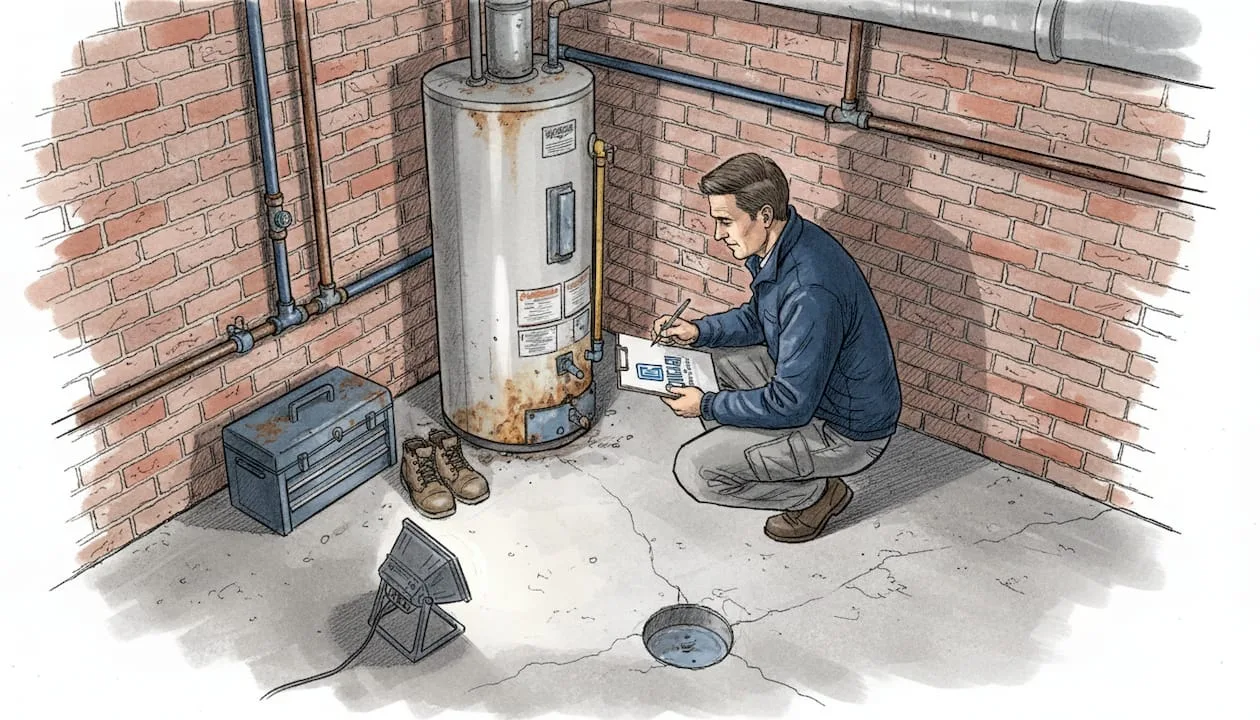
Review the detailed practical inspection tutorial designed specifically for home sellers preparing to go on the market.
Pro Tip: Before your inspector arrives, unlock access to every area of the home including the attic hatch, electrical panel, and any crawl space entry. Inspectors can only report on what they can see. Blocked access means gaps in the report, and gaps mean surprises later.
Why consider a pre-listing inspection in Chicago?
The Chicago real estate market moves fast, and when a deal falls apart after the buyer’s inspection, you lose time, momentum, and sometimes the buyer entirely. A pre-listing inspection is one of the most direct ways to prevent that scenario.
A pre-listing inspection reduces renegotiation friction during the buyer’s inspection contingency by giving sellers early knowledge and documentation to address, repair, disclose, or price known issues before negotiations even begin.
Here’s how sellers in Chicago typically use the results strategically, using the report as a baseline to either fix items before listing, price the home to reflect known conditions, or disclose findings upfront to make the buyer’s contingency period less adversarial.
The three main strategic paths sellers take after receiving their report:
- Fix before you list. For significant issues like an aging furnace, a failing roof section, or faulty wiring, completing repairs before listing removes them from the buyer’s negotiating arsenal entirely. A buyer can’t demand a $15,000 credit for a problem you’ve already solved.
- Price to reflect known conditions. Sometimes repairs aren’t worth doing before the sale, either because the timeline is tight or because the scope is too large. In that case, you can price accordingly and document exactly why, which protects you from unreasonable low-ball requests.
- Disclose and move forward. Transparency is underrated. Buyers who receive a full picture upfront are less likely to feel blindsided later, which means less friction at the closing table.
| Approach | Best when | Risk level |
|---|---|---|
| Fix before listing | You have time and the repair is finite | Low |
| Price to reflect condition | Cosmetic or well-documented defects | Medium |
| Full disclosure without repair | Timeline is tight, issue is minor | Medium |
| No inspection at all | Home is new or recently renovated | Higher |
Competitive Chicago neighborhoods like Lincoln Park, Wicker Park, Bridgeport, and many suburban markets like Naperville or Evanston attract buyers who are well-informed and often bring experienced inspectors. Standing out as a transparent seller in these markets is a real advantage.
Pro Tip: Share your pre-listing report with serious buyers before they submit an offer. It sets expectations, reduces the chance of post-offer renegotiation, and can actually accelerate the transaction timeline for both sides.
Read more about the full range of inspection benefits for sellers if you’re still weighing whether this step makes sense for your home.
Cost, timing, and when is a pre-listing inspection worth it?
Let’s talk numbers first. Pre-listing inspections in Chicago typically cost between $350 and $520 for an average-sized home. That’s a modest investment relative to the median home prices in most Chicago neighborhoods and suburbs, where even a single renegotiated repair credit after the buyer’s inspection could easily exceed the cost of the pre-listing inspection several times over.
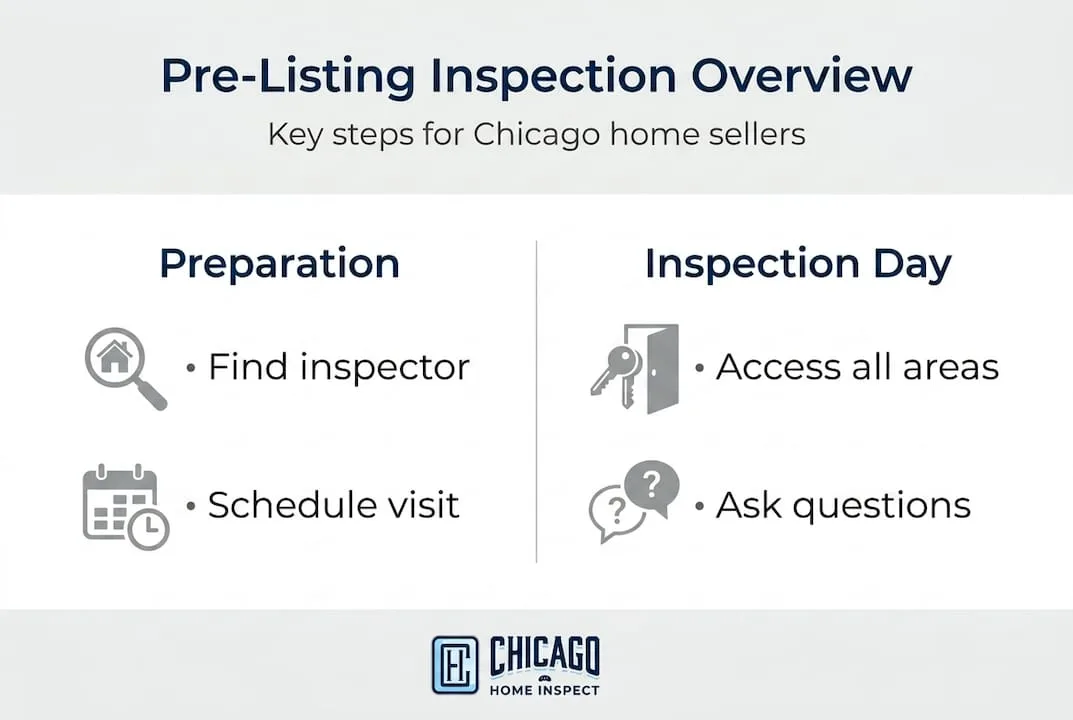
Timing matters more than most sellers realize. Some agents recommend booking your inspection as far as 12 months ahead of your target listing date if you plan major renovations. Others find that 2 to 3 months out works well if the home is in generally good shape. Most seller timing guidance suggests 6 months to a year ahead of listing, depending on goals and the need to make repairs, though some agents suggest as little as 2 months when the home has been well maintained.
When a pre-listing inspection is especially worth it:
- Older homes, particularly those built before 1980, with original systems still in place
- Homes that haven’t been updated recently
- Properties with a history of water issues, whether from flooding, a leaky roof, or basement moisture
- Sellers who haven’t lived in the home recently, such as an inherited property
- High-value listings where buyer scrutiny will be intense
When a pre-listing inspection may be less critical:
- Newly constructed homes under 10 years old with no known issues
- Recently gut-rehabbed properties with documented permits and modern systems
- Situations where the seller has limited time and prefers to price competitively and let buyers do their own due diligence
One important reality to plan for: a pre-listing inspection is optional and may not be worth the cost for every seller, especially when the buyer may still insist on their own inspection or when the home is newer or recently updated. Even if you provide a report, many buyers will still hire their own inspector. Their inspector may flag different items, especially cosmetic concerns or issues that developed after your inspection was done.
| Home profile | Pre-listing value | Recommended timing |
|---|---|---|
| Pre-1980 Chicago home | High | 6 to 12 months out |
| Recently renovated | Medium | 3 to 6 months out |
| New construction | Low to medium | Optional |
| Inherited or vacant property | Very high | As soon as possible |
Learn more about scheduling your inspection and what to expect from the booking process through to report delivery.
Legal and disclosure considerations for Chicago sellers
This is where some sellers get into trouble. Ordering a pre-listing inspection means you will have documented knowledge of your home’s condition. And in Illinois, as in most states, knowledge comes with responsibility.
Sellers may be required to disclose issues uncovered in a pre-listing inspection if they affect the home’s condition. This isn’t just an ethical standard. It’s a legal one. Illinois requires sellers to complete a Residential Real Property Disclosure Report that asks about known material defects. If your pre-listing inspection identifies a foundation crack, a non-functioning HVAC system, or evidence of water intrusion, you generally cannot simply ignore those findings.
Key disclosure principles for Chicago-area sellers to keep in mind:
- You don’t necessarily need to hand over the full inspection report to buyers, but you must disclose material defects you’re aware of
- “I didn’t know” becomes a harder defense to make once you’ve received a written inspection report
- Failing to disclose known defects can expose you to legal claims after closing, including buyer lawsuits seeking damages
- Different defects carry different levels of required disclosure, which is why consulting your real estate attorney or agent is essential
- Disclosing proactively tends to build buyer trust rather than destroy it
“Transparency in a real estate transaction is not just good ethics. In Illinois, it’s good legal strategy.”
The smartest approach is to review your report with your real estate agent or attorney before deciding what to disclose and how to frame it. This ensures you’re protected and that the information is presented in context.
Use our Why pre-listing inspections are a game-changer but not a silver bullet
Here’s our honest take after working with countless Chicago-area sellers: a pre-listing inspection is one of the most powerful tools a seller can have, but it gets misused when sellers treat it as a guarantee rather than a strategy.
Some sellers order the inspection, fix the major items, and then assume they’ve “inspection-proofed” the deal. That’s not how it works. Even with a pre-listing report, buyers may still uncover new issues or insist on their own inspection, so the seller’s report is usually about risk reduction and planning, not a guarantee of fewer negotiations.
What a pre-listing inspection actually does is give you information early enough to make good decisions. It shifts the power dynamic. Instead of reacting to a buyer’s inspector’s findings three days before your closing date, you’re proactive. You’ve had weeks or months to understand your home, decide what to fix, and set realistic expectations.
The sellers who benefit most from this tool are the ones who approach it with clear eyes. They read the report honestly, prioritize the repairs that will matter most to buyers, fix what they can, and disclose the rest confidently. They don’t try to hide findings or minimize them. They use the inspection prep tutorial to get their home ready and walk into the market with documentation that shows buyers they’ve done their homework.
That’s the real value: not the elimination of risk, but the intelligent management of it.
Ready for a pre-listing inspection? See how Chicago Home Inspect LLC can help
If you’re preparing to list your Chicago-area home and want to go to market with confidence, our pre-listing inspection services are built for exactly this situation. We’re InterNACHI certified, BBB accredited, licensed and insured, and we serve Chicago and the surrounding suburbs, with weekend availability to fit your timeline. Before you book, take a look at our inspection sample report to understand the detail and format you’ll receive. You can also browse our interior inspection photos to see exactly how we document conditions throughout a home. Reach out today to schedule your pre-listing inspection and enter the market prepared.
Frequently asked questions
Does a pre-listing inspection guarantee there will be no surprises on the buyer’s inspection?
No, a pre-listing inspection helps uncover many issues in advance, but buyers can still find new concerns with their own inspector. Even with a pre-listing report, buyers may still uncover new issues or order their own separate inspection regardless.
If I do a pre-listing inspection, am I required to give the report to buyers?
You may not be required to hand over the full report, but you are generally required to disclose material defects found in it. In Illinois, sellers may be required to disclose issues that affect the home’s condition, regardless of whether they share the full inspection document.
Should I order a pre-listing inspection on a newer Chicago home?
It may not be necessary for recently built or recently updated homes, but it can provide valuable peace of mind if you’re unsure about any hidden issues. A pre-listing inspection is optional and may not be worth the cost when the home is newer or recently updated.
How far in advance should I have a pre-listing inspection in Chicago?
Most agents recommend booking 2 to 12 months before you list, which gives you time to plan and complete any needed repairs. Timing guidance suggests 6 months to a year ahead of listing, though as little as 2 months works for well-maintained homes.
What does a typical pre-listing inspection cost in Chicago?
Most pre-listing inspections in Chicago run between $350 and $520 for an average-sized house. Pre-listing inspections typically cost in the same ballpark as buyer inspections, making them a practical investment relative to the transaction value of most Chicago properties.