
TL;DR:
- An overhead sewer system disconnects basement drains from the city sewer and reroutes wastewater above surcharge levels. Backwater valves are mechanical check valves that block sewer backup during surcharge events, requiring regular maintenance for reliability. Homes with frequent floods or finished basements benefit most from overhead sewers, while backwater valves are cost-effective for infrequent flooding and unfinished spaces.
An overhead sewer system is a permanent plumbing conversion that physically disconnects basement drains from the city sewer main and reroutes all wastewater above the surcharge level. Backwater valves are mechanical one-way check valves that block sewer backup from entering a home during surcharge events. Together, these are the two primary flood control systems Chicagoland homeowners use to protect basements from the region’s combined sewer infrastructure. Chicago’s Metropolitan Water Reclamation District (MWRD) manages one of the largest combined sewer networks in the country, and during heavy storms, that system surcharges and pushes sewage backward into homes. Understanding overhead sewers, backwater valves, and flood control systems in Chicagoland is the first step toward choosing the right protection for your home.
What is an overhead sewer system and how does it prevent basement flooding?
An overhead sewer conversion is the most permanent solution available for Chicagoland homeowners dealing with repeated sewer surcharge flooding. The system works by cutting the basement drain lines away from the city sewer connection below grade and rerouting all wastewater through pipes that run overhead, above the surcharge level. Because the basement is physically disconnected from the city main, sewer water has no path back into your home. This is not a mechanical barrier. It is a structural change to your plumbing.
How the ejector pump fits in
Every overhead sewer system requires an ejector pump to lift wastewater from basement fixtures up to the overhead pipe. The pump forces sewage uphill to meet the rerouted drain line. Without it, basement toilets, floor drains, and laundry tubs cannot discharge. Overhead sewer conversions require power to function, so a battery backup for the ejector pump is not optional in Chicago. Power outages during major storms are common, and losing basement plumbing function at the worst moment defeats the purpose of the investment.
What the conversion costs and requires
Installation costs range from $12,000 to $30,000 in Chicagoland, depending on basement size, drain layout, and restoration work. That range reflects real variation. A finished basement in a Lincoln Park greystone costs more to restore than an unfinished utility space in a McHenry County frame home. Chicago and suburban municipalities require permits for overhead sewer work, and only licensed plumbers can perform the installation. Permit fees typically run $200 to $600 and are usually included in contractor quotes.
Key benefits of an overhead sewer system:
- Eliminates the surcharge entry path permanently, with no mechanical parts to fail
- Maintains basement fixture usability during storm events via the ejector pump
- Requires no routine maintenance beyond standard pump checks
- Can lower homeowner’s insurance premiums due to reduced flood risk
- Qualifies for municipal rebate programs in many Chicagoland villages
Pro Tip: The most cost-effective time to install an overhead sewer is during a basement remodel. Demolition and restoration costs are already built into the project, which can reduce the total overhead sewer expense significantly.
How do backwater valves work, and what are their advantages and limitations?
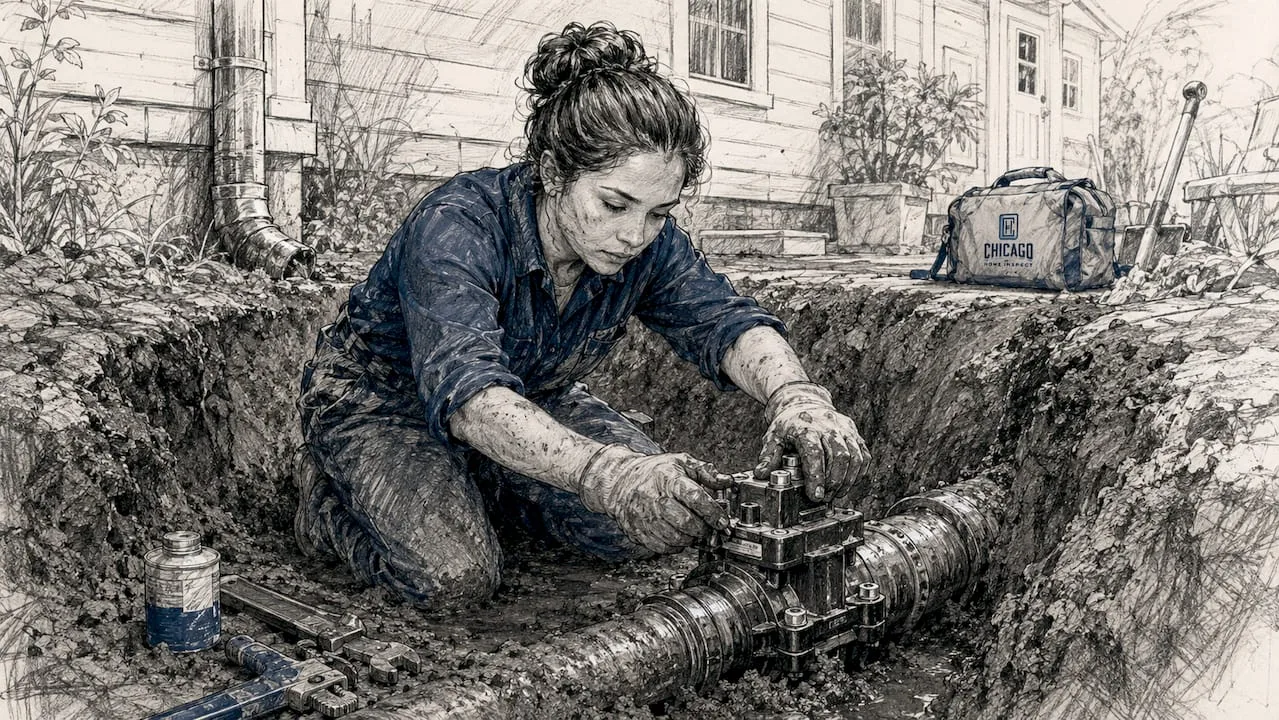
A backwater valve is a mechanical one-way check valve installed in the main sewer line where it exits the home. During normal conditions, the valve stays open and wastewater flows freely to the city main. When sewer pressure reverses during a surcharge event, the valve’s flap closes automatically and blocks sewage from entering the basement. The concept is simple. The execution requires discipline.
Where backwater valves work well
Backwater valves are the right choice for moderate surcharge exposure homes, particularly those with unfinished basements and infrequent flooding history. Professional installation costs between $2,500 and $5,500, which puts flood protection within reach for homeowners who cannot justify a full overhead conversion. For bungalows on the Northwest Side or two-flats in Berwyn with occasional wet basements, a backwater valve is a practical first line of defense.
The maintenance reality
Backwater valves require regular professional inspection and cleaning to stay reliable. Grease, debris, and sediment build up on the valve flap over time. If that buildup prevents the flap from seating fully, the valve fails during the exact event it was installed to handle. Neglect is the leading cause of backwater valve failure. Annual professional service is not a suggestion. It is the condition under which the valve works.
The four critical limitations homeowners must understand:
- Valve closure stops all basement plumbing discharge. During a surcharge event, the valve seals shut. Basement toilets, floor drains, and laundry tubs cannot drain until the valve reopens. Plan accordingly if your basement is finished and actively used.
- Debris buildup causes failure. Grease and sediment prevent proper closure, turning a working valve into a false sense of security.
- Backwater valves are unnecessary for separate sewer systems. Homes connected to a separate sanitary sewer without combined sewer surcharge risk do not need one. Verify your connection type before spending money.
- Mechanical parts wear out. Unlike an overhead sewer, a backwater valve has moving components with a finite service life. Replacement is eventual, not optional.
Pro Tip: Ask your licensed plumber to show you the valve access point after installation. Knowing where it is makes annual cleaning easier to schedule and confirms the valve is accessible for service.
Overhead sewer vs. backwater valve: costs, maintenance, and when to choose each
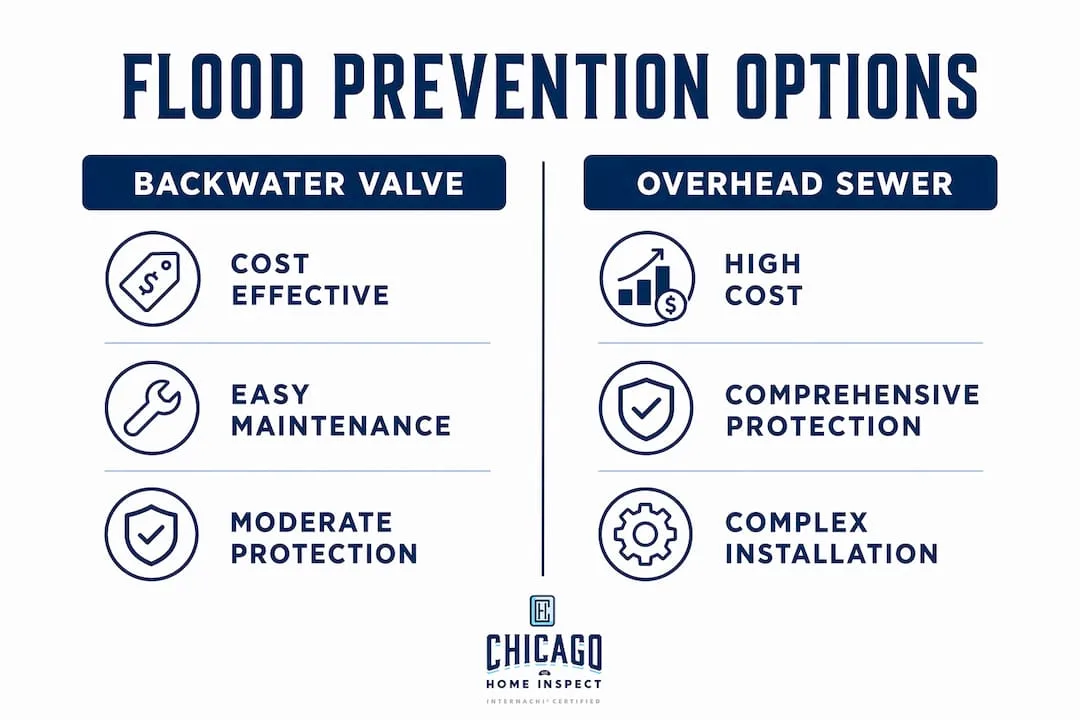
Choosing between these two systems comes down to three factors: how often your basement floods, how finished and functional the space is, and what your budget allows.
| Factor | Backwater valve | Overhead sewer |
|---|---|---|
| Installed cost | $2,500–$5,500 | $12,000–$30,000 |
| Municipal rebate potential | $500–$4,000 | $500–$4,000 |
| Maintenance required | Annual professional service | Ejector pump checks only |
| Basement plumbing during surcharge | Temporarily disabled | Fully functional |
| Flood protection type | Mechanical barrier | Physical disconnection |
| Best suited for | Moderate risk, unfinished basements | High risk, finished basements |
Municipal rebate programs in Brookfield, Berwyn, Oak Park, and through the Chicago Basement Flooding Partnership can reduce out-of-pocket costs by $500 to $4,000 or more. That rebate can shift the math meaningfully for homeowners on the fence about an overhead conversion. Check your municipality’s program before signing a contract.
A few additional factors worth weighing:
- Homes that flood every two to three years are strong candidates for overhead conversion, even with higher upfront costs
- Finished basements with bedrooms, bathrooms, or home offices justify the overhead system because a single flood event can cause tens of thousands in damage
- Timing an overhead sewer installation with a basement remodel reduces total project cost by sharing demolition and restoration expenses
- Reviewing sewer line condition before committing to either system confirms whether the existing line can support the chosen solution
What supplementary flood prevention strategies should Chicagoland homeowners use?
No single system eliminates all basement water risk. Overhead sewers and backwater valves address sewer surcharge. They do not address groundwater intrusion, surface runoff, or grading problems. A complete Chicagoland flood prevention plan layers multiple strategies.
Redirect downspouts and manage surface water
Downspouts that discharge near the foundation or into the city sewer connection add volume to an already stressed system. Disconnecting downspouts and routing runoff into gardens or rain barrels reduces the load on the combined sewer during storms. The MWRD offers rain barrels at discounted prices for seniors, and native landscaping absorbs runoff faster than turf grass.
Conserve water during heavy storms
The MWRD advises homeowners to conserve water during heavy rainfall to reduce sewer system surcharge. Running dishwashers, washing machines, and showers during peak storm events adds household wastewater to a system already near capacity. Delaying laundry by a few hours during a major storm is a free, immediate action every homeowner can take.
Address groundwater with a sump pump
A sump pump handles groundwater intrusion through the foundation, which is a separate problem from sewer surcharge. Homes in Lake County or along the Des Plaines River corridor often deal with both issues simultaneously. A sump pump with a battery backup covers the groundwater side. The overhead sewer or backwater valve covers the surcharge side. Sump pump failure during a major storm is one of the most common and costly basement flooding events in Chicagoland.
Assess grading and drainage around the foundation
Poor grading directs surface water toward the foundation rather than away from it. Grading problems often go unnoticed until a heavy may or june rain reveals water pooling against the house. Correcting the slope costs far less than repairing a flooded basement.
Our take on flood control decisions in Chicagoland
We inspect basements across Lake, McHenry, DuPage, and northern Cook Counties, and the pattern we see repeatedly is homeowners who installed a backwater valve after one flood event, skipped the annual maintenance, and then experienced a worse flood three years later when the valve failed. The valve was not the wrong choice. The neglect was.
Our honest recommendation: if your basement has flooded more than twice in five years, or if you have a finished basement with real living space below grade, the overhead sewer conversion is the right investment. The cost is real, but so is the alternative. One significant flood in a finished basement can easily exceed $30,000 in damage and remediation. Flood control viewed as a long-term investment also tends to lower insurance premiums over time, which offsets some of the upfront cost.
For homeowners with unfinished basements and infrequent flooding, a properly maintained backwater valve is a sound, cost-effective choice. The key word is maintained. Schedule the annual service call the same way you schedule a furnace tune-up. Put it on the calendar and keep it.
We also strongly recommend verifying your sewer connection type before spending anything. Homes on separate sanitary sewers do not face combined sewer surcharge risk. A sewer line inspection before installation confirms the line condition and the connection type, which prevents expensive mistakes.
— Chicago Home Inspect LLC
How Chicago Home Inspect LLC can help you assess your flood risk
Choosing the right flood control system starts with knowing what you are working with. Chicago Home Inspect LLC provides residential home inspections that cover basement plumbing, drain conditions, sump pump function, and visible signs of past water intrusion. Our InterNACHI-certified inspectors document findings with detailed plumbing inspection photos so you have a clear record before committing to any installation. We serve Lake, McHenry, DuPage, and northern Cook Counties, with weekend appointments available. Whether you are buying a home, planning a basement remodel, or simply trying to understand your flood exposure, a professional inspection gives you the facts you need to make a confident decision.
FAQ
What is an overhead sewer system?
An overhead sewer system physically disconnects basement drain lines from the city sewer main and reroutes wastewater through pipes above the surcharge level, eliminating the path for sewer backup to enter the basement.
How much does backwater valve installation cost in Chicagoland?
Professional backwater valve installation costs between $2,500 and $5,500 in Chicagoland, with municipal rebate programs potentially reducing that cost by $500 to $4,000 depending on your village.
Can I use my basement plumbing during a sewer surcharge event?
With a backwater valve, basement plumbing is temporarily disabled while the valve is sealed shut. With an overhead sewer system, the ejector pump keeps basement fixtures fully functional throughout the event.
How often does a backwater valve need to be serviced?
A backwater valve requires professional inspection and cleaning at least once a year. Grease, debris, and sediment buildup can prevent the valve from closing properly, causing failure during a surcharge event.
Does an overhead sewer system require any ongoing maintenance?
The overhead sewer itself requires no routine maintenance because it has no moving parts. The ejector pump should be checked periodically, and a battery backup unit should be tested before storm season each year.