
TL;DR:
- A thorough well, septic, and rural-property inspection is essential before buying or selling in McHenry County to avoid costly repairs. These evaluations include detailed checks of water quality, septic system condition, and site issues, with comprehensive reports and water testing. Local regulations and lender requirements often make inspections mandatory, and professional, licensed inspectors are crucial to ensure a safe and compliant property transaction.
If you’re buying, selling, or maintaining a rural property in McHenry County, schedule a dedicated well, septic, and rural-property inspection before you close or commit. Chicago Home Inspect LLC performs these evaluations across McHenry County, coordinating water sampling through certified labs and delivering a written report with photos. The McHenry County Department of Health enforces onsite wastewater rules locally, and the Illinois Department of Public Health sets the statewide framework both agencies operate under. Act now if you have a pending real estate transfer, a lender contingency, visible system problems, or a county inquiry. The financial stakes are real: a full septic system replacement can approach or exceed $10,000 in Illinois; that cost lands on whoever owns the property when the system fails.
Table of Contents
- What does a well, septic, and rural-property inspection actually cover?
- When are these inspections required in McHenry County?
- What do inspectors check? A detailed checklist
- Common reasons inspections fail and what repairs cost
- Which McHenry County offices handle permits and record searches?
- How do you choose a qualified inspector in McHenry County?
- How Chicago Home Inspect LLC handles well, septic, and rural-property checks
- Schedule your McHenry County inspection with Chicago Home Inspect LLC
- Authoritative local resources for permits, records, and county rules
What does a well, septic, and rural-property inspection actually cover?
These are three distinct scopes, and a thorough inspection addresses all of them separately.
Well inspection scope covers the mechanical and safety systems you can access above ground, plus water quality:
- Well head condition, sanitary seal integrity, and whether the well is buried in a pit (a known contamination risk)
- Pump operation, pressure tank function, and visible electrical controls
- Water sampling for bacteria and nitrates, sent to a certified lab with chain-of-custody documentation
- Visible corrosion, wiring concerns, and any safety hazards at the wellhead
Septic inspection scope focuses on the tank, distribution system, and drain field:
- Tank access, condition of inlet and outlet baffles, and scum/sludge measurement
- Distribution box function and evidence of uneven flow
- Drain-field surface signs: wet spots, unusually lush grass, persistent odors, or surfacing effluent
- Maintenance history, last pumping date, and any record of backups
Rural-property checks extend the evaluation to the site itself:
- Driveway condition, heavy-vehicle access, erosion, and culvert integrity
- Proximity of the well or drain field to agricultural fields, fuel storage, or livestock areas
- Outbuilding drainage and any runoff paths that could compromise water quality
| Inspection Type | Core Deliverables |
|---|---|
| Well | Mechanical check, pump/pressure test, water lab results (bacteria, nitrates), written report with photos |
| Septic | Tank condition, scum/sludge levels, drain-field assessment, written report with photos |
| Rural Property | Site access, erosion, agricultural runoff risk, outbuilding drainage, written report with photos |
Every inspection we perform includes a written report with photos, diagnostic findings, water lab results with chain-of-custody, repair recommendations, and notes on permit or record searches.
When are these inspections required in McHenry County?
The short answer: more often than most buyers expect. Illinois has no statewide mandatory septic inspection at the point of sale, but local ordinances and lender requirements fill that gap in practice.
Common triggers in McHenry County:
- Real estate sale contingencies. Buyers routinely include well and septic inspection contingencies in purchase contracts. This is one of the strongest financial protections available, given replacement costs.
- Lender underwriting requirements. Many mortgage lenders require water testing or a septic evaluation as a loan condition, regardless of what the county mandates.
- County permit or complaint reviews. The McHenry County Division of Environmental Health may require records, permits, or evaluations when a complaint is filed or a permit is pulled for repairs.
- Vacant properties. A system that hasn’t been used recently can pass a visual check yet fail under normal occupancy. If the home has been vacant, ask the seller to run the system for at least a week before your inspection date.
Before scheduling, contact McHenry County Environmental Health to pull permit history and confirm whether any open complaints or code issues exist on the property. Confirm your lender’s specific requirements in writing before you book.
What do inspectors check? A detailed checklist
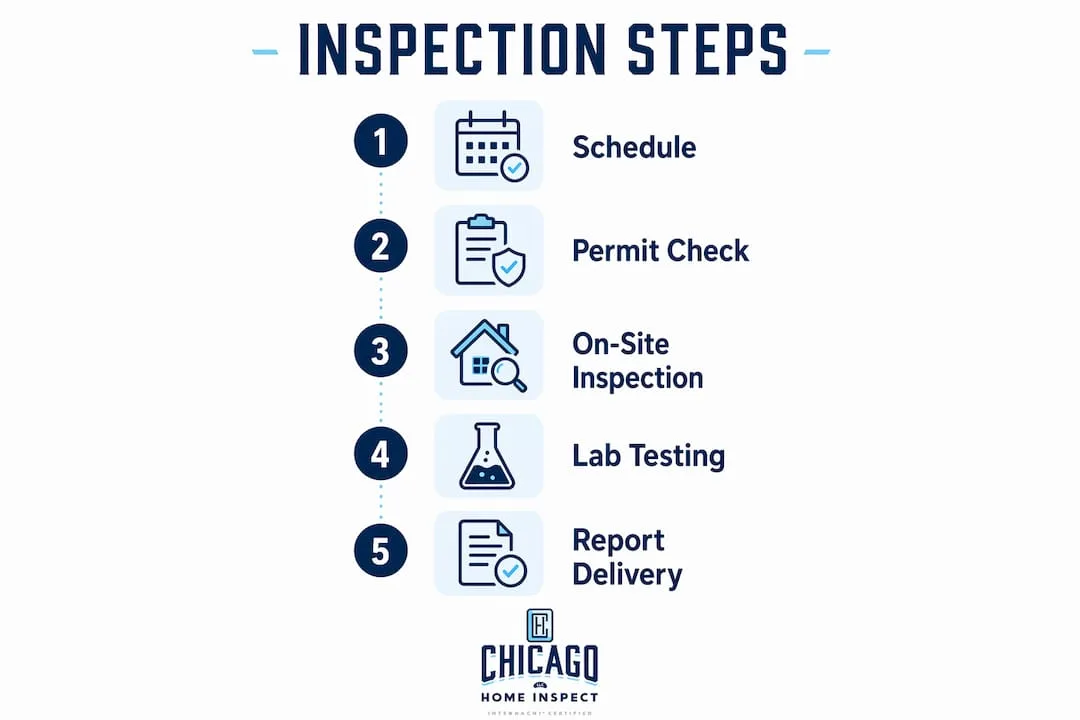
A good inspection report is organized by system. Here’s what we look for on each.
Well checklist
- Well head above grade, no buried pit, sanitary seal present and intact
- Pump cycles on and off correctly; pressure tank holds charge
- Electrical wiring at pump and pressure tank is properly protected
- No visible corrosion on casing, fittings, or connections
- Water sample collected and submitted to a certified lab for bacteria and nitrate analysis
- No safety hazards within the well setback zone
Septic system checklist
- Tank lid accessible; no surface saturation around the tank
- Inlet and outlet baffles intact; water level within normal range
- Scum and sludge layers measured; combined thickness below one-third of tank capacity
- Distribution box accessible and showing even flow to all laterals
- Drain-field surface free of wet spots, odors, or unusually green turf
- No evidence of sewage backup or slow drains reported by occupants
- Pumping date confirmed; maintenance records reviewed if available
Rural-property checklist
- Driveway and access road can support service vehicles
- No erosion channels or standing water near the drain field or wellhead
- Agricultural fields, fuel tanks, or livestock areas are at adequate distance
- Outbuilding drainage directed away from well and septic areas
- Fencing or livestock activity not compromising system components
Pro Tip: If the property has been vacant for more than a few weeks, request that the seller run water daily for five to seven days before your inspection. A dormant system can look fine on a visual check and fail within weeks of occupancy. Build a re-check contingency into the purchase contract if the seller can’t accommodate this.
Common reasons inspections fail and what repairs cost
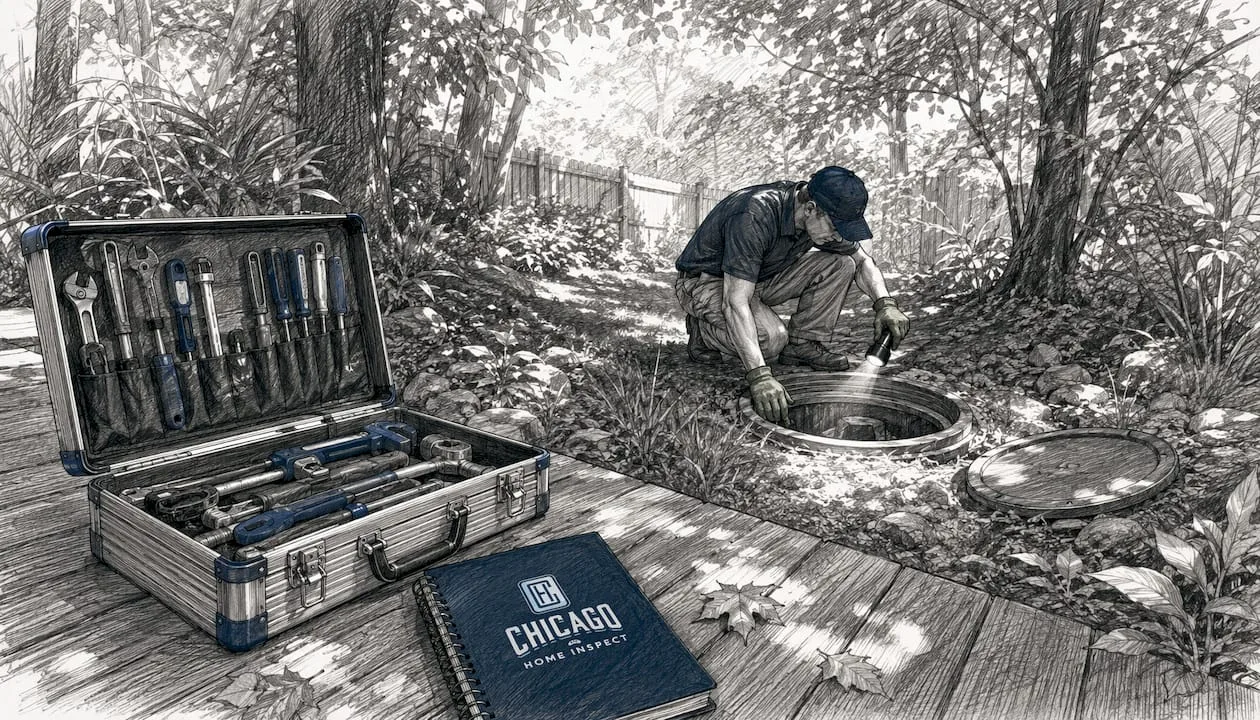
The most common failure triggers are surfacing sewage effluent, sewage backup inside the home, clogged or crushed pipes (often from tree roots or vehicle traffic), and saturated drain fields. Signs inspectors look for include slow drains, spongy or very green turf over the drain field, and persistent odors near the tank or field.
A system can also “fail” without visible sewage if it no longer meets current McHenry County health codes, even if it is still technically functioning. That matters because code-compliance failures still require remediation before a sale can close with certain lenders.
Cost reality check: Full drain-field replacement or major septic system replacement can approach or exceed $10,000 in Illinois. Smaller repairs, tank pumping, and pipe clearing cost considerably less, but site access and soil conditions in McHenry County’s rural areas can push costs higher than suburban averages.
When a failure surfaces during escrow, buyers have real options. You can negotiate a repair credit, request the seller complete repairs before closing, or walk away if the contract contingency allows it. Legal advisors recommend consulting an attorney immediately if major contamination or system failure is confirmed, because the options and timelines are contract-specific.
One risk that’s easy to underestimate: a failing septic system can contaminate a private well. In McHenry County, groundwater is the exclusive drinking-water source, so a compromised system is a public-health concern, not just a property-value issue.
Which McHenry County offices handle permits and record searches?
The McHenry County Division of Environmental Health is the primary enforcement authority for onsite wastewater and private water supply. Before any repair, replacement, or new installation, a permit is required through this office.
What to request from the county before closing or scheduling work:
- Permit history for the well and septic system
- As-built sketches or system diagrams (if on file)
- Complaint history for the property address
- Confirmation of any open violations or required repairs
- Application requirements for repair or replacement permits
The county’s Environmental Applications page lists current permit forms for onsite wastewater systems. The Septic/Well Information Requests page handles records requests through the Building Division. Contact the Environmental Health office directly to confirm turnaround times and any fees before submitting.
Local ordinances vary by county in Illinois, so what applies in McHenry County may differ from neighboring counties. Always confirm requirements with the county office rather than relying on general state guidance.
How do you choose a qualified inspector in McHenry County?
Hire a licensed, insured inspector with verifiable credentials and direct experience with McHenry County permit records and local system types. A general home inspection does not substitute for a specialized well or septic evaluation.
Questions to ask before hiring:
- Are you licensed and insured in Illinois for well and septic evaluations?
- Do you hold InterNACHI certification or an equivalent credential?
- Have you worked with McHenry County Environmental Health permit records?
- Can you provide a sample report with photos before I hire you?
- Which certified lab do you use for water testing, and do you provide chain-of-custody documentation?
- What is your typical turnaround time from inspection to final report?
- What are your liability limits, and what is explicitly excluded from your scope?
Red flags to watch for: verbal-only findings with no written report, no photos in the report, water test results without lab documentation, unwillingness to pull or review county records, or refusal to provide references from recent McHenry County clients. An inspector who can’t tell you the last time they worked with the county’s Environmental Health office is a risk. Also, DIY repairs on complex systems carry their own hazards — the same logic that applies to DIY home improvement projects applies here: hidden costs and missed details can exceed the cost of hiring a professional from the start.
How Chicago Home Inspect LLC handles well, septic, and rural-property checks
Our process for McHenry County properties runs from on-site diagnostic inspection through certified lab water sampling to a photo-rich written report. Here’s what that looks like in practice:
Credentials and trust signals:
- Licensed and insured in Illinois
- InterNACHI certified
- BBB accredited
- Water samples submitted to certified testing labs with full chain-of-custody documentation
- Written reports include photos of all inspected components and a clear statement of scope limitations
What we include and where we refer out:
- Visual inspection of all accessible well and septic components
- Water sampling for bacteria and nitrates through a certified lab
- Permit and record search coordination with McHenry County
- Exterior site condition photos documenting rural-property factors
- When a pump contractor, licensed septic installer, or licensed plumber is needed for invasive work, we say so clearly in the report and refer accordingly
Scheduling and turnaround:
- We serve McHenry County with weekend availability
- On-site inspection typically runs two to three hours for a combined well, septic, and rural-property evaluation
- Lab results for water samples generally return within three to five business days
- Final written report delivered promptly after lab results are confirmed
We also perform sewer line inspections for properties connected to municipal systems, and our plumbing inspection documentation gives you a clear visual record of what we found and where.
Why we prioritize thorough well and septic checks in McHenry County
Groundwater is McHenry County’s exclusive drinking-water source. That single fact changes the stakes. A failing septic system isn’t just a property problem; it’s a contamination risk for the entire surrounding area, which is why the county frames onsite wastewater oversight as a community health issue rather than a private one.
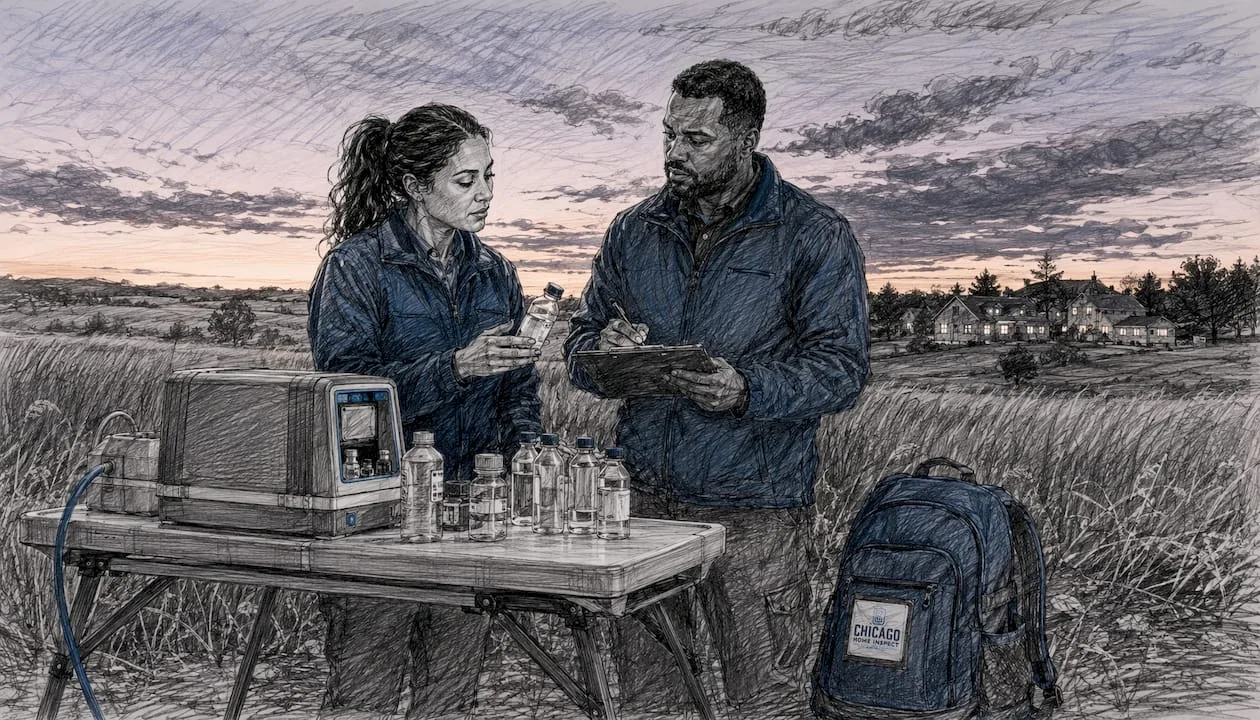
We also see the effects of Climate Zone 5 winters on these systems regularly. Freeze-thaw cycles stress tank lids, crack distribution pipes, and shift drain-field laterals in ways that don’t show up until spring. Older rural properties throughout the Chicago suburbs often have systems installed decades ago under different code standards, and those systems may be functional today but non-compliant with current McHenry County requirements.
An inspection is a snapshot, not a guarantee. We always recommend reviewing the full maintenance history of any system before closing, and scheduling follow-up evaluations if the property changes hands or sits vacant for an extended period.
Schedule your McHenry County inspection with Chicago Home Inspect LLC
Chicago Home Inspect LLC covers McHenry County and the surrounding Chicago suburban counties, including Lake, DuPage, and northern Cook. We offer weekend scheduling, which matters when buyers are working around weekday jobs and tight contract timelines. Every well, septic, and rural-property evaluation we complete includes a written report with photos, certified lab water results, and a clear scope statement. We’re licensed and insured, InterNACHI certified, and BBB accredited. To book your inspection or ask about availability, schedule online or call us directly. Don’t let a septic replacement costing $10,000 or more catch you after closing.
Authoritative local resources for permits, records, and county rules
The offices and pages below are the official contacts for McHenry County and Illinois well and septic rules. Use them to pull permit history, submit records requests, or confirm current requirements before scheduling work or closing on a property.
| Resource | What It Covers |
|---|---|
| McHenry County Onsite Wastewater (Septic) | Permit requirements, enforcement contacts, FAQs for septic systems |
| McHenry County Private Water Supply | Well maintenance guidance, county contact for private well concerns |
| McHenry County Environmental Applications | Permit application forms for onsite wastewater systems |
| McHenry County Septic/Well Information Requests | Records requests for permit history and system diagrams |
| McHenry County Public Health Ordinance | Full text of county health rules covering wells and wastewater |
| Illinois Department of Public Health | Statewide guidance, forms, and regulatory framework for private sewage and water supply |
| IDPH Private Sewage Disposal Evaluation Form | Official state evaluation form used for routine septic inspections |
This article provides general information about well, septic, and rural-property inspections in McHenry County. It is not legal or regulatory advice. Confirm current permit requirements and ordinances with McHenry County Environmental Health or a qualified professional before making decisions for your specific property.