

TL;DR:
- Exterior paint red flags in home inspections indicate serious issues such as moisture intrusion and surface preparation problems. Moisture causes most paint failures, especially in Chicago’s cold climate, and poor prep often leads to early deterioration. Fresh paint may conceal underlying water damage, highlighting the importance of thorough inspections before buying or repairs.
Exterior paint coating red flags during a home inspection are early warnings of serious problems, including moisture intrusion, poor surface preparation, and hazardous lead paint in older homes. Paint deterioration is rarely just cosmetic. In Chicago, freeze-thaw cycles and vapor drive make these problems worse every winter. Homes built before 1978 add another layer of risk under EPA regulations. Understanding what these signs mean gives buyers and homeowners a real advantage before any money changes hands.
What are the common exterior paint red flags during a home inspection?
Paint coating inspection starts with the most visible signs of failure. Peeling, blistering, and flaking paint are the clearest indicators that something went wrong, either with moisture management or surface preparation. Peeling paint appears most often near the bottom of siding, window trim, and rooflines, where water accumulates and sits longest. Most homeowners assume this is a paint quality problem. It almost never is.
Here are the exterior paint problems we flag most often on Chicago inspections:
- Peeling or flaking paint: Signals moisture intrusion or adhesion failure from poor prep.
- Blistering: Bubbles beneath the paint film indicate trapped moisture or vapor pressure.
- Alligator cracking: A scaly, patterned crack network shows the paint film has lost flexibility and failed completely.
- Chalking: A powdery residue on the surface means the paint binder has broken down from UV exposure and age.
- Fresh paint over problem areas: New paint on isolated sections of siding or trim is a common concealment tactic.
- Soft or spongy wood beneath paint: Press gently on trim and sill boards. Soft wood means long-term water intrusion has caused rot.
- Missing or cracked caulking: Open joints at windows, doors, and trim allow water to enter the wall assembly directly.
Pro Tip: Look at the paint condition on the north-facing walls first. These surfaces dry more slowly and show moisture-related failures earlier than south-facing walls.
Chicago bungalows, two-flats, and frame homes in the suburbs all share one trait: wood siding and trim that depend on intact paint for weather protection. When the paint fails, the wood follows.
How does moisture cause exterior paint failure in Chicago homes?
Moisture is the primary driver of exterior paint problems. Water infiltration from leaky gutters, poor flashing, and missing caulk joints breaks the bond between paint and substrate, causing blistering and peeling. These are not random failures. They point directly to a water source.
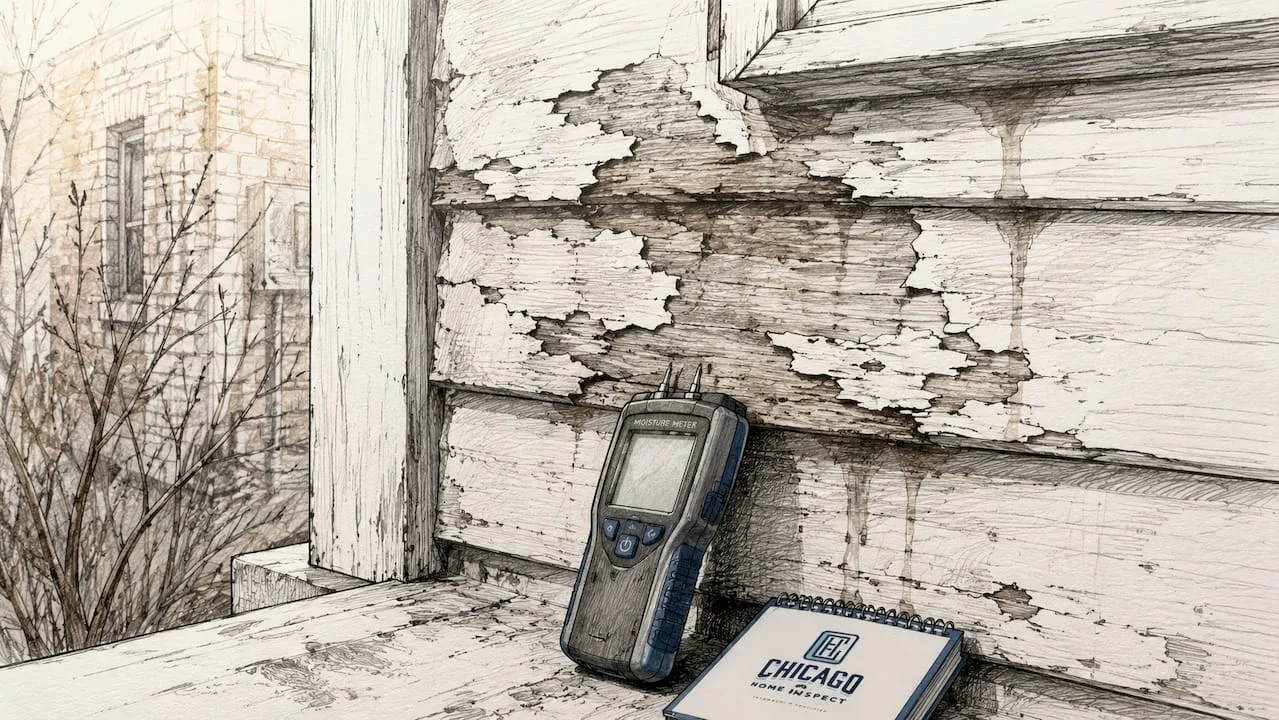
Chicago’s climate adds a specific mechanism called vapor drive. In cold climates, interior moisture pushes outward through walls and into the exterior paint film. This happens even when there is no rain or direct water contact. Rigid or overly thick paint films trap that vapor and fail from the inside out. This is why Chicago homes can show peeling paint on a perfectly dry wall in february.
We use moisture meters during every exterior inspection to find hidden water problems. Proactive moisture testing uncovers damage concealed by fresh paint and new siding. A moisture reading above acceptable thresholds in a wall cavity tells us the paint failure is a symptom, not the root problem.
The most common moisture sources we find on Chicago homes:
- Gutters and downspouts: Clogged or misaligned gutters overflow and saturate siding at the roofline.
- Flashing failures: Improperly installed or corroded flashing at windows, doors, and roof transitions allows water to run behind siding.
- Missing caulk: Open joints at trim and penetrations act as direct water entry points.
- Grade and drainage: Soil graded toward the foundation keeps the base of siding wet for extended periods.
- Condensation: Interior humidity condenses inside wall cavities and drives outward in cold weather.
Addressing the moisture source before repainting is the only repair that lasts. Painting over a wet or damaged substrate guarantees the same failure within one to two seasons.
Why does poor surface preparation cause so many paint failures?
Surface preparation is the single most important factor in paint longevity. Industry standards require surfaces to be clean, sound, and dry before any paint is applied. Skipping or rushing these steps produces failures that look like bad paint but are entirely the contractor’s fault.
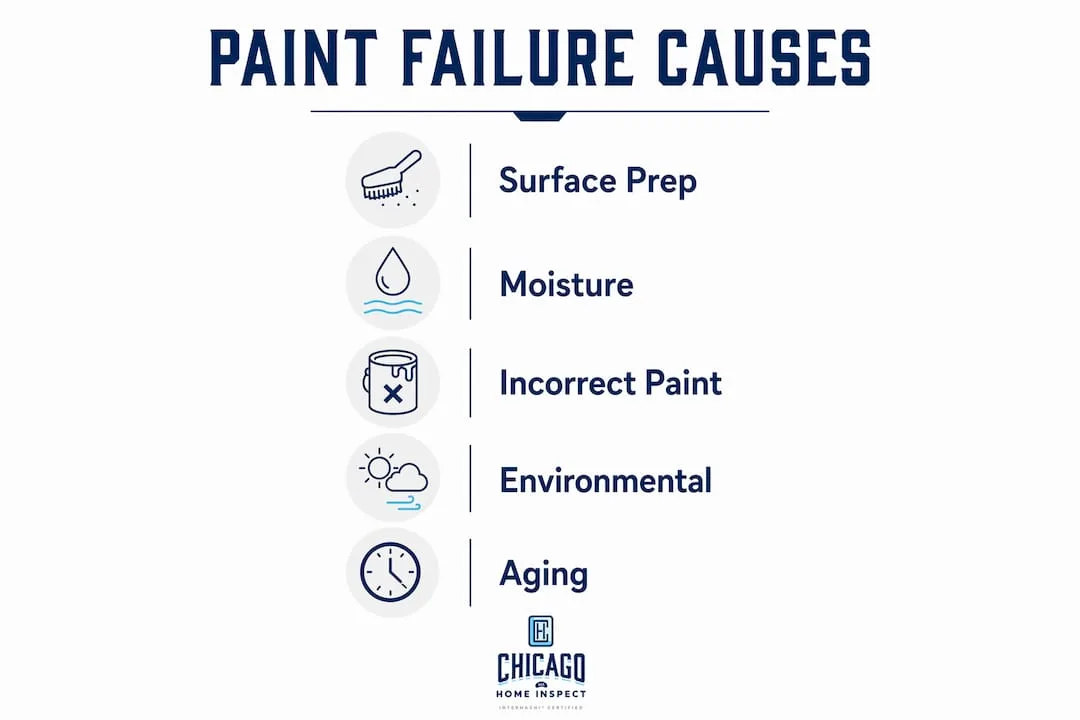
The required prep sequence is cleaning, scraping all loose material, sanding edges smooth, priming bare wood, and caulking all joints. Each step builds on the last. A coat of paint applied over dirty, chalky, or wet siding will peel within one to two years regardless of paint brand or price.
Low-cost paint jobs that skip key prep steps void manufacturer warranties and lead to early failure, especially in moist climates like Chicago’s. The contractor who wins the job with the lowest bid often wins by cutting prep time. That savings transfers directly into a maintenance problem for the homeowner.
Signs of poor prep that we document during inspections include:
- Paint peeling in sheets rather than chips, which shows adhesion never formed properly.
- Visible brush marks or lap lines from painting over dirty or wet surfaces.
- Caulk applied over paint rather than to bare substrate, which fails quickly.
- Primer missing on bare wood, leaving the topcoat without a bonded base.
Pro Tip: Ask any contractor what cleaning method they use. Pressure washing at 3,000–4,000 psi on older wood siding forces water into the framing and causes structural damage. Soft washing under 1,500 psi is the correct method for historic or delicate surfaces.
What special considerations apply to pre-1978 homes?
Homes built before 1978 are legally assumed to contain lead-based paint under federal law. This applies to a large share of Chicago’s housing stock, including graystones in Lincoln Park, bungalows on the Northwest Side, and frame homes throughout Lake and McHenry Counties. Deteriorated paint in these homes is not just a maintenance issue. It is a potential health hazard.
| Condition | Implication | Required Action |
|---|---|---|
| Peeling or flaking paint (pre-1978 home) | Potential lead hazard | Disclose to buyers; certified remediation required |
| Chalking or cracking paint (pre-1978 home) | Deteriorated lead paint risk | Document; recommend certified lead inspection |
| Disturbed painted surface over 20 sq ft | EPA RRP Rule applies | Contractor must be EPA RRP certified |
| Intact, well-adhered paint | Lower immediate risk | Monitor; do not sand or disturb |
The EPA Renovation, Repair, and Painting Rule applies to disturbed painted surfaces larger than 20 square feet in pre-1978 homes. Any contractor doing exterior work on these homes must be EPA RRP certified. Hiring an uncertified contractor for scraping or sanding work on an older Chicago home creates both a health risk and a legal liability.
Inspectors document deteriorated paint areas but do not test for lead. Lead testing and risk assessments require a certified lead inspector or risk assessor. If we flag deteriorated paint on a pre-1978 home, the next step is a certified lead evaluation before any repair work begins.
How do inspectors detect fresh paint used to hide damage?
Fresh exterior paint on a home for sale deserves extra scrutiny. Repainting is a common tactic to mask damage temporarily, and buyers who skip a thorough inspection often discover the real condition after closing. The paint looks clean. The problems underneath do not go away.
Moisture meters detect dampness underneath new paint and siding. A freshly painted wall with elevated moisture readings tells us the paint was applied over a wet or damaged substrate. That is a finding, not a cosmetic observation.
Other signs we look for when fresh paint raises concern:
- Texture inconsistencies: Bubbling or raised areas beneath new paint show trapped moisture or a failing substrate.
- Isolated repainting: One section of siding repainted while the rest is original often marks a repair that covered a leak or rot.
- Caulk over paint: Fresh caulk applied on top of existing paint rather than to bare substrate is a quick cosmetic fix, not a proper repair.
- Adjacent material condition: Trim, soffits, and fascia boards adjacent to freshly painted siding often show the real story through staining, soft wood, or rust streaks.
Pro Tip: Check the interior walls directly behind any freshly painted exterior section. Water stains, efflorescence, or soft drywall on the inside confirm that the exterior paint was covering an active leak.
What we see in Chicago inspections that most buyers miss
After inspecting homes across Lake, McHenry, DuPage, and northern Cook Counties, we have developed a clear picture of how exterior paint problems play out in this market. The most consistent finding is not the paint itself. It is the moisture source that nobody addressed before the last paint job.
Chicago’s older housing stock compounds this. A bungalow built in the 1920s has had multiple paint layers applied over decades. Each layer that went on without proper prep added to a system that was already failing. By the time we arrive, the paint is not the problem. The rotted window sill beneath it is.
We also see buyers underestimate fresh paint as a red flag. A house that looks freshly painted in april or may, right before listing season, warrants a closer look at every seam, joint, and adjacent material. That timing is not always suspicious, but it is always worth verifying. Our moisture meter readings have revealed active leaks behind paint that looked perfect from the curb.
The advice we give every buyer is straightforward: do not let a clean paint job substitute for a thorough inspection. Paint is the least expensive part of a home’s exterior. What it covers can cost tens of thousands of dollars to repair.
— Chicago Home Inspect LLC
How Chicago Home Inspect LLC documents exterior paint conditions
Chicago Home Inspect LLC performs detailed exterior inspections that include paint condition assessment, moisture meter testing, and photo documentation of every red flag we find. Our reports give buyers and homeowners a clear record of paint quality concerns, moisture readings, and areas that need follow-up before any repair or purchase decision. You can review exterior inspection photo examples to see how we document paint defects, deterioration patterns, and concealment concerns in real Chicago homes. We serve Lake, McHenry, DuPage, and northern Cook Counties, with weekend appointments available. If you are buying or maintaining a home and want a thorough look at what the paint is hiding, schedule your inspection with us.
FAQ
What causes exterior paint to peel on Chicago homes?
Leaky gutters, failed flashing, and missing caulk are the most common moisture entry points.
Should I be concerned about fresh paint on a home I am buying?
Yes. Fresh paint is a common tactic to temporarily mask water stains, rot, or leaks. A licensed inspector using a moisture meter can detect hidden dampness beneath new coatings before you close.
Does a home inspector test for lead paint?
No. Inspectors document deteriorated paint in pre-1978 homes as a potential lead hazard, but lead testing requires a certified lead inspector or risk assessor. If your inspector flags deteriorated paint on an older home, schedule a certified lead evaluation before any repair work begins.
How do I know if poor surface prep caused my paint to fail?
Paint that peels in sheets within one to two years of application almost always points to skipped or rushed surface preparation. Proper prep requires cleaning, scraping, sanding, priming, and caulking before any topcoat is applied.
What areas of a home’s exterior show paint problems first?
Peeling paint appears first at the bottom of siding, window trim, and rooflines because these areas collect and hold moisture the longest. North-facing walls also deteriorate faster due to slower drying times and less sun exposure.