
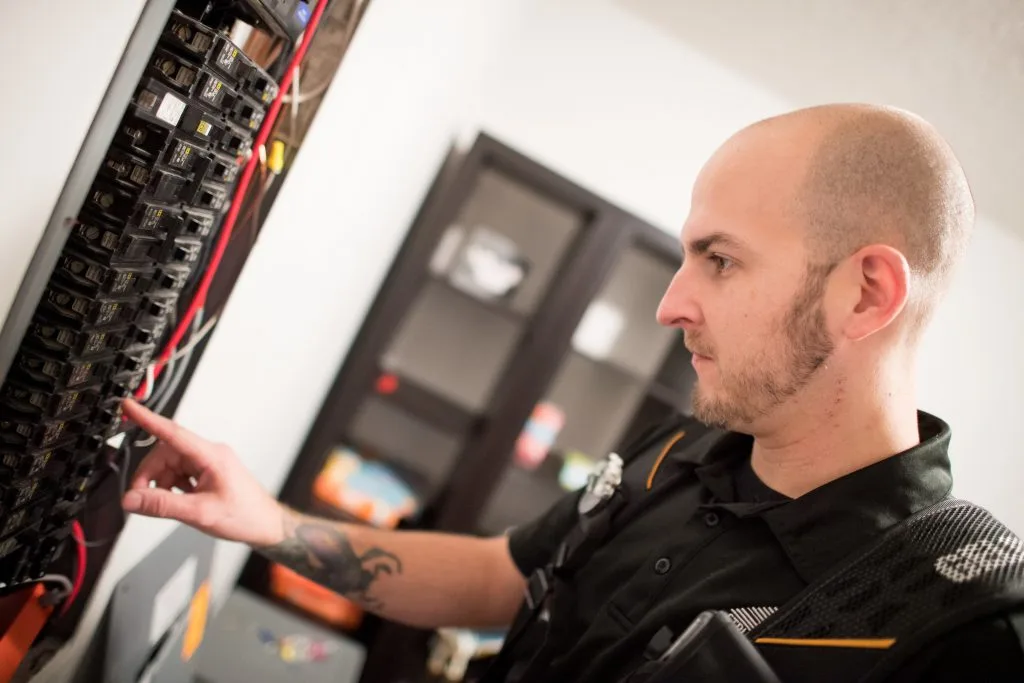
A toilet leaking through the ceiling of a Chicago condo usually starts as something you cannot see. The water comes from the bathroom in the unit above, soaks into the ceiling of the unit below, and stays hidden until it stains, bubbles or drips. With a thermal camera and a moisture meter we find it before that stage. In the condo bathrooms below, the ceiling directly above the toilet looked normal but read wet, and the most likely source was the bathroom upstairs.
If you are buying the unit below, the source is not in a space you control, and the seller cannot fix it alone. This post shows what we found, why a dry-looking ceiling can be wet, and what to ask for in writing before attorney review closes.
Table of Contents
- What we found in three Chicago condo bathrooms
- How does a thermal camera find a leak in the ceiling?
- Why does a toilet leak through the ceiling below it?
- What a condo inspection covers, and what it cannot
- Why a small wet spot matters
- Buying a condo with a leak from the unit above: what to do
- How we help
- Sources
- FAQ
What we found in three Chicago condo bathrooms
All three findings sit in the same spot: the bathroom ceiling directly above the toilet, in a unit with another unit stacked on top of it. None of the three ceilings had a visible stain.
February 2026, high-rise condo unit. Elevated moisture on the ceiling above the toilet in the main bathroom. The thermal image showed a cool patch on the ceiling, and the meter confirmed it.
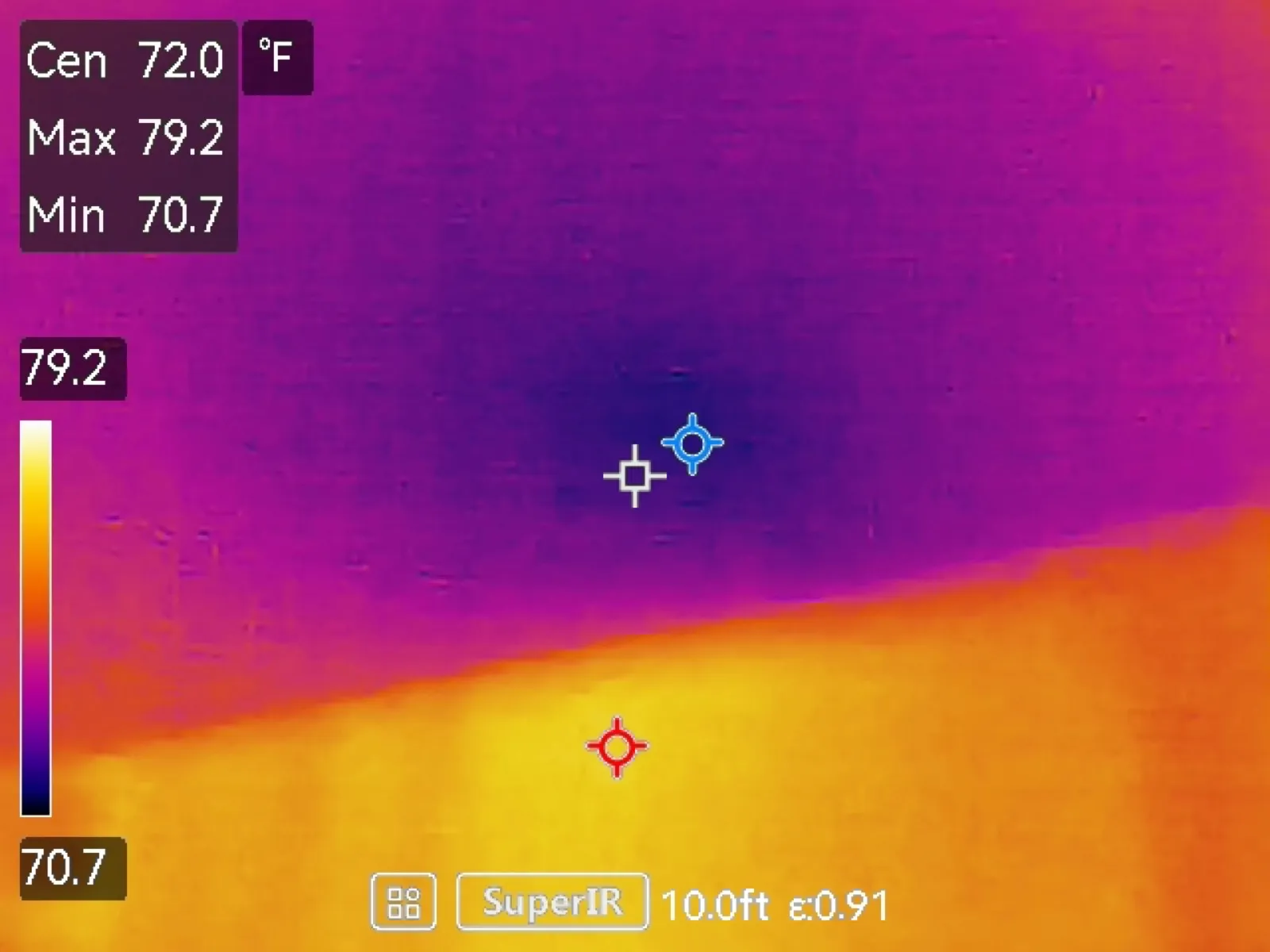
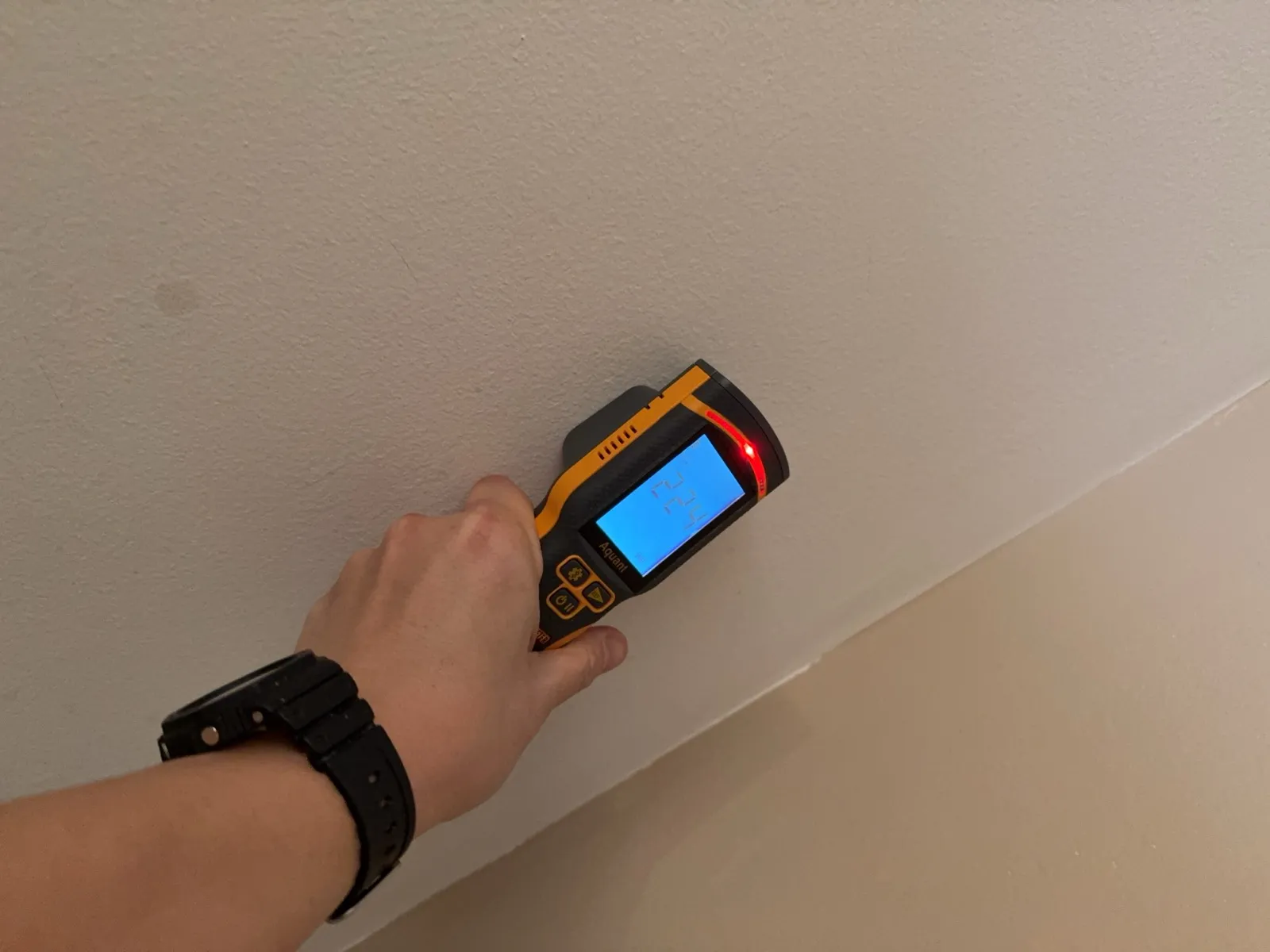
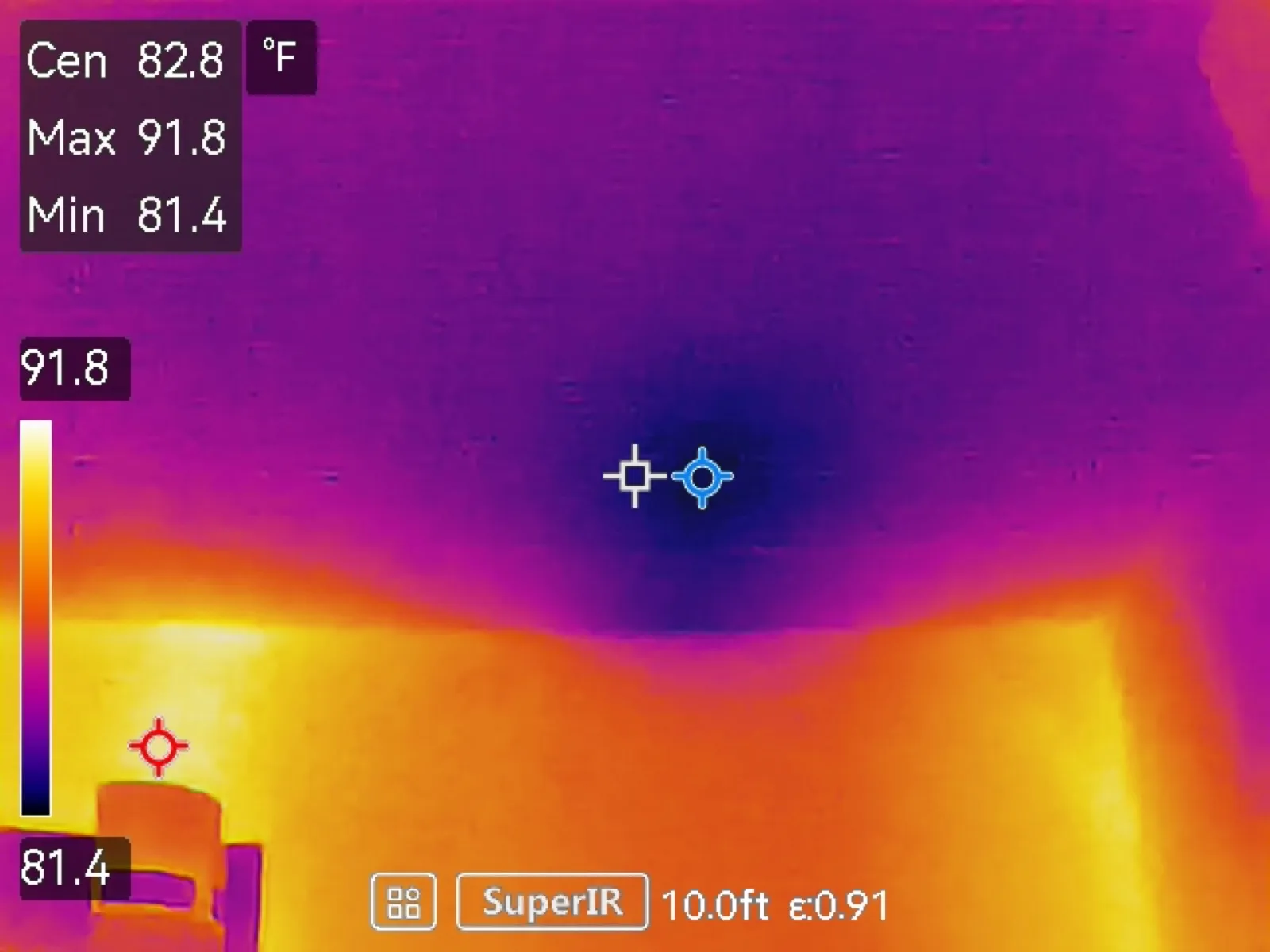
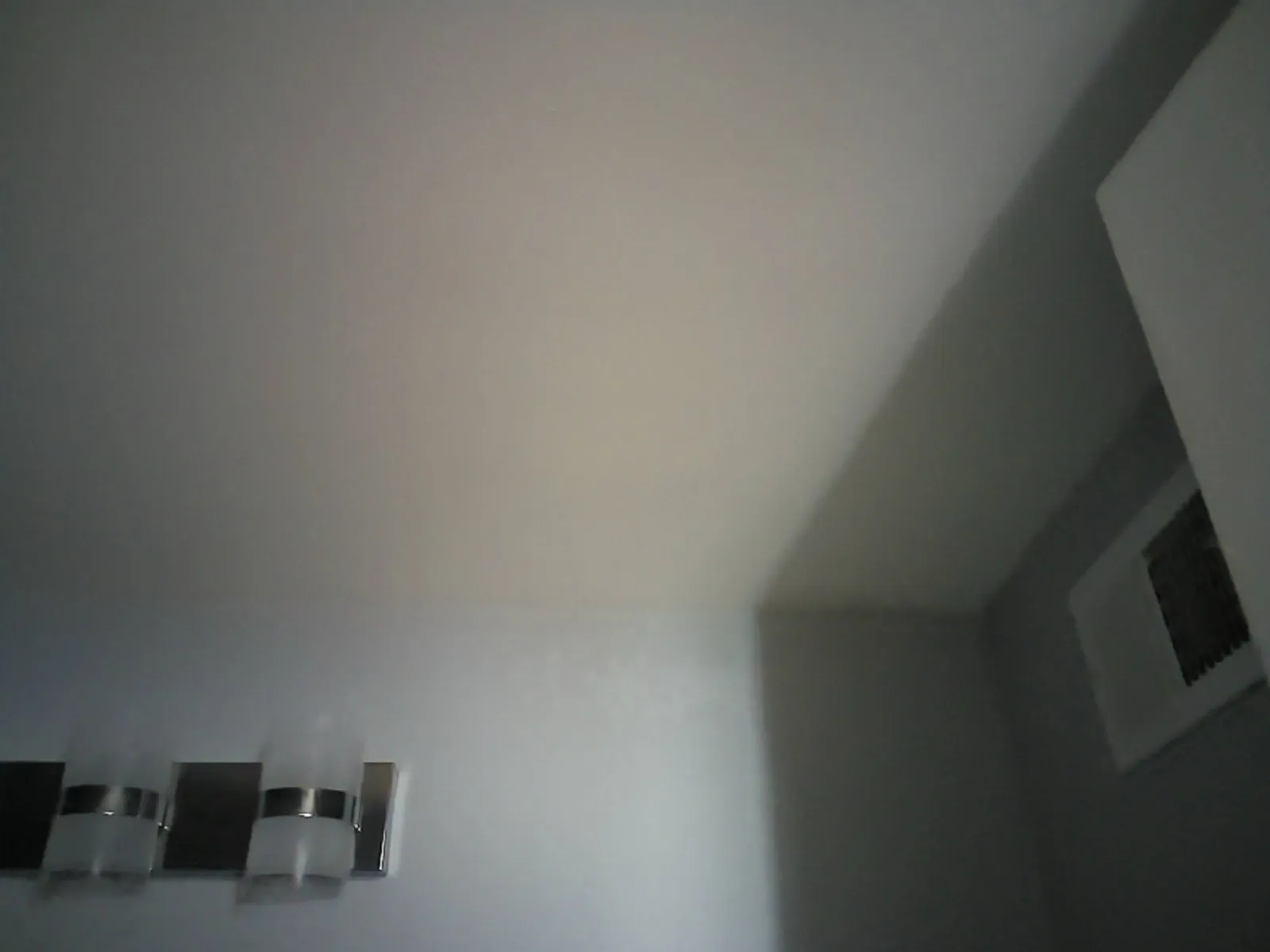
June 2026, condo unit. Our report read: “Elevated moisture readings were detected with a moisture meter at the ceiling above the toilet. In a multi-unit building this may indicate a leak originating from the unit above, such as a fixture or supply or drain line serving the upstairs bathroom, which can lead to concealed damage and mold growth if not addressed.”
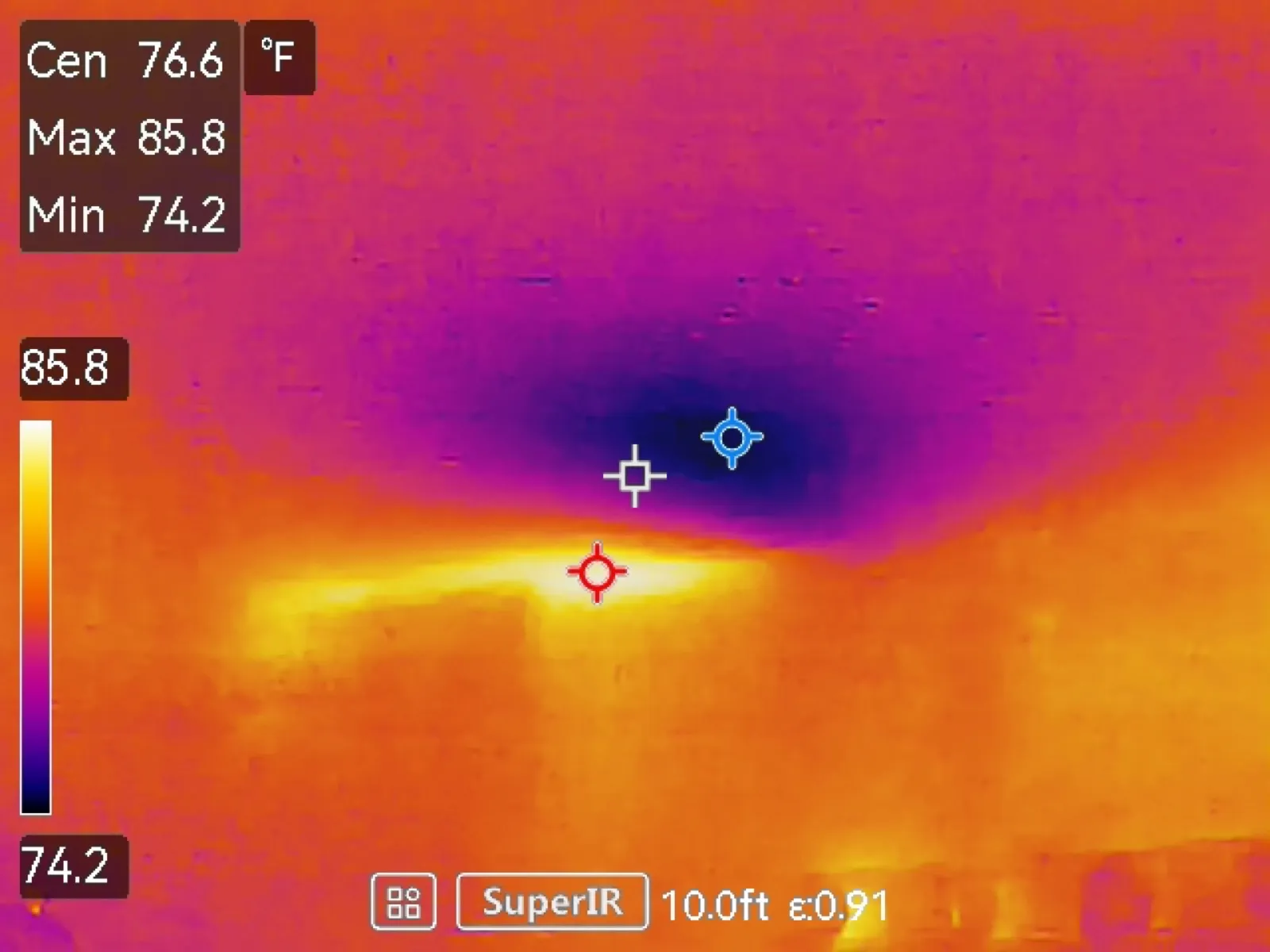
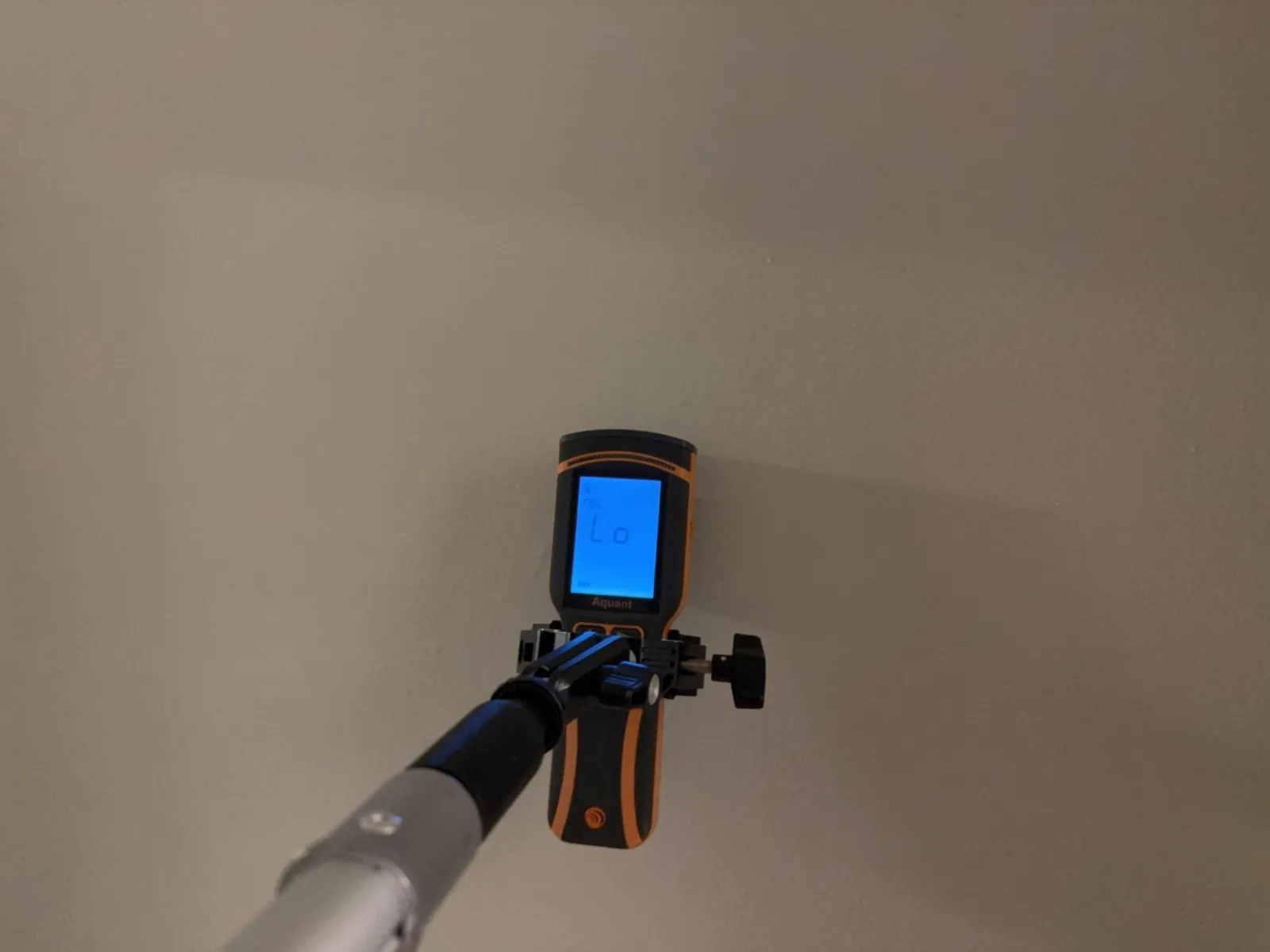
October 2026, condo unit in a 1966 building. Slightly elevated readings at the ceiling above the toilet. Here we took two readings: one at the cool spot and one on dry ceiling a short distance away. The difference between them is the finding.
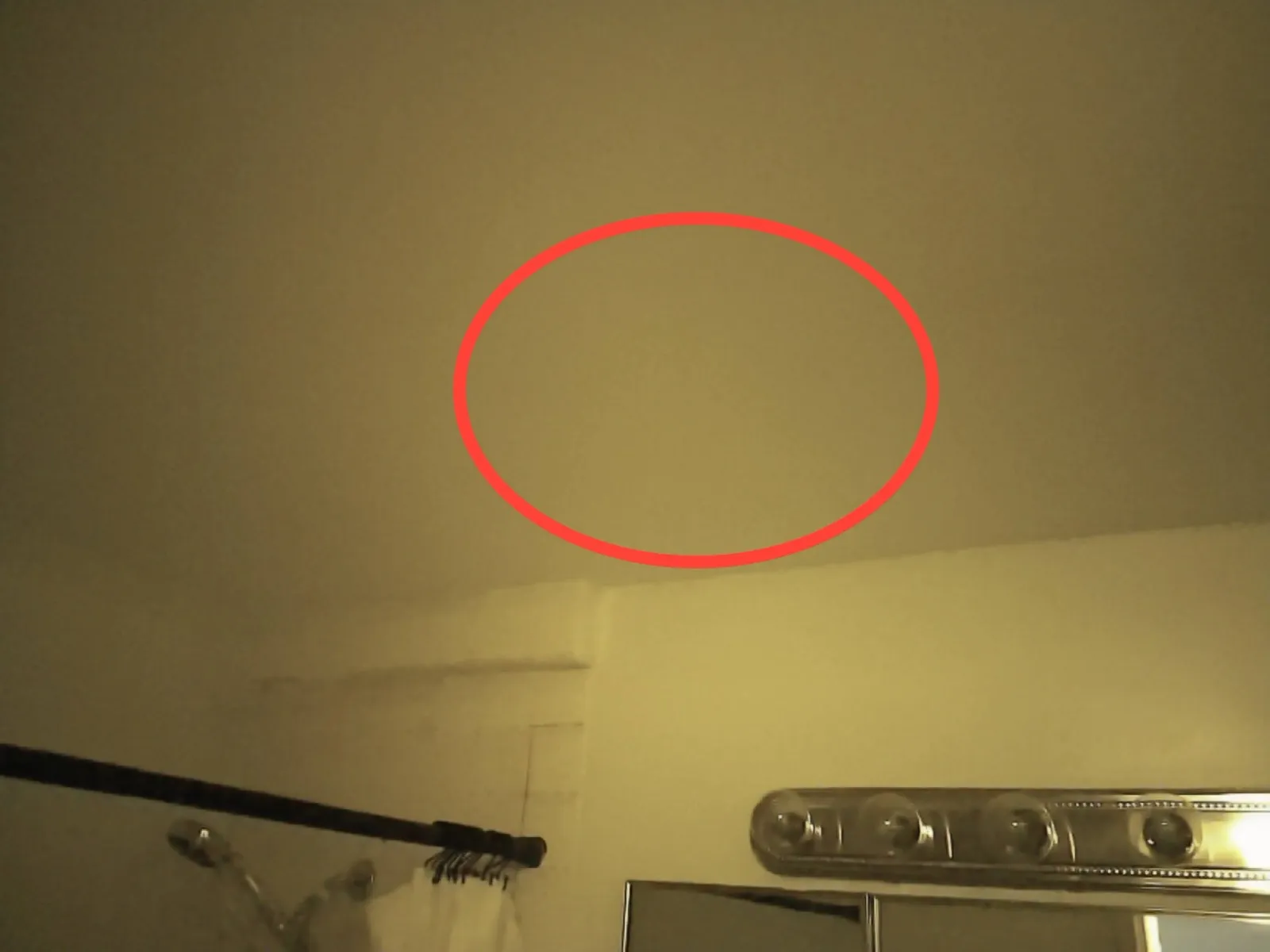
A fourth condo that year showed what a leak from upstairs leaves behind. The plaster near the crown molding had failed, and we were told it came from a prior leak in the unit above that had been repaired. The meter still read elevated at the damaged area, so it may not have been fully dry, and our report recommended that “a qualified contractor confirm the source has been resolved.” “Repaired” upstairs does not always mean dry downstairs.
More examples of what we photograph inside units are in our interior inspection photo gallery.
How does a thermal camera find a leak in the ceiling?
A thermal camera does not see water. It sees surface temperature, and wet drywall or plaster is usually cooler than the dry material around it because the water is evaporating. A thermographer writing for IR/INFO put it this way: “Wet or moist areas and objects usually have a different temperature than dry areas due to evaporative cooling, increased conductance or thermal capacitance.”
That is why every cool spot gets a second test. A cool patch can also come from missing insulation, an air leak or a duct, so we put a moisture meter on it and compare the reading with nearby ceiling. In all three bathrooms above, the cool spot and the elevated reading were in the same place. For more on what the camera can and cannot do, see our post on thermal imaging in home inspections.
The method has a limit worth knowing. A leak that only runs now and then can be dry on inspection day, and the same IR/INFO article warns that “moist areas can equalize in temperature.” A clean scan is good news, not a guarantee.
Why does a toilet leak through the ceiling below it?
The bathroom in most condo buildings is stacked: your bathroom ceiling is the underside of the floor under the upstairs toilet. Water that escapes at the upstairs toilet, its supply line, or the drain below it has one place to go, and that is down into the ceiling of the unit below.
From below we cannot tell which of those it is. Our reports say “a fixture or supply or drain line serving the upstairs bathroom” on purpose. A drain-side leak may only release water when the toilet is flushed, which makes it intermittent. A plumber has to look from the unit above, or open the ceiling below, to name the source.
What a condo inspection covers, and what it cannot
Our condo reports state that the inspection is limited to the unit’s accessible interior and the components that serve it. Common areas, shared systems and other owners’ units are outside it. We cannot walk into the unit above to find the leak, and we do not open the ceiling to look.
Illinois rules define a home inspection as a visual examination of readily accessible systems, and the interior standard requires the inspector to “report visible signs of water and moisture penetration.” A wet ceiling with no stain is not a visible sign. The thermal camera and moisture meter are how we find it anyway, and they are one reason our Chicago condo inspection looks at the ceilings below upstairs bathrooms on purpose.
| Step | Who does it | Where |
|---|---|---|
| Find the wet area and confirm it with a meter | Home inspector | Your unit |
| Get access to the unit above | Association or management | Upstairs unit |
| Find and repair the leak source | Licensed plumber | Upstairs bathroom |
| Dry and repair the damaged ceiling | Qualified contractor | Your unit |
| Confirm the ceiling reads dry afterwards | Inspector, on a return visit | Your unit |
Why a small wet spot matters
A slightly elevated reading is not an emergency, but it is not cosmetic either. The EPA says “it is important to dry water-damaged areas and items within 24-48 hours to prevent mold growth,” and that if you clean up mold without fixing the water problem, “most likely, the mold problem will come back.” A leak upstairs that keeps running will keep wetting the same ceiling.
That is why our recommendation is always the source first and the ceiling second. Patching and painting a ceiling while the toilet upstairs is still leaking just hides the next round of damage.
Buying a condo with a leak from the unit above: what to do
Treat it like any other inspection finding, with one difference: the repair has to happen in someone else’s unit, so you need the association involved before you close. Do these inside your inspection and attorney review window. Our guide to backing out or renegotiating after the inspection covers how that window works.
- Ask the seller about past leaks, in writing. The Illinois disclosure form applies to condo units and asks whether the seller is aware of “leaks or material defects in the roof, ceilings, or chimney.” Ask your attorney to request any leak history, repair invoices and correspondence with the association or the upstairs owner. Ask directly, not only through the form. The form notes that it does “not include previous problems, if any, that the seller reasonably believes have been corrected,” and that it does not cover the common elements of a condominium.
- Ask for the source to be found, not just the ceiling fixed. The Condominium Property Act gives the board access to each unit for repairs to the common elements and for emergency repairs needed to prevent damage to other units. Ask the seller to work through management to have a plumber check the bathroom above, and to give you the plumber’s written finding.
- Request the association’s insurance statement. Under Section 22.1 the seller must provide, on request, the declaration and a statement of the insurance the association provides for unit owners. Our 22.1 disclosure checklist for condo buyers covers the rest of that packet. The association has 10 business days to answer a written request, so ask on day one.
- Make the source repair a condition, not something to wait for. Getting a plumber into the unit above can take longer than your attorney review window. Put it in the repair request instead: the source found and repaired before closing, with the plumber’s written finding and a dry reading at the ceiling. A credit can cover the ceiling in your unit; it cannot fix a toilet in a unit you are not buying.
- Verify before closing. If the work is done before closing, a moisture reading at the same spot is the simplest proof. We offer a repair verification visit for exactly this.
Who pays for a leak from the upstairs condo?
It depends on the declaration and the insurance, which is why your attorney should read both. The Illinois Condominium Property Act sets a few rules. The association’s property policy must cover the units, including the bare walls, floors and ceilings unless the board decides otherwise. It does not have to cover improvements and betterments that owners added, such as decorating and finishes. When a claim is made, the board can pay the deductible as a common expense, charge it to the owner whose unit the damage came from after notice and a hearing, or have the owners of the affected units pay it.
The Act also lets the board, through the declaration, bylaws or a rule, require each owner to carry insurance for damage to another unit originating from their unit, regardless of negligence, including the damaged owner’s deductible. Ask whether your building has that requirement; if it does, the upstairs owner’s policy should cover your deductible and the finishes the association policy does not.
For a buyer, that means a leak from upstairs could end up as a deductible charged to you after closing if nothing is settled before. Get the answer in writing while you still have leverage.
How we help
We inspect condo units across Chicago and the north, northwest and west suburbs. On a condo inspection, the bathroom ceiling under an upstairs unit is one of the places we scan with the thermal camera and check with the moisture meter. The inspector who scans the ceiling is the one who writes the report, which arrives the next business day with the thermal image and meter photos attached to the finding. If a wet ceiling has already grown something, we also do mold testing in-house.
Sources
- Illinois Condominium Property Act, 765 ILCS 605: Section 12 (insurance, coverage of bare walls, floors and ceilings, deductibles, mandatory unit owner coverage), Section 18.4(j) (board access to units), Section 22.1 (resale disclosures).
- Illinois Residential Real Property Disclosure Act, 765 ILCS 77: Section 5 (condo units are covered) and Section 35 (disclosure form, item 6).
- Illinois home inspection standards of practice, 68 Ill. Adm. Code 1410.200.
- EPA, A Brief Guide to Mold, Moisture and Your Home.
- Protimeter Aquant moisture meter manual: dry, at risk and wet indicator ranges.
- Peter Hopkins, “Demystifying the Art and Science of Finding Moisture in Buildings Using Thermal Imaging,” IR/INFO, 2011.
FAQ
Why does the ceiling only leak when the upstairs toilet is flushed?
On a toilet that is working normally, water only runs through the drain connection during a flush. If the leak is on the drain side, such as a failed wax ring, it releases water in bursts, which is why the ceiling can be wet one day and dry the next. A plumber working from the upstairs bathroom can tell which it is.
The upstairs toilet overflowed and leaked through the ceiling. Is the ceiling ruined?
Not necessarily. The EPA says wet materials dried within 24 to 48 hours usually do not grow mold. The risk is a ceiling that stays damp because nobody dried it, or a slower leak that nobody noticed. A moisture reading after drying tells you whether it is actually dry.
Does a home inspection always include thermal imaging?
Not by rule. The Illinois standards require inspectors to report visible signs of water. Thermal imaging goes beyond that. Ours includes it at no additional charge. Whoever you hire, ask whether they use a thermal camera and how they confirm what it shows.