Radon testing belongs in almost every Chicago-area purchase, a sewer scope earns its cost on any home built before 1980 or sitting near mature trees, and mold testing only pays off when there’s actual evidence of moisture. That’s the short answer. Bundle all three when the property history points that way; skip mold if there’s no sign of a problem.
The math favors testing in almost every case. Radon and sewer add-ons each run a few hundred dollars, while remediation and repair costs for the problems they catch can run into the thousands. That gap is the whole argument for bundling.
- Radon testing: near-mandatory for basement and slab homes in Climate Zone 5
- Sewer scope: highest return on investment for pre-1980 homes or lots with large trees
- Mold testing: worth adding only with visible growth, musty odor, or a known water event
One in 15 U.S. homes has elevated radon, and because levels vary house to house, testing is the only way to know where a specific property stands.
Table of Contents
- Bundling Radon Mold and Sewer Add-Ons: What Radon Testing Actually Involves
- When Does Mold Testing Actually Pay Off?
- Why a Sewer Scope Often Delivers the Best Return
- How Do You Decide Which Add-Ons to Bundle?
- Sources
Bundling Radon Mold and Sewer Add-Ons: What Radon Testing Actually Involves
Radon testing measures a colorless, odorless gas that seeps up through soil and foundation gaps. It’s a simple process on paper, but the details matter more than most buyers assume.
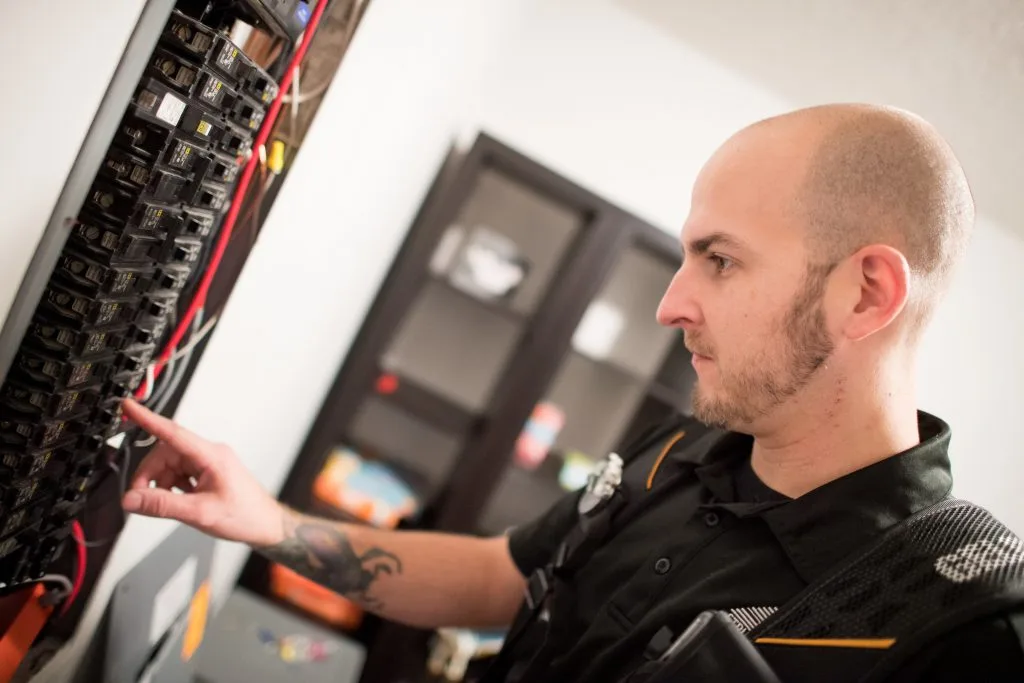
Inspectors use either continuous radon monitors or short-term charcoal kits, placed on the lowest livable level of the home, typically over a several-day testing window. A continuous monitor gives a more reliable readout because it logs hourly fluctuations and flags tampering (an open window, a slammed door), while a short-term kit is cheaper but more sensitive to weather and household activity during the test period.
The EPA recommends taking action at 4 pCi/L or higher, and mitigation systems, typically a vent pipe and fan drawing gas from beneath the slab, reduce indoor radon levels by up to 99% once installed. Radon is the second leading cause of lung cancer after smoking, which is why the EPA treats testing as standard practice for every home, not just older ones.
Pro Tip: Set the radon monitor up first thing during the inspection visit. It needs almost no hands-on time to place, and starting it early means the 48 hour window overlaps with the rest of your due diligence instead of adding a separate trip.
Costs run a few hundred dollars for the test itself, and mitigation, if needed, typically adds a few thousand dollars for system installation. That’s a fraction of what a buyer would spend not knowing at all. For Chicago basements and slab-on-grade homes, where freeze-thaw cycles open small foundation gaps over the decades, we treat radon testing as close to automatic:
- Homes with any finished or semi-finished basement space
- Slab-on-grade construction, common in many suburban subdivisions
- Any property where the seller hasn’t tested in the past two years
When results come back above 4 pCi/L, buyers have real leverage: request the seller install mitigation before closing, or negotiate a credit that covers the installation cost. Either path is more straightforward than discovering elevated radon after move-in.
When Does Mold Testing Actually Pay Off?
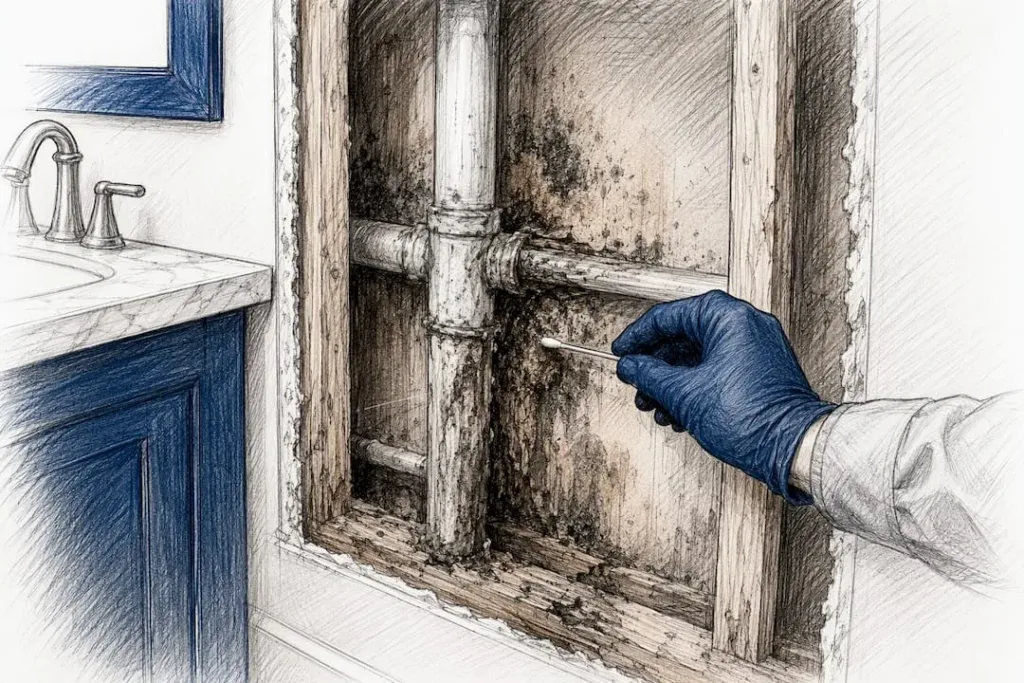
Mold testing is the one add-on we don’t recommend by default, and that’s by design. A visual mold inspection, walking the property and noting discoloration, staining, or musty smells, is different from targeted sampling, which involves air or surface samples sent to a lab for species identification. Lab turnaround typically runs a few business days.
The decision usually comes down to whether one of these triggers is present:
- Visible mold growth on walls, ceilings, or in crawl spaces
- A persistent musty odor without an obvious source
- A documented past water event, flooding, a burst pipe, a roof leak
- Elevated moisture readings flagged during the standard inspection
- A buyer or household member with respiratory sensitivities or allergies
Skip the add-on if none of these apply. Adding mold testing to a dry, odor-free home with no history of water intrusion is money spent on a low-probability outcome.
Cost ranges vary by scope, typically $200 to $800 depending on the number of samples and lab fees, and remediation costs shift dramatically based on what’s found. A localized patch behind a bathroom vanity is a different animal than whole-room remediation after a slow, unnoticed leak. Our guide to spotting water damage early walks through the moisture signs that should trigger this conversation before you even book the test. A professional mold inspection also gives buyers a documented baseline, useful if a dispute comes up later.
Once results come back, the negotiation move is straightforward: get a remediation scope and cost estimate from a qualified contractor, then ask the seller to complete the work before closing or provide a credit equal to the estimate.
Why a Sewer Scope Often Delivers the Best Return
A sewer camera inspection sends a small video camera down the main lateral line, the pipe connecting the house to the municipal sewer, and it’s the add-on most likely to catch a problem the rest of the inspection can’t see at all. Roots, bellies (sagging low spots that trap waste), hairline cracks, and material identification (clay, cast iron, Orangeburg) all show up clearly on camera footage.
Certain properties should treat this as close to mandatory:
- Homes built before roughly 1980, when clay and Orangeburg pipe were common
- Lots with mature trees within 20 to 30 feet of the lateral line
- Recurring slow drains or gurgling toilets the seller can’t fully explain
- Historic neighborhoods, graystones in Lincoln Park, two-flats in Logan Square, and bungalows on the Northwest Side, where original clay tile is still common underground
Repair costs vary widely depending on what the camera finds. A full dig-and-replace job disturbs landscaping, driveways, or sidewalks and can run well into five figures once restoration is included. Trenchless methods, cured-in-place pipe (CIPP) lining or pipe bursting, often avoid most of that surface disruption and can be more cost-effective than a full replacement in many older-home cases, though the final number still depends on pipe length, access points, and local permit fees.
| Sewer condition found | Typical repair approach | Disruption level |
|---|---|---|
| Minor root intrusion | Hydro-jetting or spot repair | Low |
| Cracked or offset joints | CIPP lining | Low to moderate |
| Collapsed or severely bellied section | Pipe bursting or dig-and-replace | Moderate to high |
Test costs run a couple hundred dollars, and InspectorData’s cost data consistently ranks sewer scopes as the highest ROI specialty test for pre-1980 homes. A dated, recorded video showing roots or a bellied section is also some of the strongest negotiation evidence a buyer can bring to the table, sellers facing a documented sewer defect on video tend to move quickly toward remediation or a credit. Our main sewer line inspection page covers what the camera process looks like on-site.
How Do You Decide Which Add-Ons to Bundle?
Run through this checklist before booking anything:
- Property age. Pre-1980 construction raises the case for a sewer scope significantly.
- Lot features. Mature trees near the lateral line, poor drainage, or a low-lying yard push toward bundling.
- Moisture history. Any documented flooding, leaks, or musty odors make mold testing worth adding.
- Occupant health. Household members with asthma or allergies tilt the decision toward mold testing even without obvious visual signs.
- Lender requirements. Some loan programs require radon testing in certain regions regardless of buyer preference.
Three quick scenarios show how this plays out. A new-construction home in a Climate Zone 5 subdivision needs radon testing (new construction isn’t automatically radon-safe) but rarely needs mold or sewer scopes. A 1950s bungalow on the Northwest Side with original clay sewer tile and a partially finished basement is a strong candidate for all three. A two-flat in Logan Square with two mature parkway trees and no visible moisture issues probably needs radon and a sewer scope, but not mold testing.
Scheduling is simpler than most buyers expect. Specialty add-ons run short: sewer scopes take 15 to 45 minutes, radon setup takes about 15 minutes, and mold sampling runs 1 to 2 hours. Booking them the same day as the standard inspection avoids extra trip fees and keeps your pre-purchase workflow on schedule during a tight closing window.
| Approach | Best for | Trade-off |
|---|---|---|
| Bundle all three same visit | Older homes with multiple risk factors | Slightly higher upfront cost |
| Radon + sewer only | Most standard resale purchases | Skips mold coverage without evidence |
| Radon only | New construction, no moisture or sewer risk signs | Narrowest coverage |
Our take on why buyers overthink this decision
Buyers tend to treat these add-ons as a single bundled decision, all or nothing, when the smarter approach treats each test on its own merits. Radon is close to a fixed cost of doing business in Climate Zone 5; the pipe underground either has roots in it or it doesn’t, and a sewer scope tells you which before you own the problem. Mold is the one place we see buyers overspend out of anxiety rather than evidence. If there’s no odor, no staining, and no history of water intrusion, a mold test is unlikely to tell you anything the rest of the inspection hasn’t already ruled out. The buyers who get the most value out of bundling are the ones who match the test to the property’s actual risk factors, not the ones who buy every add-on out of general unease about an old house.
Booking bundled inspections in Chicago and the suburbs
We’re licensed and insured, InterNACHI certified, and BBB accredited, serving Lake, McHenry, DuPage, and northern Cook Counties, including weekend appointments for buyers working against a closing deadline. Bundling radon, mold, and sewer add-ons with your standard inspection means one visit, one scheduling window, and no separate trip fees stacking up.
We routinely see combined moisture and soil-gas pathways in older bungalows across the Northwest Side, which is exactly the kind of property where all three tests earn their cost. Review our sample inspection report to see what a findings report looks like, check our radon testing services or sewer line inspection details, and schedule your inspection to get add-ons booked alongside your standard visit.
This article is general information, not a substitute for advice from a qualified doctor. Consult a qualified healthcare professional about your own circumstances before acting on anything here.
Sources
- A Citizen’s Guide to Radon (EPA)
- Home Inspection Add-On Services: Radon, Mold, Sewer Scope & More (InspectorData)
- Sewer repair for homes built before 1970 (NuFlow)