
Lake Zurich grew outward from a lake, and that history is still visible in the housing. There are older homes close to the water — some of which began as seasonal cottages and were converted for year-round use — alongside subdivisions built from the 1970s onward and unincorporated parcels on private wells and septic. Those three produce three quite different inspections.
Book your Lake Zurich home inspection — pick a time online in about two minutes. Weekend inspections available.
We are a licensed Illinois home inspection entity (License 451.001520). Every inspection includes thermal imaging at no additional charge, and your full photo report arrives within one business day.
Converted cottages near the water
This is the distinctive Lake Zurich inspection. A house that began as a summer place and became a year-round home usually got there in stages, and the staging is where the problems are: foundations and crawlspaces never designed to sit under a heated house, supply plumbing running through unheated spaces, heating added piecemeal and sized by guesswork, and additions on footings that may not reach below the frost line.
We look at how the crawlspace is conditioned and vented, whether supply lines are exposed to freezing, how additions were carried structurally, and whether the lowest level has the egress and combustion air it needs now that it is finished and occupied.
Well and septic: settle this before you write the offer
A meaningful share of property around here sits outside municipal water and sewer, on a private well and a septic field. The mailing address does not tell you — plenty of houses with a village address are on private systems. It matters because both are expensive to replace and both need their own specialist.
We inspect the visible plumbing, the pressure tank and what is accessible, and we report what we can see. We do not test well water and we do not inspect septic systems. Book those separately and book them early — their turnaround is frequently slower than an inspection period allows, and a failed septic field is the kind of finding that changes whether you buy at all.
The subdivision stock
The 1970s–90s subdivisions carry the familiar age-cohort profile: polybutylene supply piping with its fitting-failure history, hardboard and composite siding swelling at the bottom course, cedar shakes, failed insulated-glass seals across many windows at once, and original mechanicals at or past design life. Data plates get photographed so you have real ages.
Water and drainage
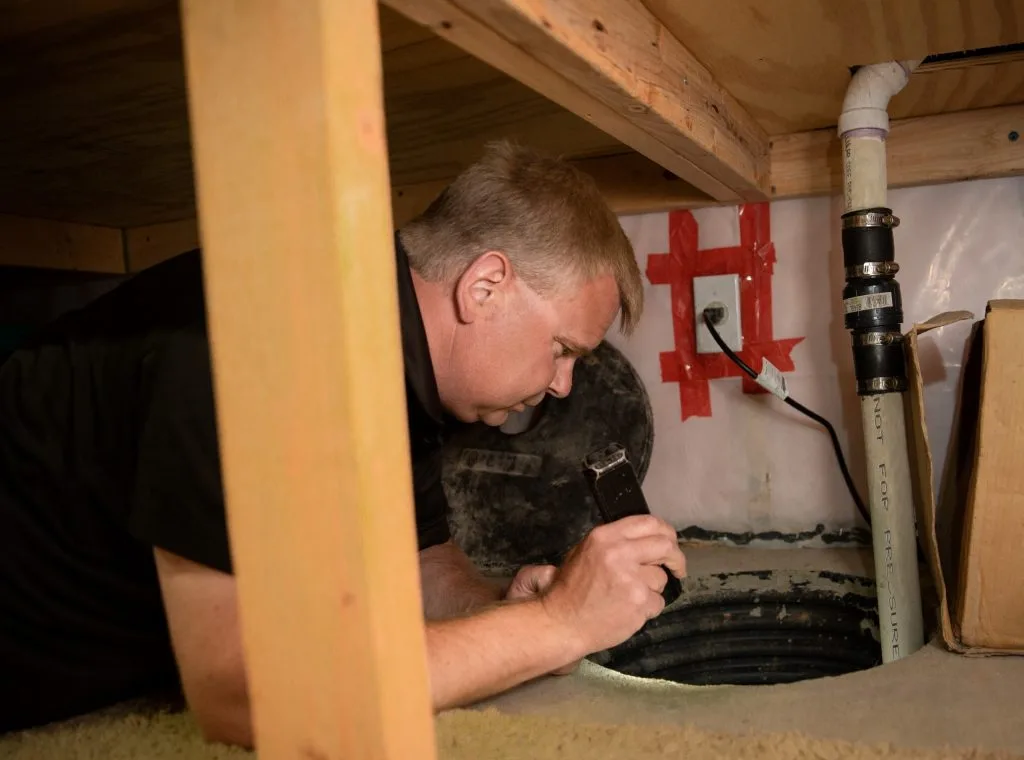
Proximity to water raises the stakes on drainage. We check whether the sump cycles and where it discharges, whether a pump protecting a finished lower level has battery backup, whether grading carries water away from the house or back toward it, and whether downspouts discharge far enough out. On older lake-adjacent property we pay particular attention to crawlspace moisture, which is often the real story rather than the basement.
Radon
Radon is common across northern Illinois — this is glacial till, and elevated readings are ordinary rather than exotic. Illinois requires sellers to disclose what they know but does not require anyone to test, so a blank disclosure means only that nobody has looked. We are IEMA-licensed and test with continuous monitors rather than charcoal kits, which gives you hour-by-hour data instead of one averaged number — the difference matters when a result lands near the 4.0 pCi/L action level and you have to negotiate on it.
Common questions
How can I tell if a house was originally a cottage?
Usually the structure tells you before the listing does — mismatched foundation types, a floor plan that grew in stages, ceiling heights that change between sections. We will point out what we see.
Can you inspect on a weekend?
Yes. We do not schedule evenings.
What the inspection does not include
A home inspection is a visual, non-invasive evaluation of the systems accessible on the day of the inspection. We do not open walls, move stored belongings, dismantle equipment, or predict how long a component will last. We do not inspect septic systems or test well water. Both are common in the unincorporated areas around here, and both need a separate specialist — arrange those early, because their turnaround can be slower than your inspection period allows. We also do not perform the structural engineering analysis some findings call for. A sewer scope needs an accessible cleanout; standing water or an inaccessible line limits what the camera can show.
We do not perform repairs, sell remediation, or take referral fees. We measure and interpret; you decide what to do about it.
What the inspection covers: every inspection we perform in Lake Zurich follows the same scope. See our home inspection services and what each one covers — pre-purchase, pre-listing, new construction, condo and multi-unit — plus in-house radon, mold, and sewer scope testing.
Nearby areas we inspect: Palatine, Mundelein, Libertyville, Buffalo Grove, Crystal Lake. If you are looking in more than one area, the same inspector and the same scope apply to all of them.
Schedule a Lake Zurich home inspection
Book your Lake Zurich home inspection online. Tell us the address and whether you want radon, mold, or a sewer scope added, and we will confirm the time and what the inspection will cover.