
Crystal Lake is the furthest northwest we regularly work, and it has the widest spread of housing of anywhere on our list — an older core near the downtown and the lake, converted seasonal property close to the water, subdivisions from the 1970s through the 2000s, and a substantial number of unincorporated parcels on private wells and septic systems. Establishing which of those you are buying is the first job.
Book your Crystal Lake home inspection — pick a time online in about two minutes. Weekend inspections available.
We are a licensed Illinois home inspection entity (License 451.001520). Every inspection includes thermal imaging at no additional charge, and your full photo report arrives within one business day.
Well and septic: settle this before you write the offer
A meaningful share of property around here sits outside municipal water and sewer, on a private well and a septic field. The mailing address does not tell you — plenty of houses with a village address are on private systems. It matters because both are expensive to replace and both need their own specialist.
We inspect the visible plumbing, the pressure tank and what is accessible, and we report what we can see. We do not test well water and we do not inspect septic systems. Book those separately and book them early — their turnaround is frequently slower than an inspection period allows, and a failed septic field is the kind of finding that changes whether you buy at all.
Older housing and converted lake property
Near the downtown and the lake, expect genuinely old housing: plaster over lath, masonry with a century of freeze-thaw behind it, galvanized supply piping corroding closed from the inside, cast iron drains, and knob-and-tube possible in unrenovated attics — an insurance question as much as a safety one.
Close to the water, some houses began as seasonal cottages. The conversion to year-round use is where problems concentrate: crawlspaces and foundations never intended to carry a heated house, plumbing in unheated spaces, heating systems added in stages, and additions on questionable footings. We look at those specifically.
The subdivision cohort
The subdivision housing fails on an age schedule rather than a style: polybutylene supply piping through the late-70s to 90s, hardboard and composite siding, failed insulated-glass seals across many windows at once, cedar shake roofs, and original mechanicals at or past their design life. We photograph data plates for real ages.
Radon deserves particular attention out here
Radon is common across northern Illinois — this is glacial till, and elevated readings are ordinary rather than exotic. Illinois requires sellers to disclose what they know but does not require anyone to test, so a blank disclosure means only that nobody has looked. We are IEMA-licensed and test with continuous monitors rather than charcoal kits, which gives you hour-by-hour data instead of one averaged number — the difference matters when a result lands near the 4.0 pCi/L action level and you have to negotiate on it.
McHenry County sits squarely in the elevated-radon belt, and this is one of the areas where we most often recommend testing regardless of what the disclosure says.
Water and drainage
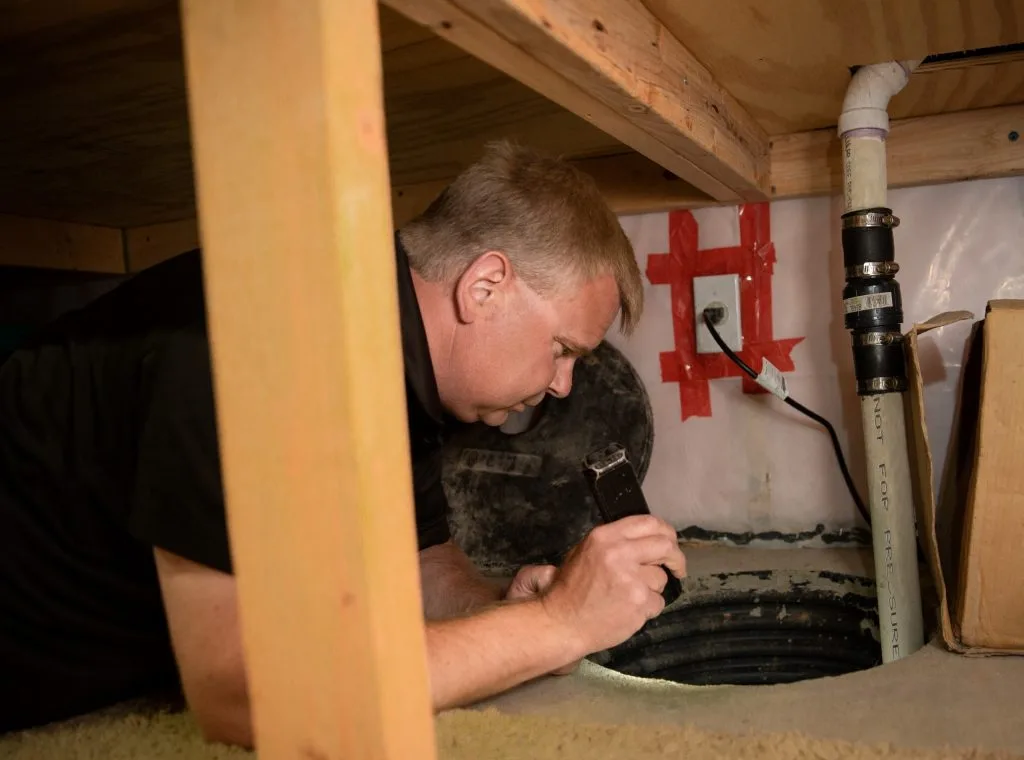
We check whether the sump actually cycles and where it discharges, whether a pump protecting finished space has battery backup, and the ordinary causes of wet basements and crawlspaces: downspouts ending at the foundation, grading settled back toward the house, and window wells with nowhere to drain. On lake-adjacent property, crawlspace moisture is frequently the real story rather than the basement.
Common questions
Do you travel out to Crystal Lake?
Yes. Book online and tell us the address; if you also need radon, mold or a sewer scope we will confirm what can be done on the same visit.
Is radon really worse out here?
Elevated results are common across northern Illinois generally, and McHenry County is among the areas where we see them most. Test rather than assume — it is inexpensive relative to what it tells you.
Can you inspect on a weekend?
Yes. We do not schedule evenings.
What the inspection does not include
A home inspection is a visual, non-invasive evaluation of the systems accessible on the day of the inspection. We do not open walls, move stored belongings, dismantle equipment, or predict how long a component will last. We do not inspect septic systems or test well water. Both are common in the unincorporated areas around here, and both need a separate specialist — arrange those early, because their turnaround can be slower than your inspection period allows. We also do not perform the structural engineering analysis some findings call for. A sewer scope needs an accessible cleanout; standing water or an inaccessible line limits what the camera can show.
We do not perform repairs, sell remediation, or take referral fees. We measure and interpret; you decide what to do about it.
What the inspection covers: every inspection we perform in Crystal Lake follows the same scope. See our home inspection services and what each one covers — pre-purchase, pre-listing, new construction, condo and multi-unit — plus in-house radon, mold, and sewer scope testing.
Nearby areas we inspect: Lake Zurich, Palatine, Mundelein, Libertyville. If you are looking in more than one area, the same inspector and the same scope apply to all of them.
Schedule a Crystal Lake home inspection
Book your Crystal Lake home inspection online. Tell us the address and whether you want radon, mold, or a sewer scope added, and we will confirm the time and what the inspection will cover.