
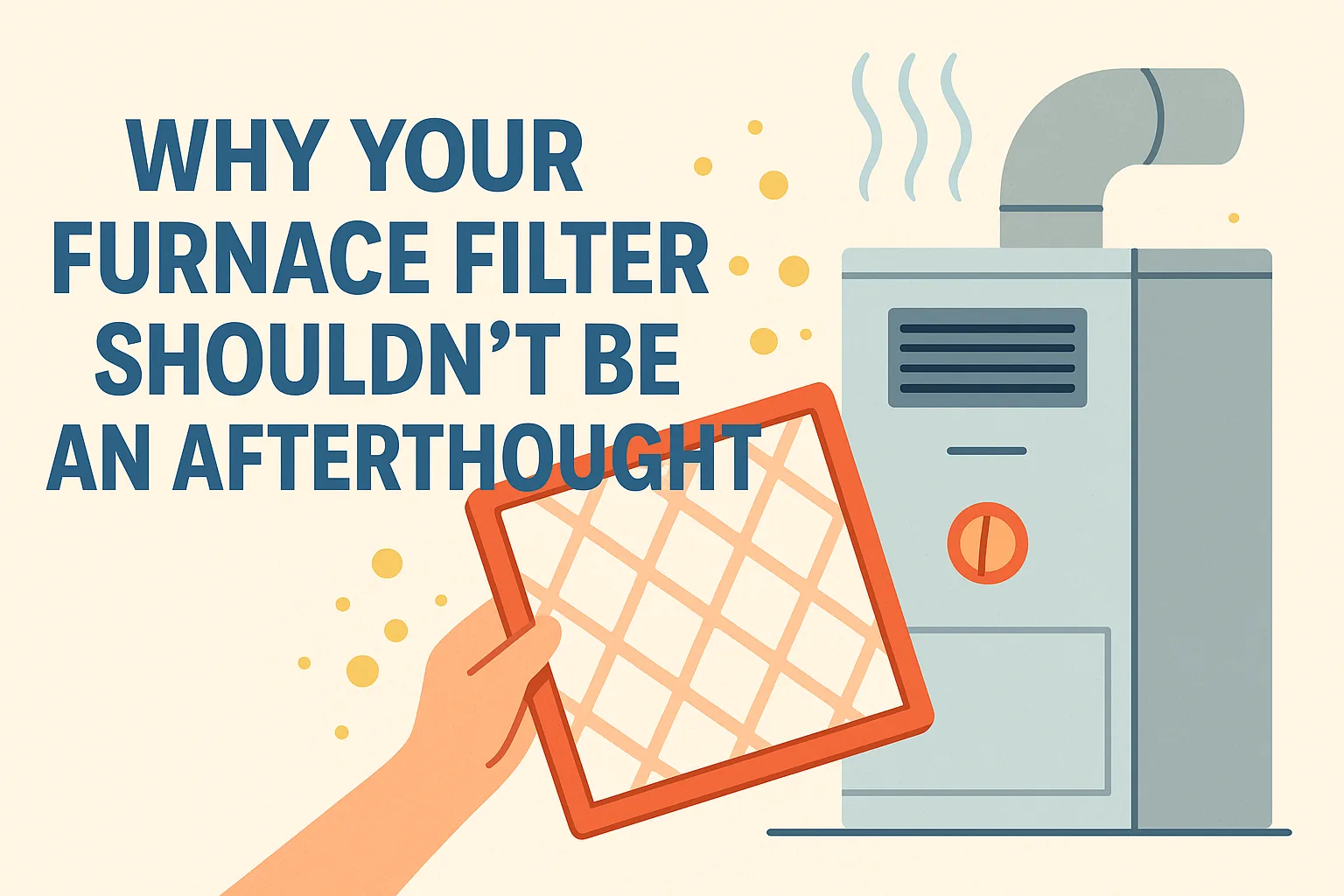
It’s one of the simplest things you can do to keep your home running smoothly—and yet, it’s often the most forgotten: changing the furnace filter.
Whether you’re moving into a new home or staying put in your current one, your furnace filter plays a crucial role in your home’s air quality, comfort, and even energy bills. In this post, we’ll break down what a furnace filter does, how it affects your HVAC system, and how often you should replace it (spoiler: it’s probably more often than you think).
What Does a Furnace Filter Actually Do?
A furnace filter traps airborne particles like dust, pollen, pet dander, and mold spores as air flows through your HVAC system. Its job is twofold:
- Protect your furnace from dirt and debris that can build up on internal components.
- Improve your indoor air quality by removing pollutants from the air before it’s circulated through your home.
It’s a small component with a big job—and when it’s dirty, the whole system suffers.
Why It Matters for Homeowners (and Buyers)
During a home inspection, we always check the furnace filter. Why? Because a neglected filter often signals larger maintenance issues. A clean, properly sized filter tells us the HVAC system has been cared for. A clogged, filthy one? That’s a red flag.
A dirty filter can lead to:
- Restricted airflow, which reduces efficiency and raises energy bills
- Overheating or short cycling in the furnace, which shortens its lifespan
- Poor air quality, triggering allergies or asthma
- System breakdowns that could cost hundreds—or even thousands—to repair
If you’re buying a home and the furnace filter looks like it hasn’t been changed in ages, it’s worth asking about the HVAC maintenance history.
How Often Should You Change It?
The general rule of thumb is:
- 1-inch filters: Every 1–3 months
- 4-inch or 5-inch filters: Every 6–12 months
- Homes with pets or allergies: Change more frequently
- High-efficiency filters (MERV 11+): Follow the manufacturer’s guidelines
Seasonal changes—like switching from heating to cooling—are a good reminder to check or replace it.
What Type of Filter Do You Need?
Furnace filters come in a variety of sizes and efficiencies. Most residential homes use filters rated on the MERV scale (Minimum Efficiency Reporting Value), which ranges from 1 to 16:
- MERV 6–8: Basic filtration, good for most homes
- MERV 9–12: Better filtration, ideal for homes with pets or allergy sufferers
- MERV 13+: Captures finer particles, but may reduce airflow in older systems
Important: Not all HVAC systems can handle high-MERV filters. Check your manual or talk to a professional before upgrading.
Signs Your Furnace Filter Needs Changing
Don’t want to set a reminder? Watch for these signs:
- Dust buildup around vents
- Allergy flare-ups
- Furnace running more than usual
- Increased energy bills
- A visibly dirty or gray filter
A new filter costs $10–$30. It’s one of the cheapest ways to keep your home healthy and your HVAC system efficient.
What We Check During Inspections
At Chicago Home Inspect, here’s what we look for when it comes to furnace filters:
- Filter condition (clean, dirty, or missing)
- Proper size and installation
- Airflow direction (installed correctly?)
- Signs of excessive dust buildup in ducts
- Overall furnace function and age
We don’t just note what’s there—we help you understand how it affects your system’s performance and future maintenance needs.
Final Thoughts
The furnace filter is a simple fix that’s often overlooked—but ignoring it can lead to big problems. Whether you’re maintaining your current system or inspecting a potential new home, paying attention to the filter can help prevent future headaches.
Regular filter changes = better air, lower bills, and a happier HVAC system.