

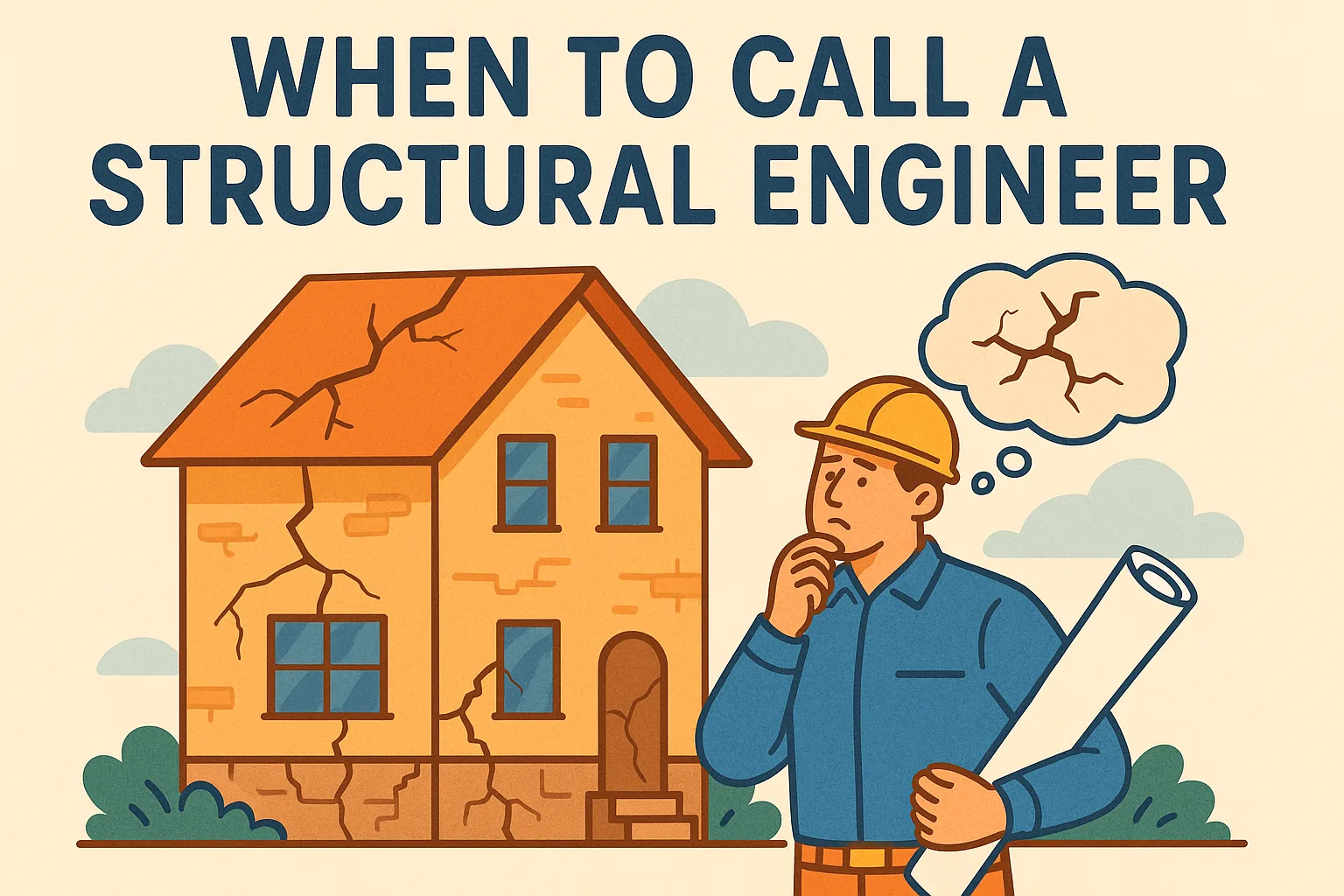
If you’re buying a home and your inspector mentions “possible structural issues,” your heart probably skips a beat. It sounds expensive, complicated, and a little scary. But don’t panic just yet—that’s exactly when a structural engineer may need to step in.
In this blog post, we’ll break down when it makes sense to call a structural engineer, what they do, how they differ from inspectors and contractors, and how their expertise can help protect your investment.
What Does a Structural Engineer Do?
A structural engineer is a licensed professional trained to evaluate the integrity of load-bearing components in a building. While a home inspector looks at the general condition of a house, a structural engineer goes deeper, using math, physics, and engineering principles to determine whether a structure is safe, stable, and built to last.
Their role is especially important when there are visible or suspected problems with key parts of the structure. They focus on:
- Foundations
- Beams and load-bearing walls
- Floor and ceiling joists
- Columns and support posts
- Roof framing systems
Structural engineers not only identify problems—they analyze their causes, assess the risk, and recommend precise, code-compliant solutions.
Why Would a Home Buyer Need One?
Most home buyers hire a home inspector before finalizing a purchase. A good inspector can spot many problems. However, when an inspector finds signs of structural movement, cracking, or deterioration, they will usually recommend bringing in a specialist: a structural engineer.
Unlike contractors, engineers provide unbiased, expert evaluations. Their findings can mean the difference between walking away from a bad investment or moving forward confidently with the right plan in place.
When Should a Buyer Call a Structural Engineer?
You likely won’t need a structural engineer for every home purchase. But in certain situations, it’s absolutely worth the added step. Here are the most common red flags that might prompt you to call in an expert:
1. Visible Cracks in Foundation Walls
Hairline cracks are often harmless, caused by normal settling. But wide vertical cracks, diagonal cracks, or stair-step cracks in block or brick walls can indicate movement or shifting that may compromise structural stability. Horizontal cracks are especially concerning.
2. Sagging or Sloping Floors
If the floors feel noticeably uneven, bounce as you walk, or slope toward one direction, it may indicate weakened joists, damaged support beams, or compromised footings. These conditions should be thoroughly evaluated before closing.
3. Bowing, Bulging, or Leaning Walls
Basement or crawlspace walls that bow inward or appear pushed in by soil pressure may not be able to safely support the home. Bulging brickwork on the exterior could be caused by moisture damage or insufficient support.
4. Sticking Doors and Windows
Doors that won’t stay closed, windows that no longer open smoothly, and large gaps between trim and framing can all be signs of structural movement. When these symptoms appear across multiple rooms, it’s a good reason to dig deeper.
5. Water Damage or Flooding History
If the home has a history of water damage, especially in the basement, this can lead to foundation weakening over time. Structural engineers can assess whether the home has sustained long-term moisture-related damage.
6. Previous Structural Repairs
If the seller discloses that the home has had structural work (like foundation repair or wall reinforcement), it’s wise to have an engineer evaluate the quality and effectiveness of those fixes.
7. Major Renovations or Additions
If a home has been expanded or had major structural alterations—like removing load-bearing walls or modifying rooflines—a structural engineer can confirm whether proper design and reinforcement techniques were used.
8. Cracked Ceilings or Sagging Roof Lines
Visible deflection in ceilings, or a sagging roof ridge, may be signs of weakened or improperly supported framing members. These issues are often beyond the scope of what a general home inspector can evaluate.
What Happens During a Structural Engineering Inspection?
When you hire a structural engineer to evaluate a home, you can expect a detailed and methodical assessment. Here’s what the process typically looks like:
- Site Visit & Visual Assessment The engineer walks through the home, focusing on the areas of concern. They visually inspect the foundation, framing, walls, and structural connections.
- Measurements & Load Calculations If needed, the engineer may take measurements and perform calculations to determine if structural elements are properly sized to support expected loads.
- Photographic Documentation Many engineers will take photos to include in their report and to help illustrate specific issues or points of concern.
- Written Engineering Report The engineer will provide a formal report outlining findings, severity of any issues, and repair recommendations. This document can be used for:
- Negotiating repairs or credits with the seller
- Getting accurate quotes from contractors
- Securing permits for repairs
- Mortgage underwriting (if required by the lender)
Structural Engineer vs. Home Inspector vs. Contractor
It’s helpful to understand how these three roles differ:
- Home Inspector: Generalist who evaluates the overall condition of the home. They identify possible problems but don’t diagnose or design repairs.
- Structural Engineer: Specialist who provides expert analysis and design solutions for structural problems. Licensed and trained in building physics and load-bearing systems.
- Contractor: Performs the physical repair work. Some contractors specialize in structural work, but they should follow a licensed engineer’s recommendations—not make decisions about structural integrity on their own.
If your home inspector suggests further evaluation, do not skip the engineer step and go straight to a contractor. Contractors may offer repair plans that are not backed by engineering, which could be ineffective, overbuilt, or worse, unsafe.
Cost of Hiring a Structural Engineer
Most structural inspections cost between $400 and $1,000, depending on the home’s size, location, and complexity of the issue. In some cases, additional analysis (like soil testing or structural modeling) may increase the cost.
While this might feel like an extra expense during an already costly purchase, it can save you thousands in the long run by preventing surprise repairs or unsafe living conditions.
If major repairs are needed, your structural engineer may also offer design drawings or stamped plans required for building permits, which can range from $500 to $2,000+ depending on the scope of work.
Using the Report for Negotiation
One of the most useful aspects of hiring a structural engineer is the ability to negotiate. If the report identifies significant repairs:
- Ask the seller to complete the repairs before closing.
- Request a credit or price reduction.
- Walk away from the deal if the risk is too high.
Sellers are often more willing to negotiate when presented with a professional engineer’s report rather than a vague inspection note.
How to Find a Structural Engineer
- Ask your home inspector or real estate agent for a referral
- Search online for “structural engineer near me”
- Verify that they are licensed in your state
- Check reviews and confirm they have experience with residential properties
Not all engineers work with homebuyers, so find one familiar with real estate timelines and reports.
Final Thoughts: Better Safe Than Sorry
While not every homebuyer will need one, knowing when to call a structural engineer can save you from major surprises and costly repairs. If you’re buying an older home, see signs of damage, or just want extra peace of mind, a structural engineer is a valuable ally.
When in doubt, follow your inspector’s recommendation—and don’t be afraid to invest in expert advice.