

Did you know that a single damaged lintel can compromise the stability of an entire wall? Lintels may seem like small parts of a building, yet they quietly support everything above doors and windows, protecting your home from cracking and sagging. Most homeowners never realize how vital these hidden supports are until problems appear. Learning how lintels work, what types are common, and how to spot issues will help you keep your home sturdy and safe.
Table of Contents
- What Is a Lintel and Its Purpose
- Common Types of Lintels in Construction
- How Lintels Support Home Structures
- Signs of Lintel Problems and Failures
- Why Lintel Condition Matters in Inspections
Key Takeaways
| Point | Details |
|---|---|
| Importance of Lintels | Lintels are essential architectural components that support structural integrity by spanning openings and transferring loads to vertical supports. |
| Types and Materials | Common lintel materials include wood, steel, reinforced concrete, and stone, each suited to specific structural requirements and architectural designs. |
| Signs of Damage | Homeowners should watch for cracks, sagging, or misalignment around openings, as these may indicate lintel failures requiring professional evaluation. |
| Inspection Relevance | Assessing lintel condition during home inspections is key to identifying structural vulnerabilities and preventing costly repairs. |
What Is a Lintel and Its Purpose
A lintel is a critical architectural element that might seem simple but plays a crucial role in maintaining the structural integrity of buildings. According to research from construction engineering sources, a lintel is a horizontal structural member that spans openings like doors, windows, or fireplaces, supporting the weight of the structure above and transferring loads safely to adjacent vertical supports.
In Chicago homes, particularly in older neighborhoods like Lincoln Park or Wicker Park with historic brick buildings, lintels are fundamental to maintaining building stability. They essentially act as a bridge, distributing weight evenly and preventing stress concentrations that could compromise wall integrity. Without a properly designed lintel, the walls around openings would be vulnerable to cracking, sagging, or potential structural failure.
The primary functions of lintels extend beyond mere weight distribution. They help:
- Prevent structural stress and potential wall damage
- Maintain architectural aesthetics around openings
- Allow for larger window and door designs
- Support various construction materials like brick, stone, or wood
Whether you’re in a vintage Chicagoland bungalow or a modern suburban home, understanding lintels can help you appreciate the subtle engineering that keeps your home standing strong. For a deeper exploration of how lintels impact specific architectural elements, check out our guide on fireplace lintel safety.
Common Types of Lintels in Construction
In construction, lintel materials vary widely, each offering unique structural and aesthetic characteristics. According to construction research, lintels are commonly fabricated from materials like reinforced concrete, wood, steel, and stone, with the selection driven by specific project requirements, budget constraints, and architectural design preferences.
Wood lintels represent a traditional choice, especially in older Chicago neighborhoods with historic homes. They work well for smaller openings and provide a classic aesthetic. Steel lintels, by contrast, offer superior strength and are frequently used in modern construction, particularly for larger window and door spans. These can handle significant load-bearing responsibilities and resist structural deformation.
The most versatile lintel type is reinforced concrete, which combines exceptional strength with durability. This material is particularly advantageous in areas experiencing diverse weather conditions like Chicago’s extreme temperature fluctuations. Concrete lintels can be precast or constructed on-site, providing flexibility for different architectural designs.
Here’s a quick breakdown of lintel types by material:
Here’s a comparison of common lintel types used in construction:
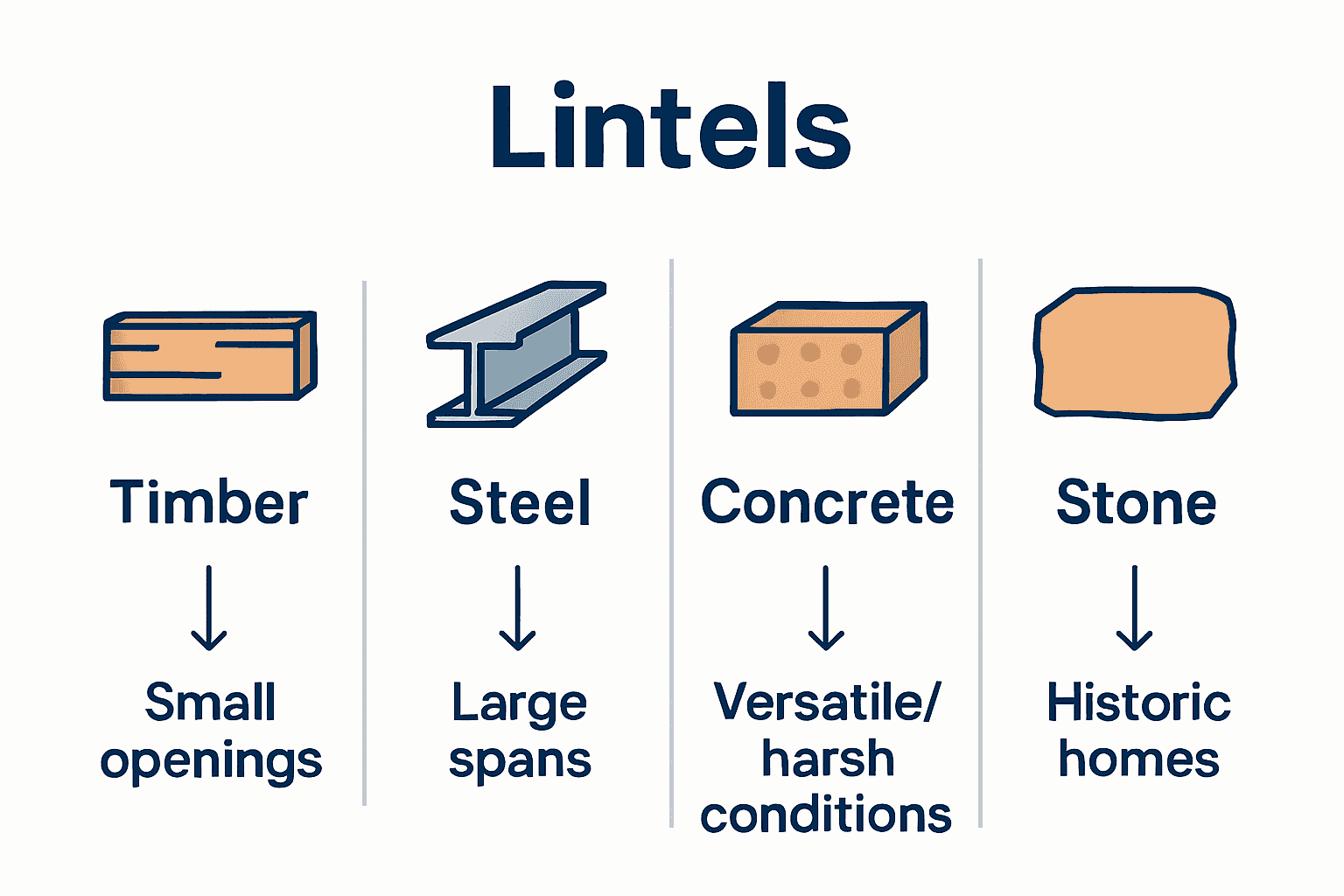
| Lintel Type | Typical Material | Best For | Key Advantages |
|---|---|---|---|
| Timber | Wood | Small openings Historic homes | Traditional look Easy installation |
| Steel | Steel | Large spans Modern builds | High strength Resists deformation |
| Concrete | Reinforced concrete | Most versatile Extreme conditions | Excellent load distribution Durable |
| Stone | Stone | Historic restoration Classic architecture | Classic appearance High durability |
- Timber Lintels: Best for smaller openings, traditional aesthetic
- Steel Lintels: Maximum strength, ideal for large spans
- Reinforced Concrete Lintels: Most versatile, excellent load distribution
- Stone Lintels: Classic look, good for historic restoration
Choosing the right lintel depends on your specific structural needs, budget, and design goals. For insights into how different lintel types might impact your home’s safety, explore our guide on fireplace lintel safety.
How Lintels Support Home Structures
Lintels are crucial structural components that play a vital role in maintaining the integrity of home structures. According to construction research, these horizontal supports bear vertical loads from walls and roofs above openings, effectively preventing potential structural deformation and ensuring overall building stability.
In Chicago’s diverse architectural landscape, from vintage bungalows to modern townhomes, lintels serve as silent guardians of structural integrity. By distributing loads across window and door openings, they minimize deflection and reduce the risk of masonry cracking. Think of a lintel like a bridge that carries the weight of the wall above, spreading it evenly to the adjacent vertical supports and preventing stress concentrations that could compromise your home’s structure.
The load distribution mechanism of lintels is sophisticated yet critical. When a wall contains an opening like a window or door, the lintel acts as a critical transfer point, redirecting potentially damaging vertical forces. This prevents:
- Structural sagging
- Wall cracking
- Uneven weight distribution
- Potential foundation stress
Understanding the structural implications of lintels can help homeowners appreciate the complex engineering behind their living spaces. If you’re concerned about your home’s structural health, our structural engineering insights can provide deeper understanding of how critical components like lintels protect your home.
Signs of Lintel Problems and Failures
Lintel damage can be subtle yet potentially devastating to your home’s structural integrity. According to construction research, early detection of lintel problems is crucial for preventing more extensive and expensive structural repairs. Homeowners should be vigilant about recognizing warning signs that indicate potential lintel failures.
In Chicago’s historic neighborhoods, where older homes feature original masonry and structural elements, lintel issues are particularly common. Visible warning signs include noticeable cracks above window and door openings, which often signal that the lintel is no longer effectively distributing structural loads. These cracks might appear diagonal, horizontal, or vertical, each indicating different stress patterns and potential underlying issues.
Critical indicators of lintel problems include:
- Visible horizontal or diagonal cracks above openings
- Sagging or bowing of the lintel itself
- Separation between the lintel and surrounding masonry
- Doors or windows becoming misaligned or difficult to open
- Visible deterioration of lintel material
- Rust stains on steel lintels
- Crumbling or flaking of concrete or brick lintels
Ignoring these signs can lead to significant structural complications. If you notice any of these symptoms in your Chicago home, it’s essential to consult a professional structural inspector. Understanding structural engineering principles can help you address potential lintel issues before they become major structural concerns.
Why Lintel Condition Matters in Inspections
During home inspections, the condition of lintels represents a critical diagnostic point that can reveal potential structural vulnerabilities. According to construction research, thoroughly assessing lintel integrity is essential because compromised lintels can lead to significant safety risks and expensive structural repairs if left undetected.
In Chicago’s diverse housing market, where homes range from historic brick buildings in Wicker Park to modern suburban constructions, lintel condition varies dramatically. Professional inspectors understand that these horizontal supports are more than just architectural elements – they’re fundamental to maintaining a building’s structural stability. A seemingly minor crack or slight misalignment can signal underlying issues that might compromise the entire structural framework of a home.
Key reasons why lintel condition is crucial during inspections include:
- Identifying potential structural weaknesses
- Preventing catastrophic structural failures
- Estimating potential repair costs
- Understanding the building’s overall maintenance history
- Assessing long-term structural integrity
- Evaluating potential safety risks
Homeowners and potential buyers should recognize that uncovering hidden structural issues during a professional inspection can save thousands in future repair costs and prevent potentially dangerous structural complications.
Protect Your Home with Expert Lintel Inspection Services
Understanding the vital role lintels play in supporting your home’s structure helps you realize how small issues like cracks or sagging can lead to big problems. If you have concerns about lintel damage, misalignment, or structural stress around windows and doors, acting early is key to preventing costly repairs and serious safety risks.
Our team offers thorough, professional home inspection services tailored to uncover hidden lintel problems and other structural concerns. Whether you need a Buyer Pre-Purchase Inspection or a Seller Pre-Listing Inspection, we provide detailed reports that empower you to make confident decisions about your property’s condition. Do not wait until minor lintel damage escalates into major structural failures. Schedule your inspection today at Chicago Home Inspector to safeguard your investment and keep your home standing strong.
Frequently Asked Questions
What is the purpose of a lintel in construction?
A lintel is a horizontal structural member that spans openings like doors and windows, supporting the weight of the structure above and distributing loads to adjacent vertical supports, thus maintaining structural integrity.
What are the common types of lintels used in construction?
Common types of lintels include timber (wood), steel, reinforced concrete, and stone. Each type offers unique strength, aesthetic, and durability qualities suited for different construction needs.
How can I identify signs of lintel problems in my home?
Signs of lintel problems include visible horizontal or diagonal cracks above openings, sagging or bowing of the lintel, misaligned doors or windows, deterioration of lintel material, and rust stains on steel lintels. Prompt inspection is essential to address these issues.
Why is the condition of lintels important during home inspections?
The condition of lintels is critical during home inspections because compromised lintels can indicate potential structural vulnerabilities. Identifying these issues early can prevent serious safety risks and expensive repairs in the future.