TL;DR:
- Chicago’s competitive housing market encourages buyers to waive contingencies, but this increases financial risk.
- Smarter strategies include limited inspections, shortened timelines, and pre-offer walkthroughs to balance protection and competitiveness.
- Understanding aging home systems and benchmarking repair costs help buyers make informed, less emotional decisions.
Chicago’s housing market has become one of the fiercest in the Midwest, and if you’re hunting for a home on the North Side or in popular suburbs, you’ve likely felt the pressure to move fast and give up protections you never imagined skipping. About 70% of listings on Chicago’s North Side are selling above asking, with buyers frequently waiving contingencies just to stay competitive. But waiving inspection is not the only path to winning. This article walks you through smart, practical strategies that protect your investment without automatically pricing you out of the deal.
Table of Contents
- Understanding multiple offer pressure in Chicago real estate
- What it means to waive inspection: risks and realities
- Smart alternatives to waiving inspection altogether
- How to benchmark your risk and know what to absorb
- Winning strategies: working with your agent and inspector
- Why the savviest Chicago buyers rethink inspection “rules”
- Protect yourself with smart Chicago home inspections
- Frequently asked questions
Key Takeaways
| Point | Details |
|---|---|
| Bidding wars increase risk | Most winning offers waive inspection contingencies, but this can expose you to costly repairs after closing. |
| Know your inspection options | Alternatives like informational inspections or shorter windows help balance protection and competitiveness. |
| Benchmark repair risks | Identify which key systems (roof, water, electrical, HVAC) you are prepared to accept in as-is condition. |
| Use your agent and inspector | Strategically collaborate with your agent and inspector to protect your interests in fast-moving deals. |
Understanding multiple offer pressure in Chicago real estate
The Chicago housing market rewards speed and simplicity. Sellers who receive five or six offers on a weekend are looking for the cleanest, least complicated path to closing. That means fewer contingencies, shorter timelines, and no back-and-forth over repairs. Buyers who understand this seller psychology can position themselves far more strategically than those who simply throw money at a deal.
Bidding wars are no longer a rare event in neighborhoods like Lincoln Park, Wicker Park, Andersonville, and Roscoe Village. They have become the standard. The result is that inspection contingency waivers have become a go-to tactic for buyers who want to appear more attractive. According to Redfin data cited by real estate analysts, agents and buyers frequently waive inspection contingencies in order to “win” bidding wars. What most buyers don’t realize is that waiving is not always required to win. It is just the lazy shortcut.
Understanding the unique aspects of Chicago home inspections gives you an edge. Chicago’s housing stock is old. Many properties date back to the early 1900s. That means inspectors are often finding knob-and-tube wiring, galvanized plumbing, and aging flat roofs that newer construction simply doesn’t have. A buyer who walks in blind is a buyer who walks into a financial minefield.
| Market factor | Seller expectation | Buyer risk |
|---|---|---|
| Multiple offers | Clean, fast closing | Overpaying without data |
| Short offer deadlines | Minimal contingencies | No time for standard inspection |
| Above-asking prices | Motivated buyer | Emotional decision-making |
| Aging housing stock | “As-is” mentality | Hidden repair costs |
“The buyers who win the deal aren’t always the ones who give up the most. They’re the ones who present the least uncertainty to the seller. Smart inspection moves can accomplish that without handing over your protection entirely.”
What it means to waive inspection: risks and realities
Let’s be direct. Waiving your inspection contingency means you agree to buy the property regardless of what a home inspector finds. You still can hire an inspector after signing, but you have no legal leverage to back out or negotiate repairs based on their findings. That is a significant financial exposure.
The top repair surprises for Chicago buyers almost always fall into four categories: roofing failures, water intrusion, electrical hazards, and HVAC system breakdowns. These aren’t minor inconveniences. Roof replacements in the Chicago area can run between $12,000 and $25,000 depending on the size and material. Water intrusion tied to foundation cracks or improper grading can cost tens of thousands to remediate properly. Buyers who win bidding wars by waiving inspection-related asks should honestly benchmark their willingness to absorb these exact repair categories before signing anything.
Before you decide whether to waive, you should think about should you waive inspection as a strategy tailored to your specific situation, not just a blanket trend everyone follows.
Common defects missed without a proper inspection:
- Cracked or deteriorated roof flashing and decking
- Basement water intrusion through foundation walls or floor drains
- Outdated electrical panels (Federal Pacific or Zinsco brands are particularly problematic)
- HVAC systems near end of life with no service history
- Improper ventilation in attics leading to mold growth
- Failed sewer lines, especially in homes built before 1980
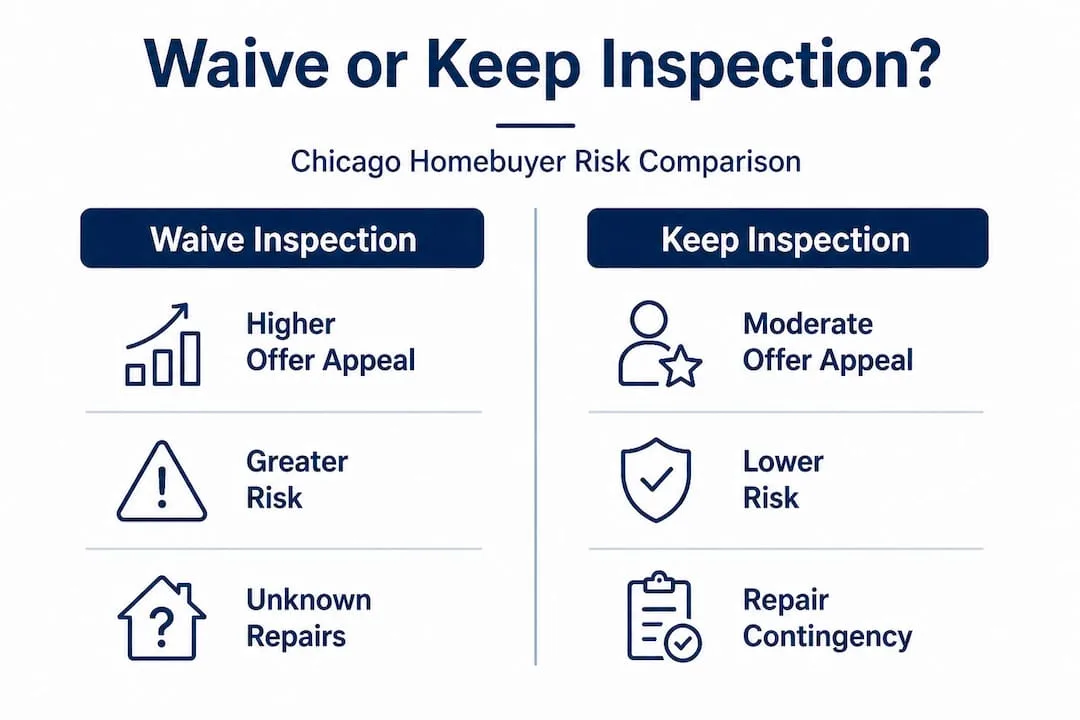
| Waiving inspection | Keeping inspection | |
|---|---|---|
| Offer appeal | High (sellers love it) | Moderate |
| Buyer risk | Very high | Low to moderate |
| Repair leverage | None after closing | Negotiable before closing |
| Peace of mind | Very low | High |
| Best for | New construction, pre-inspected homes | Older Chicago homes |
| Worst for | Pre-1970 properties, unknown condition | Ultra-competitive bidding wars |
Pro Tip: If you are considering waiving inspection on a home built before 1960, ask yourself if you have $30,000 in accessible reserves for emergency repairs. If the answer is no, waiving is probably not the right move regardless of how much you love the property.
Smart alternatives to waiving inspection altogether
If you’re wary of waiving inspection entirely, you still have options. And the good news is these options often work. Sellers don’t always need you to give up everything. They need to feel confident the deal won’t fall apart over minor issues. That’s a very different thing.
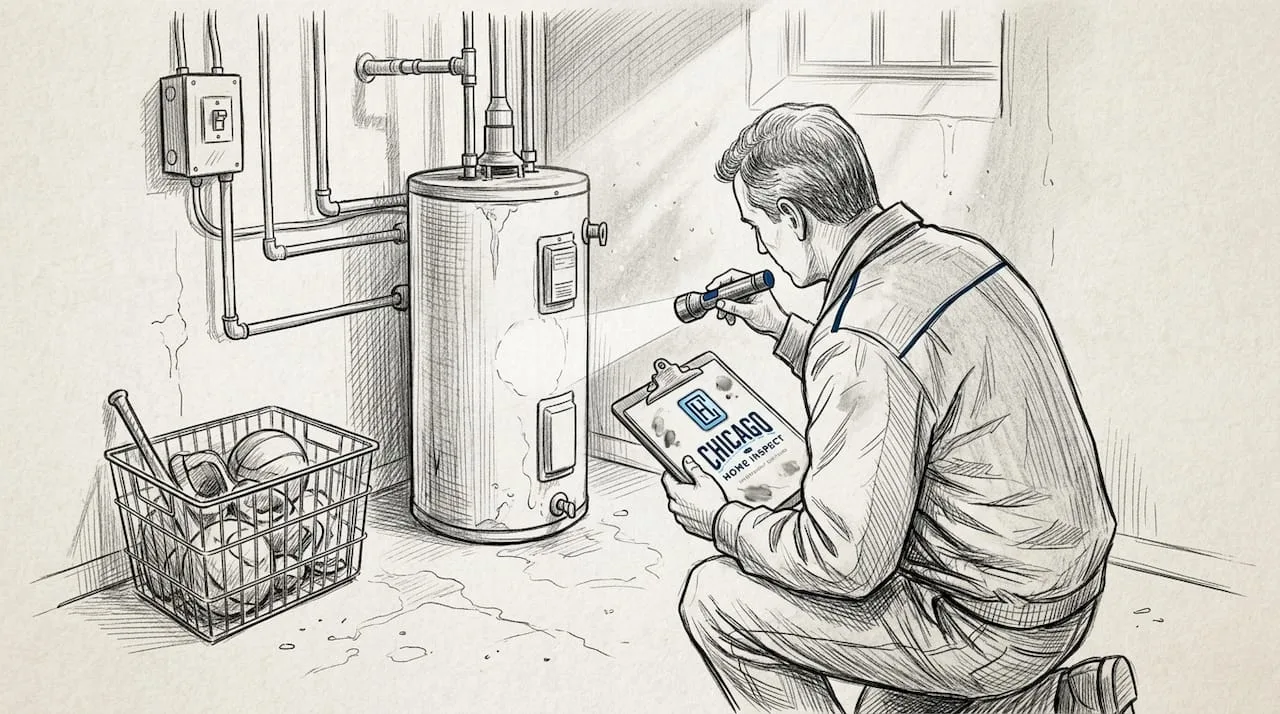
Competing without waiving inspection entirely comes down to structuring your inspection approach in a way that reduces seller anxiety. Some successful buyers structure their offer to retain limited or informational inspections instead of full waivers, and it works more often than most buyers realize.
Here are the practical alternatives Chicago buyers used successfully in 2026:
Informational-only inspection. You hire an inspector before or shortly after offer acceptance, but you commit in writing that you won’t request repairs or credits based on findings. You retain the right to walk away only if there is a truly catastrophic defect (which you define in advance). Sellers like the certainty. Buyers get knowledge.
Shortened inspection window. Standard contracts often allow 10 days for inspection. Offering a 3 to 5 day window signals urgency and seriousness to the seller while still letting you complete a thorough review of common Chicago inspection issues.
Pre-offer walk-through with a contractor. Before submitting your offer, tour the home with a trusted contractor or inspector informally. This isn’t a formal inspection, but it gives you enough intel to make a smarter offer and know roughly what you’re absorbing.
As-is purchase with retained inspection right. You agree to buy as-is but retain the right to inspect for knowledge only. You set a defined threshold in the contract: if a single repair estimate exceeds, say, $50,000, you can exit. Everything below that threshold, you accept without negotiation.
Pre-listing inspection review. If the seller had a pre-listing inspection done, ask your agent to request the report. Many Chicago sellers complete these before listing to speed up the process. Reading someone else’s inspection data is always better than having none at all.
Pro Tip: An inspector who offers weekend and short-notice availability is an incredible asset in a fast-moving deal. When a listing hits Friday afternoon with an offer deadline of Sunday, having an inspector who can show up Saturday morning is often the difference between winning with protection and winning blind.
How to benchmark your risk and know what to absorb
Even if you can’t negotiate every safeguard, you can decide what risks make sense for you. This is about being proactive before you write the offer rather than anxious after you win the deal.
Benchmarking your willingness to absorb repair categories like roofing, water intrusion, electrical, and HVAC before you waive any leverage is essential. The buyers who get hurt are the ones who made an emotional decision in the moment and never had a clear plan for what they could actually afford to fix.
Warning signs you should never ignore, even in a fast deal:
- Visible water stains on basement walls or ceiling tiles in the first floor
- A breaker panel that is over 30 years old or uses double-tapped breakers
- A roof with visible lifted or curling shingles, especially near the chimney
- Any home where the seller refuses access for any pre-inspection walk-through
- Strong musty odors in lower levels (often a sign of long-term moisture and potential mold)
Understanding Chicago repair benchmarks in real dollar terms helps you make a rational decision at the offer table rather than an emotional one.
| System | Typical Chicago repair cost | Risk level for pre-1970 homes |
|---|---|---|
| Roof replacement | $12,000 to $25,000 | High |
| HVAC full replacement | $8,000 to $15,000 | Moderate to High |
| Electrical panel upgrade | $3,000 to $8,000 | High |
| Water intrusion and waterproofing | $5,000 to $40,000+ | Very High |
| Sewer line replacement | $6,000 to $15,000 | High |
| Mold remediation | $2,000 to $20,000 | Moderate |
Understanding electrical and water intrusion risks in older homes specifically is valuable context when you’re walking through a 1920s Chicago two-flat and trying to assess how much exposure you’re taking on with each system.
Winning strategies: working with your agent and inspector
Having decided what you can absorb, your agent and inspector are key to making your strategy work. They are not just service providers. They are your tactical team in a competitive offer situation.
Agents and buyers in Chicago increasingly work together to tailor inspection terms to market realities, often drawing directly on inspector input for quick pre-offer decisions. Your agent’s ability to communicate your inspection approach clearly and confidently to the seller’s agent can make or break how your offer is received.
Actionable steps for working as a team:
- Brief your inspector before you tour a property so they know what timeline to expect
- Ask your agent to communicate your inspection plan to the listing agent upfront, before offers are due
- Use your inspector’s preliminary findings from a walk-through to sharpen your offer price
- Let your agent frame a shortened inspection window as a show of good faith, not a concession
- Have your inspector prioritize safety and major system issues if time is tight rather than cataloging every cosmetic item
Good agent strategies for inspections involve clear communication about what you are and aren’t waiving, which makes sellers far more comfortable than vague language that leaves them guessing.
Understanding the full inspection process in Chicago from a process standpoint also helps. When you know exactly what happens during an inspection, you can have a smarter conversation with your agent about where to tighten the timeline and where to hold firm.
Pro Tip: Speed and clarity are your allies. A buyer who says “we can complete our inspection by Saturday at noon and have a decision by Sunday morning” is far more appealing to a seller than a buyer who vaguely says “we’ll need the standard 10 days.”
Why the savviest Chicago buyers rethink inspection “rules”
Here’s a perspective we’ve developed from doing hundreds of inspections across Chicago and the suburbs: most buyers treat inspections like a pass/fail test. They think either the home passes and they buy it, or it fails and they walk. That’s not how experienced buyers approach it.
The smartest buyers we work with use inspection data as a negotiation tool, a pricing calibration, and a long-term budget planning resource. When they learn a home has a roof that has three to five years of life left, they don’t panic. They factor it into their offer or their post-closing reserve plan. When they find an aging furnace, they use that information to decide whether to ask for a credit or simply know they need to budget $10,000 within two years of moving in.
Rethinking inspection rules means recognizing that the inspection is not just a contingency. It’s intelligence. And in a market where you’re paying over asking price on a 100-year-old building, intelligence has real dollar value.
The buyers who regret their decisions most are not the ones who lost a bidding war. They are the ones who won a bidding war, waived inspection, and then discovered $60,000 in water damage in the first winter. That outcome is not just financially painful. It’s emotionally devastating, especially for first-time buyers who stretched to buy in their dream neighborhood.
Moving fast in this market is smart. Moving blind is not. The nuanced approach, retaining some inspection protection, shortening timelines, pre-touring with a professional, costs you very little in competitive appeal and saves you enormously in potential post-closing surprises.
Protect yourself with smart Chicago home inspections
Ready to put these strategies to work? Our team at Chicago Home Inspection Services is InterNACHI certified, BBB accredited, and available on weekends to meet the tight timelines that competitive deals require. We work with buyers across Chicago and the suburbs who need fast, thorough assessments before they commit. Whether you need a pre-offer walk-through, a full buyer pre-purchase inspection, or specialized mold testing in Chicago homes for properties with suspected moisture problems, we’ve got you covered. You can also browse our interior inspection photos to get a sense of the issues we commonly find in Chicago properties. Don’t let a fast market push you into a decision you’ll spend years paying for. Let us help you move fast and move smart.
Frequently asked questions
Is it safe to waive an inspection in a Chicago multiple offer?
It’s risky to waive inspection entirely because it leaves you responsible for major repairs you may never have seen coming. Buyers have absorbed significant costs related to roof failure, water intrusion, electrical hazards, and HVAC breakdowns after waiving inspection protection.
What is an “informational only” inspection offer?
It’s an offer structure where you retain the right to inspect the home but agree not to request repairs or credits based on the findings. Some successful buyers use this approach to get critical knowledge without reducing their offer’s appeal to sellers.
Which defects are the most costly if missed in a Chicago home?
Roof deterioration, water intrusion, outdated electrical systems, and aging HVAC equipment are consistently the most expensive surprises Chicago buyers face. Buyers should benchmark their financial capacity to absorb each of these categories before writing an offer that waives inspection leverage.
How can I make my offer more competitive without waiving inspection?
Shortened inspection timelines, informational-only inspection agreements, and pre-offer contractor walk-throughs all increase your offer’s appeal without eliminating your protection. Buyers use limited inspection windows strategically to balance competitiveness with risk management.
What role does my agent play when negotiating inspections?
A skilled agent frames your inspection approach positively to the seller’s agent, turning what might seem like a contingency risk into a demonstration of buyer preparedness and seriousness. Agents work with buyers to structure offers that retain meaningful inspection protections while still checking all of the seller’s top priorities.
Recommended
- Pre-Purchase Inspections with Home Inspectors in Chicago
- Seller Inspection Checklist for Chicagoland Home Buyers | Chicago Home Inspect LLC
- End of Inspection Checklist: Essential Steps for Home Buyers | Chicago Home Inspect LLC
- Home inspection blind spots: what Chicago buyers should know
- Avoiding Common Home Appraisal Mistakes | NJ Appraiser Tips – NJREAG