

Yes — for most homeowners, a yearly home maintenance inspection is worth the cost. InterNACHI recommends treating it like an annual physical for your house: a proactive check that catches problems early, keeps systems running, and prevents the kind of emergency spending that wrecks a household budget. Three reasons stand out:
- Catch problems early. A small roof flashing gap costs a few hundred dollars to seal. Left through a freeze-thaw cycle, it can mean a rotted deck and a major costly repair.
- Budget predictably. A written inspection report tells you what needs attention now versus what can wait, so you’re planning repairs instead of reacting to them.
- Protect safety and value. Inspectors flag carbon monoxide risks, failing electrical panels, and structural drainage issues that most homeowners walk past every day without noticing.
Chicago Home Inspect LLC is InterNACHI certified, BBB accredited, licensed, and insured — and we see these scenarios play out in bungalows on the Northwest Side and two-flats in Logan Square every season.
Table of Contents
- What a yearly maintenance inspection actually is (and how it differs from a buyer’s inspection)
- What inspectors check: a practical home maintenance checklist
- The real benefits of annual home inspections
- What a yearly inspection costs and how long it takes
- How often should you get a home inspection?
- How to prepare for your inspection and what to expect
- How to choose a qualified home inspector
- Why we recommend yearly inspections for Chicago homeowners
- Our honest take on annual inspections
- Schedule a maintenance inspection with Chicago Home Inspect LLC
- Sources
What a yearly maintenance inspection actually is (and how it differs from a buyer’s inspection)
A home maintenance inspection is a proactive, diagnostic check of your home’s current condition. It is not tied to a sale. The goal is to understand where your home stands, what’s wearing out, and what you should budget for over the next one to three years.
A buyer’s inspection, by contrast, is transactional. It’s designed to surface defects that affect a purchase decision or give a buyer negotiating leverage. The report tone is different: a buyer’s inspector flags everything that could affect the sale price. A maintenance inspector prioritizes findings by urgency and cost trajectory, helping you decide what to fix now versus what to monitor.
A maintenance inspection report reads more like a doctor’s chart than a home sale disclosure. It tracks condition over time, notes what’s changed since the last visit, and gives you a prioritized action list — not a list of contingencies for a seller to dispute.
In practice, a maintenance report typically includes an executive summary, a priority matrix (immediate, near-term, monitor), photos of every finding, and optional diagnostic tests like radon, mold sampling, or a sewer camera. You can see what a thorough annual check-up covers in our detailed process guide.
What inspectors check: a practical home maintenance checklist
InterNACHI’s maintenance guidance maps the core inspection areas homeowners should track annually. Here’s what a professional maintenance inspection covers:
Exterior and structure
- Roof surface, flashing, ridge, and penetrations
- Gutters and downspouts (clogged gutters are a leading cause of foundation water intrusion)
- Exterior cladding, trim, and caulking
- Foundation visible from grade, grading, and surface drainage
- Driveway, walkways, and steps
Interior systems
- Attic: insulation depth, ventilation, signs of moisture or pest activity
- HVAC: equipment condition, filter status, heat exchanger, flue connections
- Water heater: age, anode rod condition, pressure relief valve, flue
- Plumbing supply and drain lines, visible fixtures, water pressure
- Electrical panel: breaker labeling, double-taps, visible wiring condition
- Basement or crawlspace: moisture, structural members, sump pump
Safety items
- Smoke and carbon monoxide detectors (placement and function)
- Doors, windows, and weatherstripping
- Garage door auto-reverse and safety sensors
Optional diagnostic add-ons
- Radon testing: recommended for Chicago-area homes, especially basements
- Mold sampling: when moisture findings or musty odors are present
- Sewer camera: for homes over 30 years old or with repeated drain backups
One important scope note: a maintenance inspection is visual and non-invasive. Inspectors won’t open walls, move furniture, or dismantle equipment. What they will do is use moisture meters, infrared cameras, and panel-side experience to find what a casual walk-through misses.
| Feature | DIY seasonal walk-through | Professional maintenance inspection |
|---|---|---|
| Scope | Visual, surface-level | Visual + diagnostic tools |
| Tools used | Flashlight, ladder | Moisture meter, infrared camera, gas detector |
| Attic/crawlspace access | Often skipped | Standard coverage |
| Written report | None | Prioritized, photo-backed report |
| Optional add-ons | None | Radon, mold, sewer camera |
| Typical findings | Obvious exterior wear | Hidden moisture, early system failures |
A seasonal home maintenance checklist is a useful complement between professional visits, but it doesn’t replace the diagnostic depth of a trained inspector.
The real benefits of annual home inspections
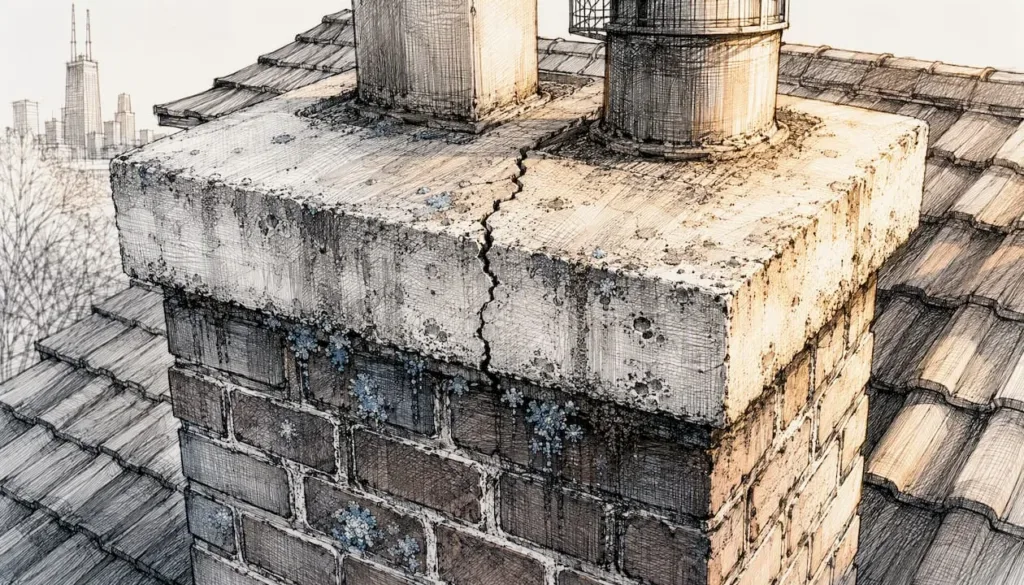
Early detection keeps repair costs manageable. A cracked chimney crown caught in October costs a few hundred dollars to repair. The same crack, after a winter of water infiltration and freeze-thaw expansion, can mean a full chimney rebuild. Roofing specialists make the same point about annual roof checks: small issues become major leaks when they go undetected through a storm season.
Predictable budgeting. When an inspector tells you the water heater is in its last two years, you can plan for that replacement instead of paying emergency rates on a Saturday morning when it fails. That’s the practical value of a priority matrix.
Safety hazard identification. Carbon monoxide leaks, failing GFCI protection near water, and deteriorating electrical panels are not visible to the naked eye during daily life. An inspector with panel-side experience spots these before they become emergencies.
The documentation a maintenance inspection creates is an underrated asset. Year-over-year reports give you a paper trail for warranty claims, insurance disputes, and resale transactions — a buyer’s agent reviewing three years of inspection reports has far less room to negotiate aggressively on condition.
Energy efficiency opportunities. Inspectors routinely find attic bypasses, missing insulation, and air-sealing gaps that drive up heating bills. In Climate Zone 5, where Chicago winters are long and heating loads are high, those findings translate directly to lower utility costs.
Resale documentation. A stack of annual inspection reports signals to buyers that the home has been maintained — and gives you a defensible record if condition questions arise. Our pre-listing inspection service builds on exactly this kind of maintenance history.
What a yearly inspection costs and how long it takes
A home inspection expert quoted by BobVila places the typical consumer price range at roughly $500 to $1,800, with add-ons pushing the higher end. For a maintenance-focused inspection without add-ons, most homeowners in the Chicago area land in the lower portion of that range.
| Home type | Typical inspection time | Estimated base cost |
|---|---|---|
| Condo or small unit | 1–2 hours | $300 |
| Single-family home | 2–3 hours | $400 |
| Larger home | 3–5 hours | $500 |
| Add-ons (radon, mold, sewer camera) | +30 min each | +$100 each |
Pricing factors that move the number:
- Home size and age: older homes with more systems take longer
- Accessibility: finished attics, tight crawlspaces, and detached structures add time
- Optional tests: radon and mold sampling require lab processing fees
- Seasonal demand: fall is the busiest inspection season in Chicago; booking early avoids delays
- Travel: homes in Lake, McHenry, or DuPage Counties may carry a small travel adjustment
One practical note on Chicago winters: ice and snow can limit roof access and obscure foundation grading. Scheduling in late summer or early fall gives inspectors the best access and gives you time to act on findings before the ground freezes.
How often should you get a home inspection?
For most homeowners, annually is a recommended inspection frequency. Newer homes in good condition — particularly those still under builder warranty — may sometimes stretch to longer intervals between full professional inspections, supplemented by seasonal homeowner walk-throughs.
The annual cadence isn’t arbitrary. One Chicago winter is enough to open a hairline crack in a chimney, shift a downspout, or stress a flat roof membrane. Waiting two years to find out means two winters of damage instead of one.
Beyond the annual schedule, certain events should trigger an inspection regardless of when the last one happened:
- A major storm (hail, high winds, heavy snow load)
- Unexplained new stains on ceilings or walls
- Musty odors in the basement or crawlspace
- After significant renovations or additions
- Before refinancing or listing the home
- After a neighbor’s excavation or nearby municipal work
- When a home has been vacant for an extended period
Vacation homes and seasonal properties that sit unoccupied for months are especially vulnerable to slow leaks, pest intrusion, and HVAC failures that go unnoticed. Annual checks are particularly valuable for those.
How to prepare for your inspection and what to expect
Before the inspector arrives:
- Clear access to the attic hatch, electrical panel, water heater, and HVAC equipment
- Unlock any gates, outbuildings, or crawlspace hatches
- Secure pets in a separate room
- Write down any concerns you’ve noticed (new stains, odd sounds, drafts) and share them at the start
- Leave utilities on, including pilot lights
During the inspection:
The inspector will work systematically from exterior to interior, typically starting with the roof and exterior, then moving through the attic, main living areas, kitchen and bathrooms, basement or crawlspace, and mechanical systems. Most inspectors welcome homeowners to follow along and ask questions — this is one of the most useful parts of the visit.
After the inspection:
The report usually arrives within 24 hours. Read the executive summary first, then work through the priority matrix. Items flagged as immediate safety concerns need contractor attention before anything else. Near-term items belong in your 12-month budget. “Monitor” items go on your seasonal checklist. Our home maintenance blog has guidance on translating report findings into a realistic repair plan.
How to choose a qualified home inspector
Certifications matter, but they’re a floor, not a ceiling. Look for:
- InterNACHI membership: InterNACHI’s Standards of Practice define the minimum scope a certified inspector must cover. Membership also requires ongoing education.
- State licensing: Illinois requires home inspector licensing. Verify the license is current.
- BBB accreditation: BBB lets you check complaint history and accreditation status before you book.
- Errors and omissions (E&O) insurance: protects you if a significant defect is missed.
Ask to see a sample report before booking. A strong maintenance inspection report includes clear photos of every finding, a priority matrix, maintenance timeline recommendations, and supporting notes — not just a checklist of pass/fail items.
Red flags to avoid: an inspector who can’t provide a sample report, doesn’t carry E&O insurance, or pressures you toward specific contractors is worth skipping. A good inspector gives you findings and lets you choose your own repair path.
Questions worth asking: How long have you been inspecting? Are you InterNACHI certified? What does your maintenance inspection report include? Do you offer radon or mold testing as add-ons?
Why we recommend yearly inspections for Chicago homeowners
Chicago’s housing stock is older than the national average. Graystones in Lincoln Park, bungalows in Jefferson Park, and two-flats in Logan Square were built in an era before modern moisture barriers, updated electrical standards, and high-efficiency HVAC. Climate Zone 5 means those homes face hard winters, significant freeze-thaw stress, and spring moisture loads that accelerate wear on roofing, masonry, and drainage systems.
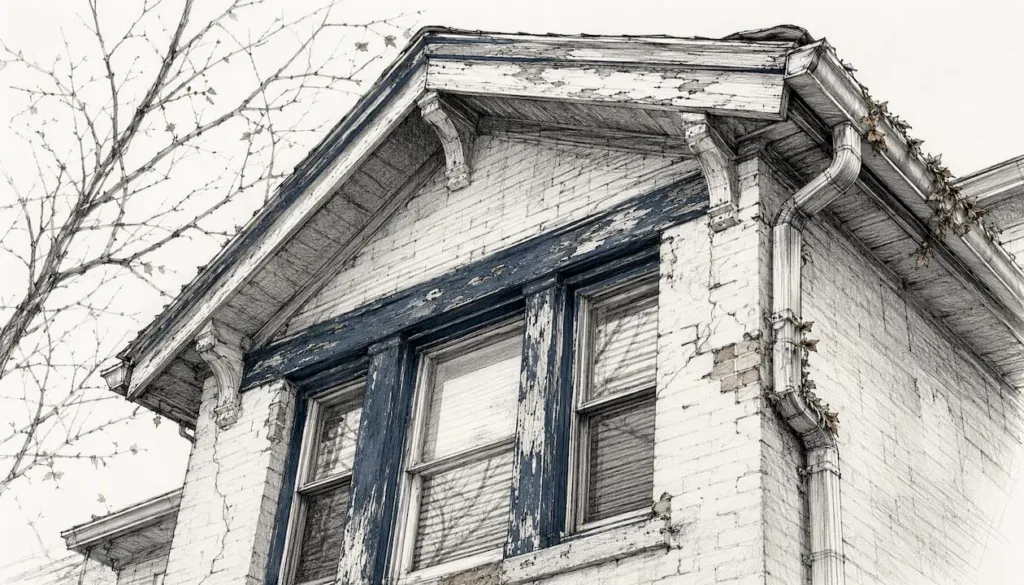
We see the results of deferred maintenance regularly. A missed attic bypass in a Northwest Side bungalow drives up heating costs for years before anyone notices. A downspout disconnected from the drain tile sends water toward the foundation every spring. These aren’t dramatic failures — they’re slow, quiet, and expensive when they finally surface.
Our annual home inspections cover all the systems above, with photo-backed reports and a clear priority matrix. We’re InterNACHI certified, BBB accredited, licensed, and insured. We also offer radon testing, mold testing, and sewer camera inspections as add-ons — which matters in a city where aging clay sewer laterals and basement moisture are common findings.
Our service capabilities at a glance:
- Full residential maintenance inspection
- Radon testing (with closed-building protocol guidance)
- Mold sampling and air quality testing
- Sewer camera inspection for older laterals
- Photo-backed digital reports delivered within 24 hours
- Weekend appointments available
Pro Tip: Combining a maintenance inspection with radon testing in the same visit is the most cost-efficient approach for Chicago homeowners. You’re already paying for the inspector’s time — adding radon testing adds minimal time and gives you data on one of the most common and invisible hazards in our region.
Our honest take on annual inspections
The conventional advice is to get an inspection when you buy and when you sell. That framing treats your home like a transaction instead of a long-term asset, and it’s where most homeowners lose money.
The real value of a yearly maintenance inspection isn’t the inspection itself — it’s the compounding effect of catching small problems before they become structural ones. A homeowner who has three years of inspection reports knows exactly what their home’s trajectory looks like. A homeowner who hasn’t inspected since closing is essentially flying blind, hoping nothing has changed.
What’s overrated: the idea that a newer home doesn’t need professional attention. Builder-grade construction has its own failure patterns — improper grading, undersized HVAC, and inadequate attic ventilation show up in homes that are five years old as often as in homes that are fifty. Age is a factor, but it’s not the only one.
What to prioritize first: roof, drainage, and the electrical panel. These three areas generate the most expensive emergency repairs and the most insurance complications. If your inspection budget is limited, start there.
Schedule a maintenance inspection with Chicago Home Inspect LLC
A maintenance inspection with Chicago Home Inspect LLC runs through every major system in your home, delivers a photo-backed priority report within 24 hours, and gives you a clear picture of what needs attention now versus what can wait. We serve Chicago neighborhoods and the surrounding suburbs across Lake, McHenry, DuPage, and northern Cook Counties.
Add radon testing, mold testing, or a sewer line inspection to the same visit and you cover the most common hidden risks in one appointment. Weekend slots are available. To book or check availability, visit our residential inspection services page and schedule directly online.
Sources
- Annual Home Maintenance Checkup – InterNACHI®
- You Don’t Have to Sell Your House to Need a Home Inspection—Here’s Why – BobVila
- BBB
- Homes2moveyou
- Annual roof inspections protect your Central Florida home – Thomas Roofing and Repair