
Most American homeowners have never seen or smelled radon, yet this invisible gas causes over 21,000 lung cancer deaths each year according to the U.S. Environmental Protection Agency. Many in the American real estate market believe only certain homes or regions are at risk, but radon does not discriminate. Understanding radon safety levels and common misconceptions can make the difference between peace of mind and hidden health dangers for Chicago families and property professionals.
Table of Contents
- Radon Safety Levels Defined and Misconceptions
- Health Impacts of Radon Exposure in Homes
- Federal and Illinois Radon Regulations
- How Radon Is Tested and Measured
- Responsibilities for Realtors and Homebuyers
Radon Safety Levels Defined and Misconceptions
Radon is a colorless, odorless radioactive gas that can pose serious health risks, particularly when concentrations accumulate inside homes. Understanding radon risk levels is crucial for Chicago area realtors and homeowners seeking to protect themselves and their clients from potential long-term health hazards.
The U.S. Environmental Protection Agency establishes a critical benchmark for radon exposure: 4 picocuries per liter (pCi/L) of air. This standard represents the action level where mitigation becomes strongly recommended. However, radon safety is nuanced – no exposure level is considered completely safe, and even concentrations below 4 pCi/L can present measurable health risks.
Common misconceptions about radon can lead homeowners and real estate professionals into dangerous territory. Many people incorrectly believe that only certain geographic regions experience radon problems or that homes without basements are automatically safe. In reality, radon can infiltrate structures through foundation cracks, basement walls, crawl spaces, and even water supplies. Every home – regardless of age, location, or construction style – should undergo professional radon testing to ensure occupant safety.
Pro Tip: Annual Radon Check: Schedule professional radon testing during home inspections or real estate transactions to protect clients and provide comprehensive property evaluations.
Health Impacts of Radon Exposure in Homes
Radon represents a serious and often overlooked health threat that can silently impact residential environments. Epidemiological studies have conclusively demonstrated that radon exposure significantly increases lung cancer risk, making it the second leading cause of this devastating disease after smoking.
The potential health consequences of radon are particularly alarming. Systematic research and meta-analyses have revealed strong correlations between residential radon levels and increased incidences of not only lung cancer but also childhood leukemia. What makes radon especially dangerous is its ability to cause harm even at concentrations below commonly established reference levels, meaning no amount of exposure can be considered completely safe.
For Chicago area homeowners and real estate professionals, understanding these risks is critical. Unlike other environmental hazards, radon is undetectable without specialized testing. It can infiltrate homes through foundation cracks, crawl spaces, and even water systems. The invisible nature of this radioactive gas means that homes across different neighborhoods and construction styles can harbor potentially dangerous radon concentrations without any visible warning signs.
Pro Tip: Comprehensive Health Screening: Schedule professional radon testing in conjunction with home inspections, and recommend periodic retesting to ensure ongoing safety for homeowners and their families.
Federal and Illinois Radon Regulations
Navigating the complex landscape of radon regulations requires a comprehensive understanding of both federal guidelines and state-specific requirements. The U.S. Environmental Protection Agency plays a pivotal role in establishing national standards, developing comprehensive radon zone maps that help local governments and homeowners understand potential radon risks across different geographic regions.
Federal regulations primarily focus on establishing safety recommendations and providing guidance rather than implementing mandatory testing requirements. The EPA recommends that every home in the United States, regardless of location or construction type, undergo radon testing. In Illinois, these federal guidelines are supplemented by state-level regulations that provide additional protections for residents. The Illinois Emergency Management Agency (IEMA) has developed specific protocols for radon testing, mitigation, and real estate transactions, ensuring that homeowners and real estate professionals have clear guidelines for managing radon risks.
For realtors in the Chicago area, understanding these regulations is critical. Illinois law requires radon disclosure during real estate transactions, mandating that sellers provide potential buyers with radon test results or allow for testing during the inspection period. This regulation ensures transparency and gives buyers the opportunity to make informed decisions about potential radon mitigation needs. Professional home inspectors must follow strict protocols when conducting radon tests, using calibrated equipment and adhering to state-approved testing methodologies.
Pro Tip: Regulatory Compliance: Always include a comprehensive radon test as part of your home inspection process and familiarize yourself with the latest federal and Illinois-specific radon guidelines to protect your clients and maintain professional standards.
How Radon Is Tested and Measured
Radon testing represents a critical component of home safety assessments, requiring specialized equipment and precise methodologies. EPA guidelines outline comprehensive approaches for detecting and measuring radon concentrations in residential environments, distinguishing between short-term and long-term testing strategies that provide different insights into potential health risks.
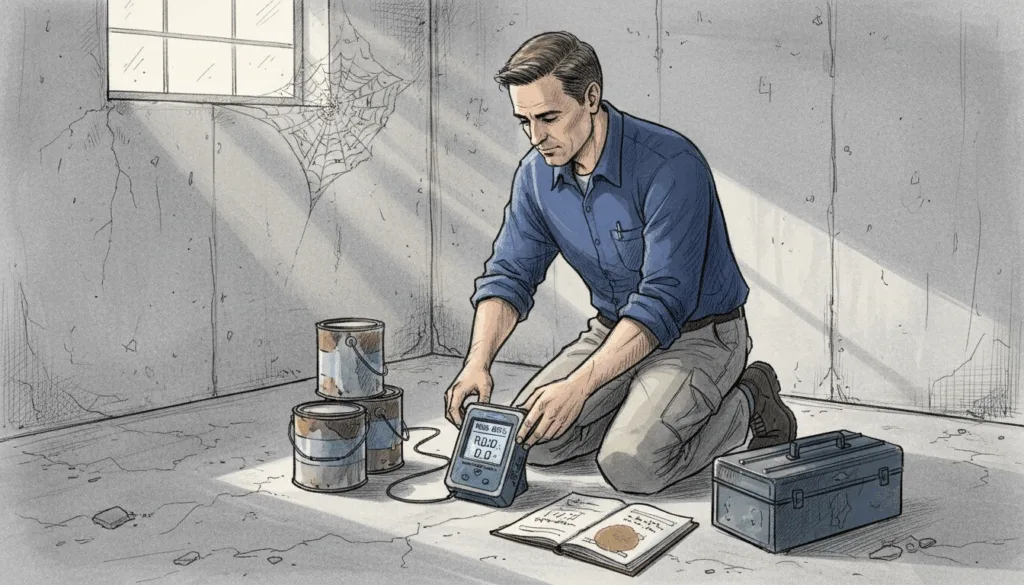
Two primary testing methods dominate professional radon assessments. Short-term tests typically last between two and seven days, providing a quick snapshot of potential radon levels. These tests use charcoal canisters, electronic monitors, or alpha track detectors placed in the lowest living area of a home. Long-term tests, by contrast, measure radon concentrations over a period of three to twelve months, offering a more comprehensive understanding of seasonal variations and consistent exposure levels. Professional home inspectors in the Chicago area recommend using both testing methods to ensure a thorough assessment of potential radon risks.
The precision of radon testing depends on strict protocols and proper equipment placement. Inspectors must carefully select testing locations, typically in the lowest lived-in level of a home, avoiding areas with high humidity or direct airflow that could skew results. Electronic continuous monitors provide real-time data and can detect short-term fluctuations, while passive devices like charcoal canisters offer a more economical option for initial screening. For real estate transactions, multiple testing points and comprehensive analysis become crucial in providing accurate risk assessments to potential homebuyers.
Here’s a comparison of radon testing methods used in home safety assessments:
| Test Type | Duration | Benefits | Limitations |
|---|---|---|---|
| Short-Term | 2-7 days | Quick results for decisions | May miss seasonal variation |
| Long-Term | 3-12 months | Reflects yearly average | Slower, requires patience |
Pro Tip: Strategic Testing: Always conduct radon tests during different seasons and in multiple locations within a home to obtain the most accurate representation of potential radon exposure risks.
Responsibilities for Realtors and Homebuyers
In the complex landscape of real estate transactions, radon awareness demands proactive engagement from both realtors and homebuyers. Understanding seller responsibilities during home inspections becomes crucial in managing potential radon-related risks and ensuring transparent communication throughout the property transfer process.
Realtors carry significant responsibility in educating clients about radon risks. This includes recommending professional radon testing, interpreting test results, and explaining potential mitigation strategies. Disclosure requirements vary by jurisdiction, but ethical realtors should always prioritize client safety by providing comprehensive information about radon exposure risks. For Chicago area professionals, this means understanding local regulations, recognizing potential radon entry points in different home styles, and connecting clients with qualified radon testing and mitigation specialists.
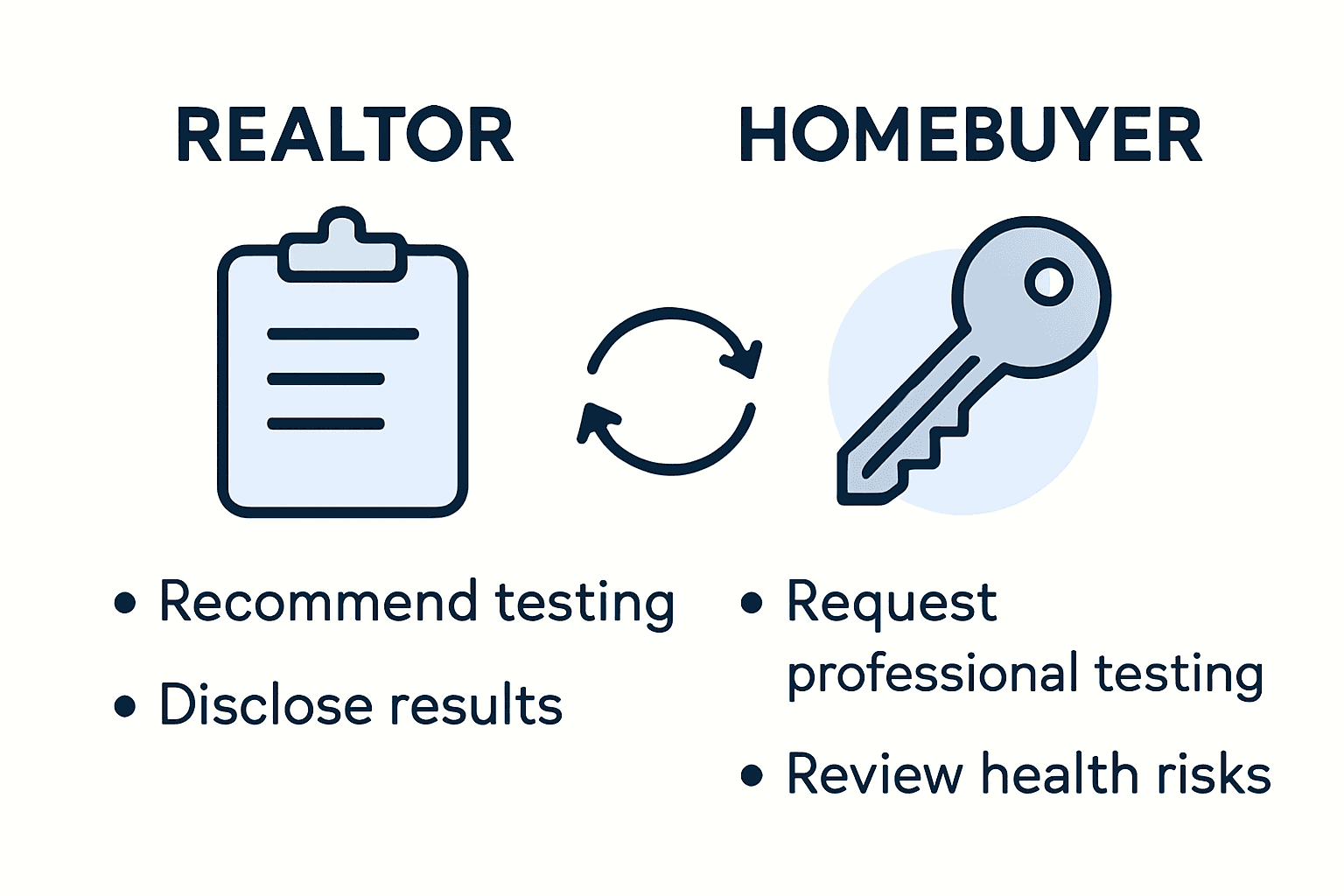
Homebuyers must be proactive and informed consumers when it comes to radon testing. This involves requesting comprehensive radon testing during home inspections, understanding test results, and evaluating potential mitigation costs. Critical steps include reviewing historical radon test data, considering the home’s construction type and geological location, and budgeting for potential remediation. Buyers should not hesitate to negotiate repairs or price adjustments if significant radon risks are identified, treating radon testing as an essential component of their overall home inspection process.
The table below summarizes key stakeholder responsibilities related to radon in real estate transactions:
| Stakeholder | Main Responsibility | Impact on Real Estate Process |
|---|---|---|
| Realtor | Educate and disclose radon risks | Informs buyers, supports transparent deals |
| Homebuyer | Request and review radon testing | Enables informed purchase and negotiation |
| Home Inspector | Conduct accurate radon measurement | Ensures safety data is reliable and trusted |
Pro Tip: Collaborative Risk Management: Work together as a team, with realtors guiding homebuyers through the radon testing and mitigation process, ensuring transparent communication and comprehensive risk assessment.
Protect Your Clients and Your Investment with Professional Radon Testing
Radon exposure is a hidden risk that every homeowner and realtor must take seriously. The article reveals key challenges like invisible radon infiltration and the misconception that only certain homes or areas face this threat. Ensuring a safe living environment means understanding radon safety levels and acting before it threatens health. Realtors and homebuyers share the goal of transparent radon disclosure and reliable test results to make informed decisions.
Take charge now with trusted Radon Testing services from licensed professionals certified by InterNACHI and accredited by BBB. Our comprehensive inspections include precise radon measurement during Buyer Pre-Purchase Inspections or Seller Pre-Listing Inspections to help you detect hidden dangers quickly and confidently. Don’t wait until radon becomes a costly health hazard. Schedule your inspection today at Chicago Home Inspector and safeguard the health and value of every home you represent.
Frequently Asked Questions
What are the recommended radon safety levels?
The U.S. Environmental Protection Agency recommends an action level of 4 picocuries per liter (pCi/L) of air for radon exposure. Homes with radon levels at or above this threshold should consider mitigation.
How can radon levels be tested in homes?
Radon can be tested using short-term and long-term testing methods. Short-term tests last between 2 to 7 days for quick results, while long-term tests range from 3 to 12 months for a comprehensive assessment of radon levels.
What are the health risks associated with radon exposure?
Radon exposure is linked to an increased risk of lung cancer and childhood leukemia. Even low levels of radon exposure can pose health risks, making testing essential for safety.
What is the role of realtors in radon awareness during home transactions?
Realtors are responsible for educating clients about radon risks, recommending professional testing, and ensuring disclosure of radon test results during real estate transactions.
Recommended
- Understanding How Does Radon Enter a Home | Chicago Home Inspect LLC
- Professional Radon Testing Services | Chicago Home Inspect LLC
- Complete Guide to Radon, Mold, or Carbon Monoxide in Chicago | Chicago Home Inspect LLC
- Safety & Wellness | Chicago Home Inspect LLC
- The Importance of Fire Alarms: Ensuring Safety and Protection