

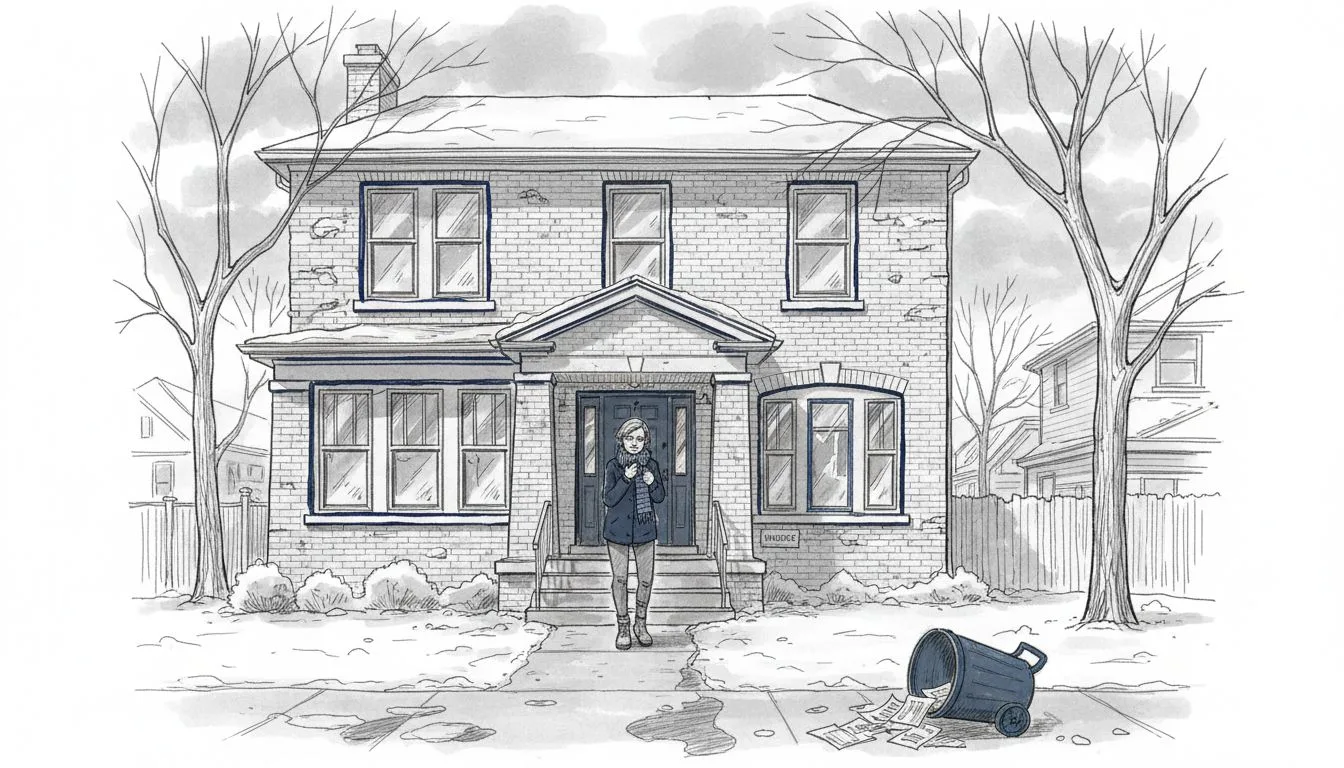
Every winter, Chicago homeowners find that keeping their homes warm comes with hidden risks as radon levels rise indoors when temperatures drop. Colder months create pressure changes and tight home sealing, pulling radon from the ground and trapping it inside—a pattern fueled by Chicago’s unique mix of soil and building styles. Knowing why winter exaggerates radon issues helps you protect your investment and your family’s health with timely, accurate testing and expert guidance.
Table of Contents
- Radon Gas and Winter Increases Explained
- Why Chicago Homes Face Higher Risk
- How Winter Conditions Affect Indoor Radon
- Testing for Radon During Winter Months
- Reducing Radon Exposure in Cold Weather
Radon Gas and Winter Increases Explained
Winter transforms how radon behaves in your Chicago home. Most people don’t realize that the coldest months often bring the highest indoor radon levels, and the science behind this is straightforward once you understand the mechanics. The culprit isn’t the cold itself, but rather a combination of pressure changes and ventilation patterns that winter creates inside and around your home.
The primary driver is something called the stack effect. When you heat your home during winter, warm air naturally rises and escapes through the upper portions of your house—through leaks around attic vents, gaps in the roof line, and small openings you can’t even see. This creates a vacuum at the lowest levels of your home, particularly in the basement and foundation areas. Radon enters homes through natural pressure differences, and winter amplifies these pressure differences dramatically. As your heating system works overtime, it essentially pulls harder on your foundation, drawing radon gas from the soil below upward and into your living spaces. Additionally, the frozen ground acts as a barrier, trapping radon beneath the surface and increasing pressure, which forces more of the gas into homes searching for a way out.
The second factor is seasonal home sealing. Chicagoans winterize their homes by caulking cracks, sealing windows, and closing off unused areas to reduce heating costs. While this saves money on energy bills, it also traps radon indoors. Your home becomes essentially airtight, which means any radon that enters has nowhere to escape. Combined with reduced natural ventilation from closed windows and doors, this creates an ideal environment for radon accumulation. The stack effect works at maximum efficiency, continuously pulling radon in through foundation cracks and soil contact areas, while your sealed home prevents it from dissipating. By January and February, radon levels in Chicago area homes typically peak at their annual highs—often two to three times higher than summer readings.
These factors converge to make winter testing absolutely critical. If you’re a homebuyer evaluating a property in Chicago or a current homeowner concerned about indoor air quality, winter provides the most accurate picture of your radon risk. The EPA recommends testing below the third floor of your home, ideally in basements or lower levels where radon accumulates. Since Chicago homes range from historic Wicker Park brownstones to modern Lincoln Park condos, foundation types vary considerably, but the physics of radon movement remains consistent. Understanding that radon peaks in winter means you should prioritize testing now rather than waiting for spring, when levels naturally decline and might give you false reassurance.
Pro tip: Schedule your radon test during winter months (November through February) for the most accurate assessment of your home’s actual radon risk, then follow up with retesting in summer to understand your home’s seasonal patterns.
Why Chicago Homes Face Higher Risk
Chicago’s geography and building characteristics create a perfect storm for radon accumulation, especially during winter months. It’s not just that radon exists in the soil here, though it does. The real issue is that Chicago’s specific combination of geology, construction styles, and climate patterns amplifies your risk compared to many other regions across the United States. Understanding why your home is particularly vulnerable is the first step toward taking action.
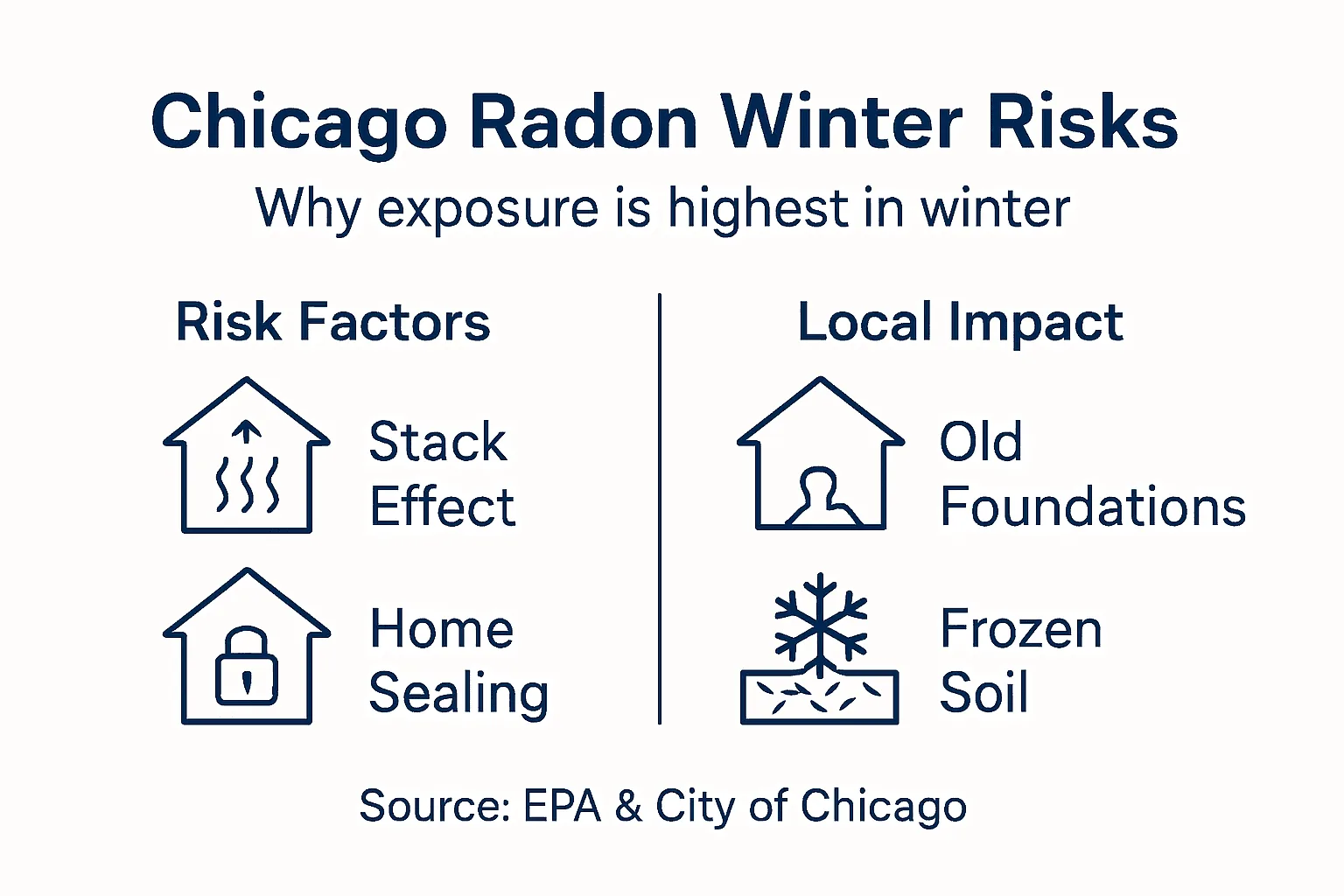
The foundation of Chicago’s radon problem lies beneath your feet. Chicago’s soil uranium content contributes significantly to elevated radon levels in residential areas throughout the city and suburbs. But geology alone isn’t the culprit. Most Chicago homes, especially those built before 1980, were constructed with basements that directly contact the soil. This is a defining characteristic of Midwestern construction. Unlike homes in other regions that sit on concrete slabs or elevated foundations, Chicago basements provide direct access points for radon to enter. The soil-to-foundation interface creates a permeable boundary where radon gas seeps upward through cracks, gaps around pipes, and even through porous foundation materials. When you combine this with construction characteristics like older foundation materials and higher ceilings, you get homes that are particularly susceptible to radon accumulation.
Your home’s construction year matters more than you might think. Older Chicago homes, common in neighborhoods from Lincoln Square to Bridgeport, were built with less attention to air sealing and ventilation standards. Pre-1980 homes especially tend to have more foundation cracks, deteriorated sealants, and structural gaps that provide easy pathways for radon. Meanwhile, newer homes built to modern standards often have improved foundation sealing, but this creates a different problem. Modern construction emphasizes energy efficiency through tight sealing and reduced natural ventilation. While this saves on heating bills during Chicago’s brutal winters, it traps radon indoors once it enters. You’re essentially caught between two risks: older homes leak radon in easily, while newer homes trap it once it’s inside. The urban density of Chicago neighborhoods also exacerbates the problem. Tightly packed homes mean less air circulation around foundations, reduced opportunities for radon to disperse naturally, and concentrated radon accumulation in basements and lower levels where families spend time.
Climate amplifies everything. Winter conditions in Chicago enhance the stack effect, the pressure differential that pulls radon upward through your foundation. Your heating system works overtime, creating powerful pressure differences that radon exploits. Add in seasonal home sealing—caulking, weatherstripping, and closing windows to keep heat inside—and you’ve essentially created a radon trap. By February, many Chicago homes show radon levels that peak at two to three times their summer readings. The combination of geological susceptibility, building construction patterns, and winter climate conditions means Chicago homeowners need to take radon testing seriously, especially during the colder months when risk is highest.
Here’s a comparison of radon entry and trapping factors in Chicago homes based on age and construction style:
| Home Type | Radon Entry Risk | Radon Trapping Risk | Typical Foundation |
|---|---|---|---|
| Pre-1980 homes | High (more cracks) | Moderate (looser seal) | Basement |
| Post-1980 homes | Moderate (better seal) | High (tighter sealed) | Basement/slab |
| Condo buildings | Low (higher floors) | Variable | Slab/underground |
| Townhomes | Variable (shared walls) | High (urban density) | Basement/slab |
Pro tip: If you own an older Chicago home with a basement, get a radon test done during winter and another in summer to establish your home’s complete radon profile, then prioritize mitigation if levels exceed 2 picocuries per liter (pCi/L).
How Winter Conditions Affect Indoor Radon
Winter weather doesn’t just affect your heating bill and the salt stains on your car. The cold, dry conditions of Chicago winters fundamentally change how radon behaves in your home. The relationship between outdoor temperature and indoor radon is almost mechanical: as it gets colder outside, radon levels inside typically spike. This isn’t coincidence. Cold winter air creates specific pressure and ventilation conditions that actively draw radon from the soil into your living spaces and then trap it there.
Temperature differences are the engine driving this process. When outdoor temperatures drop to freezing or below, your heating system works to maintain a comfortable 68 to 72 degrees inside. This creates a dramatic pressure differential between your warm interior and the cold exterior. Colder outdoor temperatures correlate with higher indoor radon due to increased pressure differences that pull radon upward through foundation cracks and soil contact points. Think of it like a suction effect: the warmer your home stays relative to the ground temperature, the harder it pulls on your foundation. Your home’s heating system essentially becomes a radon vacuum. Additionally, winter sealing and reduced ventilation allow radon to accumulate because the gas enters but has nowhere to escape. You’ve created a pressure imbalance that radon eagerly exploits.
Snow, ice, and frozen soil add another layer to this problem. When the ground freezes solid, it acts as a cap over the soil, blocking radon’s natural escape routes to the atmosphere. Radon that would normally dissipate upward through the soil surface instead gets forced sideways and downward, building pressure beneath your foundation. This increased subsurface pressure pushes radon harder against your home’s foundation, seeking every crack, gap, and weakness. Your heating system simultaneously creates that vacuum effect from above, and frozen soil creates pressure from below. Radon is caught between two forces working together to drive it into your home. Wind and precipitation also matter. Heavy snow cover further seals the ground, and winter winds can create complex pressure patterns around your home’s exterior that either amplify or reduce radon entry depending on wind direction and your home’s orientation on the lot.
Your home’s response to winter conditions matters just as much as the outdoor weather. Modern Chicago homes sealed for energy efficiency become radon traps once the gas enters. Caulked baseboards, sealed windows, weatherstripped doors, and insulated crawl spaces all contribute to excellent winter comfort but poor radon escape. Older homes with looser construction might actually have slightly better natural ventilation in some areas, but this also means easier radon entry throughout. Heating system operation changes air pressure patterns within your home, particularly in basements and lower levels where radon accumulates. Central heating draws air from lower parts of your home upward and out, which increases pressure differences at basement level. By understanding how winter conditions physically affect your home’s internal pressure and ventilation, you can appreciate why testing during these months reveals your home’s actual worst-case radon scenario.
Pro tip: Maintain a temperature log and radon test results from December through February to establish your winter baseline, then compare with spring and summer readings to understand how weather affects your specific home’s radon behavior.
Testing for Radon During Winter Months
Winter is the ideal time to test your Chicago home for radon, but many homeowners delay testing until spring or summer. This is a mistake. Winter testing captures your home’s worst-case radon scenario, which gives you the most accurate picture of your actual risk. The conditions that make winter uncomfortable for you—sealed windows, running heat constantly, pressure differences between inside and outside—are precisely the conditions that push radon to its highest concentrations. If you’re going to test your home, do it now when radon is at peak levels.
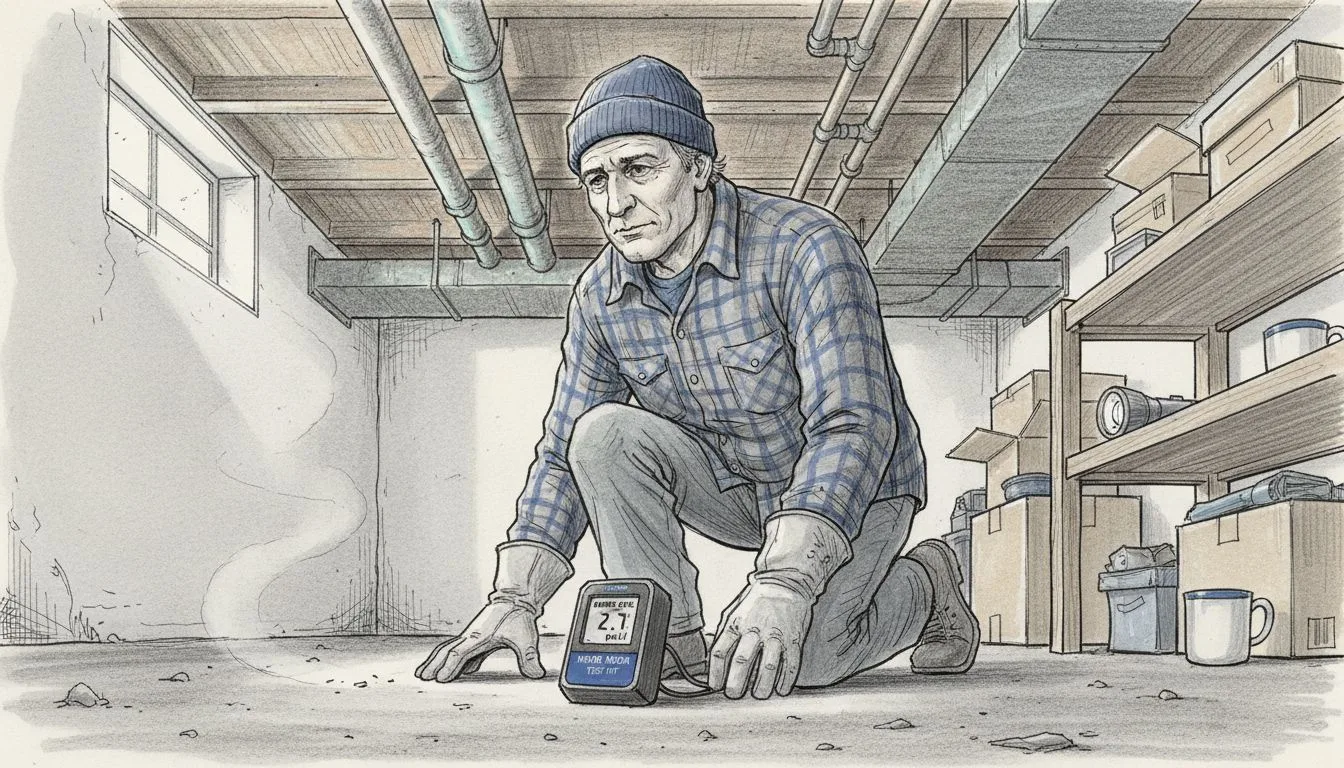
Short-term radon tests of 2 to 7 days effectively detect radon peaks in winter because this period typically shows the highest radon concentrations in your home. You don’t need to commit to months of testing to get meaningful results during winter. A 48-hour test conducted in January will reveal more about your radon exposure than a month-long test in July. This matters because the EPA and health organizations use radon measurements to determine risk levels and recommend action thresholds. If your winter test shows elevated radon, you’ll have concrete data supporting the need for mitigation. Conversely, if winter testing shows acceptable levels, you can be reasonably confident your summer levels will be even lower. Chicago Home Inspect LLC recommends placing your test device in the lowest lived-in area of your home—typically the basement, family room, or bedroom on the lowest floor. Keep windows and doors closed during the test period to simulate normal winter living conditions with your heating system running.
Proper test placement matters more than you might think. The EPA and radon testing professionals have specific guidelines for where tests should sit. Position your device at least 20 inches away from walls, windows, and doors, and place it between 20 and 48 inches above the floor. Don’t put it in drafty areas like near heating vents, air returns, or doors that frequently open to outside. Your basement or lowest-level bedroom represents where radon accumulates most heavily, so that’s where testing should occur. If you have a finished basement that your family uses regularly, place your test there. If your basement is unfinished storage space but your family spends time in a ground-level bedroom, test that bedroom instead. The goal is capturing radon levels in spaces where actual human exposure occurs.
Timing matters as much as placement. Start your test on a day when you’re planning to be home with normal heating patterns. Don’t run your heating system on overdrive the day you start testing, as this artificially elevates radon. Instead, keep your home at normal winter temperature and follow your typical routine. Avoid opening windows or doors excessively during the test period. If you’re conducting a short-term test, keep careful records of the dates and times, any unusual weather patterns, whether your heating system ran normally, and whether you opened windows. Some Chicago homes show radon variations based on wind direction, basement moisture levels, or other factors. Documenting these details helps interpret your results. If your test indicates radon above 2 picocuries per liter (pCi/L), the EPA recommends taking action to reduce levels. Chicago Home Inspect LLC can help you understand your results and discuss mitigation options if needed.
Pro tip: Schedule your radon test for mid-January through early February when winter conditions are most extreme, then plan a follow-up test in July or August to document your home’s seasonal radon variation pattern.
Below is a quick summary of recommended radon testing strategies for Chicago homes during winter:
| Strategy | Best Timing | Where to Place Test | Why It Matters |
|---|---|---|---|
| Short-term test | January-February | Basement/lowest lived space | Captures winter peak levels |
| Long-term monitoring | Year-round | Living areas, bedroom | Reveals seasonal variation |
| Repeat test in summer | July-August | Same location as winter test | Confirms true risk pattern |
Reducing Radon Exposure in Cold Weather
Reducing radon during winter requires a strategic approach that balances your need for a warm, comfortable home with the reality that sealed houses trap radon. You can’t simply crack open windows in January without defeating your heating system’s purpose. Instead, effective radon reduction during cold weather involves targeted actions that work with winter conditions rather than against them. The good news is that solutions exist, ranging from simple maintenance steps to professional mitigation systems that eliminate radon at the source.
Start with the foundation, literally. Sealing foundation cracks and gaps reduces radon entry and is one of the most cost-effective first steps. Walk your basement walls during winter and look for visible cracks in the concrete or mortar. Hairline fractures might seem minor, but radon moves right through them. Caulk these cracks with concrete caulk or epoxy sealant designed for basements. Pay special attention to areas where the foundation meets the rim joist, where pipes and utilities penetrate the foundation, and around basement windows and door frames. These transition points are where radon enters most easily. You should also seal gaps around sump pump openings and any visible cracks in the basement floor. This isn’t a perfect solution on its own, but combined with other measures, sealing foundation vulnerabilities significantly reduces radon entry. Chicago homeowners with older basements often find numerous cracks from decades of settling and freeze-thaw cycles. Taking a winter afternoon to systematically seal these gaps pays dividends.
Ventilation adjustments require finesse during winter. You can’t ventilate your home like you would in summer without wasting heat and driving up utility bills. Instead, focus on strategic ventilation in specific areas. If you have a basement bedroom, bathroom, or family room where radon concentulates, install or maintain bathroom exhaust fans that vent directly outside, ensuring dampers close when not in use. Kitchen range hoods should also vent outside rather than recirculating air back into your home. These targeted exhausts create slight pressure differences that can help move radon-laden air out rather than letting it settle in living spaces. Some Chicago homeowners also benefit from installing a heat recovery ventilation (HRV) system that exchanges stale indoor air for fresh outdoor air while recovering the heat from outgoing air. This maintains comfortable temperatures while improving air quality.
For homes with radon readings above 2 picocuries per liter, professional mitigation is often necessary. The most effective solution is sub-slab depressurization, where professionals install a system that draws radon from beneath your foundation and vents it safely outside above your roofline. This system runs year-round, even during winter, and is engineered to work in Chicago’s climate. The installation involves drilling through your basement floor to access the soil beneath, running pipes up through your home, and installing a small fan that continuously pulls radon away from your home’s foundation. Once installed, the system operates quietly in the background, and you forget it’s there. Chicago Home Inspect LLC can connect you with certified radon mitigation contractors who understand local soil conditions and building styles. Most systems cost between $1,200 and $2,500 depending on your home’s configuration. If your test indicates elevated radon, professional mitigation should be your priority rather than relying solely on DIY sealing efforts.
Maintenance during cold months keeps any existing mitigation system working effectively. If you already have a radon reduction system, check that the exterior vent isn’t blocked by snow or ice accumulation. These vents need clear airflow to function. Listen for the system’s fan running normally, and if it sounds different or stops, call your mitigation contractor immediately. Some Chicago homes with older systems may benefit from upgrading to more efficient models. Winter is the time when your system works hardest, so ensuring it’s in top condition protects your family through the season when radon peaks.
Pro tip: Schedule a professional radon mitigation assessment during December or January when contractors have availability and can work with your heating system running normally, then have any necessary system installed before February when radon pressure is at its maximum.
Protect Your Chicago Home From Winter Radon Risks
Winter exposes Chicago homes to elevated radon levels through the stack effect and reduced ventilation that trap this dangerous gas inside. If you own an older basement home or a tightly sealed modern residence, your property may face hidden radon threats that peak during the coldest months. Understanding these risks means taking action before radon reaches harmful levels.
Don’t wait until spring when radon levels naturally decline and testing gives a false sense of safety. Schedule professional Radon Testing today with Chicago Home Inspect LLC. Our licensed, InterNACHI-certified inspectors provide accurate assessments designed for Chicago’s unique climate and home construction. We offer comprehensive Buyer Pre-Purchase Inspections and expert consultations to help you interpret results and navigate mitigation options.
Protect your family from invisible health hazards this winter. Act now to identify radon risks and ensure your home stays safe and comfortable year-round. Book your inspection online at Chicago Home Inspect Schedule and take the first step toward healthier indoor air today.
Frequently Asked Questions
Why do radon levels typically peak in winter?
Radon levels peak in winter due to the stack effect, where warm air rising in your home creates a vacuum that draws radon gas from the soil into your living spaces. Coupled with seasonal home sealing that limits ventilation, winter conditions trap radon indoors at higher concentrations.
How can I test my home for radon during winter?
To test your home for radon in winter, place a testing device in the lowest lived-in area of your home, such as the basement or a ground-level bedroom. Conduct a short-term test over 2 to 7 days, ensuring windows and doors remain closed to simulate normal conditions.
What should I do if my radon levels are above the recommended limit?
If your radon levels exceed 2 picocuries per liter (pCi/L), the EPA recommends taking action to reduce those levels. You may need to seal foundation cracks and gaps, improve ventilation, or hire a professional radon mitigation contractor to install a sub-slab depressurization system.
Are older homes more at risk for high radon levels compared to newer homes?
Yes, older homes, particularly those built before 1980, are often at higher risk for radon accumulation due to more foundation cracks and less effective sealing and ventilation. Newer homes may have better sealing, but they can still trap radon indoors, creating a separate risk.
Recommended
- What Is Radon and Its Impact on Chicago Homeowners | Chicago Home Inspect LLC
- Understanding How Does Radon Enter a Home | Chicago Home Inspect LLC
- Chicago Radon Testing – Protecting Your Family’s Health | Chicago Home Inspect LLC
- How to Check Radon Levels in Chicago Homes | Chicago Home Inspect LLC
- How to Winterise Your Hot Tub: A Step-by-Step Guide – ClearSpa™
- 7 Key Steps for Your House Winter Checklist Explained – Guestly Homes
- Do Solar Floodlights Work in Winter? | LED Supply & Fit