More than 45 percent of Chicago homes will face some form of mold issue due to the city’s humid summers and damp winters. With so many families at risk, knowing the difference between mold inspection and mold testing is vital for protecting your health and avoiding costly repairs. This guide breaks down their key differences so you can confidently choose the right steps to keep your home safe and mold free.
Table of Contents
- Defining Mold Inspection And Mold Testing
- Key Differences Between Inspection And Testing
- Understanding Mold Detection Processes
- When To Choose Inspection Or Testing
- Risks, Costs, And Common Pitfalls
Key Takeaways
| Point | Details |
|---|---|
| Mold Inspection vs. Testing | Mold inspection is a visual assessment for visible mold and moisture issues, whereas mold testing involves collecting samples for analysis of mold types and concentrations. |
| When to Choose Each | Opt for inspection with visible signs of mold; choose testing if mold is suspected without visibility or for specific health concerns. |
| Financial Considerations | Professional mold testing can cost between $300 to $1,000, thus strategic assessment is crucial to avoid unnecessary expenses. |
| Professional Expertise | Engaging certified mold inspectors ensures comprehensive evaluation, reducing risks associated with misinterpretation and DIY approaches. |
Defining Mold Inspection And Mold Testing
If you’re a homeowner in Chicago, understanding the difference between mold inspection and mold testing can save you significant time, money, and potential health risks. According to the EPA, these two processes might sound similar but serve distinct purposes in identifying and addressing potential mold problems.
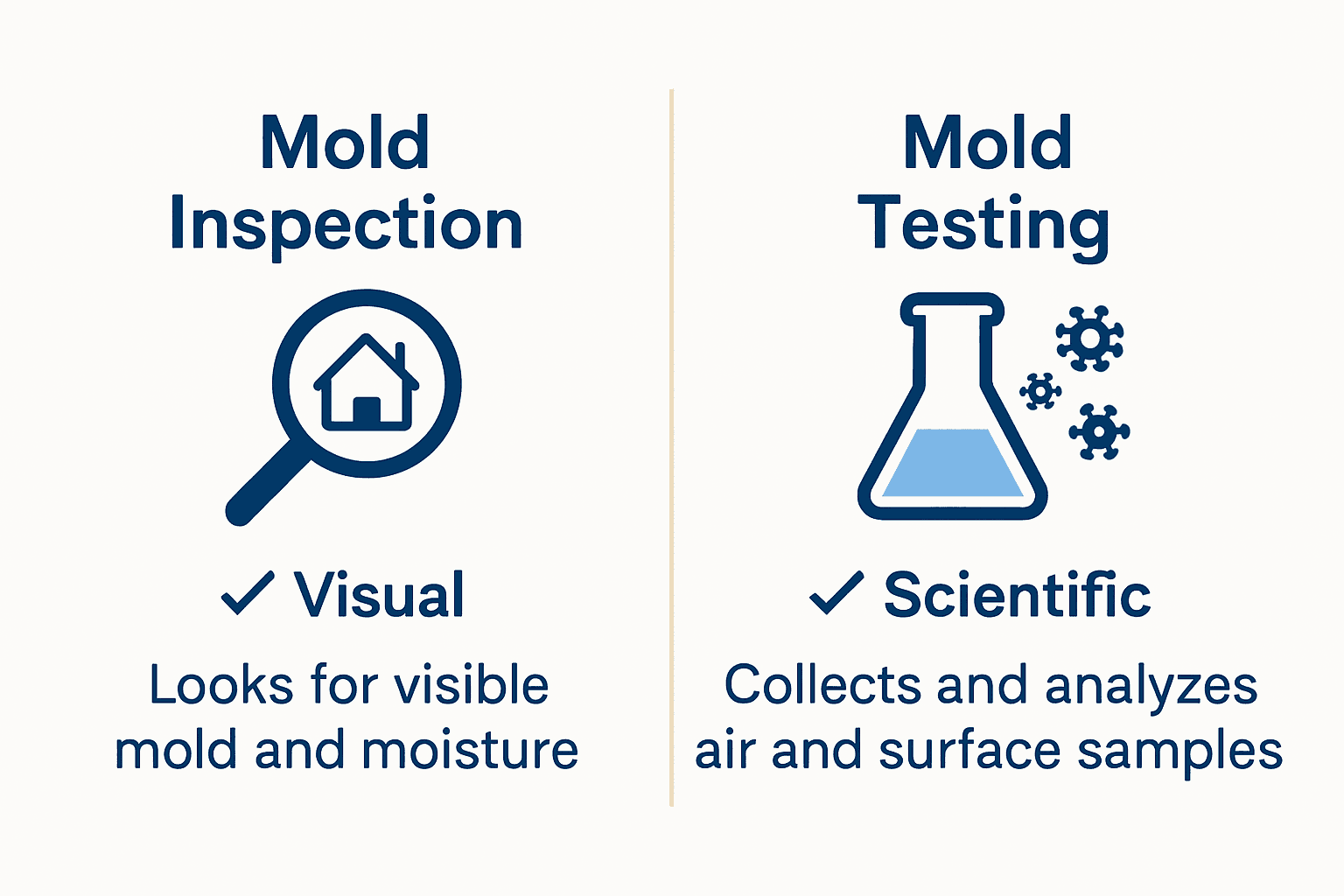
A mold inspection is fundamentally a visual assessment conducted by a professional who systematically examines your property for signs of mold growth. Think of it like a detective carefully searching for clues. Inspectors look for visible mold, water damage, moisture issues, and potential mold breeding grounds in areas like basements, crawl spaces, and around windows. In Chicago’s humid summers and damp winters, these inspections are crucial for early detection.
In contrast, mold testing goes beyond visual examination and involves collecting samples to determine the type and concentration of mold spores present. As the CDC explains, this process typically includes:
- Air sampling to measure airborne mold spore levels
- Surface sampling to collect mold from specific areas
- Laboratory analysis to identify mold species and potential health risks
The key distinction is that inspection reveals visible mold problems, while testing provides scientific data about mold types and potential hidden contamination. For Chicago homeowners, understanding what inspections are needed when buying a house becomes critical in making informed real estate decisions.
Whether you’re in Lincoln Park, Wicker Park, or the suburbs, knowing the nuanced differences between mold inspection and testing can help protect your home and health. Professional assessment is always recommended to ensure comprehensive evaluation.
Key Differences Between Inspection And Testing
Understanding the nuanced differences between mold inspection and mold testing is crucial for Chicago homeowners looking to protect their property and health. According to the EPA, these two processes serve distinct purposes in identifying and addressing potential mold problems, and knowing when to use each can save significant time and money.
The primary distinction lies in the approach and depth of investigation. Mold inspection is a visual assessment focused on detecting visible mold growth and potential moisture sources. Inspectors meticulously examine your property, looking for signs of water damage, humidity issues, and potential mold breeding grounds. In Chicago’s challenging climate with humid summers and damp winters, these visual evaluations are critical for early problem detection.
Mold testing takes a more scientific approach. As the CDC explains, this process goes beyond visual examination by collecting and analyzing samples to determine:
- Exact mold species present
- Concentration of airborne mold spores
- Potential health risks associated with specific mold types
The crucial difference is that inspection reveals what’s immediately visible, while testing provides detailed, quantitative data about mold presence. For homeowners considering a property purchase, understanding the home inspection process becomes an essential step in making informed decisions.
Whether you’re dealing with a vintage Wicker Park brownstone or a modern suburban home, recognizing these differences helps you take targeted action. Professional mold experts recommend a comprehensive approach that combines both visual inspection and scientific testing to ensure complete understanding of potential mold issues.
Understanding Mold Detection Processes
Mold detection is a critical process for protecting your Chicago home from potential health hazards and structural damage. According to the CDC, comprehensive mold detection involves multiple sophisticated approaches that go beyond simple visual examinations.
Professional mold detection typically begins with a systematic visual inspection. Trained inspectors meticulously examine your property, searching for telltale signs of mold growth such as discoloration, water stains, and moisture accumulation. In Chicago’s diverse housing landscape—from vintage brick bungalows in Bucktown to modern condos in the Loop—these visual assessments are crucial for identifying potential mold breeding grounds.
The detection process encompasses several key methods:
- Visual property assessment
- Moisture mapping
- Air quality sampling
- Surface sampling
- Laboratory analysis of collected samples
As the EPA highlights, these techniques help guide targeted remediation efforts. When conducting mold detection, professionals look beyond just visible growth, analyzing environmental conditions that might promote mold proliferation. For homeowners considering mold testing at home, understanding these nuanced detection processes can help make informed decisions about property maintenance and health protection.
Whether you’re dealing with an older Lincoln Park brownstone or a newer suburban home, professional mold detection provides a comprehensive approach to identifying and addressing potential mold issues before they become significant problems.
When To Choose Inspection Or Testing
Determining whether you need a mold inspection or mold testing depends on several critical factors specific to your property’s condition and potential health concerns. According to the EPA, homeowners should carefully assess their unique circumstances before deciding on the appropriate detection method.
Mold inspection is recommended when you observe visible signs of potential mold growth. This includes noticeable discoloration, water stains, or musty odors in areas like basements, bathrooms, or around windows. Chicago homes, with their diverse architectural styles from vintage bungalows to modern high-rises, often have unique moisture challenges that make visual assessments crucial.
Choose mold testing in these specific scenarios:
- When mold is suspected but not visibly apparent
- After water damage or flooding
- For individuals with respiratory sensitivities
- To identify specific mold species
- Before purchasing a new home
The CDC emphasizes that testing becomes essential when health risks need precise evaluation. For Chicago homeowners considering understanding why to inspect before buying, professional guidance can help navigate these complex detection decisions.
Ultimately, the goal is protecting your home and health. Professional mold experts recommend a comprehensive approach that may combine both visual inspection and scientific testing to ensure thorough assessment and peace of mind.
Risks, Costs, And Common Pitfalls
Mold detection processes come with potential risks and financial considerations that Chicago homeowners must carefully understand. According to the EPA, homeowners can easily fall into costly traps if they don’t approach mold assessment strategically.
Financial risks can quickly escalate. Professional mold testing typically ranges from $300 to $1,000, depending on the property size and complexity. Unnecessary or improper testing can waste significant money, especially when visible mold is already present. In Chicago’s diverse housing market—from compact Logan Square apartments to spacious North Shore homes—each property presents unique challenges that impact detection costs.
Common pitfalls in mold detection include:
- Conducting unnecessary testing when visual inspection suffices
- Misinterpreting sample results without professional expertise
- Overlooking underlying moisture sources
- Attempting DIY testing without proper equipment
- Ignoring potential health risks
The CDC emphasizes that testing has inherent limitations, with results potentially varying based on sampling techniques. For homeowners seeking guidance, understanding what certified inspectors do can help navigate these complex assessment challenges.
Ultimately, professional expertise is crucial. A comprehensive approach that combines visual inspection, targeted testing, and expert interpretation can help Chicago homeowners make informed decisions while avoiding unnecessary expenses and potential health risks.
Protect Your Chicago Home with Expert Mold Inspection and Testing
Facing uncertainty about mold in your home can be stressful. Whether you spot visible mold or suspect hidden contamination, understanding the difference between mold inspection and mold testing is essential to protect your family’s health and your property’s value. You want clear answers without wasting money or time on unnecessary procedures. Our licensed and InterNACHI certified professionals know exactly how to assess your home’s unique risks with a thorough visual examination and precise laboratory testing when needed.
Don’t let unseen mold become a costly problem. With our comprehensive home inspection services including seller pre-listing inspections, buyer pre-purchase inspections, and specialized mold testing, we provide peace of mind for Chicago-area homeowners. Take control today by scheduling your appointment. Learn more about our process on the Home Inspection Services page and book your expert mold inspection or testing at https://www.chicagohomeinspector.com/schedule. Protect your home now before small issues grow into expensive repairs or health concerns.
Frequently Asked Questions
What is the difference between mold inspection and mold testing?
Mold inspection is a visual assessment focused on identifying visible mold growth and moisture sources, while mold testing involves scientific sampling to determine the type and concentration of mold spores present in the environment.
When should I choose a mold inspection?
You should opt for a mold inspection when you notice visible signs of mold growth, such as discoloration, water stains, or musty odors in areas prone to moisture.
Is mold testing necessary if I can see mold?
If visible mold is present, a mold inspection is typically sufficient. However, mold testing may be necessary if you want to identify specific mold species or assess health risks related to airborne spores.
What are the costs associated with mold inspection and testing?
Professional mold testing generally ranges from $300 to $1,000, depending on the property’s size and complexity. Mold inspection costs may vary, but they often are less expensive than testing because they do not involve lab analyses.