
What does a home inspection cost in Lake, McHenry, DuPage, and North Cook counties?
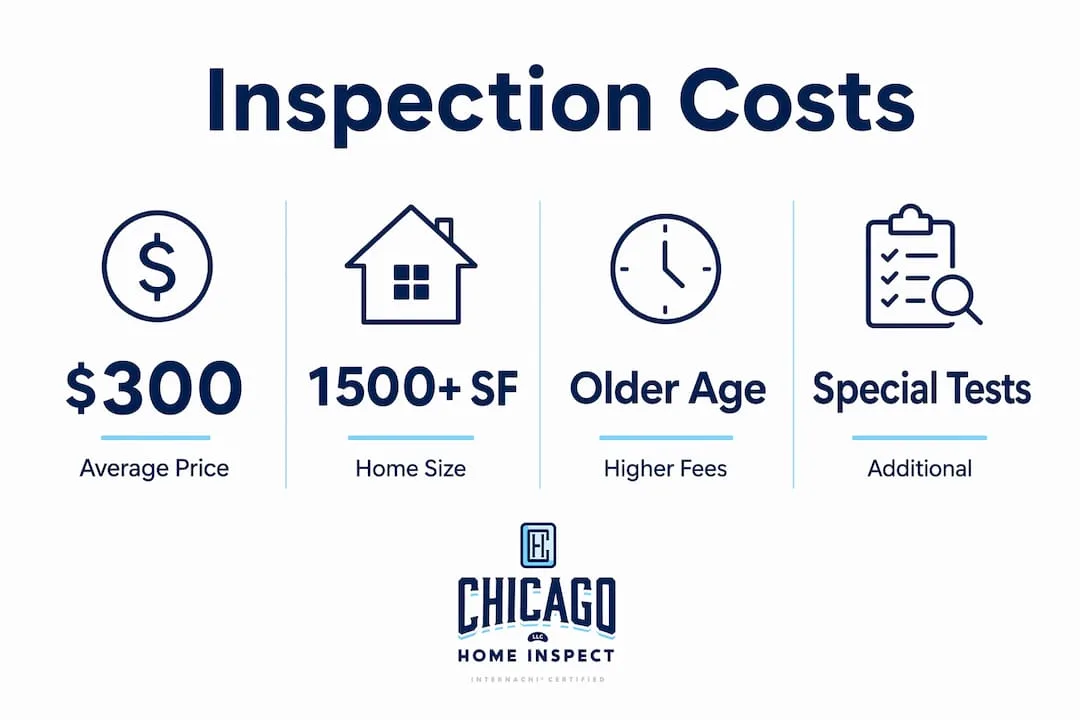
Most homebuyers in these four counties pay varying fees for a standard residential inspection that reflect local market conditions and home characteristics. Your actual price depends on the home’s size, age, and inspection requirements.
Here is what shapes where your quote falls:
Prices vary by home size and type, with larger or older homes generally costing more to inspect. Condos and townhomes are often less expensive. Add-on services like radon, mold, or sewer line inspections incur additional fees.
Prices across Lake, McHenry, DuPage, and North Cook counties track closely with each other. DuPage County tends to run slightly higher due to stronger buyer demand and a denser concentration of larger suburban homes, while McHenry County properties, especially rural parcels, can add travel fees. For what we charge, see our Chicago home inspection cost guide.

What factors drive home inspection fees in these Illinois counties?
Several variables push a quote up or down, and knowing them helps you budget accurately rather than guess.
- Home size: Larger homes take longer to inspect. More square footage means more systems, more rooms, and more time on site.
- Home age: Older homes, particularly those built before 1978, often have legacy systems that require closer attention. Knob-and-tube wiring, galvanized plumbing, and older HVAC configurations all add inspection complexity and time.
- Basement and crawl space: Homes with full basements, common throughout DuPage and Lake counties, require additional inspection time compared to slab-on-grade construction.
- Property type and complexity: A two-story colonial with a detached garage and finished basement takes longer than a ranch-style home of the same square footage.
- Specialized add-ons: Radon and sewer line inspections are separate services with their own fees. Illinois soil conditions make radon testing particularly relevant across all four counties.
- Local market demand: Suburban market conditions affect pricing. High transaction volume in DuPage and North Cook can keep inspector schedules full, which supports higher rates.
- Travel distance: Inspectors serving rural McHenry County properties may add a travel fee for locations well outside their primary service area.
The single biggest cost driver we see is home age combined with complexity. A 1,800-square-foot ranch built in 2005 in Naperville costs less to inspect than a 1,600-square-foot bungalow from 1952 in Waukegan, because the older home demands more time and more careful documentation.
What types of home inspections are available in 2026?
A standard residential inspection covers the core systems of the home. Specialized inspections address specific risks that a general inspection does not fully evaluate.
Standard home inspection covers:
- Structural components: foundation, framing, and visible structural elements
- Roof system: covering, drainage, flashings, chimneys, and skylights
- Exterior: siding, grading, drainage, decks, and attached structures
- Electrical system: service panel, wiring methods, outlets, and smoke/CO detector compliance
- Plumbing: supply lines, drain systems, water heater, and visible fixtures
- HVAC: heating and cooling equipment, ductwork, and visible venting
- Interior: walls, ceilings, floors, windows, doors, and installed appliances
- Insulation and ventilation: attic, crawl space, and mechanical ventilation
Specialized inspections commonly recommended in Illinois:
- Radon testing: Illinois sits in a moderate-to-high radon zone. Professional radon testing is strongly recommended for any home with a basement or lower-level living space.
- Sewer line camera inspection: Older sewer laterals in established suburbs like Evanston, Wilmette, and Arlington Heights are prone to root intrusion and deterioration. A sewer line inspection uses a camera to check the line from the home to the municipal connection.
- Mold testing: Relevant after any visible moisture damage, or in homes with a history of water intrusion. Chicago’s freeze-thaw cycles create conditions where moisture problems develop behind walls without obvious signs.
- Home maintenance inspection: Useful for sellers who want to identify issues before listing, or for owners of older homes who want a condition baseline.
Each specialized service carries its own fee. Bundling two or more with a standard inspection often reduces the total cost compared to scheduling them separately.
How are home inspection fees calculated?
Most inspectors in this region price by a combination of base fee plus adjustments for size, age, and add-ons. Understanding the structure helps you compare quotes accurately.
- Flat base fee: Many inspectors set a starting price for homes up to a certain square footage, typically 1,500–2,000 sq ft, then add incrementally for larger homes.
- Per-square-foot component: Some inspectors apply a per-square-foot rate above the base threshold. This is more common for larger homes where time scales directly with size.
- Age surcharge: Older homes with legacy systems take more time to inspect thoroughly. An inspector may add a flat surcharge for homes built before a certain year, or simply price them higher from the start.
- Add-on service fees: Radon testing, mold sampling, and sewer camera work are priced separately and added to the base inspection fee.
- Travel fees: Inspectors may charge for properties beyond their standard service radius, which applies more often to rural McHenry County locations.
- Report preparation: The written report is included in the inspection fee. Under Illinois law, the report must be delivered within two business days of the completed inspection.
Chicago Home Inspect LLC publishes transparent pricing and includes the written report in the quoted fee. No surprise line items after the fact.
What are the legal requirements and certification standards for Illinois home inspectors?
Illinois has specific licensing requirements that protect buyers and sellers. Hiring an unlicensed inspector puts you at risk of an incomplete or legally unenforceable report.
- Illinois Standards of Practice: The Illinois Administrative Code establishes minimum standards for what a licensed home inspector must visually examine. The inspection covers main systems and components as a non-invasive, visual assessment.
- Written contract required: Before the inspection begins, the inspector must enter into a written contract with the client that includes the scope of services and the fee.
- Report delivery timeline: Illinois law requires the written inspection report to be delivered within two business days of the completed inspection. The report must include the inspector’s license number, on-site start time, weather conditions, and a description of all inspected systems.
- Licensing: Illinois requires home inspectors to hold a state license. Inspectors must meet education and examination requirements and carry errors and omissions insurance.
- InterNACHI certification: The International Association of Certified Home Inspectors (InterNACHI) sets a widely recognized professional standard above the state minimum. Chicago Home Inspect LLC is InterNACHI certified, which means our inspectors meet ongoing education requirements and adhere to a published code of ethics.
- BBB Accreditation: Chicago Home Inspect LLC is also BBB Accredited, providing an additional layer of verified business accountability.
Hiring a licensed, insured, and certified inspector is not just a formality. It determines whether your report holds up during price negotiations or legal disputes after closing.
How can you save on home inspection costs without cutting corners?
Reducing your inspection bill does not mean accepting a less thorough inspection. A few practical moves can lower your total cost while keeping quality intact.
- Bundle services: Scheduling radon testing or a sewer line camera inspection at the same time as your standard inspection almost always costs less than booking them separately. The inspector is already on site.
- Choose a comprehensive inspector: An inspector who covers more systems in a single visit reduces the need for follow-up specialists. Paying slightly more upfront for a thorough inspection often saves money on additional consultations.
- Use findings in negotiations: A well-documented inspection report gives you real leverage at the negotiating table. Buyers who use inspection findings average $14,000 in price reductions or repair credits before closing.
- Avoid re-inspections when possible: If repairs are made after an initial inspection, a re-inspection confirms the work was completed correctly. Scheduling the original inspection before the repair deadline in your contract avoids rushed timelines that lead to re-inspection fees.
- Schedule on weekdays if flexible: Some inspectors charge a premium for weekend appointments. Chicago Home Inspect LLC offers weekend availability at no extra charge, which is worth confirming when you compare quotes.
- Learn how to How to Book a Home Inspection Online in Chicago | Chicago Home Inspect LLC early in the contract period to leave room for follow-up if needed.
How long does a home inspection take in these counties?
Plan for 2–4 hours on site for a standard residential inspection. The exact duration depends on the home’s size, age, and condition.
- Small homes under 1,500 sq ft: typically 1.5–2.5 hours
- Mid-size homes, 1,500–2,500 sq ft: typically 2.5–3.5 hours
- Larger or older homes: 3–4 hours or more, particularly for homes with full basements, multiple HVAC systems, or deferred maintenance
- Add-on services: Radon testing requires a separate device placement and pickup, adding minimal time to the inspection itself. Sewer camera work adds 30–60 minutes depending on line access.
- Report delivery: Illinois requires the written report within two business days. Chicago Home Inspect LLC typically delivers reports the same day or the following morning.
Attending the inspection is worth your time. Walking through the home with the inspector gives you context that a written report alone cannot fully convey. You will understand which findings are minor maintenance items and which warrant immediate attention.
Why a home inspection is worth more than its cost
A home inspection is not a pass/fail test. It produces a detailed condition snapshot of the home at the time of inspection, identifying safety hazards, deferred maintenance, and system deficiencies. That information has real financial value.
- Negotiation leverage: Documented findings give buyers a factual basis to request repairs or price reductions before closing.
- Safety hazards identified: Inspectors flag issues like carbon monoxide risks, faulty electrical panels, and structural concerns that are not visible during a typical showing.
- Maintenance roadmap: Even a home in good condition will have items that need attention in the next 1–5 years. Knowing what is coming helps you plan.
- Seller preparation: Pre-listing inspections help sellers identify and address issues before buyers discover them, reducing the chance of a deal falling apart.
- Local expertise matters: A Chicago-area inspector familiar with Climate Zone 5 conditions, aging bungalow construction, and the specific drainage challenges of DuPage and McHenry counties brings context that a generalist cannot.
Pro Tip: Buyers who act on inspection findings average $14,000 in negotiated savings or repair credits before closing. Against the cost of an inspection, the return on that investment is hard to match anywhere else in the transaction.
For a closer look at what our inspectors document on site, our inspection photo gallery shows real findings from local homes.
What additional costs can come up after a home inspection?
The base inspection fee is rarely the final number. Several scenarios can add costs, and knowing them in advance prevents surprises.
Specialty inspections triggered by findings:
A standard inspection may reveal conditions that warrant a closer look by a specialist. Common examples include visible mold or moisture damage prompting mold testing, signs of sewer backup prompting a camera inspection, or an older chimney prompting a Level 2 chimney inspection. Each of these carries its own fee, listed in our current prices.
Re-inspections:
If a seller agrees to make repairs before closing, a re-inspection confirms the work was done correctly. Re-inspection fees are usually lower than the original inspection cost, but they add to the total. Scheduling the original inspection early in your contract period gives you time to request repairs and still complete a re-inspection before the closing deadline.
Radon follow-up:
If initial radon testing returns elevated levels, a mitigation system is typically installed by a licensed contractor. Mitigation costs in Illinois generally run several hundred dollars to over $1,000 depending on the home’s foundation type. That cost falls outside the inspection fee but is a direct result of the testing.
Repair costs post-inspection:
This is where the real money moves. Inspection findings often reveal deferred maintenance or system failures that require contractor quotes. Older homes in Waukegan, Elgin, or Crystal Lake may surface issues like aging electrical panels, deteriorating flat roofs, or failed sump pump systems. After an inspection, connecting with a home remodeling contractor in Crystal Lake or a remodeling specialist in Northbrook can help you get accurate repair estimates to use in negotiations.
How regional market trends are shaping inspection costs in 2026
Home inspection pricing in the Chicago suburbs has risen steadily over the past several years. National averages have climbed since 2022, driven by inflation, higher inspector operating costs, and sustained housing transaction volume.
In Lake, McHenry, DuPage, and North Cook counties specifically, a few trends are worth noting for 2026.
Sustained buyer demand in DuPage and North Cook: These two counties remain among the most active real estate markets in the Chicago metro area. High transaction volume keeps inspectors’ schedules full, which supports pricing at the upper end of the regional range.
Aging housing stock in Lake and McHenry counties: A significant portion of homes in Waukegan, Zion, and McHenry were built between 1940 and 1980. These properties require more thorough inspections due to older electrical systems, cast iron plumbing, and foundation types that demand careful evaluation. That complexity pushes inspection time and cost upward regardless of square footage.
Growing demand for specialized testing: Radon awareness has increased among buyers across all four counties, and sewer line inspections have become nearly standard for homes built before 1980. Both services add to the total cost but reflect a more thorough approach to due diligence.
Inspector availability: The Chicago suburbs have a healthy supply of licensed inspectors, which keeps pricing competitive. That said, peak real estate season, typically April through July, can compress scheduling windows and limit your ability to comparison-shop on short notice. Booking early in your contract period gives you more options.
For a detailed breakdown of how Chicago-area pricing compares across neighborhoods and property types, our home inspection cost guide for Chicago covers the regional picture in depth.
Our perspective on home inspections in Lake, McHenry, DuPage, and North Cook counties
The conversation about home inspection costs often focuses on the wrong thing. Buyers compare quotes and try to find the lowest number, when the more useful question is what the inspection actually covers and who is doing it.
We have inspected homes across all four counties, from newer construction in Naperville to 1920s frame homes in Waukegan. The homes that generate the most difficult post-closing surprises are almost never the ones where buyers paid too much for an inspection. They are the ones where the inspection was too narrow, too rushed, or performed by someone unfamiliar with how Chicago-area homes age.
Climate Zone 5 conditions are hard on houses. Freeze-thaw cycles crack foundations, work water into masonry, and stress roof systems in ways that are not obvious during a summer showing. Older homes in this region often have multiple generations of repairs layered on top of each other. Knob-and-tube wiring that was partially updated in the 1970s. Cast iron drain lines that were spot-repaired but never replaced. Flat roof sections over additions that have been patched repeatedly. None of that shows up in a listing description.
A thorough inspection does not just document what is broken. It gives you a realistic picture of what you are buying and what it will cost to maintain. That picture is worth more than the difference between two quotes. We recommend buyers focus on the inspector’s credentials, their familiarity with local construction, and whether they offer the specialized services the property actually needs. The fee is the smallest variable in that decision.
Chicago Home Inspect LLC serves Lake, McHenry, DuPage, and North Cook counties
Buyers and sellers across these four counties get a licensed, insured, InterNACHI-certified inspection with transparent pricing and same-day or next-morning report delivery. We cover residential inspections from standard walkthroughs to full packages that include radon testing, mold testing, and sewer line camera work. Weekend appointments are available at no extra charge, which matters when your contract timeline is tight.
Our inspectors know the housing stock in this region. That means faster identification of the issues that actually affect value and safety in older Chicago-area homes, not a generic checklist applied the same way to every property. If you are buying or selling in Lake, McHenry, DuPage, or North Cook County in 2026, schedule your inspection today and get a clear picture of what you are working with before you close.