TL;DR:
- Federal Pacific and Zinsco electrical panels are common safety hazards in older American homes due to failure-prone breakers. Inspectors flag these panels because their internal defect risks are invisible externally and can cause fires or electric shocks. Removing these panels before sale or insurance issues arise helps protect homeowners and ensures a smooth transaction.
Federal Pacific and Zinsco electrical panels are among the most dangerous electrical systems found in older American homes, and they top the list of electrical panels that inspectors flag like Federal Pacific, Zinsco, and other legacy brands during home inspections across Chicago. These panels share one critical flaw: their breakers can fail to trip when a circuit overloads. That failure lets wires overheat silently inside walls, creating a fire risk that no amount of visual inspection from the outside will reveal. If you are buying or selling a home in Lake, McHenry, DuPage, or northern Cook County, understanding why inspectors flag these panels could protect your investment and your family.
What failure modes make Federal Pacific and Zinsco panels unsafe?
The core problem with both panel types is breaker failure under overload conditions. A breaker’s only job is to cut power when a circuit draws too much current. When it does not do that job, the wiring it protects can reach temperatures that ignite insulation, framing, and drywall.
Federal Pacific Electric (FPE) Stab-Lok panels carry a well-documented failure record. Independent testing by Dr. Jesse Aronstein found that FPE Stab-Lok breakers fail to trip at rates between 51% and 65%. That failure rate is associated with an estimated 2,800 house fires annually across the United States. Courts have also found that FPE obtained its safety certifications through fraud, meaning these panels were never properly validated to begin with.
Zinsco panels carry a different but equally serious failure mode. Independent testing using UL 489-style methodology found that 29% of Zinsco breakers fail to trip under overload conditions. The more alarming finding is that Zinsco breakers can physically weld themselves to the bus bar inside the panel. When that happens, the breaker handle moves to the “off” position but the circuit stays energized. That condition is called a false off, and it means a circuit you believe is dead is still live.
The false off hazard creates a shock risk that extends beyond fire. Zinsco breakers can conduct electricity even when switched to “off,” putting any electrician or homeowner who opens the panel at serious risk. This is not a theoretical concern. It is a documented failure mode tied to internal heat damage and arcing inside the breaker housing.
Key failure characteristics of both panel types:
- FPE Stab-Lok breakers fail to trip in more than half of tested cases
- Zinsco breakers can weld to bus bars, creating false off conditions
- Both panel types show internal deterioration that is invisible from outside the panel
- Federal Pacific breaker performance degrades based on usage history, so past safe trips do not guarantee future safety
- Zinsco breaker handles can appear off while the circuit remains fully energized
Pro Tip: Never assume a Zinsco or FPE panel is safe because the breakers switch normally. The handle moving is not proof the internal trip mechanism works.
Why do home inspectors flag these panels even when they look fine?
Inspectors flag Federal Pacific and Zinsco panels because the internal risks are not visible without disassembly. A panel can look clean, have no burn marks, and have breakers that switch on and off, and still contain welded contacts or degraded trip mechanisms that will fail under load. Inspectors flag Zinsco panels regardless of outward appearance for exactly this reason.
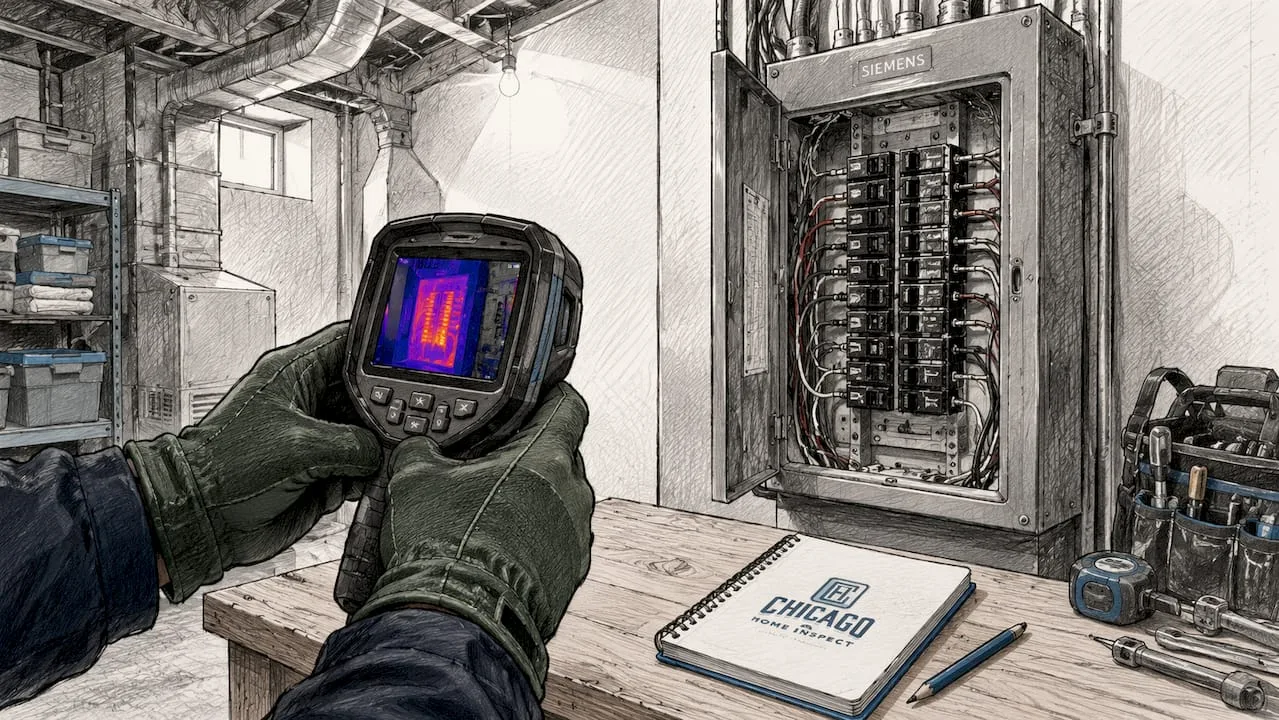
Inspectors trained under InterNACHI and ASHI standards treat these panel brands as known safety hazards. The flag is not a judgment about current condition. It is a recognition that the design itself is defective and that no visual check can rule out the failure modes described above. Inspectors flag panels based on breaker protective function, not on whether handles move normally, because internal trip failure is the danger.
Common triggers that prompt an inspector to flag a panel during a Chicago home inspection:
- Identification of a Federal Pacific Electric, Zinsco, Challenger, or GTE-Sylvania brand label on the panel door
- A burning smell near the panel or visible scorch marks on breakers or the bus bar
- Breakers that feel warm to the touch or that have tripped repeatedly
- Evidence of double-tapped breakers or DIY wiring modifications
- Panel age consistent with installation before the 1990s in a Chicago bungalow, two-flat, or frame home
Pro Tip: Check the panel door label before your inspection appointment. The brand name and model number are printed there. Knowing what you have lets you ask your inspector the right questions on the day of the inspection.
Flagging these panels is a protective measure for buyers and current homeowners alike. Local inspections in Chicago often flag these panels due to recognized risks, and that flag can directly influence mortgage closing timelines and insurance binding.
How do flagged panels affect insurance and home sales in Chicago?
Insurance carriers treat Federal Pacific and Zinsco panels as high-risk systems. Many carriers refuse policies or issue non-renewals on homes with these panels present. Others will write a policy but attach a surcharge or exclude fire damage caused by the electrical system. That exclusion effectively removes the most likely claim scenario from coverage.
The table below shows how insurers and lenders typically respond to different flagged panel types:
| Panel Brand | Typical Insurer Response | Lender Impact |
|---|---|---|
| Federal Pacific (Stab-Lok) | Policy denial or non-renewal | Replacement often required before closing |
| Zinsco | Policy denial, surcharge, or exclusion | Replacement often required before closing |
| Challenger | Increased scrutiny, possible surcharge | Case-by-case lender review |
| GTE-Sylvania | Increased scrutiny | Case-by-case lender review |
| Standard modern panel | Standard underwriting | No impact |
In a Chicago home sale, an inspection report that flags a Federal Pacific or Zinsco panel almost always triggers a negotiation. Buyers request replacement before closing, a price reduction to cover replacement costs, or a credit at closing. Sellers who have not addressed the panel face pressure at the worst possible moment. Insurance and underwriting view flagged panels as effectively uninsurable or replacement-only even without formal recalls, which limits a seller’s ability to simply disclose and move on.
For buyers, the practical risk is a gap in coverage between contract signing and closing if the panel issue is not resolved. Some lenders will not fund a mortgage on a home with a known defective panel. Addressing the panel before listing, or budgeting for replacement as part of the purchase negotiation, is the cleaner path for both sides.
What should Chicago homeowners do after a panel gets flagged?
Acting quickly after a flag protects both safety and the transaction timeline. The steps below apply whether you are a seller who just learned about the panel or a buyer whose inspector flagged it during a purchase inspection.
- Identify the panel brand and model. The label is on the inside of the panel door. Illinois homeowners should check the brand name and model number and note it for their electrician and insurance agent.
- Contact a licensed Illinois electrician. Get at least two quotes for full panel replacement. In Chicago bungalows and two-flats, panel access can be complicated by finished basements or tight utility areas, which affects labor cost.
- Notify your insurance carrier immediately. Some carriers give a short deadline, sometimes 30 days, to replace a flagged panel before they cancel coverage. Do not wait for the sale to close.
- Communicate with your lender. If a mortgage is involved, confirm whether the lender requires replacement before funding. Get that requirement in writing and share it with your electrician so scheduling is aligned with the closing date.
- Plan for Chicago-specific conditions. Older homes in Climate Zone 5 often have panels installed in unheated utility spaces. Freeze-thaw cycles can accelerate corrosion inside aging panels. A licensed electrician familiar with Chicago construction will account for this in the replacement plan.
- Keep all documentation. Save the inspection report, electrician quotes, permit records, and the final inspection sign-off. This paperwork protects you at closing and with your insurer.
If you want to understand what a flagged panel looks like in a real inspection report, reviewing electrical inspection photos from actual Chicago homes gives you a concrete reference point before your own inspection.
How do Federal Pacific and Zinsco compare with other flagged panel brands?
Federal Pacific and Zinsco receive the highest level of concern from inspectors and insurers, but they are not the only legacy panels that raise flags. Challenger and GTE-Sylvania panels also appear in older Chicago homes and carry documented concerns, though the evidence base and insurer response differ.
| Panel Brand | Primary Failure Risk | Inspector Flag Level | Insurer Response |
|---|---|---|---|
| Federal Pacific (Stab-Lok) | Breaker non-trip (51%–65% failure rate) | High | Frequent denial or non-renewal |
| Zinsco | Breaker weld, false off, non-trip (29% failure rate) | High | Frequent denial or non-renewal |
| Challenger | Breaker overheating, arc faults | Moderate to high | Surcharge or exclusion common |
| GTE-Sylvania | Breaker reliability concerns | Moderate | Increased scrutiny |
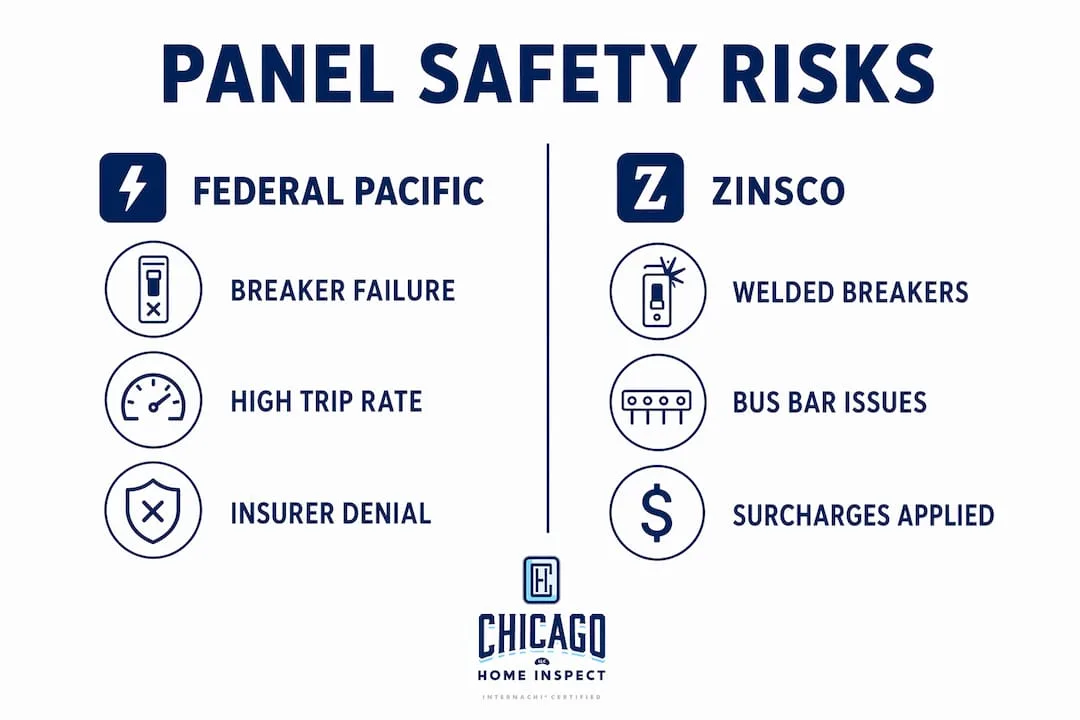
Federal Pacific and Zinsco earn the highest flags because their failure modes are backed by independent testing with documented failure rates. Challenger panels have been linked to overheating and arc fault concerns, but the data record is less extensive. GTE-Sylvania panels draw scrutiny based on age and design concerns rather than a single documented failure mode.
The practical takeaway for Chicago homeowners is that any panel from these four brands warrants a licensed electrician evaluation. The older the home, the more likely the panel has never been serviced or tested under load conditions.
What we see in Chicago homes and why we take these flags seriously
At Chicago Home Inspect LLC, Federal Pacific and Zinsco panels rank among the most critical safety findings we document. We inspect bungalows on the Northwest Side, two-flats in Logan Square, and frame homes throughout the suburbs, and these panels show up regularly in homes built between the 1950s and the 1980s. The outward appearance almost never tells the real story.
What concerns us most is the gap between how a panel looks and how it performs. Homeowners see breakers that switch on and off and conclude the system is working. The false off condition in Zinsco panels and the degraded trip mechanisms in FPE Stab-Lok panels are invisible to that kind of check. We have seen panels that looked clean and organized but had breakers that would not have protected the home under any real overload.
Our recommendation is always the same: do not wait for an insurance notice or a sale to force the issue. A licensed electrician evaluation costs far less than a delayed closing or a gap in fire coverage. If your home was built before 1990 and you have never had the panel evaluated, schedule that evaluation before your next home inspection. Thorough documentation of the replacement, including permits and final inspection sign-off from the city or county, protects you at every future transaction.
— Chicago Home Inspect LLC
Electrical panel inspections with Chicago Home Inspect LLC
Chicago Home Inspect LLC serves homeowners and buyers across Lake, McHenry, DuPage, and northern Cook Counties. Our residential home inspections include a full electrical system evaluation, with clear documentation of panel brand, condition, and any safety concerns. For homes with Federal Pacific, Zinsco, or other flagged panels, our reports give you the specific findings you need to act quickly with your electrician, insurer, and lender. You can review real electrical inspection findings from Chicago-area homes to understand what our reports cover. If your inspection report has already identified a problem, our Chicago buyers guide walks you through the next steps. We are InterNACHI Certified, BBB Accredited, licensed, insured, and available on weekends.
FAQ
What makes Federal Pacific and Zinsco panels so dangerous?
Federal Pacific Stab-Lok breakers fail to trip at rates between 51% and 65%, and Zinsco breakers can weld to bus bars and create false off conditions. Both failures allow circuits to stay energized during an overload, which can cause wiring to overheat and start a fire.
Can a Zinsco or Federal Pacific panel pass a home inspection?
No reputable inspector trained under InterNACHI or ASHI standards will pass these panels without flagging them. The flag is based on the known design defects of the panel brand, not on whether the breakers appear to switch normally.
Will insurance cover a home with a Federal Pacific or Zinsco panel?
Many insurance carriers deny coverage or issue non-renewals for homes with these panels. Others attach surcharges or exclude fire damage caused by the electrical system, which removes the most likely claim from coverage.
How much does it cost to replace a flagged panel in Chicago?
Panel replacement costs vary by home size, panel location, and local permit requirements. In Chicago bungalows and two-flats, labor costs can be higher due to access challenges. Getting two or three quotes from licensed Illinois electricians gives you an accurate range for your specific home.
Does a flagged panel affect a home sale in Chicago?
A flagged panel almost always triggers a buyer request for replacement before closing, a price reduction, or a closing credit. Some lenders will not fund a mortgage on a home with a known defective panel, which can delay or derail the transaction if the issue is not addressed early.