

Slippery driveways and icy sidewalks are a familiar winter headache for Chicago homeowners. Knowing how deicing salts work is key to protecting your property and keeping your family safe when temperatures plummet. With options like sodium chloride, calcium chloride, and magnesium chloride, selecting the right solution can help you reduce ice formation and minimize risks to concrete, pets, and landscaping. This guide reveals practical and safe ways to use deicing salts for effective DIY winter maintenance.
Table of Contents
- What Are Deicing Salts And How They Work
- Popular Deicing Salt Types For Homeowners
- Application Methods For Walkways And Driveways
- Risks To Concrete, Lawns, And Pets
- Safe Handling, Storage, And Best Practices
What Are Deicing Salts and How They Work
Deicing salts are specialized chemical compounds designed to combat winter ice formation by lowering water’s freezing point. In Chicago, where winter temperatures frequently drop below freezing, understanding these salts becomes critical for homeowners seeking to protect their property and ensure safe walking surfaces.
The most common deicing salt is sodium chloride (rock salt), which effectively melts ice by creating brine solutions. When salt dissolves in water, it disrupts the molecular structure that allows water to freeze, preventing ice formation at temperatures around 32°F. Different salt compounds perform uniquely:
- Sodium Chloride (NaCl): Most affordable and widely used
- Calcium Chloride (CaCl2): Works at lower temperatures
- Magnesium Chloride (MgCl2): Less corrosive alternative
These salts work through a fascinating chemical process where dissolved salt molecules interfere with water’s natural freezing mechanism. Unique salt compounds prevent ice recrystallization by creating a liquid brine that remains fluid at temperatures standard water would typically freeze.
Pro Tip: Before applying any deicing salt, check the specific temperature range and surface compatibility to maximize effectiveness and minimize potential damage to concrete or landscaping.
Popular Deicing Salt Types for Homeowners
Navigating the world of deicing salts can be challenging for Chicago homeowners, especially when protecting driveways, walkways, and steps during harsh winter months. Different salt types offer unique advantages and limitations for winter maintenance, making it crucial to understand their specific characteristics.
The most common deicing salt options include:
Rock Salt (Sodium Chloride)
- Most affordable option
- Widely available
- Best for temperatures above 15°F
- Potentially harmful to plants and concrete
Calcium Chloride
- Works at extremely low temperatures
- Faster ice melting performance
- More expensive than rock salt
- Higher potential for surface corrosion
Magnesium Chloride
- Less corrosive environmental alternative
- Effective at lower temperatures
- Gentler on concrete and metal surfaces
- Slightly more expensive than rock salt
Potassium Chloride
- Most environmentally friendly option
- Works best above 15°F
- Slower ice melting process
- Often used as a fertilizer supplement
Each salt type presents trade-offs between cost, effectiveness, and potential environmental impact. Homeowners should consider their specific climate conditions, surface types, and environmental concerns when selecting a deicing salt.
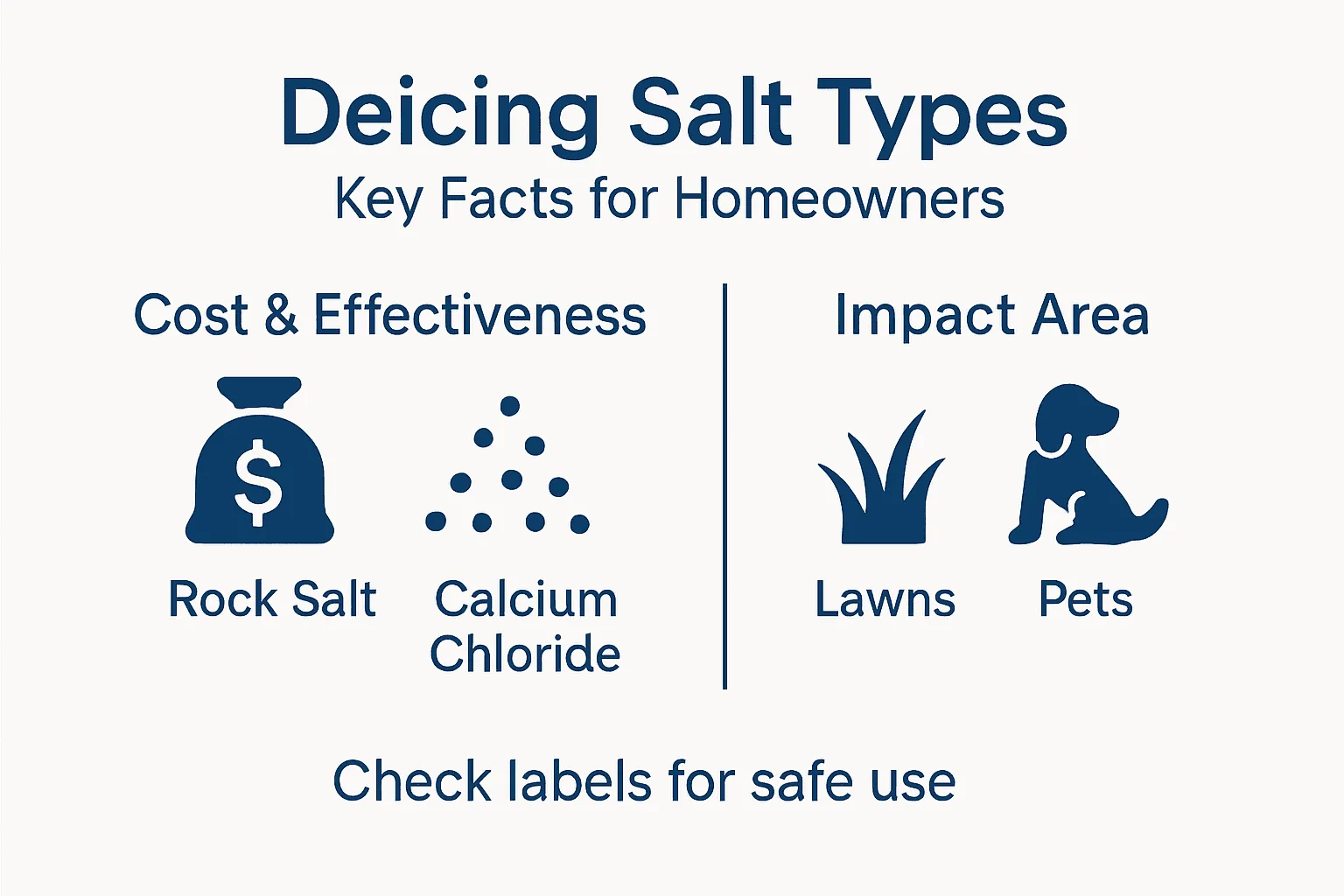
Here’s a practical overview comparing common deicing salts for homeowners:
| Salt Type | Lowest Effective Temperature | Relative Cost | Environmental Impact |
|---|---|---|---|
| Sodium Chloride | 15°F | Lowest | High—harms plants, concrete |
| Calcium Chloride | -25°F | Highest | Can corrode metals |
| Magnesium Chloride | 5°F | Moderate | Gentler on surfaces, moderate |
| Potassium Chloride | 15°F | High | Most plant-friendly option |
Pro Tip: Mix different salt types to create a more versatile and effective deicing solution that works across a broader temperature range.
Application Methods for Walkways and Driveways
In the challenging Chicago winter landscape, applying deicing salts requires strategic planning and precise techniques to ensure safe and effective ice removal. Proper application methods are crucial for minimizing environmental impact while maintaining pedestrian and vehicle safety.
Application Techniques involve multiple approaches:
Granular Salt Spreading
- Use calibrated spreaders for even distribution
- Best for larger surface areas like driveways
- Requires manual or mechanical spreading
- Ideal for solid rock salt and mixed salt compounds
Liquid Brine Pre-Treatment
- Apply before snowfall or ice formation
- Prevents initial ice bonding to surfaces
- More efficient chemical penetration
- Reduces total salt quantity needed
Mechanical Snow Removal
- Combine physical snow clearing with salt application
- Reduces overall chemical usage
- Prevents excessive salt accumulation
- Improves surface preparation for deicing
Calibrated spreaders and strategic application techniques help homeowners optimize salt usage, balancing effectiveness with environmental considerations. Understanding temperature ranges, salt types, and application methods ensures safer winter maintenance.
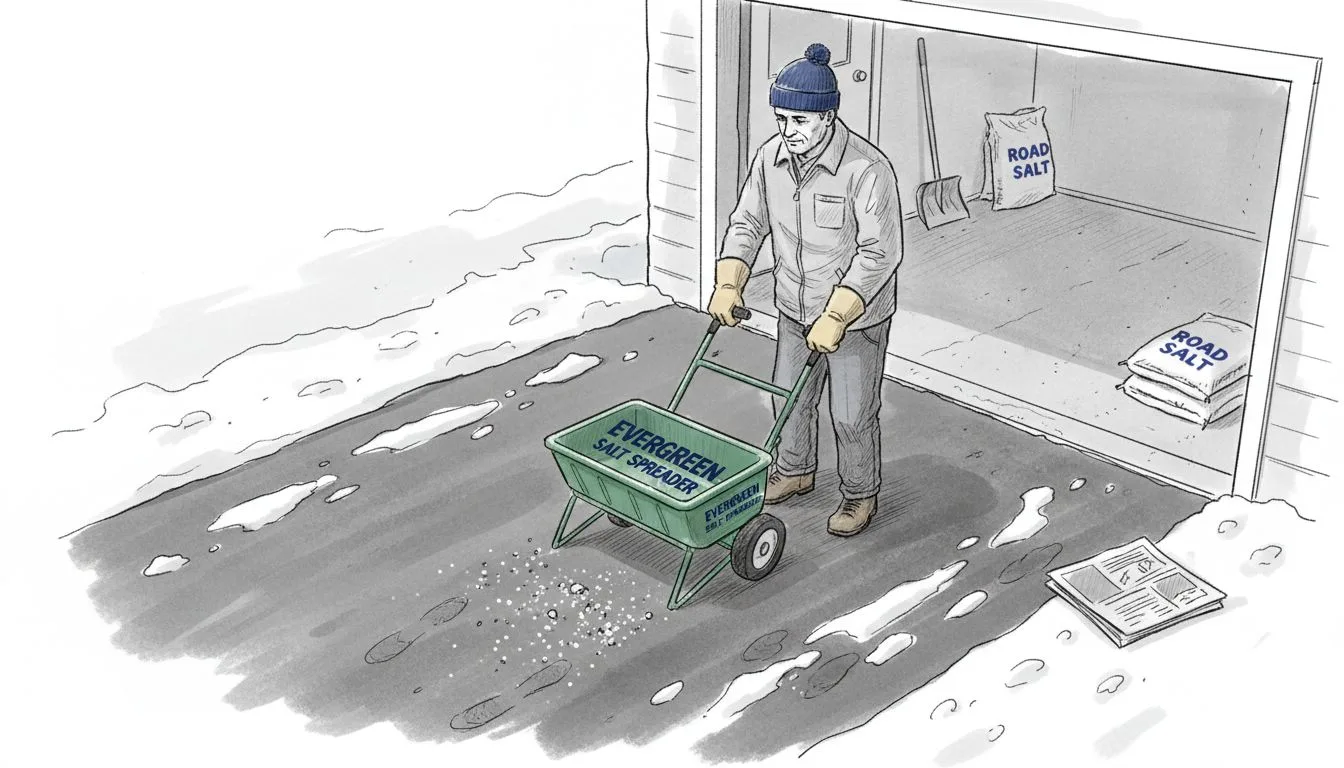
Pro Tip: Invest in a quality spreader with adjustable settings to control salt distribution precisely and minimize waste.
Risks to Concrete, Lawns, and Pets
Winter maintenance in Chicago comes with significant challenges, particularly when managing the potential damage caused by deicing salts. Chloride-based salt compounds can create substantial risks to your property, landscaping, and beloved pets.
Concrete Damage Risks:
- Surface scaling and deterioration
- Chemical reactions weakening structural integrity
- Increased freeze-thaw cycle damage
- Accelerated concrete joint disintegration
- Higher susceptibility in newer or more porous concrete surfaces
Lawn and Plant Vulnerabilities:
- Salt accumulation causing soil toxicity
- Root dehydration and nutrient disruption
- Potential long-term vegetation damage
- Reduced plant growth and health
- Increased susceptibility to winter stress
Pet Safety Concerns:
- Potential chemical irritation to pet paws
- Risk of salt ingestion and poisoning
- Potential chemical burns from direct contact
- Increased vulnerability for smaller animals
- Long-term health complications from repeated exposure
Understanding these risks helps Chicago homeowners make more informed decisions about winter maintenance strategies, balancing safety with environmental and pet protection.
Pro Tip: Always rinse your pet’s paws after walking on salted surfaces and consider using pet-safe alternative deicing products.
Safe Handling, Storage, and Best Practices
Managing deicing salts requires careful attention to safety, environmental impact, and proper storage techniques. Effective salt management protects both your property and the surrounding ecosystem during Chicago’s challenging winter months.
Storage Guidelines:
- Use covered, well-drained storage facilities
- Select waterproof, durable containers
- Maintain a one-year supply maximum
- Prevent moisture absorption
- Ensure proper site accessibility
- Keep storage areas away from water sources
Safe Handling Practices:
- Wear protective dust masks
- Use mechanical equipment for transfer
- Minimize salt spillage
- Protect workers from direct salt exposure
- Clean up excess salt immediately
Application Best Practices:
- Apply salt before ice accumulates
- Remove snow manually when possible
- Use minimal effective salt quantities
- Target specific high-risk areas
- Sweep and reuse excess salt
- Avoid application near sensitive vegetation
These strategic approaches help Chicago homeowners manage deicing salts responsibly, balancing safety needs with environmental considerations.
Below is a summary of safe handling and storage strategies to maximize salt effectiveness and reduce risks:
| Safety Focus | Best Practice Example | Benefit |
|---|---|---|
| Storage | Use sealed, elevated containers | Prevents moisture absorption |
| Handling | Wear dust masks, gloves | Protects user health |
| Application | Spread before ice forms | Increases melting efficiency |
Pro Tip: Store salt in sealed, elevated containers with proper drainage to prevent moisture contamination and maintain salt quality.
Protect Your Chicago Home This Winter with Expert Inspection Services
Deicing salts play a vital role in keeping your walkways and driveways safe during harsh Chicago winters, but their chemical effects can threaten your concrete, landscaping, and even your pet’s health. Understanding the risks like surface scaling, soil toxicity, and pet irritation discussed in the article can help you protect your home more effectively. To take control of winter wear and tear on your property, a thorough home inspection is key. This helps uncover potential damage early, ensuring your home stays safe and well-maintained.
Don’t wait until winter creates hidden problems. Our Yearly Home Checkup service is designed to identify issues caused by winter exposure including salt corrosion and structural concerns. Schedule an inspection now to safeguard your investment against seasonal damage. Ready to get started? Book your expert home inspection today at Chicago Home Inspector and enjoy peace of mind all winter long.
Frequently Asked Questions
What are deicing salts and how do they work?
Deicing salts are chemical compounds designed to lower the freezing point of water, preventing ice formation. They work by dissolving in water and disrupting ice’s molecular structure, effectively melting it.
What types of deicing salts are available for home use?
Common deicing salts include Sodium Chloride (rock salt), Calcium Chloride, Magnesium Chloride, and Potassium Chloride. Each type varies in cost, effectiveness at low temperatures, and environmental impact.
How can I effectively apply deicing salts on my driveway and walkways?
Effective application methods include granular salt spreading, liquid brine pre-treatment, and mechanical snow removal. Using calibrated spreaders and applying salt before ice forms can enhance effectiveness.
What risks do deicing salts pose to concrete, lawns, and pets?
Deicing salts can cause concrete damage, such as scaling and structural weakening, harm plants through soil toxicity, and pose safety concerns for pets, including paw irritation and ingestion risks.
Recommended
- Winter Home Maintenance List to Prevent Damage in Chicago | Chicago Home Inspect LLC
- Ice Dams – Protecting Chicago Homes This Winter | Chicago Home Inspect LLC
- 7 Winter Prep in Chicago: Hidden Maintenance Tasks Most Homeowners Miss | Chicago Home Inspect LLC
- Fall Home Maintenance Checklist | Chicago Home Inspector Tips