
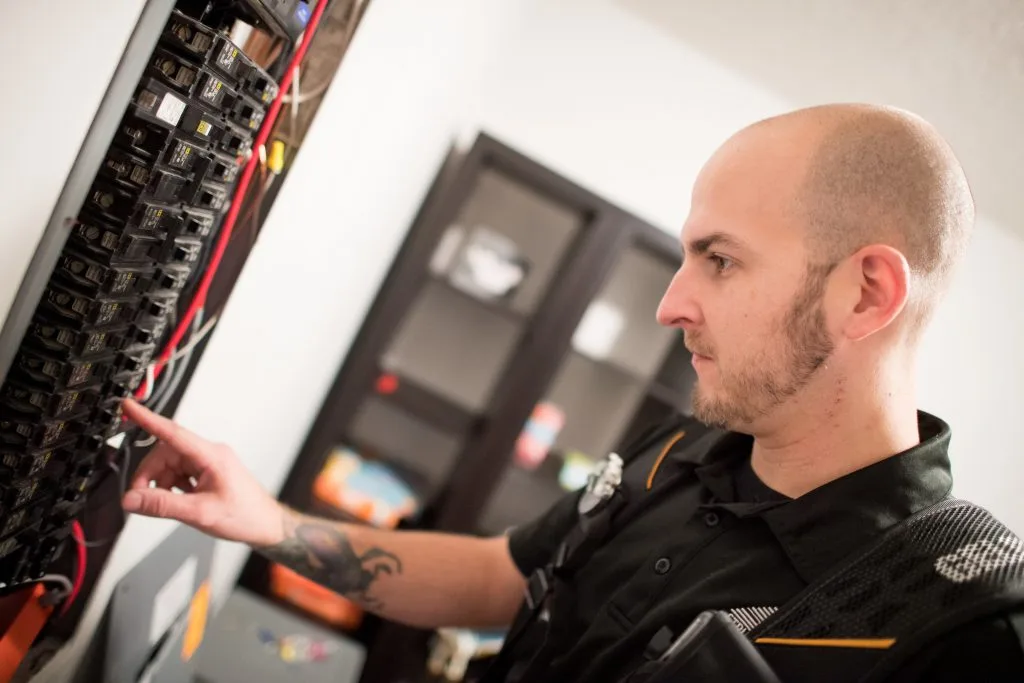
Unit owners are responsible for everything “walls-in”: in-unit plumbing, the electrical panel and branch wiring, the HVAC equipment serving the unit, interior finishes, and appliances. The homeowners association typically covers the roof, exterior walls, shared plumbing stacks, and common-area mechanicals. If you’re under contract on a condo or townhouse anywhere in Lake, McHenry, DuPage, or northern Cook County, schedule your unit inspection and request the HOA resale packet on the same day your contingency clock starts.
That timing matters more here than in most markets. Chicago winters put real stress on building envelopes, and freeze-thaw cycles are unforgiving to aging masonry and flashing details common in older suburban buildings. A reserve study that hasn’t kept pace with that wear is one of the biggest hidden costs a buyer can inherit.
- You own: in-unit electrical, plumbing fixtures, HVAC equipment, interior finishes, appliances
- The HOA owns: roof, exterior envelope, shared stacks, common-area mechanicals
- Do today: book the inspection and request the resale packet together
Table of Contents
- Condo and Townhouse Inspections in the North Suburbs: What Is Yours vs. the HOA
- HOA vs. unit-owner responsibilities: where the lines blur
- A room-by-room checklist for your walkthrough
- The HOA paperwork that decides your real cost of ownership
- Warning signs that outlast a clean walkthrough
- Which add-on tests are worth ordering
- How we combine the inspection with the HOA financial review
- Scheduling your condo or townhouse inspection with us
- Sources
Condo and Townhouse Inspections in the North Suburbs: What Is Yours vs. the HOA
Every condo or townhouse interior inspection focuses on what real estate professionals call the “walls-in” scope: the systems and finishes that belong to you, not the association. That includes the electrical panel and branch wiring inside your unit, in-unit plumbing fixtures and supply lines, the HVAC equipment that serves your specific space, interior walls, ceilings, and flooring, windows and doors, built-in appliances, and smoke and carbon monoxide detectors. A complete condo inspection evaluates all of it, while structural components and shared systems generally fall to the HOA.
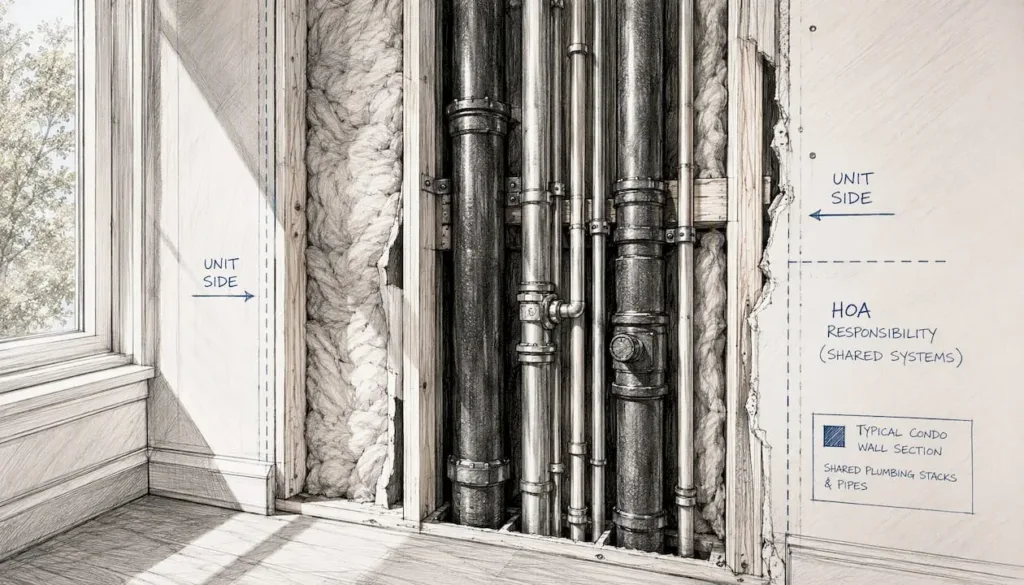
What inspectors usually don’t touch: shared plumbing stacks buried in walls between units, the roof, the foundation, and the building envelope beyond what’s visible from inside your unit. That’s not a gap in service. It’s a boundary set by the condo declaration itself, and it’s intentionally partial by design.
| System | Typical responsibility | Verify in |
|---|---|---|
| Electrical panel and wiring | Unit owner | CC&Rs, unit boundary section |
| In-unit plumbing fixtures | Unit owner | CC&Rs |
| HVAC serving the unit | Unit owner | Declaration, LCE list |
| Shared plumbing stacks | HOA | Reserve study |
| Roof and exterior envelope | HOA | Reserve study, budget |
| Windows (glazing vs. frame) | Often split | Declaration |
Pro Tip: Read the limited common elements section of the declaration before your inspection appointment. It tells the inspector exactly which balcony, HVAC closet, or storage area is fair game and which belongs to the association.
HOA vs. unit-owner responsibilities: where the lines blur
The general rule holds across most North Suburbs buildings: the HOA handles the roof, exterior walls, foundation, main plumbing and electrical distribution, and common areas. You handle everything inside your unit, including finishes, in-unit systems, and appliances. Most disputes we see don’t happen at the clear boundaries. They happen at the edges.
Balconies, HVAC closets, and window glazing are the usual suspects. A balcony surface might be your responsibility while the structural slab underneath belongs to the HOA. Window glass might be yours to replace while the frame and seal are association-maintained. None of this is standardized, which means the declaration, not general convention, controls the outcome.
- Pull the CC&Rs and search for “unit boundary” and “limited common element” language before you assume anything.
- Townhouse-style condos flip the script more often than stacked units. Some owners hold title to their own roof and attic space, or even a private yard, which shifts more exterior burden onto the individual. A townhouse inspection in Chicago needs to account for that difference from day one, since townhouse ownership structures often carry more owner-side exterior duty than a typical stacked condo.
- Master insurance covers the building structure and common areas, but you still need an HO-6 policy for interior finishes, personal property, and loss-assessment coverage, since the gap between the master policy and your own coverage can leave real exposure if a special assessment lands.
Pro Tip: If you’re buying a townhouse-style unit, ask directly whether the roof and attic are inside your unit boundary. Treat that answer as decisive for how you scope your inspection.
A room-by-room checklist for your walkthrough
Walk the unit with a specific list, not a general impression. In the bathroom, check drainage speed, tile grout, and any staining around the tub or shower pan. In the kitchen, look at appliance hookups and check under the sink for water stains. In bedrooms and living areas, test windows for smooth operation, check closets for moisture smell, and confirm outlets are grounded and working. On the balcony or patio, separate cosmetic surface issues from anything that looks structural. If a garage or storage unit is assigned to you, inspect it with the same scrutiny as the main living space.
On systems, test every electrical outlet, pull the HVAC filter and locate the shutoff valves, and check the water heater along with any visible supply and drain piping. Confirm smoke and CO detectors are present and functional. A checklist built for resale condo evaluations recommends checking shared areas adjacent to your unit too, since problems there often show up first inside your walls.
- Take timestamped photos of any stains, cracked finishes, or access panels. These become your evidence when negotiating repairs with a seller or filing a request with the HOA.
- Common issues our inspectors flag repeatedly are cataloged in our post on overlooked defects in Chicago inspections.
Pro Tip: Photograph access panels even if they look fine. If a dispute comes up later about when damage started, a dated photo is worth more than memory.
The HOA paperwork that decides your real cost of ownership
The inspection tells you about the unit. It tells you almost nothing about the building’s financial health, and that’s the piece buyers skip most often. Request the full resale packet: CC&Rs and declaration, bylaws, the current budget, the reserve study, the last 12 months of meeting minutes, insurance certificates, recent financial statements, and any special-assessment notices.
Watch for a handful of numbers and patterns. A reserve funding ratio under roughly 50% is a common predictor of a coming special assessment. Frequent past assessments, dues that have climbed sharply, a high delinquency rate among owners, or pending litigation are all signs the building’s finances are stretched thinner than the hallway paint job suggests.
- Ask the property manager about planned capital projects, the routine maintenance schedule, any recent or expected assessments, and the association’s reserve funding policy.
- Reserve studies and minutes reveal planned capital projects and funding shortfalls that no inspection can uncover on its own.
Pro Tip: Request the resale packet the same day your contingency period begins, and have a professional review the reserve study side by side with the inspection report before you make a decision.
Warning signs that outlast a clean walkthrough
A unit can show beautifully and still sit inside a building headed for trouble. Low reserves are the clearest signal, but a few others deserve attention: water stains with no obvious source, repeated repair line items in the meeting minutes, inconsistent language around what counts as a “limited common element,” or roof patches with no documented history.
A common pattern we see across the North Suburbs is a move-in-ready unit inside a building that has quietly deferred envelope maintenance for years, only for owners to get hit with a special assessment for façade repair right after closing. Our roundup of red flags Chicago buyers should know covers several variations of this same trap.
- If minutes are vague or reserves look thin, ask the board in writing before you consider waiving any inspection contingency.
Which add-on tests are worth ordering
Not every unit needs every test, but a few decision rules make the call easier. Order a radon test for basement or lower-level units, since it’s inexpensive relative to the health upside. Order mold testing if there’s any history of water intrusion or a musty smell that doesn’t have an obvious source. A sewer camera inspection matters most in older buildings or ones with a history of slow drainage, since aging cast-iron or clay lines are common throughout older North Suburbs housing stock. Pest inspection makes sense when you see physical evidence, not as a routine add-on.
- Radon: low cost, high upside, especially in ground-level and garden units.
- Mold: order after any documented leak or persistent odor.
- Sewer camera: reserve for older buildings or units with drainage complaints.
- Pest: order only when evidence is present.
How we combine the inspection with the HOA financial review
We treat the physical inspection and the document review as one job, not two separate steps. Our process: schedule the unit inspection early in your contingency window, request and review the reserve study alongside 12 months of meeting minutes, then combine both findings into a single buyer advisory.
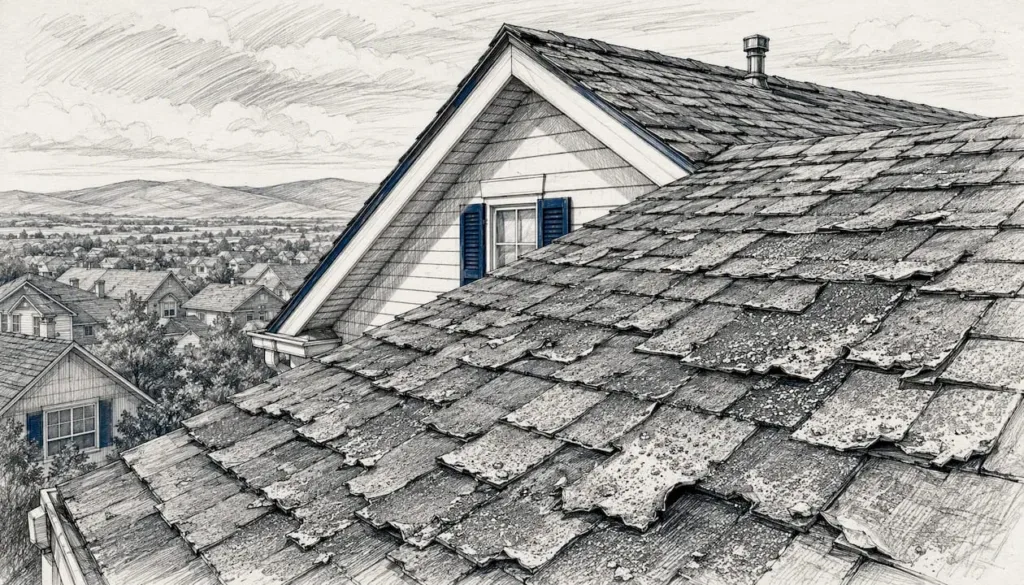
Freeze-thaw cycling and older masonry stock make envelope and roof funding especially important across the North Suburbs, since deferred exterior maintenance shows up as special assessments years before it shows up as a leak. When findings point to structural or envelope concerns beyond routine repair, we’ll recommend a building-envelope specialist or structural engineer rather than guessing.
- Schedule early, request documents early, review together.
Pro Tip: Don’t wait for your inspector’s report to request the reserve study. Pull both at once so nothing delays your decision window.
Our take from the field
We’re licensed, InterNACHI certified, and serve Lake, McHenry, DuPage, and northern Cook counties. Two examples stick with us: a north-suburban townhouse with a reserve fund that couldn’t cover a roof replacement everyone knew was coming, and an older masonry condo building where one failing shared stack triggered plumbing repairs in three separate units. Use our sample report and photo galleries to see what these findings actually look like before you’re standing in the unit yourself.
Scheduling your condo or townhouse inspection with us
Chicago Home Inspect LLC pairs the physical inspection with the document side of due diligence, so you’re not left guessing whether a clean-looking unit sits inside a financially healthy building. Our services cover pre-purchase interior inspections, radon testing, mold testing, and sewer camera inspections for older buildings with aging drain lines. If your unit’s HVAC closet or system needs a closer look, a detailed HVAC checklist from our partners at Lucas Air Conditioning and Heating outlines exactly what a specialist checks beyond a standard inspection.
We’re licensed and insured, InterNACHI certified, BBB accredited, and available on weekends to fit tight contingency windows. Before you book, review our sample inspection report to see exactly how findings and photos get presented. When you’re ready, schedule your inspection directly through our site and we’ll walk you through the two-part process from day one.
This article is general information, not a substitute for advice from a qualified lawyer. Consult a qualified legal professional about your own circumstances before acting on anything here.
Sources
- A Complete Condo Inspection Guide for Buyers | Redfin
- Condo home inspection: what to check | InspectionTriage
- Physical evaluation checklist for resale units | CMHC