
TL;DR:
- Older Chicago homes rely heavily on vintage boiler and radiator systems that need regular safety and efficiency inspections. These evaluations include checking system condition, safety controls, combustion, venting, and heat distribution to prevent costly breakdowns. Proper maintenance and timely upgrades can extend system life and improve performance in these historically complex heating setups.
A boiler and radiator inspection in an older Chicago home is a structured safety and efficiency evaluation covering combustion integrity, pressure controls, heat distribution, and code compliance. Chicago’s vintage housing stock, from graystones in Lincoln Park to two-flats in Logan Square, relies heavily on steam and hydronic radiator systems that can be 50 to 100 years old. The Chicago Building Code mandates annual inspections for buildings with four or more apartments, commercial properties, and institutional facilities. Understanding what inspectors check in these systems helps homeowners and buyers make informed decisions before Chicago’s long heating season begins.
What do inspectors check in boilers of older Chicago homes?
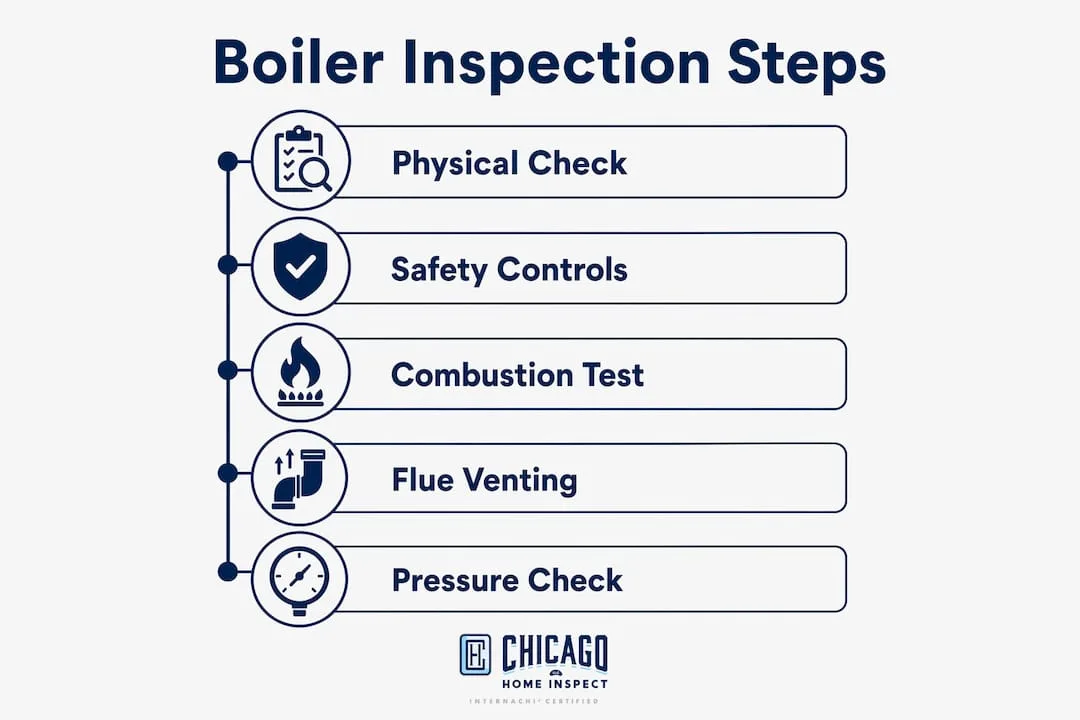
Boiler inspection in older Chicago homes covers five core areas: physical condition, safety controls, combustion quality, venting, and operating pressure. Each area carries real consequences if overlooked, especially in Climate Zone 5 where heating systems run hard from october through april.
Physical condition and corrosion checks
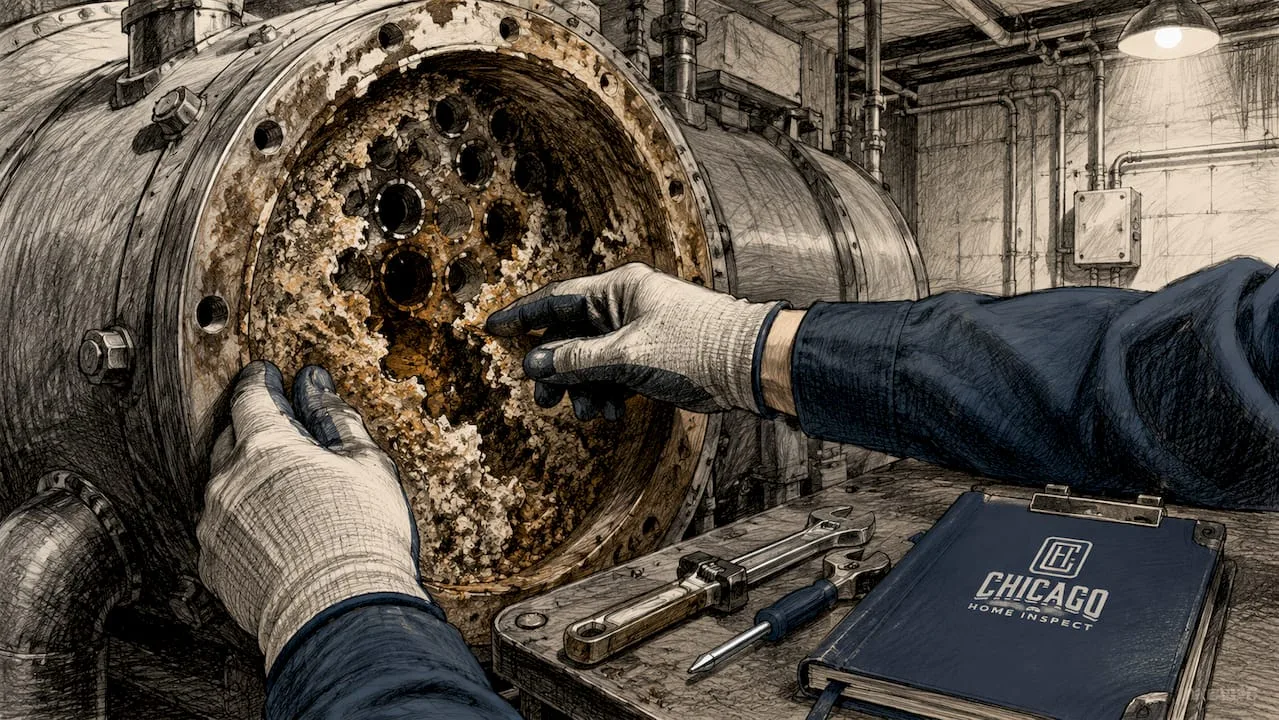
Inspectors examine the boiler’s exterior and accessible interior surfaces for corrosion, cracks, scale deposits, and active leaks. Rust streaks on the jacket or mineral staining around fittings signal long-term water contact. Scale buildup is particularly common in Chicago because the city’s water supply carries elevated mineral content. That figure means a homeowner may be paying nearly one-third more in gas bills for the same amount of heat output.
Safety controls and pressure relief
Every boiler must have a functioning pressure relief valve and a low water cutoff. Inspectors test both. A pressure relief valve that fails to open under excess pressure can cause a catastrophic failure. A low water cutoff that does not shut the burner down when water drops too low will destroy the heat exchanger within minutes. These are not theoretical risks in older homes. Deferred maintenance and DIY repairs frequently leave these controls bypassed or stuck.
Combustion chamber and carbon monoxide risk
Combustion chamber inspection verifies flame patterns and confirms safe, efficient fuel burning. An irregular or lifting flame indicates incomplete combustion, which produces carbon monoxide. Inspectors look for soot deposits, cracked refractory material, and signs of flame impingement on the heat exchanger. Carbon monoxide is odorless and colorless, making a visual combustion check one of the most critical steps in any boiler safety evaluation.
Flue venting and system pressure
Proper flue venting removes combustion gases from the home. Inspectors check for disconnected vent sections, corrosion holes, and inadequate slope. A blocked or leaking flue can redirect carbon monoxide into living spaces. System pressure is also verified against the manufacturer’s rating plate. Operating outside the rated pressure range stresses fittings and accelerates wear on older cast iron components.
Pro Tip: If you see white mineral deposits around boiler fittings or on the floor beneath the unit, schedule a professional inspection before the heating season starts. That staining almost always means a slow leak has been present for months.
How are radiators inspected in older Chicago homes?
Radiator inspection starts with correctly identifying the system type. Getting this wrong leads to incorrect repairs and wasted money. Many older Chicago homes have had multiple owners and partial upgrades, making system identification less obvious than it seems.
Identifying steam vs. hot water systems
The number of pipes connected to a radiator does not reliably distinguish steam from hot water systems. Checking for an expansion tank or circulation pump is the more definitive method. A hot water system will have a circulator pump and an expansion tank. A steam system will not. This distinction matters because bleeding, balancing, and valve replacement procedures differ completely between the two types.
Checking valves, vents, and air traps
- Inlet valves are inspected for full open or full closed operation. Steam radiator valves must be fully open or fully closed. A partially open steam valve causes water hammer and banging noises.
- Air vents on steam radiators are checked for blockage or failure. A clogged vent traps air and leaves the radiator cold, even when the boiler is running.
- Thermostatic radiator valves (TRVs) are tested for response and calibration. TRVs improve temperature control in older Chicago buildings by allowing localized adjustments that compensate for aging system limitations.
- Bleed valves on hot water radiators are checked for function. Trapped air in a hot water radiator creates cold spots at the top of the unit.
- Radiator body and connections are inspected for rust, active leaks, and physical damage from past freeze events or thermal cycling.
Heat distribution and balancing
Uneven heating across rooms is one of the most common complaints in older Chicago buildings. Aging piping and limited insulation are the primary causes. Inspectors note which rooms receive adequate heat and which run cold. Balancing a hot water system involves adjusting flow rates at individual radiators. Steam systems require careful vent sizing. Neither task is a quick fix, but identifying the problem during an inspection gives homeowners a clear repair target.
Pro Tip: Before calling a technician about a cold radiator, check whether the inlet valve is partially open. On a steam system, that single adjustment often resolves the problem immediately.
What are common boiler and radiator problems found during inspections?
Older Chicago homes show a predictable set of recurring problems during heating system inspections. Recognizing the symptoms early prevents the kind of emergency repair that costs three times more than planned maintenance.
- Gradual efficiency loss from scale buildup. Chicago’s mineral-rich water deposits scale inside the boiler’s heat exchanger over time. Testing water quality and cleaning heat exchangers directly addresses this.
- Lukewarm radiators and uneven heat. Boilers in older Chicago homes often fail gradually, with lukewarm radiators and rising gas bills as the first warning signs. Homeowners frequently attribute these symptoms to the weather rather than the system.
- Banging and knocking noises. Water hammer in steam systems and trapped air in hot water systems both produce noise. Neither is normal. Both indicate a condition that will worsen without correction.
- Mismatched pumps and zone valves. Improper upgrades such as mismatched circulator pumps or incorrectly installed zone valves cause hidden stress on piping and lead to leaks. Many older Chicago homes have had well-intentioned but poorly executed modifications over the decades.
- Corrosion from freeze-thaw cycling. Chicago’s winters create repeated thermal stress on older cast iron components. Hairline cracks in radiators and fittings often go unnoticed until a leak appears. Inspectors look for rust staining and joint separation as early indicators.
Catching these problems during a scheduled older home inspection is far less costly than addressing them after a system failure in january.
What is the right maintenance schedule for older Chicago boilers and radiators?
Maintenance frequency depends on system age, complexity, and building type. The table below outlines the standard schedule for older Chicago homes.
| System type | Recommended service frequency | Key tasks |
|---|---|---|
| Single-family, newer boiler | Annual (fall) | Burner cleaning, safety control test, flue check |
| Single-family, older boiler | Twice yearly (fall and spring) | All annual tasks plus heat exchanger cleaning, water quality test |
| Multi-zone or multi-unit building | Twice yearly (fall and spring) | All above plus zone valve check, pump inspection, radiator balancing |
| Steam system, any age | Annual minimum | Air vent replacement, valve inspection, water line check |
Heating systems in Chicago should receive at least annual servicing, with twice-yearly service recommended for older or more complex systems. Fall service prepares the system for peak demand. Spring service removes deposits that accumulate during the heating season and catches damage from winter thermal cycling.
Cleaning burners and heat exchangers removes combustion residue that reduces efficiency. Bleeding air from hot water radiators restores full heat output. Testing water chemistry identifies mineral content that will form scale. Calibrating thermostats and zone controls ensures the system responds accurately to temperature demands across Chicago’s long heating season.
Our perspective on inspecting vintage Chicago heating systems
We have inspected heating systems in bungalows on the Northwest Side, greystones in Hyde Park, and frame two-flats in Wicker Park. The pattern we see repeatedly is this: older systems are often more durable than people expect, but they have almost always been modified in ways that create new problems.
The conventional wisdom says to replace old boilers as soon as possible. We disagree with that as a blanket recommendation. A well-maintained cast iron boiler from the 1970s can outperform a poorly installed modern unit. The real risk is not the age of the equipment. The risk is the accumulated layer of mismatched parts, bypassed controls, and deferred maintenance that builds up over decades of ownership changes.
What we find most often is not catastrophic failure waiting to happen. It is quiet efficiency loss. A radiator delivering half its rated output because of a stuck air vent. These are not dramatic problems, but they cost homeowners real money every month. A thorough inspection catches them. Skipping the inspection does not make them go away.
We also push back on the idea that older systems cannot be improved without full replacement. TRVs, modern low-water cutoffs, and properly sized circulator pumps can extend the life of a vintage system significantly. The key is matching upgrades to the existing system design rather than forcing modern components onto infrastructure they were not designed for.
— Chicago Home Inspect LLC
How Chicago Home Inspect LLC approaches boiler and radiator inspections
Chicago Home Inspect LLC brings InterNACHI-certified expertise and direct knowledge of Chicago’s vintage housing stock to every heating system evaluation. We follow inspection protocols aligned with the Chicago Building Code and document findings with clear photos and written explanations. Our HVAC inspection process covers boiler condition, safety controls, combustion quality, radiator function, and heat distribution across the entire home. Whether you are buying a greystone in Pilsen or maintaining a bungalow in Norwood Park, we give you a complete picture of what your heating system needs. We serve Lake, McHenry, DuPage, and northern Cook Counties, with weekend appointments available. Schedule your inspection before the heating season puts your system to the test.
FAQ
What does a boiler inspection include in older Chicago homes?
A boiler inspection covers physical condition, safety controls, combustion quality, flue venting, and system pressure. Inspectors also verify compliance with Chicago Building Code requirements for the building type.
How often should a boiler be inspected in Chicago?
Annual inspections are the minimum for most systems. Older or multi-zone systems benefit from twice-yearly service, once in the fall before heating season and once in the spring after it ends.
How do I know if my Chicago home has a steam or hot water radiator system?
Look for a circulator pump and expansion tank near the boiler. Their presence confirms a hot water system. Pipe count alone is not a reliable indicator and leads to incorrect repairs.
What causes uneven heating in older Chicago homes?
Uneven heating typically results from aging piping, limited insulation, trapped air in radiators, or clogged air vents. Thermostatic radiator valves and proper system balancing address most distribution problems.
Are boiler inspections required by law in Chicago?
The Chicago Building Code requires annual boiler inspections for buildings with four or more apartments, as well as commercial and institutional facilities. Single-family homeowners are not legally required to inspect annually but face real safety and efficiency risks without regular service.